

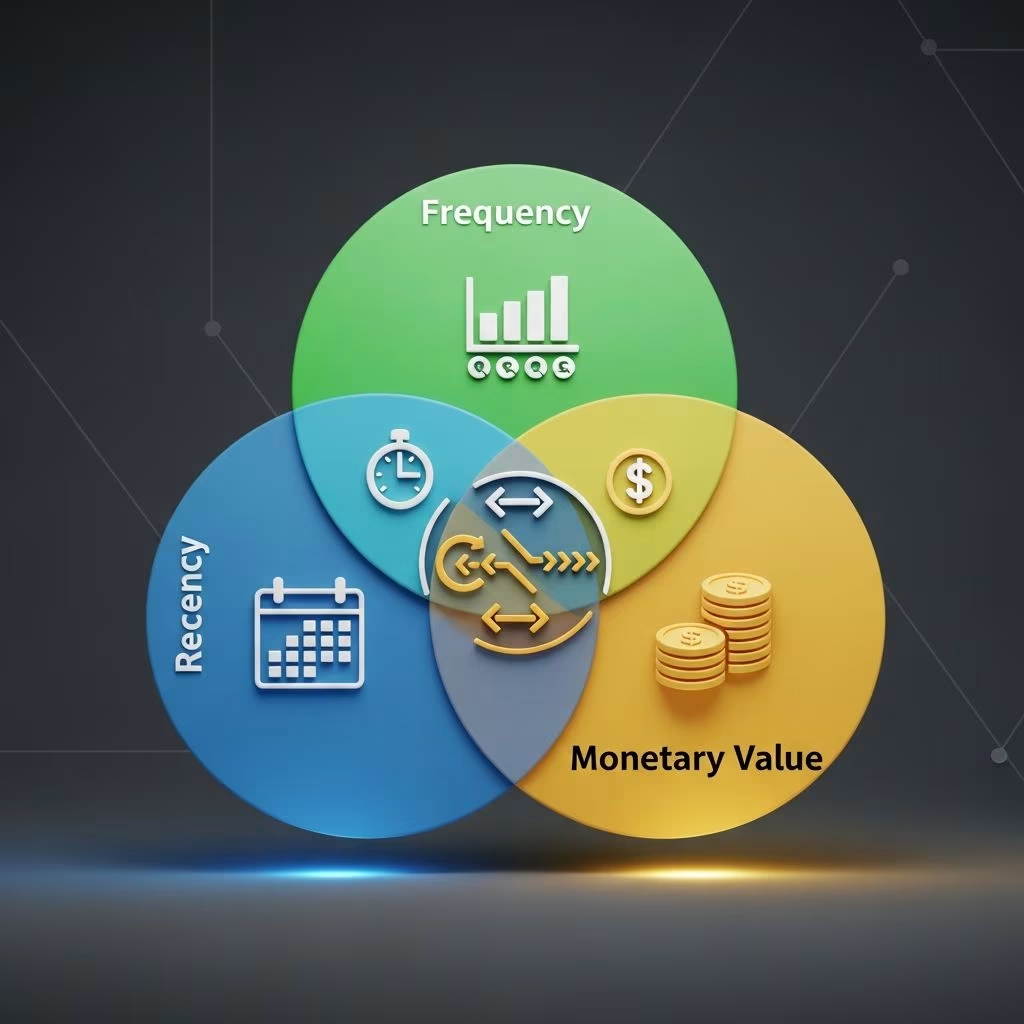
What is RFM Analysis?
RFM analysis is a data-driven customer segmentation technique that evaluates customer behavior and value based on three key metrics: Recency, Frequency, and Monetary value. This methodology helps businesses identify their most valuable customers, understand purchasing patterns, and tailor marketing strategies accordingly. Rather than treating all customers uniformly, RFM analysis provides a structured approach to categorizing customers into meaningful groups based on their transaction history.
The technique is particularly valuable for businesses seeking to optimize marketing spend, improve customer retention, and maximize return on investment. By understanding which customers are most engaged and profitable, companies can allocate resources more effectively and create personalized campaigns that resonate with different customer segments.
Understanding the Three Components of RFM
RFM analysis comprises three distinct but interconnected metrics that work together to provide a comprehensive view of customer behavior:
Recency
Recency measures how recently a customer made a purchase or engaged with your business. This metric is based on the number of days since their most recent transaction. Customers who purchased recently are typically more engaged and more likely to respond to marketing campaigns. High recency scores indicate customers who are actively interested in your products or services, making them ideal targets for promotional initiatives.
Frequency
Frequency tracks how often a customer makes purchases within a specific time period. This metric reflects customer loyalty and engagement level. Customers who purchase frequently demonstrate consistent interest in your offerings and are more likely to continue purchasing in the future. High frequency scores indicate established customer relationships that can be nurtured for long-term retention.
Monetary Value
Monetary value represents the total amount of money a customer has spent with your business over time. This metric directly correlates to customer profitability and lifetime value. Customers with high monetary scores are your most valuable contributors to revenue and deserve prioritized attention and retention efforts. Understanding spending patterns helps identify which customer segments generate the most revenue.
Why RFM Analysis Matters
RFM analysis is essential for modern businesses because it transforms raw transaction data into actionable insights. Unlike demographic segmentation or generic customer categorization, RFM focuses on actual purchasing behavior, making it a more reliable predictor of future customer actions.
Key reasons why RFM analysis matters include:
- Identifies high-value customers who generate the most revenue
- Pinpoints at-risk customers who need re-engagement campaigns
- Reveals patterns in customer purchasing behavior
- Enables more targeted and personalized marketing communications
- Improves marketing ROI by focusing efforts on responsive segments
- Helps predict customer lifetime value and retention potential
- Supports data-driven decision-making across the organization
How to Calculate RFM Scores
Calculating RFM scores involves a systematic process that transforms raw customer data into meaningful rankings. Here’s how to implement this methodology:
Step 1: Collect Essential Data
Begin by gathering the necessary customer information from your CRM, e-commerce platform, or customer engagement system. Essential data points include:
- Purchase dates for each customer
- Number of purchases per customer
- Total spend per customer
- Customer identifiers (email, customer ID, phone number)
Step 2: Assign Individual Scores
Rank each customer on each of the three RFM metrics using a numerical scoring system. Most commonly, businesses use a 1-to-5 scale for each component, though some organizations use 1-to-10 scales depending on their needs. Assign higher scores to customers with more recent purchases, more frequent transactions, or greater total spending. This creates a consistent framework for comparison across your customer base.
Step 3: Calculate Combined RFM Scores
Once individual scores are assigned, calculate the combined RFM score by concatenating the three separate scores. For example, a customer might receive a recency score of 5, frequency score of 4, and monetary score of 5, resulting in an RFM score of 545. This combined score provides a quick reference point for overall customer value and engagement level.
Step 4: Identify Segments
With RFM scores calculated, segment customers into meaningful groups based on score combinations. Common segments include champions (555), loyal customers (4xx or 5xx), at-risk customers (3×1 or 3×2), and lost customers (111 or 211).
Key Customer Segments in RFM Analysis
RFM analysis typically reveals several distinct customer segments, each requiring different marketing approaches and retention strategies:
Champions (555)
Champions are your best customers—they purchase frequently, spend generously, and have done so recently. These highly engaged, top-spending customers represent your highest-value segment. Strategy: Focus on nurturing loyalty through exclusive offers, early access to new products, VIP treatment, and premium customer service to ensure they remain brand advocates.
Loyal Customers (4xx, 5xx)
Loyal customers buy frequently and consistently, though they may not spend as much as champions. They demonstrate strong engagement and repeat purchase behavior. Strategy: Maintain their interest through loyalty programs, referral incentives, member-exclusive events, and regular communication that acknowledges their consistent support.
At-Risk Customers (3×1, 3×2)
These customers purchased frequently in the past but haven’t made recent purchases. They represent a significant opportunity for re-engagement efforts. Strategy: Launch targeted win-back campaigns with personalized offers, ask for feedback on why they’ve disengaged, and remind them of value propositions that initially attracted them.
VIP Customers
Customers with high scores across all RFM categories represent your most valuable segment. Strategy: Provide exceptional customer service, personalized communication, priority support, and exclusive benefits to maintain their loyalty and maximize their lifetime value.
New Customers
Customers with high recency scores but lower frequency and monetary scores are recent purchasers still building their relationship with your brand. Strategy: Focus on building strong relationships through excellent onboarding experiences, educational content, and incentives to encourage repeat purchases.
Lost Customers
Customers with low scores across all categories haven’t engaged recently, rarely purchased, and spent minimal amounts. Strategy: Consider specialized re-engagement campaigns or, if conversion probability is low, reallocate resources to more promising segments.
Implementing RFM Analysis in Your Business
Successfully implementing RFM analysis requires a structured approach and commitment to data-driven decision-making:
Define Your RFM Scoring System
Start by establishing clear scoring criteria based on your specific business model and industry standards. Determine the time periods that matter most for your business, appropriate score ranges, and how you’ll define recency, frequency, and monetary thresholds. This ensures consistency and relevance to your particular market dynamics.
Create Customer Segments
Based on your RFM scores, define key customer segments aligned with your business objectives. Organize customers into meaningful groups that your marketing and customer service teams can act upon effectively. Consider creating both broad categories and more granular sub-segments as your analysis becomes more sophisticated.
Develop Targeted Strategies
For each segment, develop specific marketing initiatives and customer engagement strategies. Tailor messaging, offer timing, communication frequency, and channel selection to match each segment’s characteristics and preferences. What works for champions may not work for new customers, and customization is key to success.
Monitor and Adjust
RFM analysis is not a one-time exercise. Regularly recalculate scores, monitor segment performance, track campaign results by segment, and adjust strategies based on outcomes. As customer behavior evolves, your segments and approaches should evolve accordingly.
Benefits of RFM Analysis
Organizations that effectively implement RFM analysis experience numerous benefits:
- Increased marketing efficiency through targeted campaigns
- Improved customer retention and lifetime value
- Better resource allocation and budgeting decisions
- Enhanced understanding of customer behavior patterns
- More accurate prediction of customer churn risk
- Ability to identify upsell and cross-sell opportunities
- Stronger relationships with high-value customers
- Data-backed strategies that reduce guesswork in marketing
Real-World Application Example
Consider an ecommerce fashion retailer that implemented RFM analysis to revitalize customer engagement. The company focused on high-value customers who had made recent purchases, crafting campaigns specifically tailored to this segment. By using customized RFM cutoffs, they targeted segments with high revenue potential while simultaneously identifying at-risk customers needing re-engagement. This targeted approach allowed them to concentrate marketing resources on the most responsive and valuable segments, significantly improving campaign effectiveness and revenue per marketing dollar spent.
RFM Analysis in Different Industries
While RFM analysis originated in direct marketing, it has proven valuable across numerous industries. In banking, RFM helps identify customers most likely to churn, determine appropriate deposit rates, and predict lifetime profitability. In retail, it guides promotional calendar planning and inventory decisions. In SaaS, it helps identify subscription churn risk and upsell opportunities. The flexibility of RFM makes it adaptable to virtually any business model involving recurring or repeat transactions.
Common Challenges and Solutions
Organizations implementing RFM analysis may encounter several challenges. One common issue is oversimplification—treating all high-score customers identically without considering context. Solution: Create sub-segments within major categories to capture nuance. Another challenge involves data quality; incomplete or inaccurate transaction records can skew analysis. Solution: Implement data validation processes and invest in clean data infrastructure before beginning RFM calculations. Finally, organizations sometimes struggle with turning insights into action. Solution: Ensure marketing, sales, and customer service teams have clear guidelines for acting on RFM segments.
Advanced RFM Considerations
While basic RFM analysis uses 1-to-5 scoring scales creating 125 possible combinations, more advanced implementations might incorporate additional dimensions. Some organizations weight different components differently based on business priorities. Others incorporate seasonal adjustments to account for industry-specific patterns. Progressive companies automate RFM calculations and segment assignments, enabling real-time personalization and dynamic campaign triggers based on customer behavior changes.
Frequently Asked Questions About RFM Analysis
Q: How often should I recalculate RFM scores?
A: Most organizations recalculate RFM scores quarterly or monthly, depending on transaction frequency and business model. High-volume retail might benefit from monthly calculations, while B2B companies might use quarterly reviews. More frequent recalculation enables faster response to changing customer behavior.
Q: What time period should I use for RFM analysis?
A: The ideal time period depends on your business cycle. Typically, organizations analyze the past 12-24 months of data to capture meaningful patterns while remaining current. Businesses with seasonal patterns might adjust accordingly.
Q: Can RFM analysis work for subscription-based businesses?
A: Yes, RFM analysis works well for subscription models. Recency might measure time since last renewal or login, frequency could track engagement events, and monetary value would include subscription fees and add-on purchases.
Q: How do I handle new customers in RFM analysis?
A: New customers typically receive high recency scores but lower frequency and monetary scores. Segment them separately with specific strategies focused on encouraging repeat purchases and building relationships.
Q: Should I weight the three RFM components equally?
A: While equal weighting is standard, some businesses benefit from adjusting weights. A subscription service might weight frequency highly, while a luxury retailer might emphasize monetary value. Align weights with your business priorities.
Q: How can I automate RFM analysis?
A: Many customer data platforms and marketing automation tools offer built-in RFM functionality. Alternatively, most CRM systems support custom scoring formulas that automatically calculate and update RFM scores as new transaction data arrives.
Q: What’s the difference between RFM analysis and customer lifetime value?
A: RFM analysis uses historical behavior to segment and predict future value, while customer lifetime value calculates the total profit expected from a customer relationship. RFM is simpler and more accessible; CLV is more precise but requires more complex calculations.
References
- RFM Analysis: A Data-Driven Approach to Customer Segmentation — HubSpot. 2025. https://blog.hubspot.com/service/rfm-analysis
- Understanding RFM Segmentation–Marketers Guide — Braze. 2025. https://www.braze.com/resources/articles/rfm-segmentation
- What Is RFM Analysis? Definition, Benefits, and Best Practices — Shopify. 2025. https://www.shopify.com/blog/rfm-analysis
- How to Use RFM Customer Segmentation Analysis in Banking — Southstate Correspondent. 2025. https://southstatecorrespondent.com/banker-to-banker/bank-marketing/how-to-use-rfm-customer-segmentation-analysis-in-banking/
- What is RFM Analysis? Definition, Benefits & Examples — CleverTap. 2025. https://clevertap.com/blog/rfm-analysis/
This article is general information, not personal financial advice. Consider your own situation, or speak with a licensed adviser, before acting on it.


