

What Is the Difference Between Greenfield and Brownfield Investment?
When evaluating investment opportunities, particularly in real estate and development projects, investors frequently encounter two distinct strategies: greenfield and brownfield investments. Understanding the fundamental differences between these approaches is essential for making informed financial decisions that align with your investment goals, risk tolerance, and time horizon.
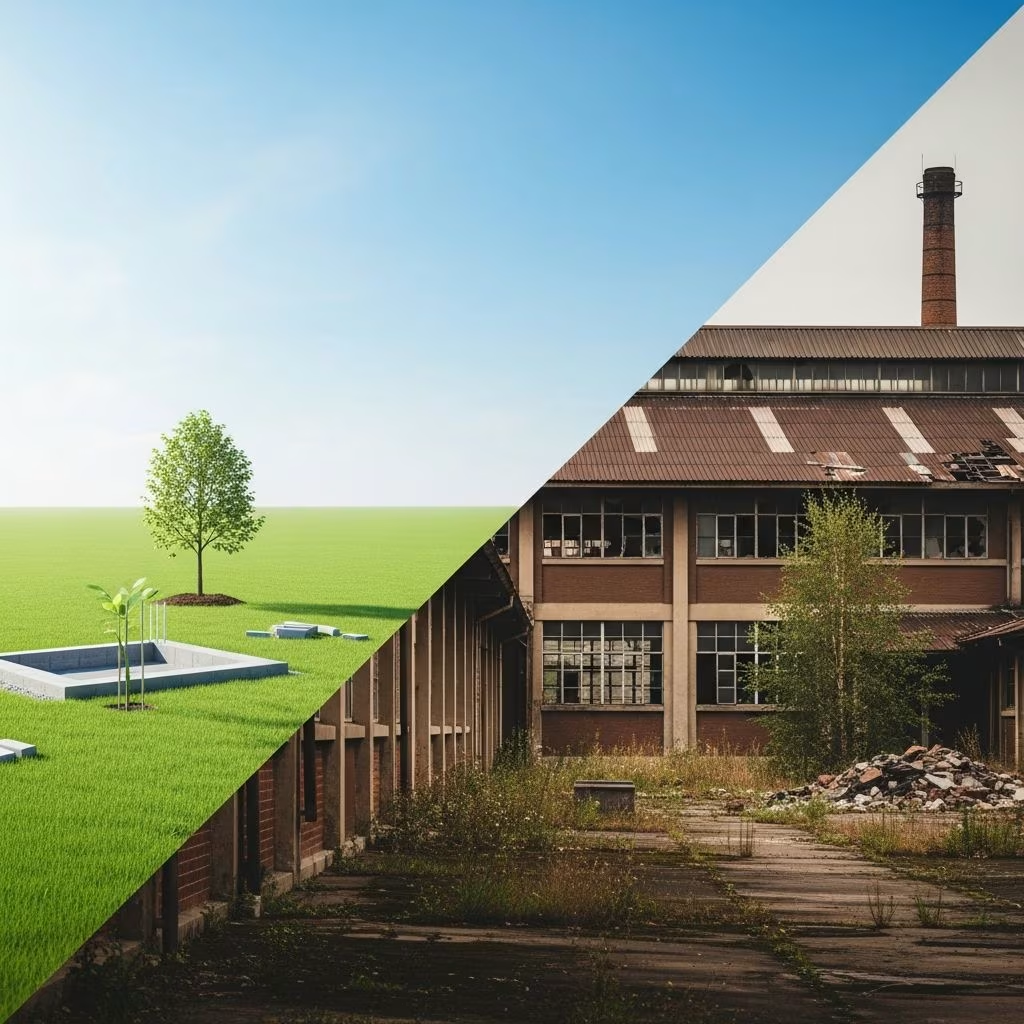
Greenfield investing involves developing new projects on undeveloped or unused land where no previous infrastructure or structures exist. Conversely, brownfield investing focuses on the redevelopment or repurposing of previously used properties, often located in urban areas, which may carry existing structures or potential contamination from prior industrial or commercial activities.
Understanding Greenfield Investments
Greenfield investments represent the process of building an entirely new project from the ground up on land that has not been previously developed. These projects typically occur on vacant or rural land where developers have complete freedom to design and construct infrastructure from inception. Examples of greenfield investments include establishing a new manufacturing facility in an undeveloped area, constructing a solar or wind farm on agricultural land, or building a residential community on previously unused property.
The term “greenfield” itself derives from the concept of virgin land—often appearing as green fields before development begins. Investors pursuing greenfield strategies are essentially creating new economic value by establishing entirely new facilities, infrastructure, and operational systems. This approach allows investors to capitalize on emerging markets or implement innovative technologies without the constraints of existing systems or structures.
Advantages of Greenfield Investing
Customization and Design Flexibility: One of the most compelling advantages of greenfield investments is the unparalleled freedom in design and development. Investors can tailor projects to specific market demands, innovative concepts, and operational requirements. Every aspect—from infrastructure layout to aesthetic design—can be customized to align perfectly with the investor’s vision and strategic objectives. This flexibility enables the creation of optimized facilities designed for minimal maintenance costs and maximum operational efficiency.
Potential for Greater Returns: Greenfield projects often involve entering relatively uncharted territory, creating opportunities to establish new markets or pioneer cutting-edge technologies. Early movers in emerging sectors can capture significant market share and generate substantial returns. For instance, investing in renewable energy infrastructure on undeveloped land positions investors to benefit from growing demand for clean energy solutions.
Modern Infrastructure: Greenfield projects incorporate contemporary technology and infrastructure standards from the outset, eliminating the need to work around outdated or legacy systems. This results in facilities that are inherently future-ready and capable of accommodating technological advancement without major overhauls.
Disadvantages of Greenfield Investing
Higher Initial Capital Requirements: Developing a project from scratch demands substantial upfront investment in infrastructure development. Investors must bear the full cost of constructing roads, utilities, buildings, and all necessary systems. These expenses accumulate rapidly, making greenfield projects significantly more capital-intensive than brownfield alternatives, which can leverage existing infrastructure.
Extended Development Timelines: Building from the ground up is inherently time-consuming. From initial planning and securing regulatory permits to completing construction, greenfield investments often face lengthy development cycles before becoming operational and generating returns. This extended timeline ties up capital for extended periods and delays revenue generation.
Regulatory and Environmental Challenges: Greenfield projects frequently encounter substantial regulatory obstacles, including comprehensive environmental impact assessments and multi-stage approval processes. These requirements can introduce unexpected delays and additional costs, potentially compromising project viability or return projections. Securing necessary permits and environmental clearances requires careful navigation of complex regulatory frameworks.
Geographic Limitations: Greenfield developments are often located in rural or undeveloped areas, frequently positioned at considerable distances from established urban centers where demand is typically highest. This geographic separation can negatively impact profitability, require substantial marketing efforts to establish customer bases, and result in higher transportation or distribution costs.
Understanding Brownfield Investments
Brownfield investing involves the redevelopment or repurposing of previously used land or properties, typically in established urban or developed areas. These sites often have prior industrial, commercial, or residential histories and may contain existing structures. Brownfield sites frequently require remediation or cleanup from previous industrial activities before redevelopment can proceed, though they benefit from established infrastructure and accessibility.
The term “brownfield” historically referred to contaminated industrial sites, though it now encompasses any previously developed property being repurposed for new uses. Examples include converting abandoned factories into residential lofts, transforming old retail spaces into modern offices or mixed-use facilities, or retrofitting manual warehouses into automated logistics centers.
Advantages of Brownfield Investing
Accelerated Development Timelines: Brownfield projects benefit from existing infrastructure and previously developed sites, enabling faster completion compared to greenfield developments. Existing roads, utilities, transportation links, and connectivity infrastructure reduce construction timelines and can accelerate the path to profitability. This faster time-to-market allows investors to begin generating returns sooner.
Strategic Location Benefits: Brownfield sites are predominantly located in established urban or developed areas, providing immediate access to existing markets, communities, and customer bases. These central locations typically offer superior accessibility, established transportation networks, and proximity to consumers or business partners—advantages that can substantially enhance project profitability.
Government Incentives: Many governments actively encourage brownfield redevelopment through tax incentives, grants, and favorable financing programs to stimulate economic growth and environmental remediation. These financial incentives can substantially reduce net project costs and improve overall return on investment.
Infrastructure Leverage: Existing infrastructure represents a significant cost advantage for brownfield projects. Electricity lines, water supply systems, roads, and transportation infrastructure already exist, eliminating the need to build these systems from scratch. This infrastructure reuse generates substantial cost savings compared to greenfield projects.
Disadvantages of Brownfield Investing
Environmental Remediation Costs: Brownfield sites frequently require environmental cleanup and remediation before redevelopment can commence. These costs can be substantial and unpredictable, potentially increasing the project’s total investment beyond initial estimates. Environmental contamination assessment and remediation represent significant financial and legal considerations.
Legacy System Constraints: Brownfield projects often require integration with existing, potentially outdated systems and infrastructure. These legacy systems can create technical debt, limit operational flexibility, and necessitate complex coordination efforts during redevelopment phases. Working around existing constraints requires careful planning and management.
Regulatory Compliance: Brownfield redevelopment involves navigating complex environmental regulations and compliance requirements. Investors must ensure adherence to environmental standards, obtain necessary permits for remediation and construction, and manage potential liability issues associated with historical site contamination.
Land Use Constraints: Brownfield sites frequently face zoning restrictions or land use limitations that may constrain development options. Previous zoning designations or local regulations might restrict certain uses or require expensive rezoning processes, limiting development flexibility compared to greenfield sites.
Comparative Analysis: Greenfield vs Brownfield Investments
| Factor | Greenfield Investment | Brownfield Investment |
|---|---|---|
| Location | Rural or undeveloped areas | Urban or developed areas |
| Infrastructure | Must be built from scratch | Already exists and can be leveraged |
| Initial Capital Requirements | Higher upfront costs | Lower entry costs with existing infrastructure |
| Development Timeline | Longer development cycles | Faster development and faster returns |
| Design Flexibility | Maximum customization options | Limited by existing structures and constraints |
| Environmental Concerns | Environmental impact assessments required | Potential remediation and cleanup costs |
| Market Access | Distance from established markets | Proximity to existing customers and markets |
| Government Incentives | Limited incentives available | Tax incentives and remediation grants |
| Return on Investment | Higher potential returns but longer wait | Quicker returns with lower initial investment |
How to Choose Between Greenfield and Brownfield Investments
Selecting between greenfield and brownfield investments requires careful analysis of multiple factors aligned with your specific circumstances, investment philosophy, and financial capacity.
Assess Your Risk Tolerance: Greenfield projects carry higher risks due to longer development timelines, greater regulatory uncertainty, and larger capital requirements. If you prefer lower-risk investments with quicker returns, brownfield projects typically offer more predictable timelines and established market access. Conversely, if you can tolerate higher risk in exchange for potentially greater long-term returns, greenfield opportunities may align with your objectives.
Evaluate Capital Availability: Consider your available capital and investment timeline. Brownfield projects generally require lower initial capital and generate faster returns, making them suitable for investors with limited capital or shorter investment horizons. Greenfield projects demand substantial upfront investment and extended holding periods, requiring access to significant capital and extended investment timelines.
Analyze Market Conditions: Examine current market trends, demand patterns, and economic conditions in your target sectors. Emerging markets with strong growth potential may favor greenfield investments despite higher risks. Established markets with stable demand typically provide better brownfield opportunities with more predictable returns.
Consider Regulatory Environment: Research the regulatory and environmental landscape in your target locations. Regions with streamlined permitting processes, strong environmental protections, and government development incentives may be more favorable for brownfield projects. Conversely, areas with clear environmental frameworks and minimal regulatory barriers may support greenfield development.
Examine Location Significance: Assess whether proximity to established markets and infrastructure is critical to your project’s success. Urban-focused strategies typically benefit from brownfield redevelopment in accessible locations. Market expansion into new territories may require greenfield development despite geographic disadvantages.
Real-World Investment Scenarios
Renewable Energy Development: An investor interested in capitalizing on surging renewable energy demand might develop a solar or wind farm on unused agricultural land through greenfield investment. This approach requires significant upfront capital for equipment and infrastructure but enables customized system design optimized for minimal maintenance costs and maximum efficiency over decades of operation.
Urban Logistics Expansion: Converting a manual warehouse facility into an automated logistics center through brownfield redevelopment demonstrates how existing infrastructure can be leveraged. Implementing automated material handling systems in an existing facility typically costs less and completes faster than constructing a new facility from scratch in a remote location.
Technology Campus Development: Developing a technology campus in a previously undeveloped area represents a greenfield opportunity offering complete design customization and long-term growth potential. While requiring substantial capital and extended planning, this approach creates a modern, fully integrated facility attracting premium tenants.
Frequently Asked Questions (FAQs)
Q: What is the primary difference between greenfield and brownfield investments?
A: Greenfield investments develop entirely new projects on undeveloped land with no existing infrastructure, while brownfield investments redevelop previously used sites that typically have existing structures and infrastructure but may require remediation or cleanup.
Q: Which type of investment typically requires more capital upfront?
A: Greenfield investments generally require significantly higher upfront capital because investors must build all infrastructure, utilities, roads, and buildings completely from scratch. Brownfield projects leverage existing infrastructure, reducing initial capital requirements.
Q: How do development timelines differ between the two approaches?
A: Greenfield projects typically involve longer development timelines due to planning, permitting, and construction requirements. Brownfield projects generally develop faster because existing infrastructure and structures reduce construction complexity.
Q: What environmental considerations apply to brownfield investments?
A: Brownfield sites may require environmental remediation and cleanup from previous industrial activities. Environmental assessments, remediation costs, and regulatory compliance represent important considerations that can increase project expenses.
Q: Are government incentives available for either investment type?
A: Governments frequently offer tax incentives, grants, and favorable financing for brownfield redevelopment to encourage economic revitalization and environmental cleanup. Greenfield projects typically have fewer government incentives available.
Q: Which investment type offers greater design flexibility?
A: Greenfield investments provide maximum design flexibility because investors build from scratch without existing constraints. Brownfield projects face limitations from existing structures, infrastructure, and zoning regulations.
Q: Which approach typically generates returns faster?
A: Brownfield investments generally produce faster returns due to accelerated development timelines and reduced infrastructure development requirements. Greenfield projects require longer development periods before generating returns despite potentially higher long-term profits.
Q: How should I decide between greenfield and brownfield for my portfolio?
A: Consider your risk tolerance, available capital, investment timeline, market conditions, and location requirements. Brownfield investments suit investors preferring quicker returns with lower initial capital. Greenfield projects suit investors with higher risk tolerance, substantial capital, and longer investment horizons willing to accept higher upfront costs for potentially greater long-term returns.
References
- Greenfield vs Brownfield Investing — The Entrust Group. 2024. https://www.theentrustgroup.com/blog/greenfield-vs-brownfield-investing
- The Difference Between Brownfield and Greenfield Developments — HUD Loans. 2024. https://www.hud.loans/hud-loans-blog/brownfield-vs-greenfield-developments/
- Difference Between Greenfield & Brownfield Investments — Legal Vision. 2024. https://legalvision.co.nz/business-sale-and-purchase/greenfield-and-brownfield/
- Greenfield vs. brownfield logistics projects — Interlake Mecalux. 2024. https://www.interlakemecalux.com/blog/greenfield-vs-brownfield
- Greenfield vs Brownfield IT Projects: Key Differences, Costs and Risks — Naturaily. September 2025. https://naturaily.com/blog/greenfield-vs-brownfield-projects-in-it-differences-pros-cons-and-how-to-lead
This article is general information, not personal financial advice. Consider your own situation, or speak with a licensed adviser, before acting on it.


