

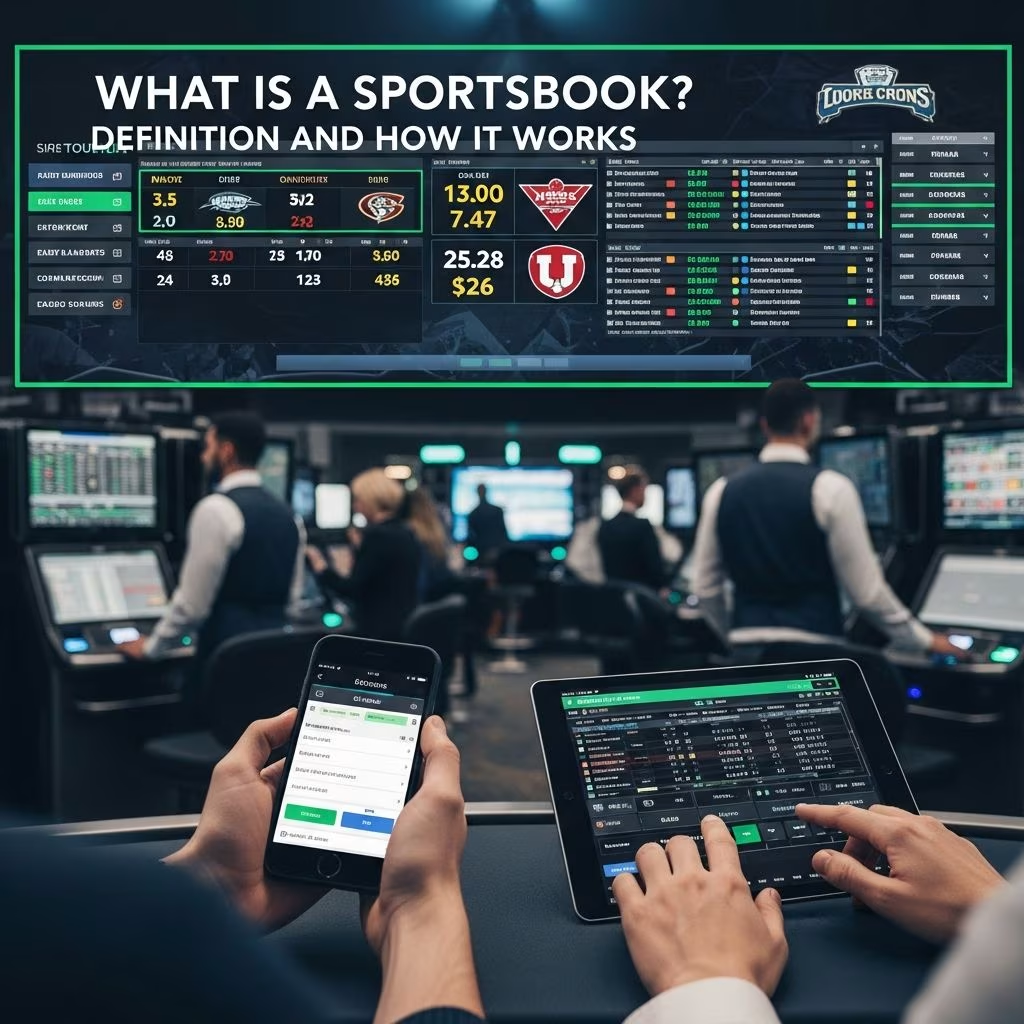
A sportsbook is a business or website that accepts wagers on sporting events and other competitions. It serves as the intermediary between bettors and the outcomes they predict, handling everything from odds setting to payouts. Sportsbooks have evolved significantly over the past two decades, transitioning from exclusively illegal or underground operations to legitimate, regulated businesses in many jurisdictions. Understanding how sportsbooks work is essential for anyone interested in sports betting.
Understanding the Definition of a Sportsbook
A sportsbook is fundamentally a service provider that facilitates sports betting by accepting wagers on the outcomes of sporting events. The term can refer to either a physical location, commonly found in casinos or dedicated betting establishments, or a digital platform accessible through websites and mobile applications. Sportsbooks generate revenue by collecting commissions on losing bets, known as the “vigorish” or “vig,” rather than by betting themselves.
The primary function of a sportsbook is to set odds on various sporting events, manage the flow of money coming in on different sides of a bet, and ensure profitability regardless of the outcome. This is achieved through careful odds adjustment and risk management strategies.
How Sportsbooks Operate
Sportsbooks operate through a carefully balanced system designed to minimize risk while maximizing profit. Here’s how the process typically works:
- Odds Setting: Sportsbooks employ oddsmakers who analyze team statistics, player performance, historical data, and public sentiment to establish initial odds for sporting events. These odds reflect both the probability of an outcome and the sportsbook’s profit margin.
- Money Management: As bets pour in, sportsbooks monitor the distribution of wagers across different outcomes. If too much money is bet on one side, they adjust the odds to encourage more balanced betting, protecting themselves from potential losses.
- Vigorish Collection: Sportsbooks collect a commission (typically 4-5% of the total wagered amount) on losing bets. This commission, called the “juice” or “vig,” represents the primary source of revenue for most sportsbooks.
- Payout Management: When bets are settled, winning bettors receive their payouts according to the agreed-upon odds. The sportsbook retains the collected vigorish and any losses from bettors on the losing side.
Types of Sportsbooks
The sportsbook landscape encompasses several distinct categories, each serving different markets and regulatory frameworks:
Legal and Regulated Sportsbooks
Licensed sportsbooks operate under strict regulatory guidelines established by state or national authorities. These platforms are required to maintain certain standards regarding consumer protection, responsible gambling measures, and financial transparency. Legal sportsbooks operate in jurisdictions where sports betting has been legalized, such as Nevada, New Jersey, Pennsylvania, and other U.S. states.
Online Sportsbooks
Digital platforms have revolutionized sports betting accessibility. Online sportsbooks allow users to place bets from anywhere using computers or mobile applications. Major online operators include DraftKings, FanDuel, BetMGM, and many others. These platforms offer convenience, competitive odds, and frequent promotional offers to attract and retain customers.
Brick-and-Mortar Sportsbooks
Physical sportsbooks located in casinos or dedicated betting establishments provide an immersive betting experience. Customers can place bets in person, watch events on multiple screens, and interact with betting professionals. Las Vegas casinos have long been the epicenter of legal sports betting in the United States.
Offshore and Illegal Sportsbooks
These unlicensed operations exist outside regulatory frameworks, often operating from foreign jurisdictions. While they may offer certain conveniences, they lack consumer protections, are subject to fraud risks, and operate illegally in many regions.
Key Features and Services Offered by Sportsbooks
Modern sportsbooks provide a comprehensive range of features designed to enhance the betting experience:
- Multiple Betting Markets: Sportsbooks offer wagers on numerous sports including football, basketball, baseball, hockey, soccer, tennis, golf, and more. They also provide betting options on non-sporting events like political elections and award shows.
- Diverse Bet Types: Beyond simple win/loss predictions, sportsbooks offer point spreads, moneylines, over/under bets, parlays, prop bets, and live in-game betting options.
- Live Betting: Many sportsbooks now offer real-time in-game betting, allowing customers to place wagers throughout the duration of a sporting event.
- Mobile Applications: Dedicated apps provide seamless betting experiences with user-friendly interfaces, quick deposit and withdrawal options, and push notifications for relevant updates.
- Promotional Offers: Sign-up bonuses, free bets, cashback offers, and loyalty programs are common incentives used to attract new customers and reward regular bettors.
- Live Streaming: Many sportsbooks provide live event streams, allowing customers to watch games while placing bets.
The Business Model of Sportsbooks
The revenue model of sportsbooks is straightforward yet sophisticated. The primary income source is the vigorish or commission collected on losing bets. By maintaining balanced betting action on both sides of a wager, sportsbooks profit regardless of the actual outcome.
For example, if a sportsbook accepts $1,000 in bets on Team A and $1,000 on Team B, the total wagered is $2,000. Regardless of which team wins, the sportsbook retains the vigorish from the losing side’s $1,000 in bets, typically earning a 4-5% commission. This amounts to $40-50 in pure profit with minimal risk exposure.
Sportsbooks also generate secondary revenue streams through promotional offers that bring in new customers, existing customer retention strategies, and premium features or services offered to high-value bettors.
Odds and How They Work
Odds represent the probability of an outcome and determine the potential payout for successful bets. Sportsbooks present odds in three common formats:
American Odds (Moneyline)
Displayed as positive or negative numbers, American odds indicate how much profit a bettor can make on a $100 wager. A -150 odds means you must bet $150 to win $100, while +150 means a $100 bet wins $150.
Decimal Odds
Common in Europe and online sportsbooks, decimal odds represent the total payout including the original stake. Odds of 2.50 mean a $100 bet returns $250 total ($150 profit plus the original $100).
Fractional Odds
Primarily used in the United Kingdom, fractional odds display the ratio of profit to stake. Odds of 3/1 mean a $100 bet returns $300 in profit plus the original $100.
Legal Landscape and Regulation
The legality of sportsbooks varies significantly by jurisdiction. In the United States, the Supreme Court’s 2018 decision in Murphy v. NCAA effectively struck down the federal ban on sports betting, allowing individual states to legalize the practice. Since then, numerous states have established regulated sportsbook markets.
Legal sportsbooks must comply with state-specific regulations covering licensing, consumer protection, data security, responsible gambling measures, and tax obligations. International markets have varying regulatory approaches, with some countries fully legalizing and taxing sports betting, while others maintain strict prohibitions.
The rise of legal sportsbooks has significantly impacted illegal betting markets, though offshore platforms continue to operate despite legal risks for users.
Responsible Gambling and Consumer Protection
Licensed sportsbooks implement various responsible gambling tools and safeguards to protect consumers, including:
- Deposit limits allowing customers to cap their spending
- Time-out periods enabling users to take breaks from betting
- Self-exclusion programs preventing access for individuals with gambling problems
- Age verification systems ensuring only adults can participate
- Educational resources about problem gambling
- Clear terms and conditions regarding odds, payouts, and dispute resolution
Frequently Asked Questions (FAQs)
Q: What’s the difference between a sportsbook and a casino?
A: Sportsbooks specifically accept wagers on sporting events and competitions, while casinos primarily offer games of chance like slots, table games, and poker. Some establishments operate both sportsbooks and casinos.
Q: How do sportsbooks make money?
A: Sportsbooks generate revenue through vigorish (commission) collected on losing bets, typically 4-5% of the wagered amount. By balancing action on both sides of a bet, they profit regardless of the outcome.
Q: Are online sportsbooks safe?
A: Licensed online sportsbooks in regulated jurisdictions maintain security standards and consumer protections. However, offshore platforms lack regulation and present greater risks of fraud or account compromise.
Q: What does a moneyline bet mean?
A: A moneyline bet is a straightforward wager on which team or competitor will win a game or event, displayed using American odds that indicate potential profit on a $100 bet.
Q: Can you make a living from sports betting?
A: While professional bettors exist, consistent profitability requires significant skill, discipline, and bankroll management. Most casual bettors face the statistical advantage built into sportsbook odds.
Q: What is a point spread?
A: A point spread is a handicap sportsbooks use to balance betting action, giving the favored team a negative number (they must win by more than that amount) and the underdog a positive number.
References
- Murphy v. NCAA — U.S. Supreme Court. 2018-05-14. https://www.supremecourt.gov/opinions/17pdf/16-476_dbfi.pdf
- State of Nevada Gaming Control Board Regulations — Nevada Gaming Control Board. 2024. https://gaming.nv.gov/
- Sports Betting: State Legislation and Regulatory Overview — National Conference of State Legislatures. 2024. https://www.ncsl.org/gambling/sports-betting-overview
- Understanding Responsible Gambling Measures — National Council on Problem Gambling. 2024. https://www.ncpg.org/
- The Economics of Sports Betting Markets — Federal Reserve Bank of Philadelphia. 2023. https://www.philadelphiafed.org/
This article is general information, not personal financial advice. Consider your own situation, or speak with a licensed adviser, before acting on it.


