

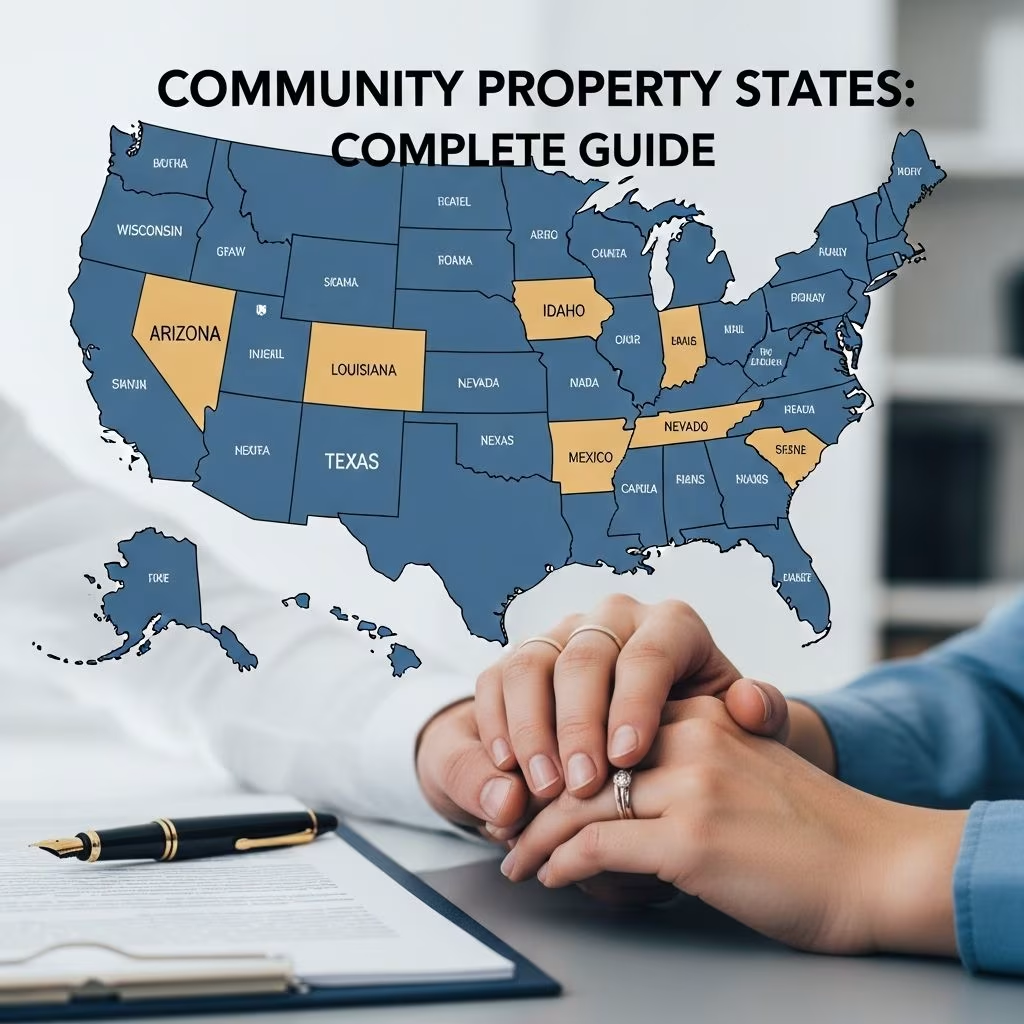
What Are Community Property States?
Community property states are jurisdictions where both spouses have equal ownership rights to assets acquired during marriage, regardless of whose name appears on the title or who earned the income. This fundamental principle distinguishes community property states from common law states, where each spouse typically owns assets acquired separately in their individual name. In community property states, the law presumes that any property or assets accumulated during the marriage belong equally to both spouses, creating what is known as marital or community property.
The concept of community property originated from Spanish and French legal traditions and has been adopted by nine U.S. states. These states operate under the principle that marriage is an economic partnership in which both spouses contribute equally, whether through income generation, household management, or child-rearing responsibilities. This philosophical approach to marital property significantly impacts how assets are divided in divorce proceedings, how estate planning must be structured, and what rights each spouse holds over jointly acquired property.
List of Community Property States
Nine U.S. states are classified as community property states. These jurisdictions have implemented comprehensive legal frameworks to protect the equal ownership interests of both spouses:
- Arizona
- California
- Idaho
- Louisiana
- Nevada
- New Mexico
- Texas
- Washington
- Wisconsin
Additionally, Puerto Rico functions as a community property jurisdiction, and several other states have adopted variations of community property laws. Alaska operates an elective community property system allowing couples to opt into the framework, while Tennessee, Florida, Kentucky, and South Dakota permit couples to convert assets into community property through specific trust arrangements.
What Counts as Community Property?
Community property encompasses a broad range of assets acquired during marriage. Understanding what qualifies as community property is essential for financial planning, divorce preparation, and estate administration:
- Financial assets — Bank accounts, savings accounts, money market accounts, and cash holdings acquired during the marriage
- Real estate — Primary residences, vacation homes, rental properties, and land purchased during the marriage
- Personal property — Vehicles, furniture, artwork, jewelry, and other tangible items accumulated during marriage
- Income earned — Wages, salaries, bonuses, commissions, and all forms of compensation earned by either spouse during the marriage
- Retirement accounts — Individual retirement accounts (IRAs), 401(k) plans, pension plans, and other retirement savings contributed to during the marriage
- Debt acquired — Credit card balances, loans, mortgages, and other financial obligations incurred by either spouse during the marriage
The breadth of community property is significant because it ensures that both spouses receive credit for contributions to the marital estate, even if one spouse was primarily responsible for earning income while the other managed household affairs. This recognition reflects the legal understanding that both roles contribute to marital property accumulation.
What Is Not Community Property?
Not all assets acquired during marriage qualify as community property. Several categories of property remain separate and are not subject to equal division:
- Prenuptial or postnuptial agreements — Property specifically identified and titled separately through written agreements between spouses
- Property from separate property states — Assets acquired while living in common law states generally retain their separate property character, though exceptions may apply depending on state law
- Gifts and inheritance — Property received as gifts from third parties or inherited during the marriage, even if received by one spouse
- Personal injury awards — Damages awarded in personal injury lawsuits, which typically remain the separate property of the receiving spouse
These exclusions are particularly important for individuals with family wealth, business interests, or those who have received significant gifts or inheritances. Proper documentation and titling of separate property is crucial to protect assets from community property characterization during divorce proceedings.
Community Property States vs. Common Law States
The fundamental distinction between community property states and common law states lies in the presumption of ownership following marriage. Understanding these differences is essential for couples relocating between states or contemplating marriage in different jurisdictions.
Common Law State Principles
In common law states (also called equitable distribution states), each spouse retains separate ownership of assets acquired individually during the marriage. There is no automatic right to equal ownership unless both spouses agree to joint titling. However, common law states recognize various titling mechanisms that allow couples to create joint ownership, such as holding property as joint tenants with rights of survivorship. Under this arrangement, when one spouse passes away, the surviving spouse automatically receives the property without probate proceedings, providing a practical benefit similar to community property ownership.
Community Property State Principles
In community property states, the opposite presumption applies. All assets acquired during marriage are presumed to be community property unless one spouse can demonstrate they are separate property. This requires less legal formality than in common law states—couples do not need to take specific steps to create joint ownership because the law presumes it exists. However, this presumption can be modified through prenuptial or postnuptial agreements that specify how property should be characterized and divided.
How Community Property Laws Vary by State
While all community property states share the fundamental principle of equal spousal ownership of marital assets, specific rules and regulations differ significantly:
Domestic Partnership Recognition
Community property law extends to domestic partnerships in California, Nevada, Wisconsin, and Washington, meaning unmarried couples in committed relationships may qualify for community property protections and obligations.
Community Property Trusts
Alaska, Florida, Kentucky, South Dakota, and Tennessee allow couples to establish community property trusts, which convert separately titled assets into community property. This strategy provides significant tax advantages because both spouses’ ownership interests receive a step-up in cost basis at death, potentially reducing capital gains taxes if a surviving spouse sells inherited property. Community property trusts are particularly valuable for high-net-worth couples seeking to minimize tax liability on appreciated assets.
Interstate Movement Rules
When couples relocate between states, property ownership characterization may change based on the new state’s laws:
- Relocating from a community property state to a common law state may end the community property arrangement, potentially converting community property to separate property depending on how title is held
- Moving from a common law state to California, Idaho, Washington, or Wisconsin may automatically convert relocated property into community property under those states’ “quasi-community property” doctrines
- Relocating to Arizona, Louisiana, Nevada, New Mexico, or Texas may not automatically change property ownership unless spouses affirmatively elect to do so
Impact on Estate Planning
Community property laws create significant implications for estate planning that differ substantially from common law states. If you die while residing in a community property state, you cannot bequeath more than one-half of community property acquired during marriage to anyone other than your surviving spouse. This restriction prevents one spouse from unilaterally disinheriting the other through a will or trust, as the surviving spouse automatically retains ownership of their half of the community property.
Additionally, neither spouse can sell, transfer, or give away community property without the other spouse’s written consent. This protection ensures both spouses maintain control over major financial decisions affecting jointly held assets. Couples planning estates in community property states must carefully structure their documents to respect these legal restrictions while achieving their personal objectives for wealth transfer to children, charitable organizations, or other intended beneficiaries.
Frequently Asked Questions
Q: What happens to community property in a divorce?
A: Community property states generally require divorcing couples to divide community property 50/50, with limited exceptions for circumstances like infidelity in some jurisdictions. Separate property remains with the spouse who owns it. Each spouse typically receives exactly half of the marital assets accumulated during the marriage.
Q: Can a prenuptial agreement override community property laws?
A: Yes, prenuptial and postnuptial agreements can modify or override community property presumptions by specifically designating how property should be titled and divided. These agreements must be properly executed with full disclosure and independent legal representation to be enforceable.
Q: If I inherit money during marriage in a community property state, is it community property?
A: No, inherited property remains the separate property of the inheriting spouse and is not subject to equal division in divorce or inclusion in the community property estate, even if acquired during the marriage.
Q: How does community property affect tax filing?
A: Community property can affect income tax reporting, particularly for self-employed spouses or those with investment income. Both spouses may need to report their share of community income on separate tax returns. The step-up in cost basis at death can also provide significant tax benefits for surviving spouses.
Q: Can a couple in a common law state create community property protections?
A: Yes, through community property trusts in states like Alaska, Florida, Kentucky, South Dakota, and Tennessee, couples can convert assets into community property arrangements to gain tax advantages and equal ownership protections otherwise available only in community property states.
Q: What should I do if I move between community property and common law states?
A: Consult with a family law or estate planning attorney to understand how your existing property will be characterized under your new state’s laws and to restructure titles and documents if desired to preserve or modify ownership arrangements.
References
- Community Property States: List and Meaning — NerdWallet. 2024. https://www.nerdwallet.com/estate-planning/learn/community-property
- An Introduction to Marital Property Law — Baylor University School of Law. 2023. https://law.baylor.edu/sites/g/files/ecbvkj1546/files/2023-11/His,%20Her%20or%20Their%20Property%20–%20New%20York%202016.pdf
This article is general information, not personal financial advice. Consider your own situation, or speak with a licensed adviser, before acting on it.


