

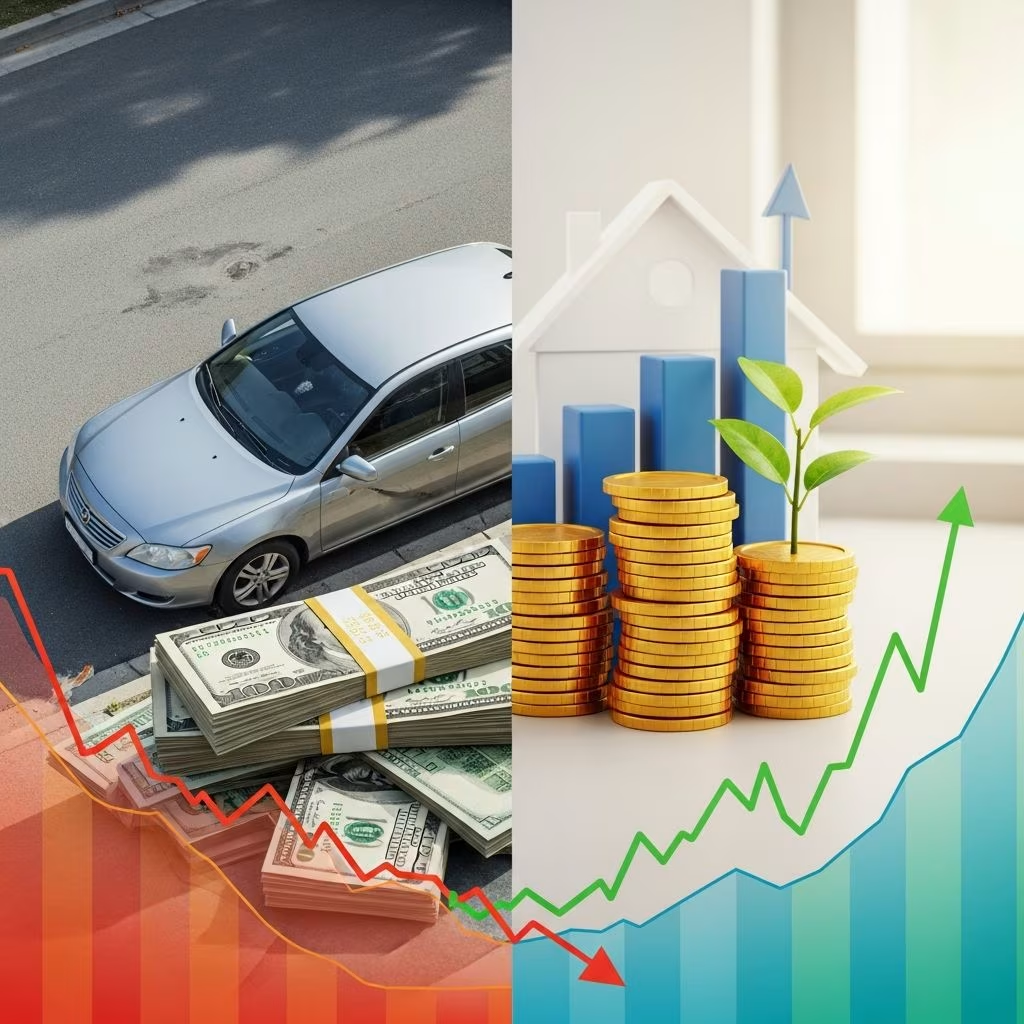
Cars primarily serve as tools for transportation rather than assets that appreciate in value. Unlike stocks or real estate, vehicles depreciate rapidly, making them a poor choice for wealth building in most scenarios. However, understanding total ownership costs, financing options, and market dynamics can help determine if buying aligns with your financial goals.
Understanding Vehicle Depreciation and Value Loss
A new car loses significant value immediately upon purchase. On average, a vehicle can drop 20-30% of its value in the first year alone, with ongoing depreciation continuing over time. This rapid decline means that while you may own the car outright after payments, its resale value diminishes, often leaving you with less than what you’ve invested.
Factors influencing depreciation include make, model, mileage, and market conditions. Reliable brands like Toyota and Lexus tend to hold value better due to their longevity, as evidenced by analyses showing these vehicles frequently exceeding 250,000 miles on the road. In contrast, luxury or less reliable models depreciate faster, amplifying financial losses.
Total Cost of Car Ownership Breakdown
Owning a car involves more than the purchase price. Key expenses include depreciation, interest on loans, insurance, maintenance, fuel, registration, and repairs. Over five years, these can total tens of thousands of dollars, far exceeding the initial sticker price for many buyers.
- Depreciation: The largest cost, often 50-60% of total ownership expenses.
- Financing Interest: Higher rates in 2026 increase loan costs, especially for longer terms.
- Insurance and Maintenance: Rise with vehicle age and repair needs post-warranty.
- Fuel and Tires: Ongoing operational costs that add up based on driving habits.
Compare this to leasing, where payments cover only the depreciation during the term plus fees, resulting in lower monthly outlays but no equity buildup.
Buying vs. Leasing: A Financial Comparison
Deciding between buying and leasing hinges on your driving needs, budget, and timeline. Buying builds equity over time, allowing payment-free use after the loan ends, while leasing offers lower payments and access to newer models but perpetuates ongoing costs.
| Aspect | Buying | Leasing |
|---|---|---|
| Monthly Payments | Higher, covers full principal | Lower, covers depreciation only |
| Ownership | You own the asset eventually | No equity; return at end |
| Mileage Limits | Unlimited | Typically 10,000-12,000/year; fees for excess |
| Long-term Cost (6+ years) | Lower overall | Higher due to repeated leases |
| Maintenance | Your responsibility post-warranty | Often included initially |
For high-mileage drivers or those keeping cars over six years, buying proves more economical. Leasing suits those preferring new features every few years with predictable costs.
2026 Auto Market Trends Impacting Decisions
Vehicle sales intent remains strong, with 39% of U.S. adults planning purchases in 2026, mostly within the next year. This demand, coupled with trade-ins from 65% of buyers, could boost used car supply. However, new car prices stay elevated, pushing many toward used options averaging below $35,000, far under new vehicle transaction prices.
Leasing rates dipped to 23% of purchases from 32% in 2019, reducing future used inventory from returns. Consumers now retain vehicles nearly a year longer on average, tightening supply and sustaining higher used prices. North American sales may dip to 19.3 million units amid affordability pressures and anticipated tariffs.
Financing Considerations in a High-Interest Environment
Auto loan rates significantly affect affordability. In 2026, elevated rates amplify total costs for financed purchases. Shorter loan terms reduce interest but raise monthly payments, while longer terms ease cash flow at the expense of higher overall interest.
Younger generations like Gen Z and Millennials favor leasing (17% intent) over older cohorts (7% for Boomers), valuing flexibility amid economic uncertainty. Super prime and subprime borrowers drive originations, but affordability challenges persist.
Strategies to Minimize Financial Losses
To make car ownership less burdensome:
- Opt for used cars 2-3 years old to bypass initial depreciation hit.
- Choose reliable models with strong resale value.
- Pay cash if possible to avoid interest.
- Drive fewer miles to preserve value.
- Shop during incentives or off-peak times.
Calculate total cost of ownership tools from reputable sources help compare scenarios accurately.
Alternatives to Traditional Car Ownership
Subscription services, car-sharing like Zipcar, or public transit reduce ownership needs. For occasional use, these options cut costs dramatically. Electric vehicles and hybrids gain traction, with global electrified sales projected at 30% by 2026, though adoption slows due to policy shifts.
FAQs
Does a car ever appreciate in value?
Rarely for standard consumer vehicles; collectibles or limited editions may, but everyday cars depreciate.
Is leasing cheaper than buying long-term?
No; two three-year leases cost more than buying and owning for six years, per ownership analyses.
How does mileage affect costs?
High mileage lowers resale value for owned cars and incurs fees on leases.
Are EVs better investments?
They depreciate similarly but offer incentives; hybrids rise in popularity amid stalling BEV adoption.
When is buying the best choice?
For drivers keeping cars 6+ years or exceeding 12,000 miles annually.
Key Takeaways for Smart Vehicle Decisions
Prioritize needs over wants: Assess mileage, retention plans, and budget. Buying suits long-term ownership; leasing fits frequent upgrades. In 2026’s market, used cars offer value amid high new prices and supply constraints. Always compute five-year costs before committing.
References
- Buying or Leasing a Car in 2026: Which Makes the Best Financial Sense for You? — Consumer Reports. 2026. https://www.consumerreports.org/cars/buying-a-car/leasing-vs-buying-a-new-car-a9135602164/
- Consumer Auto Survey Feb 2026: High Purchase Intent Points to Increased Vehicle Sales — TransUnion. 2026-02. https://newsroom.transunion.com/consumer-auto-survey-feb-2026/
- DCG Used Car Insight Brief 2025: The 2026 Used Car Market Will Challenge Franchise Dealers — Dave Cantin Group. 2025. https://www.davecantingroup.com/dcg-used-car-insight-brief-2025
- Five Predictions for the 2026 Automotive Industry Outlook — S&P Global. 2026-01. https://www.spglobal.com/automotive-insights/en/blogs/2026/01/five-predictions-2026-automotive-industry-outlook
- Automotive Industry Outlook 2026 — PwC. 2026. https://www.pwc.com/us/en/industries/industrial-products/library/automotive-industry-outlook.html
This article is general information, not personal financial advice. Consider your own situation, or speak with a licensed adviser, before acting on it.


