

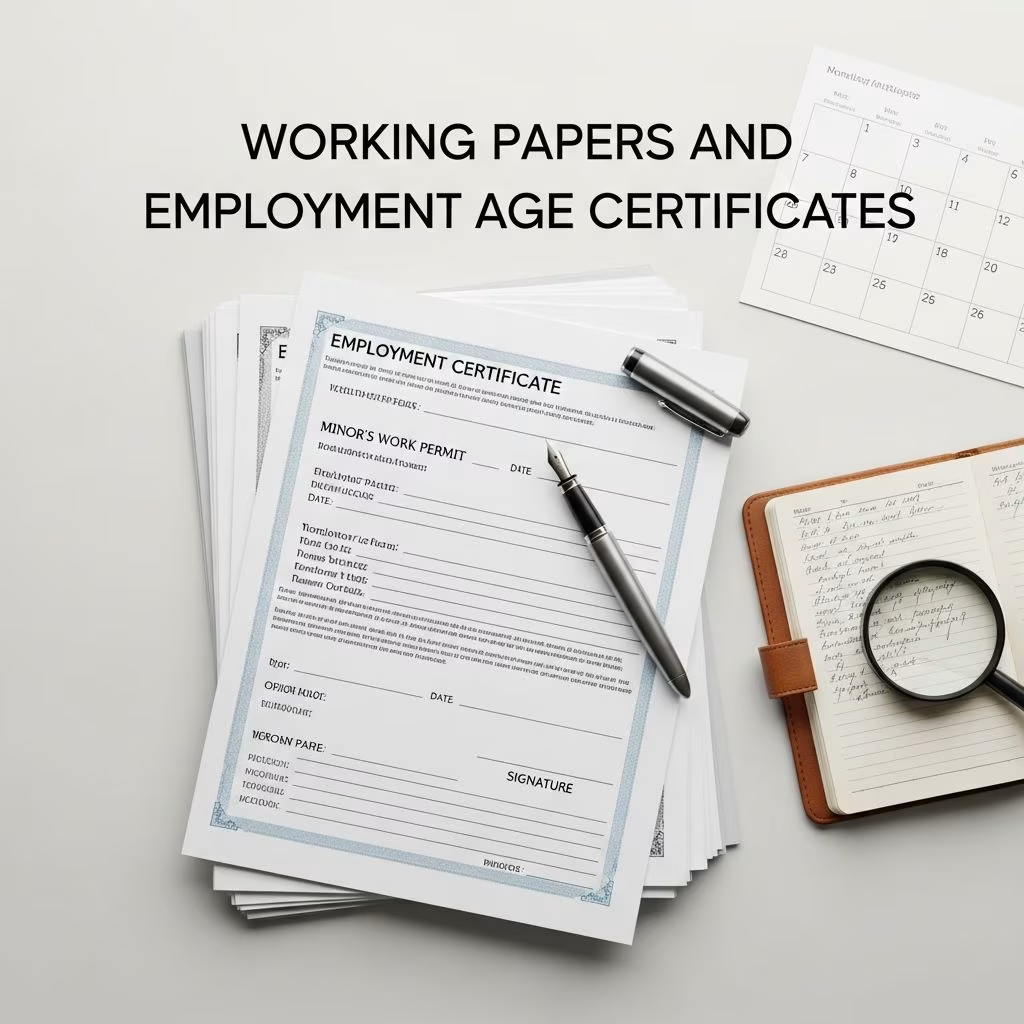
Understanding Working Papers and Employment Age Certificates
Working papers, also called employment certificates or age certificates, serve as official documentation that minors meet their state’s legal requirements for employment. These documents are a critical component of child labor protections in the United States, ensuring that young workers are employed in safe conditions with appropriate working hour restrictions. Understanding the purpose, types, and application process for these certificates is essential for both employers and teen workers seeking to enter the workforce.
The fundamental purpose of working papers is to verify that a minor meets the minimum age requirement for employment and that their employment complies with applicable child labor laws. Different states maintain varying requirements regarding who needs working papers, what age groups are affected, and how these documents are obtained and maintained.
What Are Working Papers?
Working papers, formally known as employment certificates, are legal documents issued by state labor departments or school systems that authorize a minor to work in a particular state. These documents confirm that a young employee meets the state’s minimum age requirements for employment and that their employer has verified their identity and age through official documentation.
Employment certificates typically include information about the minor’s identity, age, employer information, and the types of work the minor is authorized to perform. The certificate may also contain restrictions on hours worked, particularly for younger employees, and prohibit certain types of hazardous or prohibited employment.
The key distinction between working papers and age certificates is important to understand. While both documents serve related purposes, employment certificates often provide more comprehensive information about employment eligibility and restrictions, whereas age certificates simply provide proof of age. Some states require both documents, while others require only one or the other depending on the minor’s age and employment situation.
Why Are Employment Certificates Required?
Employment and age certificates exist as a direct result of child labor protection laws established to safeguard young workers. These certificates serve multiple important functions in protecting minors in the workplace.
Age Verification and Compliance: The primary function of working papers is to verify that a minor meets the minimum age requirement for employment. By requiring official documentation of age, states ensure that employers do not illegally employ children below the minimum working age, which in most states is 14 years old.
Work Restrictions and Safety: Employment certificates detail the types of work a minor is permitted to perform. Minors are prohibited from working in certain industries or performing specific dangerous tasks, such as operating heavy machinery, working with hazardous materials, or performing construction work. These certificates outline exactly what work is permissible for each age group.
Hour Restrictions: Working papers establish limits on the number of hours minors can work during school days and during school vacation periods. These restrictions ensure that employment does not interfere with a minor’s education and that young workers receive adequate time for rest and educational pursuits.
Employer Accountability: By requiring working papers, states hold employers accountable for following child labor laws. Employers who hire minors without proper documentation face potential fines and penalties, creating a strong incentive for compliance.
Types of Employment Certificates
Different types of employment certificates exist to accommodate various employment situations and age groups. The specific types available vary by state, but several common categories are widely used.
Standard Employment Certificates
Standard employment certificates, also called vacation or part-time certificates, permit minors between 14 and 16 years of age to work during school vacation periods, on days when school is not in session, or outside school hours on school days. These certificates allow young workers to gain employment experience while maintaining their educational responsibilities.
Work-Training Certificates
Work-training certificates are specifically designed for minors enrolled in school-sponsored work-training programs. These certificates allow employment during school hours when the minor is participating in a formal agreement between the employer and the school. To qualify, there must be a written agreement between the employer and the school that meets specific legal requirements, ensuring that the employment is educational in nature and properly supervised.
Age Certificates
Age certificates serve as proof of age and are typically issued to workers age 16 and older. Unlike employment certificates, age certificates simply verify a worker’s age without necessarily detailing work restrictions or hour limitations. Many employers request age certificates as part of the hiring process to comply with industry standards or legal requirements specific to certain types of work.
Full-Time Employment Certificates
Some states issue full-time employment certificates to minors age 16 and 17 who have left school or are not attending school. These certificates permit full-time employment and generally allow work in a wider range of industries than part-time certificates, though certain hazardous occupations remain restricted.
State-Specific Requirements and Variations
While working papers serve a similar purpose across all states, the specific requirements, application processes, and age brackets vary significantly by jurisdiction. Understanding your state’s particular requirements is essential for both employers and young workers.
Virginia
In Virginia, minors under the age of 16 must obtain an employment certificate before their first day of employment. Three key documents are required for an employment certificate: Permission to Employ (filled out by the parent, guardian, or custodian), Proof of Age (verified by the employer using a birth certificate, baptismal record, or other official document), and the employment certificate itself issued by the appropriate authority.
Virginia recognizes two primary types of employment certificates: vacation or part-time certificates, which permit employment only during school vacation periods or outside school hours, and work-training certificates, which permit employment during school hours when enrolled in a qualifying school work-training program.
New York
New York State color-codes working papers based on the minor’s age and school status. Fourteen and fifteen-year-old workers receive blue working papers, which restrict them from factory work. Workers ages 16 and 17 who are still in school receive green working papers, which permit factory employment but restrict hazardous activities such as operating certain machinery or performing construction work. Young workers ages 16 and 17 who have left school receive salmon-colored papers permitting full-time employment with similar restrictions on hazardous work.
In New York, the original employment certificate must be provided to the employer and returned at the end of employment. Employers are not permitted to accept or retain photocopies of working papers, ensuring document authenticity and proper tracking.
West Virginia
West Virginia requires age certificates for all 14 and 15-year-olds before accepting employment. The age certificate form serves as both the application and the certificate itself. For 14 and 15-year-olds, the employer, parent, and school registrar must complete their respective sections before submission to the Division of Labor. For 16 and 17-year-olds seeking age certificates, only the employer and minor need to complete the form.
Maryland
Maryland requires work permits for all minors under 18, with different restrictions based on age brackets. The state uses an Electronic Application Registration System (EARS) for permit applications. Applicants must provide proof of age, and for minors under 16, parental or guardian consent is required as part of the application process.
Required Documentation and Application Process
The specific documentation and application process for obtaining working papers varies by state, but several common requirements appear across most jurisdictions.
Proof of Age
All states require official proof of age as part of the application process. Acceptable documents typically include birth certificates, baptismal records, driver’s licenses, passports, or other official government-issued identification. The employer or school official receiving the application verifies this documentation and includes a statement confirming the age verification in the employment certificate.
Parental Consent
For minors under 16, parental or guardian consent is typically required as part of the application process. Parents or guardians must complete a permission form authorizing employment and, in some cases, must appear in person to provide consent, particularly when the minor is seeking full-time employment or has dropped out of school.
Employer Information
The prospective employer must provide information about the job position, including the nature of work to be performed, hours of work per day and per week, and specific job duties. This information allows school officials and labor department representatives to verify that the employment complies with restrictions on hazardous or prohibited work for the minor’s age group.
School Status Verification
For younger workers, verification that the minor is currently enrolled in and attending school is often required. This ensures that employment will not interfere with educational responsibilities and that appropriate hour restrictions are applied.
Who Issues Working Papers?
Working papers are issued by various authorities depending on the state. Most commonly, employment certificates are issued by school systems, with school guidance counselors or designated school officials handling the application and issuance process. In some states, the labor department or a specific child labor division handles certificate issuance. Understanding which agency in your state issues working papers is important for the application process.
Changing Jobs and Age Transitions
When a young worker transitions from one age bracket to another or changes employers, specific procedures must be followed regarding working papers.
As minors progress through different age ranges, their working papers must be updated to reflect new permissions and restrictions. For example, when a worker turns 16 in New York, they must exchange their blue 14-15 year-old working papers for green 16-17 year-old working papers, which permit factory employment. This transition typically occurs through the school guidance office or nearest school where updated working papers are issued.
When starting a new job, minors must provide their current employment certificate to the new employer. Employers cannot accept photocopies; the original document must be provided. If a minor loses their working papers, they must return to their school or the issuing authority to obtain a duplicate copy before beginning work.
Restrictions on Minors’ Employment
Working papers detail specific restrictions on the types of work minors can perform. These restrictions are based on safety considerations and child labor protection laws.
Age 14-15 Restrictions: Younger minors face the most restrictive employment limitations. They typically cannot work in factories, cannot perform construction work, and cannot operate certain machinery. Additionally, they face strict hour limitations, particularly during the school year.
Age 16-17 Restrictions: Minors age 16 and 17 generally have fewer restrictions than younger workers. However, they still cannot perform certain hazardous activities, including operating certain machinery, performing construction work, helping on motor vehicles, or cleaning and adjusting machinery belts.
Hazardous Work Prohibitions: Across all age groups, certain types of hazardous work are prohibited, including work involving dangerous chemicals, explosives, or radioactive materials. These prohibitions exist regardless of working paper status and reflect fundamental child labor protections.
Frequently Asked Questions About Working Papers and Employment Certificates
Q: At what age can I start working and obtain working papers?
A: In most states, minors can begin working and obtain working papers at age 14. However, some states permit employment at younger ages in certain circumstances, such as agricultural work or work in family businesses. Check your specific state’s requirements for exact age minimums.
Q: Do I need working papers if I work for my family business?
A: Requirements vary by state. Some states have exemptions or reduced requirements for minors working in family businesses. Check your state’s specific regulations, as some states may still require working papers even for family employment.
Q: What happens if my employer hires me without working papers?
A: Employers who hire minors without required working papers face potential fines, penalties, and legal consequences. As an employee, you should not work without proper documentation, as this leaves you without the legal protections that working papers provide.
Q: How long are working papers valid?
A: Most working papers are valid for the duration of employment with a specific employer. When you change jobs, you must provide the original working papers to your new employer. Some states issue working papers valid for a specific time period regardless of employment status.
Q: Can employers keep a copy of my working papers?
A: No. In most states, employers cannot retain or photocopy working papers. The original document must be returned to the employee at the end of employment or when the employee leaves the position.
Q: What if I lose my working papers?
A: Contact the school or labor department that issued your working papers and request a duplicate. You will need to provide proof of your identity and may need to complete an application for a replacement certificate.
Q: Do I need an age certificate if I’m 16 or 17 and still in school?
A: This depends on your state. Some states require different types of working papers for different ages and school statuses. Check your state’s specific requirements to determine what documentation you need.
Q: Are there exemptions to working paper requirements?
A: Some states provide exemptions for certain types of work, such as agricultural employment, work in family businesses, self-employment, or volunteer positions. Check your state’s labor laws for specific exemptions.
Employer Responsibilities Regarding Working Papers
Employers have specific legal responsibilities regarding working papers and employment compliance. Employers must verify that any minor applicant has obtained required working papers before employment begins. They must review the working papers to confirm the minor’s age and verify that the proposed employment complies with restrictions outlined in the certificate. Employers cannot accept photocopies or damaged certificates and should maintain records of all working papers they have received. Additionally, employers must ensure that working hours comply with state restrictions and that no minor is assigned to work prohibited by their employment certificate.
Conclusion
Working papers and employment age certificates represent an essential component of child labor protections in the United States. These documents ensure that young workers are employed safely, with appropriate hour restrictions and job limitations that reflect their developmental stage and educational needs. Whether you are a teen seeking your first job, a parent supporting your child’s employment, or an employer hiring young workers, understanding the requirements, types, and regulations surrounding working papers is critical for legal compliance and worker protection. Each state maintains specific requirements, so consulting your state’s labor department or school system is essential for accurate, current information about obtaining and maintaining proper working paper documentation.
References
- Teens and Employment – Virginia Rules — Virginia Rules, accessed 2025. https://virginiarules.org/varules_topics/teens-and-employment/
- Working Papers — New York State Department of Labor, accessed 2025. https://dol.ny.gov/working-papers
- Child Labor FAQ — West Virginia Division of Labor, accessed 2025. https://labor.wv.gov/Wage-Hour/Child_Labor/Pages/Child-Labor-FAQs.aspx
- Employment of Minors (Work Permit) — Maryland Department of Labor, accessed 2025. https://labor.maryland.gov/labor/wages/empm.shtml
- Employment/Age Certificate — U.S. Department of Labor, accessed 2025. https://www.dol.gov/agencies/whd/state/age-certificates
- Work Permits for Minors: What You Need to Know — Nolo, accessed 2025. https://www.nolo.com/legal-encyclopedia/work-permits-for-minors-what-you-need-to-know.html
- Work Permits and Age Certificates — Oracle, accessed 2025. https://docs.oracle.com/cd/E66143_01/doc.850/e77654/c_hr_admin_workpermit_and_agecertificate.htm
This article is general information, not personal financial advice. Consider your own situation, or speak with a licensed adviser, before acting on it.


