

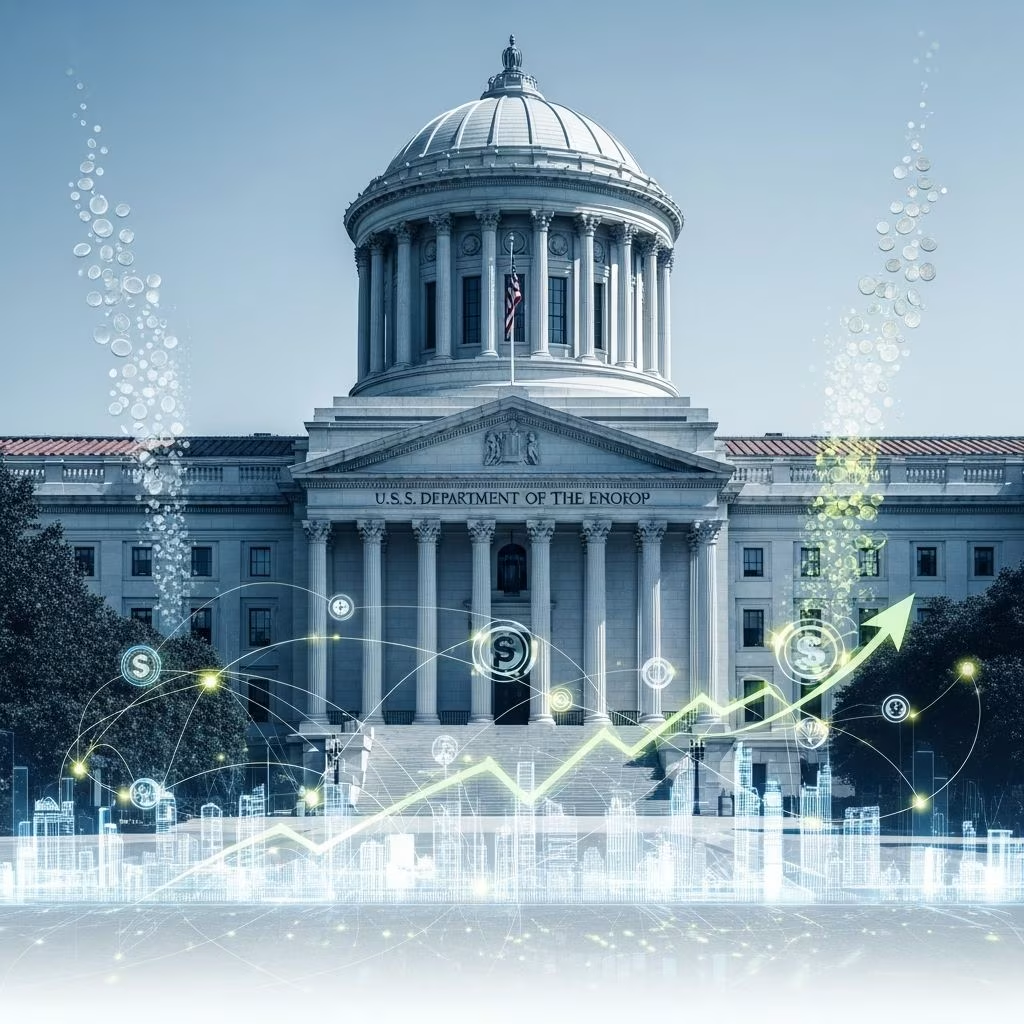
Understanding the U.S. Department of Treasury
The U.S. Department of the Treasury stands as one of the most critical institutions in the American government, serving as the primary federal agency responsible for promoting the prosperity and stability of the U.S. economy. Established in 1789, the Treasury Department has evolved into a comprehensive financial management organization that touches nearly every aspect of American economic life. From managing federal finances to collecting taxes and producing currency, the Treasury Department plays an indispensable role in maintaining the financial health and security of the nation.
At its core, the Treasury Department’s mission is to maintain a strong economy and create economic and job opportunities by promoting the conditions that enable economic growth and stability both domestically and internationally. The Department also strengthens national security by combating financial threats and protecting the integrity of the financial system. This multifaceted approach reflects the Treasury’s understanding that economic security is intertwined with national security and global prosperity.
Core Mission and Responsibilities
The Treasury Department’s fundamental purpose is to manage the U.S. Government’s finances and resources effectively while promoting economic prosperity. The Department accomplishes this through a comprehensive range of activities that directly impact every American’s daily life.
The basic functions of the Treasury Department include managing federal finances, collecting taxes, duties, and monies owed to the United States, and paying all bills the U.S. government owes to other nations and entities. Additionally, the Department produces currency and coinage, manages government accounts and the public debt, supervises national banks and thrift institutions, and advises the President and other branches of government on financial and tax-related policies. The Treasury also enforces federal finance and tax laws, investigates and prosecutes tax evaders, and assists in investigating counterfeiters.
These responsibilities are carried out to ensure that the federal government operates with transparency and fiscal responsibility while maintaining public confidence in the nation’s financial systems. The Treasury forecasts the federal government’s fiscal needs, collects money due to the United States through various revenue sources, and disburses payments owed by the government, including interest payments, Social Security benefits, and Medicare payments.
Key Functions and Operations
Currency Production and Management
One of the Treasury Department’s most visible responsibilities is producing safe, secure, cost-effective, and high-quality U.S. currency notes and coins that are readily accepted by all users. The Department oversees the Bureau of Engraving and Printing and the U.S. Mint, two federal agencies that work in tandem to ensure adequate currency circulation throughout the domestic fiscal system. This function is essential for facilitating commerce and maintaining economic stability, as reliable currency forms the foundation of all financial transactions within the nation.
Tax Collection and Revenue Management
The Internal Revenue Service (IRS), one of the Treasury Department’s most well-known bureaus, is responsible for assessing and collecting internal revenue and federal taxes. Through this function, the Treasury collects billions of dollars annually that fund government operations, defense, infrastructure, social programs, and countless other initiatives. The efficiency and fairness of tax collection directly impact economic growth and public confidence in government institutions.
Federal Financial Management
The Treasury operates and oversees the government’s central financial accounting and reporting system, which is critical to ensuring proper management of the nation’s finances and maintaining public confidence in the U.S. government. The Department collects, analyzes, and publishes government-wide financial information that is used by the federal government to establish fiscal and debt management policies. Both the public and private sectors rely on this vital information to monitor the government’s financial status, which informs their business decisions and economic strategies.
National Bank Supervision
The Treasury Department supervises national banks and thrift institutions to ensure their stability and compliance with federal regulations. This oversight helps maintain a stable financial system and protects consumers’ deposits and interests. By regulating these institutions, the Treasury helps prevent financial crises and maintains confidence in the banking system.
Combating Financial Crimes
The Financial Crimes Enforcement Network (FinCEN) operates under the Treasury Department’s purview, focusing on combating money laundering, terrorist financing, and other financial crimes. This bureau plays a critical role in safeguarding the integrity of the financial system and protecting national security by identifying and disrupting various threats to the financial infrastructure.
Organizational Structure
The Department of the Treasury is organized into two major components: the Departmental Offices and the Operating Bureaus. The Departmental Offices are primarily responsible for formulating policy and managing the Department as a whole. These offices handle strategic planning, policy development, and overall departmental management.
The Operating Bureaus carry out the specific operations assigned to the Department and make up approximately 98 percent of the Treasury workforce. Key operating bureaus include:
Internal Revenue Service (IRS): Manages the assessment and collection of federal taxes from individuals and businesses.
Bureau of Engraving and Printing: Produces all U.S. paper currency and other official documents and security materials.
U.S. Mint: Manufactures coins and manages their circulation within the economy.
Financial Crimes Enforcement Network (FinCEN): Combats money laundering, terrorist financing, and other financial crimes.
Alcohol and Tobacco Tax and Trade Bureau (ATTB): Regulates alcohol and tobacco products and producers to ensure American businesses operate fairly in a competitive marketplace.
Office of Inspector General: Provides independent oversight to ensure the Department operates efficiently and without corruption.
Economic Impact and Influence
Fiscal Policy and Economic Stability
The Treasury Department plays a vital role in formulating and implementing fiscal policy alongside the Federal Reserve. Through its management of federal spending, taxation, and borrowing, the Treasury influences inflation rates, employment levels, and overall economic growth. The Secretary of the Treasury formulates and recommends domestic and international financial, economic, and tax policies that shape the economic landscape.
The Department’s ability to manage the public debt effectively is particularly important. By issuing Treasury bonds, bills, and notes, the Department raises funds necessary to run the federal government and manages the nation’s debt obligations. These actions directly influence interest rates and borrowing costs throughout the economy.
Global Economic Leadership
The Treasury Department works with other federal agencies, foreign governments, public stakeholders, and international financial institutions to encourage global economic growth, raise standards of living, and anticipate and mitigate the consequences of economic and financial crises. This international engagement positions the United States as a leader in shaping global financial policies and standards.
National Security Through Financial Measures
The Treasury Department performs a critical role in enhancing national security through financial and economic intelligence analysis, action, and oversight. By identifying and disrupting financial support networks of national security threats and implementing economic sanctions against foreign adversaries, the Treasury protects the international financial system from abuse and strengthens American security interests.
Strategic Objectives and Government Accountability
The Treasury Department pursues several strategic objectives that guide its operations and priorities. A primary objective is improving the efficiency and transparency of federal financial management and government-wide accounting. This commitment ensures that taxpayer dollars are spent responsibly and that the government maintains the trust and confidence of the American people.
In this role, the Treasury executes billions of transactions each year. The safety, security, efficiency, and reliability of these transactions are paramount to maintaining public trust and improving the management of the nation’s finances. By providing transparent reporting of government financial status, the Treasury enables informed decision-making by both government officials and private sector stakeholders.
How the Treasury Department Affects Your Life
While many Americans rarely think about the Treasury Department directly, its actions profoundly affect daily life. The currency in your wallet, the taxes withheld from your paycheck, the Social Security benefits received by retirees, and the interest rates on loans and savings accounts are all influenced by Treasury Department decisions and policies. During economic downturns, the Treasury may stimulate the economy through tax cuts or increased spending. During inflationary periods, the Department may adopt more restrictive fiscal policies. These actions ripple throughout the economy, affecting employment, prices, investment returns, and overall financial well-being.
Frequently Asked Questions
Q: When was the U.S. Department of Treasury established?
A: The Treasury Department was established in 1789, making it one of the oldest federal agencies in the United States.
Q: Who leads the Department of Treasury?
A: The Secretary of the Treasury leads the Department. This Cabinet-level position is responsible for formulating and recommending domestic and international financial, economic, and tax policy.
Q: How much money does the Treasury collect annually?
A: The Treasury collects billions of dollars in federal taxes and other revenue each year. The exact amount varies based on economic conditions and tax policies, but federal revenues typically exceed $4 trillion annually.
Q: What is the Treasury Department’s role in preventing financial crimes?
A: Through the Financial Crimes Enforcement Network (FinCEN) and other bureaus, the Treasury identifies and disrupts money laundering, terrorist financing, and other financial crimes that threaten the integrity of the financial system.
Q: How does the Treasury Department influence interest rates?
A: While the Federal Reserve directly sets interest rates, the Treasury influences them through its management of government borrowing and spending, which affects demand for credit and the overall economy.
Q: What is the Treasury’s role in international economics?
A: The Treasury works with foreign governments and international financial institutions to promote global economic growth, stability, and development while protecting American economic interests.
References
- Role of the Treasury — U.S. Department of the Treasury. 2024. https://home.treasury.gov/about/general-information/role-of-the-treasury
- Organization and Functions — U.S. Department of the Treasury. 2024. https://home.treasury.gov/about/history/history-overview/organization-and-functions
- Duties and Functions FAQs — U.S. Department of the Treasury. 2024. https://home.treasury.gov/subfooter/faqs/duties-and-functions-faqs
- U.S. Treasury Department — EBSCO Research Starters. 2024. https://www.ebsco.com/research-starters/politics-and-government/us-treasury-department
- Department of the Treasury – Performance.gov — Office of Management and Budget. 2024. https://obamaadministration.archives.performance.gov/agency/department-treasury.html
This article is general information, not personal financial advice. Consider your own situation, or speak with a licensed adviser, before acting on it.


