

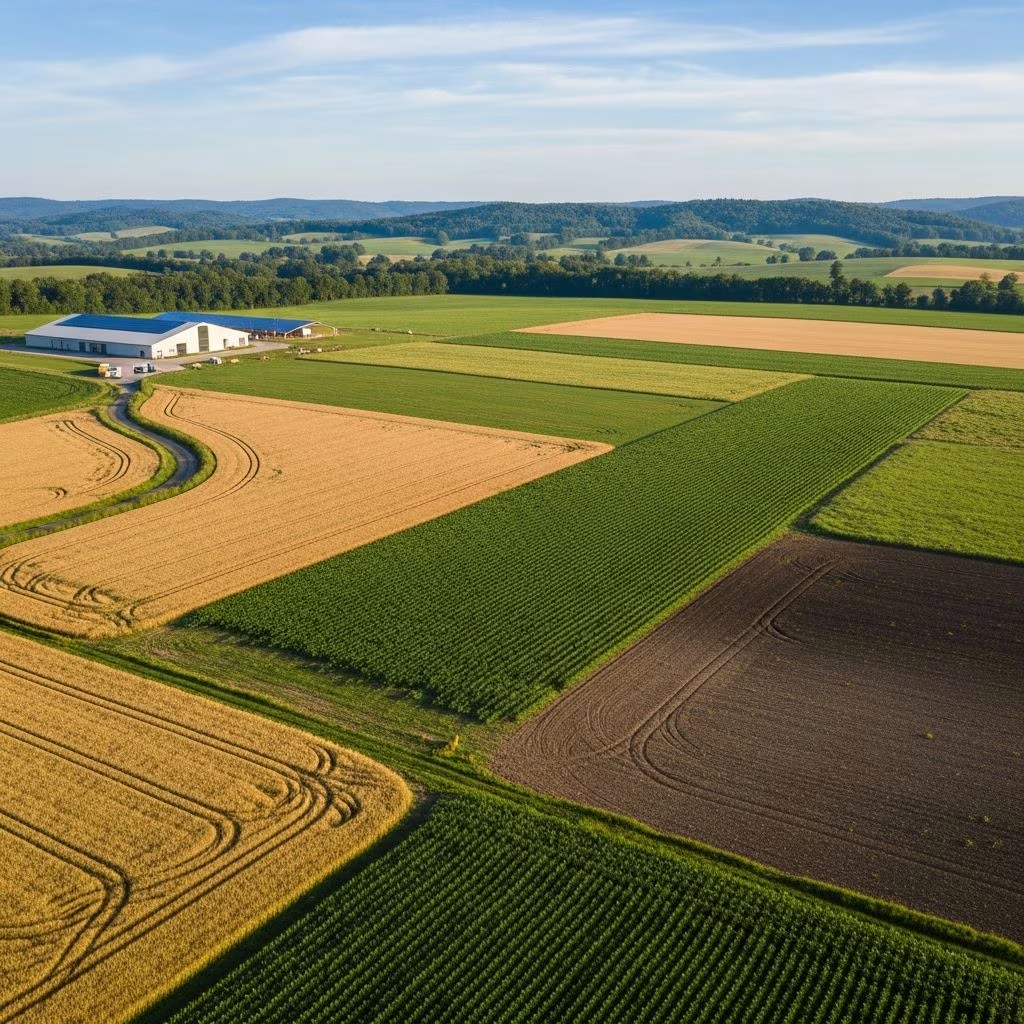
What is FarmTogether?
FarmTogether is an online investment platform founded in 2017 that enables accredited investors to participate in farmland ownership across the United States. The platform leverages technology and data science to democratize agricultural investing, which was historically available only to those with substantial capital or industry connections. By utilizing crowdfunding mechanisms, FarmTogether allows investors to own fractional shares of high-quality farmland properties, starting with relatively modest minimum investments compared to direct farmland purchases.
The company’s mission centers on removing barriers to farmland investment while offering competitive pricing to farmers and maintaining flexible deal structures. FarmTogether manages all aspects of property acquisition, due diligence, and ongoing oversight, positioning itself as a passive investment vehicle. This means investors can gain exposure to agricultural real estate without the operational responsibilities typically associated with farm ownership.
How FarmTogether Works
FarmTogether operates through a straightforward investment model designed for ease of use. The platform sources farmland investment opportunities, conducts rigorous due diligence, and presents vetted deals to accredited investors through its online portal. Investors can research properties, review financial projections, and fund investments directly through the website.
Once you invest in a specific farmland opportunity, you become a fractional owner of that property. FarmTogether handles farm management, lease negotiations, maintenance, and property operations. The company generates returns through agricultural production and potential land appreciation, which are passed to investors as dividends. These distributions typically occur on a quarterly, semi-annual, or annual basis, depending on the specific investment terms, and are deposited directly into investor bank accounts.
Investment Options and Products
FarmTogether offers multiple investment structures to accommodate different investor preferences and capital levels:
Crowdfunding Offerings
These fractional ownership opportunities represent the most accessible entry point, with minimum investments starting at $15,000. Crowdfunding offerings allow multiple investors to collectively own individual farmland properties, sharing both the risks and rewards. Properties typically focus on high-value permanent crops like almonds, avocados, and mandarins, primarily located in prime West Coast growing regions where climate and soil conditions optimize agricultural productivity.
Sustainable Farmland Fund
For investors seeking diversified exposure rather than individual property ownership, the Sustainable Farmland Fund provides access to a portfolio of multiple farmland assets. This option requires a minimum investment of $100,000 but offers built-in diversification across various crops, geographies, and farm operators. The fund emphasizes sustainable and regenerative agricultural practices.
Bespoke and Separately Managed Accounts
High-net-worth investors with specific investment criteria can access customized opportunities through bespoke offerings and separately managed accounts, typically beginning at $3 million. These arrangements allow sophisticated investors to tailor farmland investments to their precise requirements and investment thesis.
Investment Fees and Costs
Understanding FarmTogether’s fee structure is essential for calculating net returns. The platform charges multiple layers of fees across the investment lifecycle:
Initial Acquisition Fee: Typically 2% of the investment amount, charged when you invest in a property.
Annual Management Fee: Ranges from 1% to 2% of invested capital, covering FarmTogether’s ongoing operational and management services.
Net Operating Income Fee: Ranges from 0.75% to 5%, representing FarmTogether’s share of profits generated from the farmland.
These fees vary by specific investment and should be carefully reviewed before committing capital. While fees are competitive within the alternative investment space, they do reduce net returns to investors. It’s important to evaluate expected returns before and after fees to ensure the investment meets your income and growth objectives.
Due Diligence and Quality Control
One of FarmTogether’s most significant competitive advantages is its comprehensive due diligence process. The platform reviews approximately 9,200 opportunities annually but brings only about 44 to investors—representing a roughly 0.4% acceptance rate. This exceptionally selective approach demonstrates the company’s commitment to quality and investor protection.
FarmTogether’s proprietary 105-point due diligence checklist examines both macro and micro factors: Macro analysis includes water table levels, climate trends, weather patterns, and soil composition across the region. Micro analysis delves into individual property characteristics such as soil quality, leaf health, irrigation systems, and crop history. The platform incorporates 150 data sets when analyzing potential properties, incorporating agricultural expertise, market analysis, and technological assessment.
This rigorous vetting process provides investors substantial confidence that opportunities presented have undergone comprehensive evaluation before capital deployment.
Expected Returns and Performance
FarmTogether investments typically target yields ranging from 6% to 13% annually, even after incorporating all associated fees. These returns come from two sources: current income generated through agricultural operations and potential land appreciation over the holding period.
Historical data suggests that farmland investments have outperformed most asset classes over the past 30 years, providing compelling long-term wealth accumulation potential. However, returns vary significantly based on crop type, location, weather conditions, and market prices for agricultural commodities. Investors should review individual offering documents and financial projections for specific return expectations.
Pros and Cons of FarmTogether
Advantages
- Extensive Due Diligence: The platform’s rigorous 105-point checklist and 0.4% acceptance rate provide confidence in deal quality.
- Diversification: FarmTogether offers access to both row crops and permanent crops across multiple geographies, facilitating portfolio diversification.
- Passive Income: As a fully managed investment, FarmTogether handles all operational responsibilities, delivering passive returns to investors.
- User-Friendly Platform: The intuitive dashboard and simple investment process make farmland investing accessible without requiring agricultural expertise.
- Multiple Investment Options: From crowdfunding to funds to bespoke accounts, investors can select structures matching their capital and sophistication levels.
- Sustainability Focus: FarmTogether is a member of Leading Harvest and prioritizes sustainable farming practices and fair treatment of farming partners.
- Transparent Information: Property listings include detailed information, drone footage, crop data, and lease structures.
Disadvantages
- Accredited Investor Requirement: The platform restricts access to accredited investors only, eliminating opportunities for most individual investors.
- Illiquidity: Farmland investments are inherently illiquid, with typical holding periods ranging from 2 to 11 years. Early exit options are extremely limited.
- Higher Minimum Investment: The $15,000 crowdfunding minimum exceeds many alternative investment platforms, and fund options require $100,000.
- Complexity in Fee Structure: Variable fees across different investments can make it challenging to precisely calculate net returns.
- Agricultural Risks: Weather, pests, commodity price fluctuations, and market downturns can negatively impact farm profitability and investor returns.
- Limited Mobile Access: The platform does not currently offer a mobile application, limiting convenience for on-the-go investors.
- Not a REIT: Unlike REITs, FarmTogether investments are not securitized and offer no regulatory protections inherent in securities structures.
Platform Features and Usability
FarmTogether receives high marks for usability, earning a 5/5 rating on platforms tracking investment tools. The dashboard presents farmland opportunities in a clean, intuitive interface. Investors can filter properties by crop type, investment size, expected returns, and geographic location. Each property listing includes comprehensive information covering lease structure, acreage, produce type, identified risks, financial projections, and often includes drone footage providing visual property assessment.
The platform’s Learning Center provides educational resources helping investors understand farmland investment fundamentals, agricultural trends, agtech developments, and sustainable farming practices. This educational component proves particularly valuable for investors new to agricultural investing.
Research and funding can be completed within minutes, significantly streamlining the investment process compared to traditional farmland acquisition methods.
Is Farmland a Safe Investment?
Farmland investment is generally considered a relatively safe asset class within the alternative investment category. Farmland has demonstrated resilience across market cycles and has appreciated significantly over multi-decade periods. However, investors should recognize that all investments carry risks.
Specific farmland risks include crop failure from disease or pests, adverse weather conditions reducing yields, commodity price declines affecting farm profitability, and potential farm operator default on lease obligations. Additionally, climate change introduces emerging risks affecting agricultural productivity in different regions. Thorough due diligence and diversification across multiple properties and crop types can mitigate these risks.
FarmTogether vs. Competitors
While several farmland investment platforms exist, FarmTogether distinguishes itself through its rigorous due diligence process, user-friendly platform, and diverse investment options. Competitors include AcreTrader and Farmland Partners, each offering different fee structures, minimum investments, and property selections. FarmTogether’s comprehensive 105-point due diligence checklist and exceptionally low 0.4% deal acceptance rate reflect its selective approach to quality.
Who Should Consider FarmTogether?
FarmTogether suits accredited investors seeking portfolio diversification through passive agricultural exposure. Ideal candidates include investors interested in alternative assets, those seeking inflation-resistant investments, and individuals wanting to support sustainable farming practices. The platform works well for long-term investors comfortable with illiquid investments and multi-year holding periods. Conversely, FarmTogether is inappropriate for investors requiring investment liquidity, those below accredited status, or investors seeking short-term returns.
Frequently Asked Questions
Q: What is the minimum investment on FarmTogether?
A: The minimum investment is $15,000 for crowdfunding offerings, $100,000 for the Sustainable Farmland Fund, and $3 million for bespoke offerings.
Q: Do I need to be an accredited investor?
A: Yes, FarmTogether exclusively serves accredited investors. This typically means individuals with annual income exceeding $200,000 or net worth exceeding $1 million.
Q: How often do I receive returns?
A: Dividend payments are distributed quarterly, semi-annually, or annually depending on the specific investment, and are deposited directly into your bank account.
Q: What happens if the farm fails to meet its obligations?
A: While FarmTogether conducts rigorous due diligence, investment losses are possible if the farm operator defaults or cannot meet lease agreements due to poor harvests or other factors. There are no guarantees on returns.
Q: Can I sell my investment before the holding period ends?
A: Farmland investments are illiquid, and early exit options are extremely limited. Investors should plan for long-term commitment matching the stated holding period.
Q: Does FarmTogether have a mobile app?
A: Currently, FarmTogether does not offer a dedicated mobile application, though the web platform is accessible from mobile browsers.
References
- FarmTogether – Overview, Reviews, Alternatives 2025 — Rental Real Estate. 2025. https://rentalrealestate.com/tools/farmtogether/
- FarmTogether Review: Is It the Best Farmland Investment Platform — Wall Street Zen. 2025. https://www.wallstreetzen.com/blog/farmtogether-review/
- FarmTogether Overview: Features, Pricing, and More — Benzinga. 2025. https://www.benzinga.com/money/farmtogether-review
- FarmTogether Review: Pros, Cons, And Alternatives — The College Investor. 2025. https://thecollegeinvestor.com/33377/farm-together-review/
- Review of Landmark Mandarin Grove and Sustainable Farmland Fund — Alternative Assets. 2025. https://alternativeassets.substack.com/p/farmtogether-review-of-landmark-mandarin
This article is general information, not personal financial advice. Consider your own situation, or speak with a licensed adviser, before acting on it.


