

Will Debt Relief Hurt Your Credit Score?
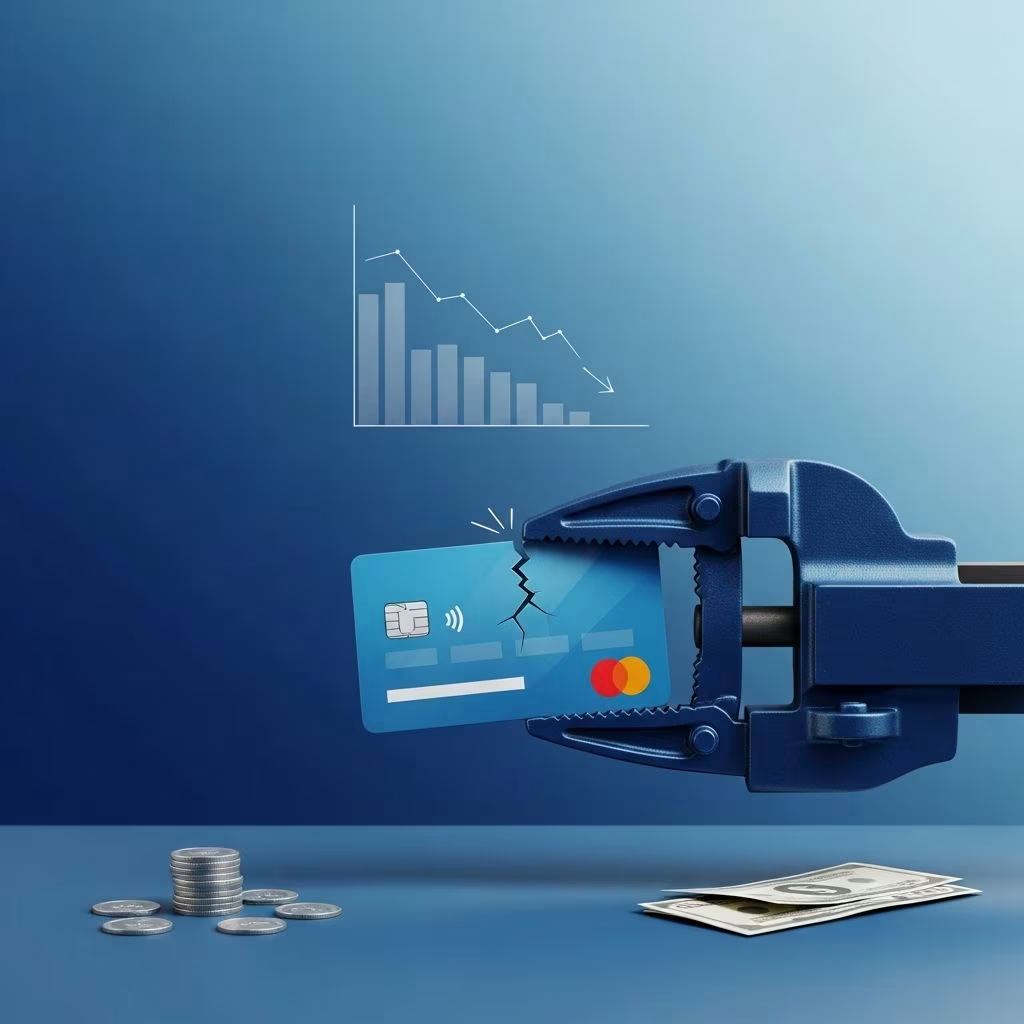
One of the most pressing concerns for people considering debt relief is whether it will damage their credit score. While debt relief can help alleviate the overwhelming burden of high debt, understanding its impact on your creditworthiness is essential before making a decision. The relationship between debt relief and credit scores is nuanced, and the answer depends largely on which debt relief strategy you choose and how you implement it.
Debt relief encompasses several different approaches to managing overwhelming debt, each with distinct implications for your credit profile. Some methods are more aggressive than others, and some may have minimal impact on your score if managed correctly. This comprehensive guide explores how various debt relief options affect your credit score and what you can realistically expect during your financial recovery journey.
Understanding Debt Relief and Credit Impact
Debt relief refers to strategies designed to reduce or eliminate outstanding debt obligations. These can range from formal programs like bankruptcy to informal negotiations with creditors. The primary concern many people have is that pursuing any form of debt relief will make it harder to access credit in the future, potentially affecting their ability to get approved for loans, mortgages, or even rental leases.
It’s important to recognize that enrollment in a debt relief program itself doesn’t automatically hurt your credit score. However, the actions you take based on the debt relief company’s recommendations often do. For instance, most debt settlement companies will advise you to stop making regular payments on your debts, which can significantly damage your credit score. Understanding this distinction is crucial for making informed financial decisions.
How Different Debt Relief Methods Affect Credit Scores
Debt Settlement
Debt settlement is one of the most aggressive debt relief approaches and typically has the most significant impact on credit scores. When working with a debt settlement company, they typically recommend that you stop making regular payments to your creditors. Instead of continuing with monthly payments, you’ll deposit money into a savings account managed by the debt relief company. This accumulated fund is then used to negotiate lump-sum settlements with your creditors for less than the full amount owed.
The problem with this strategy is that halting payments immediately lowers your credit score. Payment history is the most important factor in credit scoring models, accounting for approximately 35% of your FICO score. When you miss payments, creditors report these delinquencies to credit bureaus, which results in an immediate and substantial drop in your credit score.
Additionally, when the debt relief company successfully negotiates a settlement where you pay less than the original amount owed, this partial payment is noted on your credit report. Credit scoring models view this negatively, as it indicates you didn’t fulfill your original debt obligation. The combination of missed payments and settled accounts typically results in credit score drops of 100 points or more, with some people experiencing drops of 200 points or greater, especially if they started with higher credit scores above 700.
Debt Consolidation
Debt consolidation presents a more moderate approach to debt relief and generally has less severe credit score impacts. This strategy involves taking out a new loan to pay off multiple existing debts, consolidating several payments into one. The immediate impact includes a hard credit inquiry, which typically lowers your score by 5-10 points. Additionally, opening a new credit account reduces your average account age, which can temporarily decrease your score.
However, debt consolidation can stabilize your credit score if you manage it responsibly and avoid missing payments. The long-term benefits often outweigh the short-term dip. If you consistently make all consolidation loan payments on time, your credit score typically recovers and improves within 6-12 months. Your credit utilization ratio improves as credit card balances are paid off, and a positive payment history on the consolidation loan demonstrates responsible credit management.
The key to successful debt consolidation is ensuring you can afford the new loan payments and avoiding taking on additional credit card debt while paying off the consolidation loan. Many consolidation arrangements require closing existing credit card accounts, which can temporarily increase your credit utilization ratio on remaining accounts. However, maintaining one active credit card with a small recurring payment can help preserve your credit mix and demonstrate ongoing responsible credit management.
Debt Management Plans
Debt management plans (DMPs) offer a gentler alternative to debt settlement or bankruptcy. Working with a credit counselor, you’ll develop a plan to repay your debts through negotiated payment reductions or extended repayment periods. Importantly, debt management plans are typically not reported to credit bureaus, which means they have minimal direct impact on your credit score.
The only instance where your credit score might experience an initial dip is if certain credit cards are closed as part of the arrangement. However, since the plan itself isn’t reported, your payment history remains unaffected as long as you make payments according to the arrangement. This makes DMPs particularly beneficial for people with large amounts of credit card debt who want to pursue debt relief while minimizing credit score damage.
Bankruptcy
Bankruptcy represents the most severe debt relief option and has the most substantial impact on credit scores. Chapter 7 bankruptcy can remain on your credit report for up to seven years, while Chapter 13 bankruptcy stays for up to ten years. Credit scores can be negatively affected by as much as 200 points from filing bankruptcy.
Despite the significant initial damage to your credit score, bankruptcy can actually be a strategic choice for some people. If you’re already experiencing multiple late payments and collections, your credit score is likely already severely damaged. In such cases, bankruptcy may actually represent the fastest path to rebuilding your credit, as it provides a fresh start and eliminates most debts, allowing you to focus on rebuilding.
How Much Will Your Credit Score Drop?
The exact amount your credit score will drop depends on several factors, and the impact varies significantly from person to person. According to credit industry experts, if your credit score is above 700, it could fall as much as 200 points or more through debt settlement. If your score is already below 700, it could experience a drop of 100 points or more.
Several factors influence the severity of the credit score impact:
Current Credit Score: Counterintuitively, people with higher credit scores often experience larger point drops. Someone with a 750 credit score might see a drop of 150-200 points, while someone already at 580 might only drop 50-75 points. However, someone with a very high credit score is statistically unlikely to pursue debt settlement, as they typically have better options available.
Number of Credit Accounts: The more diverse credit accounts you have, the faster your score typically recovers. Someone with multiple credit accounts, some of which they continue paying regularly while settling others, will likely recover quicker than someone with only a few accounts who is settling most or all of them.
Severity of Late Payments: If you’re already behind on payments before enrolling with a debt relief company, your credit score may have already suffered damage. In this case, the additional impact from debt settlement might be less severe than if you had maintained a perfect payment history.
Amount of Debt Being Settled: Settling a larger portion of your total debt typically has a more significant impact than settling a small amount.
The Credit Score Recovery Timeline
While the immediate impact of debt relief can be significant, the good news is that credit damage is rarely permanent. Your credit score can recover over time with disciplined financial management. Credit bureaus and scoring models recognize that people can experience financial difficulties and rebuild their creditworthiness.
The timeline for recovery depends on which debt relief method you chose. Settled accounts appear on your credit report for seven years, but their negative impact diminishes significantly over time, especially as you establish new positive payment history. Similarly, bankruptcy can remain on your report for seven to ten years, but the negative effects lessen considerably as time passes.
The most important factor in credit recovery is establishing a new pattern of responsible credit behavior. Making all payments on time, keeping credit card balances low (ideally below 30% of your credit limit), and avoiding new negative marks on your report will gradually improve your score.
Credit Score Ranges and Debt Relief Considerations
Understanding credit score ranges can help you contextualize the impact of debt relief. The Consumer Financial Protection Bureau defines subprime credit scores as those between 580 and 619, and “deep subprime” as those below 580. Most people pursuing debt settlement will find themselves in the subprime range after settlement is complete.
However, even with a subprime score, you’re not permanently locked out of credit markets. You may face higher interest rates and less favorable terms, but rebuilding your score is possible. Many people discover that having eliminated their debt through settlement, even with a temporarily lower credit score, puts them in a better financial position than they were before.
Settled Accounts vs. Ongoing Delinquencies
An important consideration is that while settled accounts appear on your credit report with a negative notation, this is still better than having ongoing, unresolved delinquent accounts. A paid settlement shows that you ultimately took responsibility for the debt, whereas an unpaid delinquency suggests you’re avoiding your obligations. Over time, creditors view settled accounts more favorably than perpetual delinquencies.
If you’re already struggling with debt and considering your options, debt settlement may result in a lower credit score in the short term, but it can prevent the situation from deteriorating further. Continuing to miss payments without addressing the underlying debt problem will keep your credit score depressed indefinitely.
Frequently Asked Questions
Q: Will enrolling in a debt relief program immediately hurt my credit score?
A: Enrolling in a debt relief program itself doesn’t hurt your credit score. However, the actions recommended by the program—particularly stopping payments in debt settlement—will cause your score to drop. The enrollment doesn’t trigger the damage; the missed payments do.
Q: How long do settled debts stay on my credit report?
A: Settled debts remain on your credit report for seven years from the date of settlement. However, their negative impact diminishes significantly over time, especially as you establish new positive payment history.
Q: Can I rebuild my credit while paying off a debt relief plan?
A: Yes. While your score will initially drop, you can begin rebuilding it immediately by making all payments on time, keeping credit card balances low, and avoiding new negative marks. Many people see score improvements within 6-12 months of completing their debt relief arrangement.
Q: Is debt consolidation better for my credit score than debt settlement?
A: Generally, yes. Debt consolidation typically has a much smaller immediate impact on your credit score and can actually improve it over time if you make payments consistently. Debt settlement, while more aggressive in reducing overall debt, has a more significant negative impact on your credit score.
Q: Will debt relief prevent me from ever getting credit again?
A: No. While your creditworthiness will be affected temporarily, you can access credit again as your score recovers. You may face higher interest rates or less favorable terms initially, but credit availability returns as you rebuild your credit history.
Q: Should I avoid debt relief to protect my credit score?
A: Not necessarily. If you’re already struggling with unmanageable debt, your credit score is likely already suffering or will continue to deteriorate. Strategic debt relief can actually position you better financially long-term, even if it temporarily lowers your score further.
References
- How Debt Relief Affects Credit Scores — Cal West Law. July 2025. https://www.calwestlaw.com/blog/2025/july/the-impact-of-debt-relief-on-your-credit-score/
- Will Debt Relief Hurt Your Credit Score? — Money. https://money.com/will-debt-relief-hurt-credit-score/
- How Do Different Debt Relief Programs Affect Your Credit Score? — Hoyes. https://www.hoyes.com/blog/understanding-the-credit-impact-of-different-debt-relief-programs/
- Will Debt Relief Hurt My Credit Score? — Experian. https://www.experian.com/blogs/ask-experian/will-debt-relief-hurt-my-credit-score/
- How Many Points Will My Credit Score Drop After Debt Settlement? — InCharge Debt Solutions. https://www.incharge.org/debt-relief/debt-settlement/effect-on-credit-report/
- What is a Debt Relief Program and How Do I Know if I Should Use One? — Consumer Finance Protection Bureau. https://www.consumerfinance.gov/ask-cfpb/what-is-a-debt-relief-program-and-how-do-i-know-if-i-should-use-one-en-1457/
- How a Debt Management Plan Can Impact Your FICO Scores — MyFICO. https://www.myfico.com/credit-education/blog/debt-management-score
This article is general information, not personal financial advice. Consider your own situation, or speak with a licensed adviser, before acting on it.


