

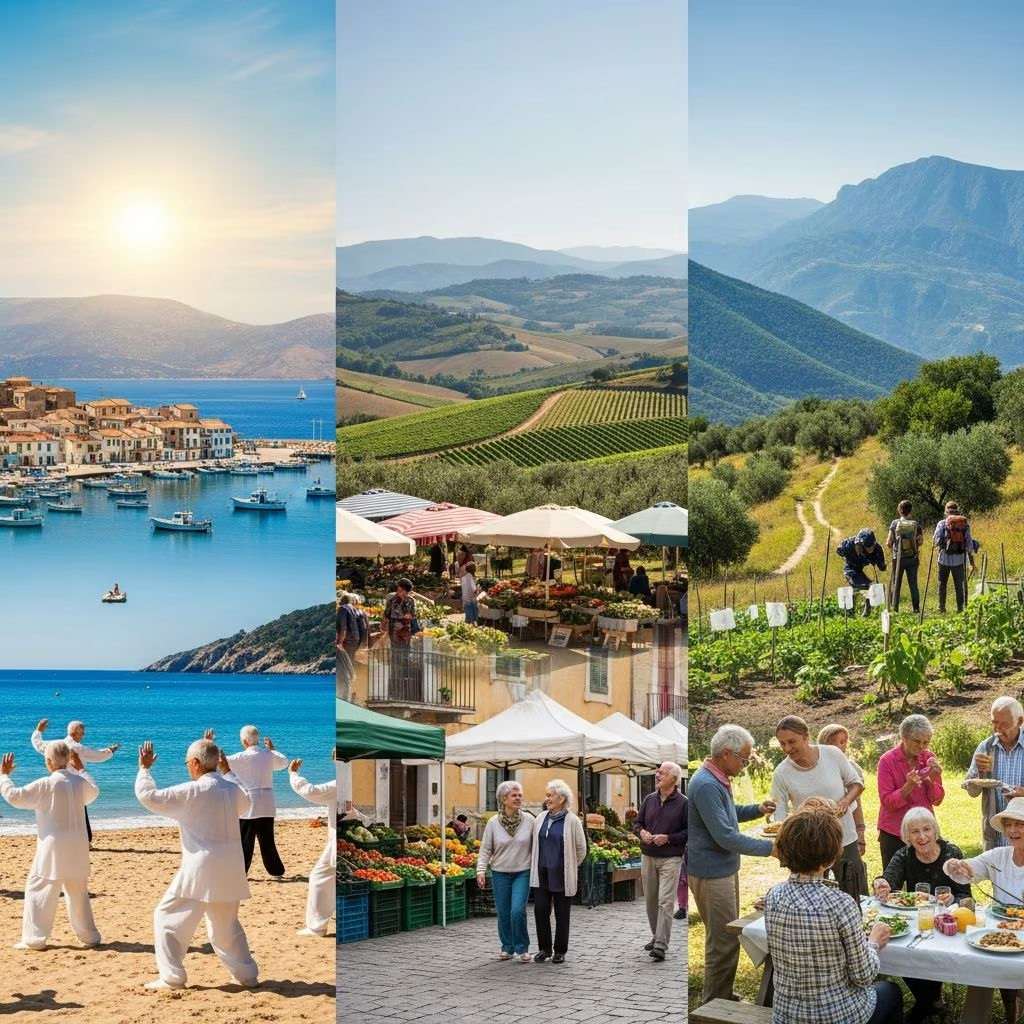
10 States Most Likely to Become ‘Blue Zones,’ With Healthy Lifestyles and Long Lifespans
A comprehensive analysis reveals that residents in California, Minnesota, and Utah demonstrate particularly long and healthy lives, positioning these states as leading candidates for blue zone status. Blue zones represent geographic areas where populations exhibit exceptional longevity and lower rates of chronic disease compared to the general population.
Understanding the Blue Zone Concept
Dan Buettner developed the blue zone framework after extensive global research investigating the secrets behind extended lifespans. His work, featured prominently in the Netflix documentary series “Live to 100: Secrets of the Blue Zones,” has transformed how we understand longevity. Buettner identified five established blue zones located in Italy, Greece, Japan, and Costa Rica, as well as Loma Linda, California. Residents of these regions consistently demonstrate significantly lower incidence of chronic diseases and substantially longer life expectancies than the broader global population.
The Pillars of Blue Zone Living
According to Buettner’s research, blue zone residents share common lifestyle characteristics that contribute to their exceptional health outcomes. These foundational pillars include:
– Daily natural movement and physical activity integrated into everyday routines- Consumption of whole foods, particularly vegetables and nuts- Strong social connections and community engagement- A clear sense of purpose and meaning in life- Regular participation in faith-based or spiritual communities
These interconnected factors create an ecosystem where healthy living becomes the natural consequence of environmental design rather than deliberate individual effort. Residents do not pursue longevity as a specific goal; instead, longevity emerges as a byproduct of systemic lifestyle factors.
The NowPatient Index: Measuring Blue Zone Potential
A new evaluation framework from online pharmacy NowPatient has developed a comprehensive index grading U.S. states based on the health and longevity indicators of their residents. This index incorporates data related to sleep quality, physical activity levels, and anxiety and depression rates across state populations. The methodology expands beyond traditional health metrics to include behavioral and environmental factors that correlate with blue zone characteristics.
Index Methodology and Criteria
The NowPatient assessment incorporates several unique variables that may initially appear unconventional. The index rewards states demonstrating high numbers of Google searches for meat-free restaurants, reflecting dietary patterns aligned with blue zone nutrition principles. According to NowPatient’s analysis, blue zone food guidelines specifically recommend minimizing eggs, fish, and dairy consumption. The research suggests that optimal blue zone diets consist of 95 to 100 percent plant-based foods, emphasizing whole grains, legumes, vegetables, and nuts while limiting animal products.
Additionally, the index evaluates religious participation rates across state populations. This factor stems from Buettner’s documented observation that individuals residing in high-life-expectancy blue zones typically belong to faith-based communities. Religious engagement correlates with social connection, community involvement, and psychological well-being—all recognized contributors to longevity.
The Top 10 States Positioned for Blue Zone Status
Based on comprehensive analysis of health metrics, lifestyle indicators, and longevity potential, the following states rank highest for blue zone emergence:
| Rank | State | Key Characteristics |
|---|---|---|
| 1 | California | Home to Loma Linda, established blue zone; strong plant-based food culture |
| 2 | Minnesota | High physical activity; strong community health initiatives |
| 3 | Utah | High religious participation; strong family and community bonds |
| 4 | North Carolina | Balanced lifestyle factors; growing wellness initiatives |
| 5 | Massachusetts | Strong healthcare infrastructure; high education levels |
| 6 | Maryland | Urban walkability; diverse community engagement |
| 7 | Virginia | Active lifestyle culture; community-oriented development |
| 8 | Connecticut | High life expectancy; strong health programs |
| 9 | Rhode Island | Community-focused wellness; accessible healthcare |
| 10 | Colorado | High physical activity; outdoor recreation culture |
Current U.S. Life Expectancy Trends
Overall longevity metrics in the United States demonstrate encouraging recent improvements. The Centers for Disease Control and Prevention reported that national life expectancy reached 77.5 years in 2022, representing a gain of 1.1 years compared to 2021, when coronavirus-related and heart disease mortality rates were significantly elevated.
However, this positive trend in life expectancy masks a concerning countertrend affecting quality of life. Reporting from the Wall Street Journal highlights that American “healthspans”—the duration during which individuals remain active without significant illness, pain, or disability—are paradoxically contracting. This divergence suggests that while people may live longer, they spend increasing proportions of their later years managing chronic conditions and functional limitations.
Environmental and Policy Factors in Blue Zone Success
Geographic and urban planning considerations significantly influence population health outcomes. The variation in life expectancy between different regions within the same state illustrates this principle dramatically. For example, life expectancy in certain Kentucky regions trails that of Boulder, Colorado, by as much as 22 years. This disparity reflects differences in environmental design and public policy rather than demographic or genetic factors.
Boulder’s success in promoting longevity stems from deliberate policy choices that prioritize walkability, pedestrian and cycling infrastructure, and nutrition-supporting food policies. The municipality restricts junk food advertising, limits certain restaurant types, and favors non-smokers through regulatory frameworks. These systemic approaches create environments where healthy behaviors become convenient and culturally normalized.
The Power of Blue Zone Community Implementation
Practical applications of blue zone principles have demonstrated measurable success in American communities. In 2009, researchers established a Blue Zones Community intervention in Albert Lea, Minnesota, implementing lifestyle and environmental changes aligned with blue zone principles. The initiative achieved approximately 40 percent reduction in healthcare costs while simultaneously increasing life expectancy for participating residents.
This model has subsequently expanded significantly, with blue zone principles now implemented across more than 70 American cities. Communities participating in structured blue zones initiatives have documented measurable improvements in body mass index, smoking cessation rates, and other significant health risk factors. Fort Worth, Texas, reported extraordinary results, realizing approximately 250 million dollars in annual healthcare cost savings through implementation of blue zone community strategies.
Plant-Based Nutrition and Dietary Patterns
Dietary composition emerges as a central element distinguishing blue zone populations from broader populations. Buettner’s research consistently documents the prevalence of plant-based eating patterns in established blue zones. The recommended dietary approach emphasizes consuming between 95 and 100 percent plant-based foods while minimizing or eliminating animal products including eggs, fish, and dairy.
This nutritional philosophy contrasts sharply with typical American dietary patterns, which center on animal proteins and processed foods. The NowPatient index captures this dietary distinction through metrics such as vegetarian restaurant search frequency, recognizing that dietary preferences indicate underlying health values and behaviors.
Social Connection and Spiritual Community
Beyond physical health behaviors, psychological and social factors profoundly influence longevity outcomes. Research from established blue zones consistently reveals that regular participation in faith-based or spiritual communities correlates strongly with extended lifespans. This relationship reflects multiple mechanisms, including social support networks, stress reduction through spiritual practice, regular structured social engagement, and shared values that promote prosocial behaviors.
The psychological literature confirms that social isolation represents a significant mortality risk factor equivalent to smoking or obesity. Conversely, individuals embedded in strong social networks and communities experience reduced stress hormones, improved immune function, and enhanced emotional resilience—all factors supporting longevity.
Natural Movement and Physical Activity Integration
Blue zone residents do not typically engage in formalized exercise programs or gym memberships. Instead, physical activity integrates naturally into daily life through occupational demands, transportation choices, and recreational pursuits. Gardening, walking to work and social destinations, active commuting, and household labor provide consistent, moderate physical activity without conscious effort or motivation.
This approach contrasts with the American fitness paradigm, which emphasizes intentional exercise sessions separated from daily life. The blue zone model suggests that sustainable longevity depends on structural design that makes movement inevitable rather than voluntary.
Future Blue Zones and Emerging Opportunities
Buettner’s research framework explicitly acknowledges that additional blue zones beyond the five currently identified will likely emerge as communities implement supportive environmental and social policies. The NowPatient analysis suggests that ten American states demonstrate sufficient characteristics and metrics to potentially develop into recognized blue zones within coming years.
The ranking reflects not merely current health outcomes but potential for transformation. States scoring highly typically demonstrate combinations of high walkability, health-conscious populations, strong community institutions, accessible healthcare infrastructure, and policies supporting preventive wellness approaches rather than reactive disease management.
Frequently Asked Questions
Q: What exactly defines a blue zone?
A: Blue zones are geographic regions where populations consistently demonstrate exceptional longevity, low rates of chronic disease, and high quality of life in advanced age. These areas share common lifestyle, environmental, and social characteristics that support extended healthy lifespans.
Q: Can any state become a blue zone?
A: Yes, Buettner’s research suggests that blue zones can emerge in any region willing to implement supportive environmental policies, build strong communities, and promote healthy lifestyle integration. The transformation requires systemic changes in urban planning, food systems, healthcare approaches, and community engagement.
Q: What is the most important factor for achieving blue zone longevity?
A: Research indicates that no single factor determines longevity. Instead, blue zone success depends on an integrated ecosystem of environmental design, social connection, physical activity integration, nutrition, spiritual engagement, and healthcare access all working synergistically.
Q: How can individuals adopt blue zone principles in their current location?
A: Individuals can integrate blue zone principles by increasing plant-based food consumption, building regular social connections, incorporating natural movement into daily routines, developing spiritual or community practices, and advocating for policy changes that support walkability and healthy food access in their communities.
Q: What role does diet play in blue zone longevity?
A: Diet constitutes a significant but not exclusive factor in blue zone longevity. Research demonstrates that plant-based nutritional patterns emphasizing whole foods, legumes, nuts, and vegetables—while minimizing processed foods and animal products—strongly correlate with extended lifespans and reduced chronic disease incidence.
References
- Lessons From the Blue Zones: There is No Silver Bullet (or Magic Diet) — National Center for Biotechnology Information. 2024. https://pmc.ncbi.nlm.nih.gov/articles/PMC12048395/
- Do ‘blue zones,’ supposed havens of longevity, rest on shaky science? — Science Magazine. 2023. https://www.science.org/content/article/do-blue-zones-supposed-havens-longevity-rest-shaky-science
- Blue Zones, Part 2: How the World’s Oldest People in Asia and Europe Make Their Money Last — Institute for Longevity Research. 2019. https://www.ilcorp.org/blue-zones-part-2-worlds-oldest-people-asia-europe-make-money-last/
- A Healthier America? We’re Aiming at the Wrong Target — Blue Zones LLC. 2023. https://www.bluezones.com/2023/09/a-healthier-america/
- Blue Zones and Lifestyle Medicine: The Secrets to Longevity Unlocked — Lifestyle Medicine Resources. 2022. https://www.youtube.com/watch?v=6edzZtmPNnU
This article is general information, not personal financial advice. Consider your own situation, or speak with a licensed adviser, before acting on it.


