

The Rise of the Planner Addict Community
In the digital age, where productivity apps and digital calendars dominate our devices, an unexpected trend has emerged: a thriving community of women who prefer pen and paper to organize their lives. These individuals, known as “Planner Addicts,” have built a massive and highly engaged community on Instagram, sharing beautifully designed to-do lists, color-coded schedules, and intricately decorated planners. What started as a personal organizational tool has evolved into a cultural phenomenon, with millions of posts shared under hashtags like #BulletJournal and #BuJo. But beneath the pretty aesthetics and decorative stickers lies a more complex question: Are these planners a genuine life hack, or have they become a trendy time sink that blurs the line between productivity and obsession?
Understanding the Planner Movement
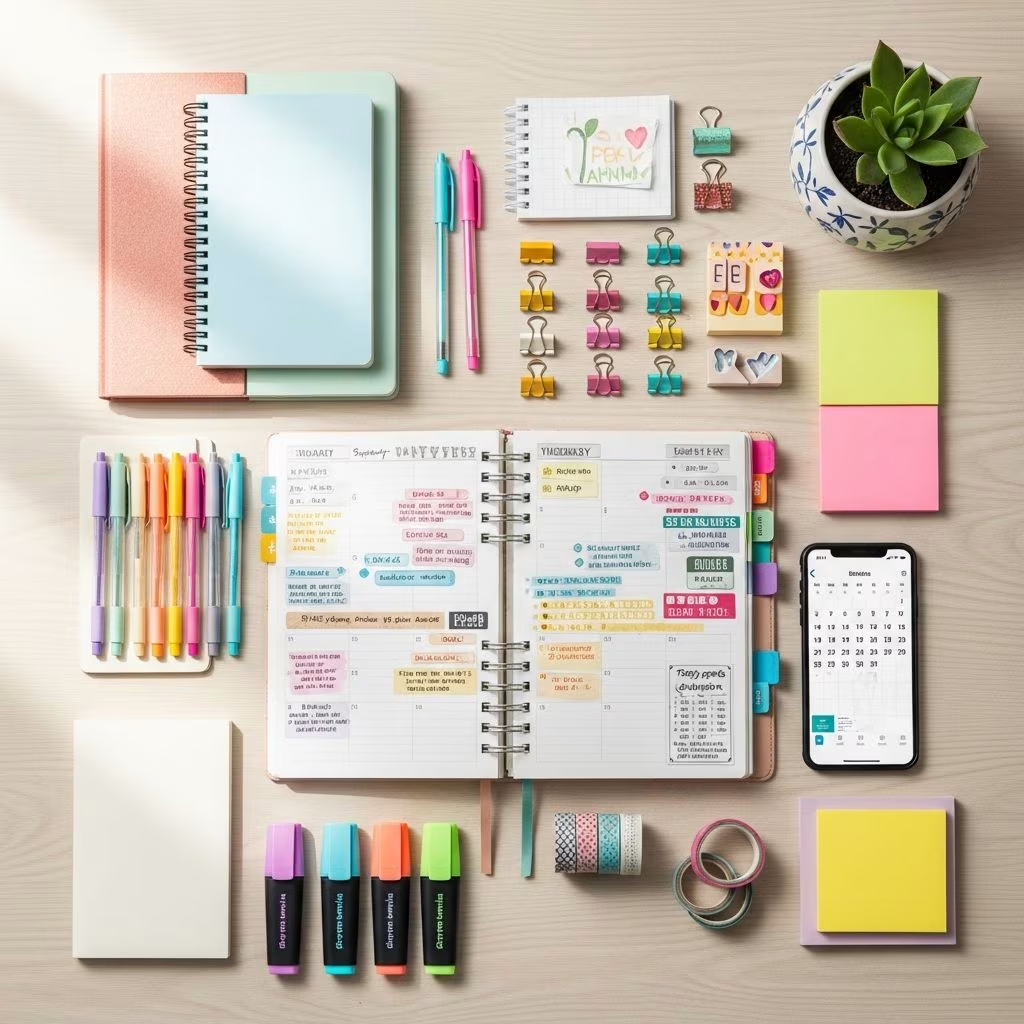
The Planner Addict community represents a fascinating countermovement to the digital-first world we inhabit. Members of this community, predominantly women, dedicate significant time to planning their lives using physical planners and bullet journals. They spend entire afternoons charting out their weeks, sometimes down to the hour, employing various organizational techniques that transform mundane to-do lists into works of art. Color-coding by importance level, adding decorative stickers, drawing cartoons, and writing affirmations in bubble letters are common practices among these enthusiasts.
The movement encompasses diverse individuals from different walks of life. Some members are students like those featured in early community spotlights, while others juggle full-time careers or responsibilities as stay-at-home parents. Each brings their own perspective to planning, making the community remarkably inclusive despite its seemingly niche focus.
The Tools of the Trade
Planner Addicts utilize various organizational systems, each serving different needs and preferences. Understanding these tools provides insight into the diversity of the movement:
- Bullet Journals: A customizable organizational system that works with any blank notebook, allowing complete creative freedom in design and layout
- Day Designer: A pre-made planner specifically designed for busy professionals and creatives
- Happy Planner: A popular pre-made option favored by many community members for its flexibility and aesthetic appeal
- Digital Integration: Some members combine traditional planning with digital tools for maximum efficiency
The Social Media Phenomenon
Like every passionate online community, the Planner Addict movement has become deeply embedded in social media culture. The aesthetically pleasing calligraphy and immaculate spreads created by top #PlannerGirls frequently appear on StudyBlr blogs, an entire internet subculture devoted to the visual aesthetics of note-taking and organization. The reach of this community is staggering, with the bullet journal’s top two hashtags, #BulletJournal and #BuJo, accumulating nearly 7 million uses combined. This massive online presence has transformed planning from a solitary activity into a communal experience where members share inspiration, techniques, and their latest creations with thousands of followers.
Why People Turn to Planning
The motivations behind joining the Planner Addict community are as diverse as its members. According to Gretchen Klobucar, a 32-year-old education fundraiser and mother of two, people gravitate toward planning for a variety of reasons. “People come to planning for a variety of reasons,” Klobucar explains. “In most cases, they’re seeking to manage a role or expectation they’re anxious about. They want to be able to plan so they can live the life they envision.”
For Klobucar specifically, planning serves as an outlet during transitional life periods. She turned to the planner community during a challenging time when she felt disconnected from her social circle, pressured to find new employment, and lost her identity as a career woman. The Happy Planner became her tool for organizing the endless mental tasks that once consumed her thoughts: upcoming work assignments, fitness goals, and her baby’s eating habits. To her, planning represents more than mere organization—it’s a creative, communal activity that provides structure to life’s chaos.
The Emotional and Psychological Impact
Many planners report transformative experiences through their organizational practice. One planner eloquently summarizes the impact: “Planning has changed my life for the better. I write a lot more, I think more clearly, I’m more emotionally stable. It’s made a huge impact on everything.” These testimonials highlight how planning can influence mental clarity and emotional well-being when used as intended.
However, professionals in mental health fields express caution about the practice. Suvrat Bhagave, a family psychiatrist and author of A Moment of Insight, has observed concerning patterns in some patients. He notes that stress levels can actually increase when using a planner, with some individuals losing sleep over their inability to follow their meticulously created plans. “Planners are wonderful symbols of rational thought,” Bhagave explains. “But when your need to stick with the plan is getting in the way of other things you should be doing to take care of yourself, that’s a red flag.” This insight suggests that while planning can be beneficial, the practice can become counterproductive when taken to extremes.
The Spectrum of Planner Culture
Within the broader Planner Addict community, a spectrum of approaches exists. On one end, individuals like Klobucar use planning as a practical tool to manage genuine responsibilities and life goals. They view it as a support system and connection point with women who share similar ambitions and challenges. On the other end of the spectrum lies a more aesthetically-focused segment. Here, members invest in expensive marker sets costing over $100, elaborate sticker packs priced at $40 or more, and professional cameras worth $500 to document their creations. For these individuals, the emphasis shifts from crossing items off lists to making pages Instagrammable, creating a competitive environment around who can bring the most dedication to agenda planning.
This extreme segment represents what some might call “horse girl energy” applied to planning—a term used to describe intense, passionate dedication that borders on obsessive. Members in this category spend hours daily, not completing tasks, but creating the visual representation of planning. While their work is undeniably beautiful and demonstrates remarkable creativity, it raises questions about whether the planning serves life organization or becomes a substitute for actual task completion.
Success Stories and Community Impact
Despite the concerns about obsession, the Planner Addict community has generated genuine success stories. At community gatherings, organizers have shared video compilations of transformative experiences. One woman paid off $25,000 in debt through dedicated planning and financial tracking. Another used her planner to meticulously track fertility treatments and successfully achieved her goal of becoming a first-time mother. These stories demonstrate that when approached thoughtfully, planning can facilitate real, measurable life improvements.
Heather Kell, a Texas-based planner and YouTuber, describes the emotional power of these narratives: “It was so emotional. It was like, this is why we plan.” By the end of such presentations, participants often find themselves in tears, moved by the collective power of organization and community support to create meaningful change.
Grind Culture and Modern Productivity
The Planner Addict movement exists within the broader context of contemporary discussions about work culture and productivity. There’s ongoing debate about whether modern productivity tools and organization systems—from iCalendars to browser extensions to apps like Evernote and OmniFocus—actually help us accomplish more or simply accelerate burnout. The Planner community represents an analog version of what critics call “hustle porn” and social media posturing, where the documentation of productivity becomes as important as productivity itself.
This phenomenon reflects deeper anxieties about work-life balance, achievement pressure, and the cultural valorization of constant productivity. The planning movement’s popularity may partly stem from its promise to impose order and control in increasingly chaotic lives, offering reassurance that with the right system, one can truly “have it all.”
A Meditation on Pen and Paper in the Digital Age
The resurgence of planner culture also represents something more philosophical: a cultural attachment to pen and paper in an increasingly digital world. For many adherents, the tactile experience of writing by hand creates a different cognitive and emotional engagement than typing. The act of physically writing goals, tasks, and reflections engages the mind differently and creates a more permanent record. The decorative elements add a layer of self-expression and creativity that purely digital systems often lack.
This return to analog methods suggests that despite living in a highly technological era, many people crave tactile, intentional practices that slow down the pace of modern life. Planning becomes a form of mindfulness, a deliberate act of reflection and organization that cannot be rushed or multitasked.
Frequently Asked Questions
Q: What exactly is a bullet journal?
A: A bullet journal is a customizable organizational system that works with any blank notebook. Unlike pre-made planners, it allows complete creative freedom in design, layout, and organization methods, enabling users to create a personalized planning system tailored to their specific needs.
Q: How much time do Planner Addicts typically spend on their planners?
A: The time investment varies significantly. Some spend an hour or two weekly, while dedicated enthusiasts may spend several hours daily creating and maintaining their planners, particularly those focused on aesthetic presentation and Instagram documentation.
Q: Can planning actually help with debt reduction and major life goals?
A: Yes, planning can be an effective tool for achieving significant goals. Community success stories include individuals who paid off substantial debt and accomplished challenging personal goals through dedicated planning and tracking, though results depend on consistent execution and realistic goal-setting.
Q: Is there a risk of becoming too obsessed with planning?
A: Mental health professionals note that excessive planning can sometimes increase stress rather than reduce it. If strict adherence to a plan causes sleep loss or prevents other necessary self-care activities, it may indicate the practice has become counterproductive.
Q: What types of people are drawn to the Planner Addict community?
A: While primarily women, the community includes students, full-time professionals, stay-at-home parents, and people navigating life transitions. They’re drawn to planning for various reasons: managing anxiety, organizing chaotic responsibilities, seeking community connection, or pursuing creative expression.
References
- Planner Addicts: Highly Organized or Obsessed With Lists? — Money Magazine. 2019. https://money.com/planner-addicts-instagram/
This article is general information, not personal financial advice. Consider your own situation, or speak with a licensed adviser, before acting on it.


