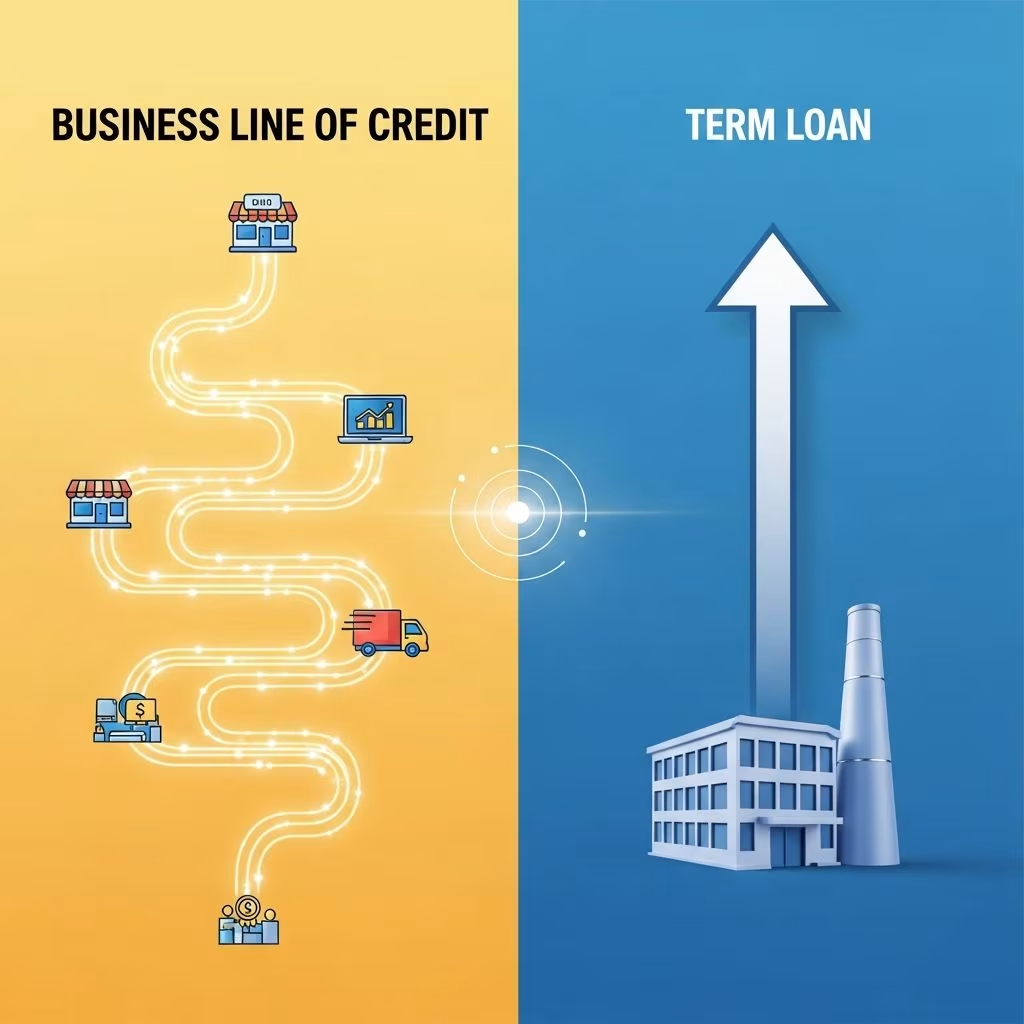
A business line of credit and a traditional business loan are two of the most widely used financing tools for small and midsize companies. Both can help you cover expenses and invest in growth, but they work very differently and are suited to different types of needs.
This guide explains how each option works, how they compare, and how to choose the right fit for your business goals and cash-flow profile.
What Is a Business Line of Credit?
A business line of credit is a flexible revolving credit facility that lets you borrow up to a set limit, repay, and borrow again, similar to a credit card but usually with lower rates and higher limits.
Instead of receiving one lump sum, you draw funds as needed. You pay interest only on the amount you actually use, not on your total credit limit.
How a Business Line of Credit Works
While terms vary by lender, most business lines of credit share several core features:
- Credit limit: The lender approves you for a maximum borrowing amount based on your revenue, profitability, and credit profile.
- Draw period: A set time (for example, 12–24 months) during which you can request advances up to your limit.
- Revolving structure: As you repay principal, your available credit is replenished, and you can borrow again up to the limit.
- Variable interest rates: Many lines carry variable rates tied to a benchmark index, so your cost can move with market conditions.
- Minimum payments: You make periodic payments—interest only, or interest plus a portion of principal—depending on the agreement.
- Renewal or term-out: At the end of the draw period, the line may be renewed or converted into an amortizing term loan.
Common Uses for a Business Line of Credit
Lines of credit are typically used for recurring or unpredictable short-term needs rather than one-time large investments.
- Smoothing seasonal or cyclical cash-flow gaps
- Covering payroll or rent during slow periods
- Purchasing inventory in advance of peak sales seasons
- Funding small, frequent operating expenses
- Handling unexpected repairs or emergency costs
Pros and Cons of a Business Line of Credit
| Advantages | Drawbacks |
|---|---|
|
|
What Is a Business Term Loan?
A business loan—often called a term loan—provides a lump sum of money upfront that you repay over a fixed period, typically with regular monthly payments of principal plus interest.
Term loans are commonly used for significant investments, such as purchasing equipment, renovating facilities, or expanding to a new location.
How a Business Term Loan Works
Although specifics differ by lender, most traditional business loans follow a similar structure:
- Lump-sum disbursement: You receive the entire loan amount at closing.
- Fixed repayment schedule: You repay via equal installments over a defined term, for example 3, 5, or 10 years.
- Interest rate: Many term loans carry fixed rates, providing predictable payments, though some may be variable.
- Collateral: Depending on size and risk, loans may be secured by business assets, real estate, or personal guarantees.
- Amortization: Payments gradually reduce principal until the loan is fully repaid by the end of the term.
Common Uses for a Business Term Loan
Business term loans are best suited to long-term or one-time projects where the funding need is clear and substantial.
- Buying or upgrading equipment or machinery
- Renovating or expanding a facility
- Purchasing commercial real estate
- Launching a new product line or opening a new location
- Refinancing higher-cost business debt
Pros and Cons of a Business Term Loan
| Advantages | Drawbacks |
|---|---|
|
|
Key Differences: Business Line of Credit vs Business Loan
While both tools provide access to capital, their structure and best uses differ in important ways.
| Feature | Business Line of Credit | Business Term Loan |
|---|---|---|
| Form of funding | Revolving credit you draw from as needed | One-time lump sum at closing |
| Typical purpose | Short-term working capital, gaps, emergencies | Long-term investments, large one-time projects |
| Interest charges | Only on amount drawn | On full principal amount |
| Repayment | Flexible draws and payments within a draw period | Fixed schedule over a defined term |
| Rate type | Often variable | Often fixed, sometimes variable |
| Best for | Ongoing, unpredictable needs | Planned, sizable expenses with clear budgets |
Costs and Interest Rates
The overall cost of either a line of credit or a term loan depends on the lender, your creditworthiness, the type of product, and market rates.
Lines of Credit: How Costs Are Structured
- Interest rate: Usually variable and higher than secured long-term loans, especially for unsecured or online lines.
- Interest calculation: Charged only on outstanding balances, typically calculated daily and billed monthly.
- Fees: May include annual fees, draw fees, or inactivity fees, depending on the lender.
- Collateral: Some lines are secured by receivables or inventory, which can improve pricing but increase risk to your assets.
Business Loans: How Costs Are Structured
- Interest rate: Often lower than for revolving credit, particularly with bank term loans and Small Business Administration (SBA)–backed loans.
- Fixed vs variable: Many term loans offer fixed rates, allowing consistent payments over the life of the loan.
- Origination and closing fees: May apply and should be factored into the annual percentage rate (APR).
- Loan term: Longer terms usually mean lower monthly payments but more total interest paid over time.
Qualification Requirements
Eligibility criteria vary widely, but traditional banks and SBA programs generally expect stronger credit and more documentation than many online lenders.
Qualifying for a Business Line of Credit
Lenders typically review:
- Time in business and revenue trends
- Business and personal credit scores
- Existing debt obligations and cash flow
- Financial statements and tax returns
- Available collateral, for secured lines
Some online lenders offer smaller unsecured lines to younger businesses with streamlined documentation, but often at higher interest rates.
Qualifying for a Business Term Loan
For traditional bank or SBA-backed term loans, expectations are usually higher.
- Strong credit history and scores for owners
- Several years of financial statements and tax returns
- Detailed use-of-funds documentation and business plans
- Collateral and personal guarantees for larger loans
- Ability to demonstrate sufficient cash flow to service the debt
SBA loan programs partially guarantee loans issued by approved lenders, allowing them to extend financing to businesses that might not qualify for conventional loans, often with longer terms and competitive rates.
When a Line of Credit Makes More Sense
Choosing a line of credit can be a better fit when your business faces uncertain or fluctuating short-term needs.
Ideal Situations for a Business Line of Credit
- Seasonal cash-flow swings: You need temporary working capital during slow months and repay after revenue rebounds.
- Unpredictable expenses: You want a financial safety net for emergencies or unexpected opportunities.
- Frequent small purchases: You regularly buy inventory or cover operating costs that don’t require a large lump sum.
- Short-term projects: You fund smaller marketing campaigns, short contracts, or bridge financing.
When a Business Loan Is the Better Choice
A traditional term loan is usually more appropriate for significant, well-defined investments that will benefit your business over several years.
Ideal Situations for a Business Term Loan
- Major equipment or vehicle purchase: You need to finance durable assets that generate revenue over time.
- Real estate acquisition or expansion: You are purchasing or renovating commercial property.
- Long-term growth projects: You are opening a new location or undertaking a substantial expansion.
- Debt consolidation: You want to refinance multiple higher-rate obligations into a structured loan with predictable payments.
How to Decide: Key Questions to Ask
When choosing between a business line of credit and a business loan, work through these key questions:
- Is my funding need one-time or ongoing? One-time, large costs favor term loans; recurring or uncertain needs favor lines of credit.
- How precisely can I estimate the total cost? If you know the exact amount, a term loan is often more efficient; if not, flexibility may matter more.
- How important is payment predictability? Fixed payments from a term loan simplify budgeting; variable usage and rates on lines can make payments less predictable.
- Can my cash flow support regular principal payments? Evaluate debt service coverage before committing to any fixed repayment schedule.
- What do my credit profile and financials support? Stronger businesses may qualify for larger, lower-cost loans, including SBA-backed options.
Can You Use Both a Line of Credit and a Business Loan?
Many businesses use a combination of a term loan and a line of credit. A structured loan finances long-term investments, while a line of credit handles day-to-day working capital and short-term volatility.
For example, a company might take an SBA 7(a) or bank term loan to purchase equipment, and maintain a smaller revolving line of credit to manage inventory swings and receivables gaps.
Frequently Asked Questions (FAQs)
Q: Is a business line of credit considered a loan?
Yes. A business line of credit is a type of loan that provides revolving access to funds up to a set limit, rather than a single lump sum. You still owe any amounts you draw, plus interest, under the terms of your credit agreement.
Q: Which is cheaper: a line of credit or a business loan?
It depends on your situation. Term loans—especially bank and SBA-backed loans—often feature lower interest rates, but you pay interest on the full principal. Lines of credit may have higher nominal rates yet cost less overall if you borrow smaller amounts for shorter periods.
Q: Can startups qualify for a business line of credit or loan?
Startups can face more difficulty qualifying for traditional lines and term loans because lenders typically prefer established revenue and financial history. Some online lenders and community development institutions offer smaller lines or microloans specifically designed for younger businesses.
Q: Does a business line of credit affect personal credit?
Many lenders require a personal guarantee from owners, especially for small or closely held businesses. In those cases, delinquencies or defaults on the business line or loan may appear on your personal credit reports, depending on the lender’s reporting policies.
Q: Can I convert a line of credit into a term loan?
Some lenders allow outstanding balances on a line of credit to be converted or “termed out” into an amortizing loan at the end of the draw period, often with a different interest rate and repayment schedule. This option is lender-specific and should be confirmed in advance.
References
- 10 Types of Business Loans: Compare Financing — NerdWallet. 2025-01-15. https://www.nerdwallet.com/business/loans/learn/types
- 15 Types of Business Loans to Consider — SoFi. 2024-02-21. https://www.sofi.com/learn/content/types-of-business-loans/
- Compare Small Business Financing Options in 2025 — Nav. 2025-01-10. https://www.nav.com/business-financing-options/
- Types of Business Loans: Your Different Options Explained — NBC Bank. 2024-08-05. https://www.nbcbanking.com/business-banking/business-lending-guide/types-of-business-loans/
- Types of 7(a) Loans — U.S. Small Business Administration (SBA). 2023-10-01. https://www.sba.gov/partners/lenders/7a-loan-program/types-7a-loans
This article is general information, not personal financial advice. Consider your own situation, or speak with a licensed adviser, before acting on it.