

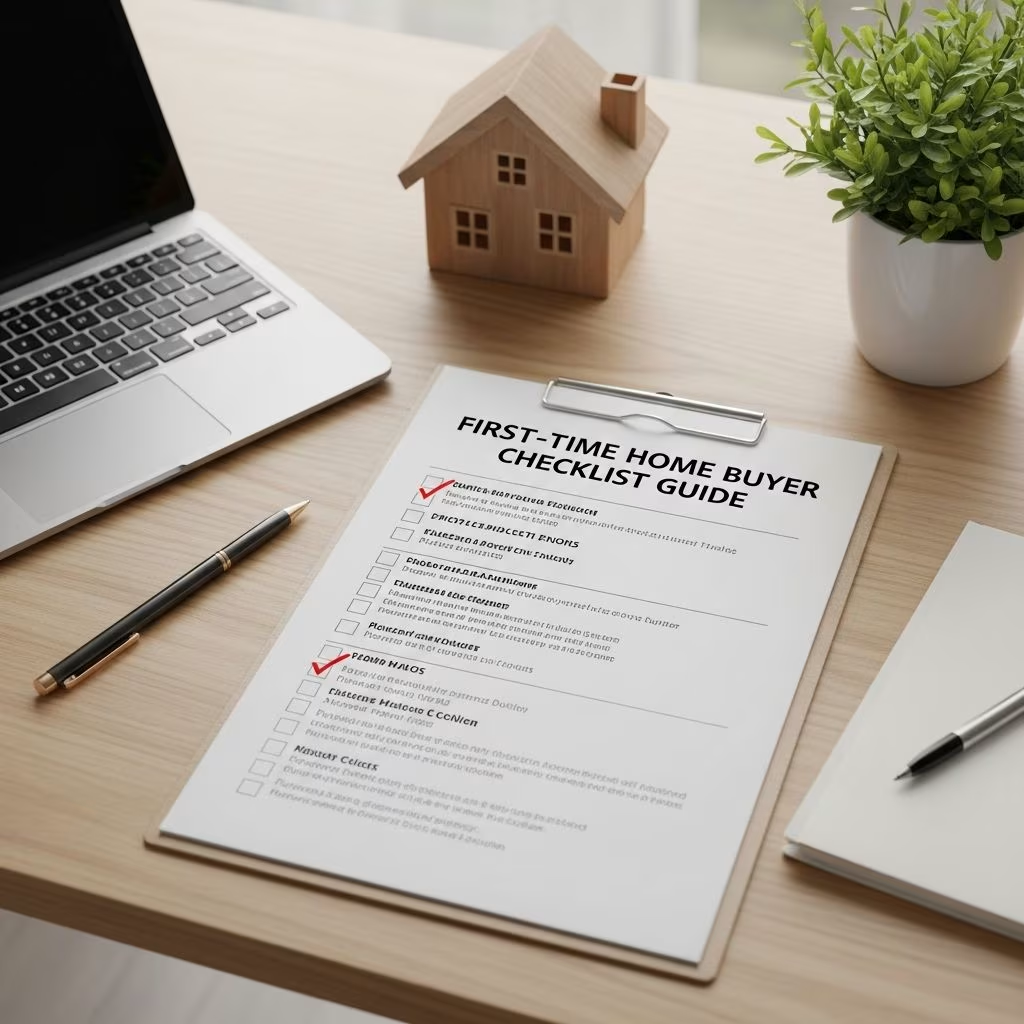
Buying your first home is a major milestone, but it can also feel overwhelming. A clear, step-by-step checklist helps you stay organized, compare your options, and make confident decisions from the moment you start saving to the day you get your keys.
This guide walks through the key stages of the home buying journey, explains common terms, and highlights important documents and decisions at each step.
1. Understand Whether You Are Ready to Buy
Before you look at listings or contact a real estate agent, take an honest look at your financial and lifestyle readiness. Lenders and housing agencies emphasize that homeownership works best when buyers have stable finances, manageable debt, and a long enough time horizon to recover upfront costs.
1.1 Financial Readiness Checklist
- Stable income for at least the past 1–2 years
- Emergency savings (ideally 3–6 months of expenses)
- Manageable debt payments and a reasonable debt-to-income (DTI) ratio
- Ability to cover down payment and closing costs
- Room in your budget for ongoing maintenance and repairs
Your debt-to-income ratio is the share of your gross monthly income that goes toward monthly debt payments, including your future mortgage. Many lenders use DTI as a key factor in mortgage approval.
1.2 Lifestyle Readiness
- Plan to stay in the same area for at least 3–5 years
- Comfort with taking on home maintenance responsibilities
- Need for stability compared with the flexibility of renting
- Awareness that selling a home quickly can be costly
2. Set a Realistic Home Buying Budget
Once you know you are broadly ready, narrow down how much you can safely spend. Government and nonprofit housing guidance emphasize that buyers should consider all housing costs, not just the purchase price.
2.1 Estimate How Much House You Can Afford
Common rules of thumb suggest keeping your total monthly housing costs (mortgage, taxes, insurance, and any HOA fees) within a reasonable share of your income, while also respecting the DTI limits used by lenders.
- List your monthly income (before taxes)
- List all monthly debts (credit cards, auto loans, student loans, etc.)
- Estimate a comfortable housing payment, not just the maximum possible
2.2 Include Ongoing Housing Costs
- Property taxes
- Homeowners insurance
- Utilities (electricity, gas, water, trash, internet)
- Maintenance and repairs (routine and unexpected)
- HOA or condo fees where applicable
- Commuting and transportation from the new location
3. Plan Your Down Payment and Upfront Costs
Many first-time buyers are surprised to learn that a 20% down payment is not always required. Several mortgage programs allow lower down payments, particularly for eligible first-time or moderate-income buyers.
3.1 Typical Upfront Costs
- Down payment (often 3%–20% of purchase price, depending on loan type)
- Closing costs (commonly 2%–5% of purchase price)
- Home inspection fee
- Appraisal fee
- Moving expenses and initial repairs or furnishings
3.2 Saving for Your Down Payment
- Set a dedicated savings goal and timeline
- Automate transfers into a separate savings account
- Reduce discretionary expenses temporarily
- Consider windfalls (tax refunds, bonuses, gifts) as boosts to savings
Some buyers may also qualify for down payment assistance programs offered by state and local housing agencies.
4. Check and Strengthen Your Credit Profile
Lenders rely heavily on your credit history and credit score when deciding whether to approve a mortgage and what interest rate to offer. Improving your credit profile before applying can save you money over the life of the loan.
4.1 Review Your Credit Reports
- Obtain your credit reports from the major credit bureaus
- Check for errors (incorrect accounts, late payments that are not yours)
- Dispute inaccuracies with the credit bureau if needed
4.2 Build a Stronger Credit Profile
- Pay all bills on time, every time
- Reduce credit card balances to lower your credit utilization
- Avoid opening new credit lines shortly before applying for a mortgage
- Keep older accounts open to preserve length of credit history, when possible
5. Learn the Main Types of Mortgages
As a first-time buyer, you will likely be choosing among several common mortgage types, each with its own eligibility rules and costs.
| Loan Type | Typical Features |
|---|---|
| Conventional | Not government-insured, often allows down payments as low as 3% for qualified borrowers. |
| FHA | Insured by the Federal Housing Administration, designed to help buyers with modest credit scores and lower down payments. |
| VA | For eligible veterans, active-duty service members, and some surviving spouses; may allow little or no down payment. |
| USDA | For qualifying rural and some suburban areas; income and location restrictions apply. |
5.1 Fixed-Rate vs. Adjustable-Rate
- Fixed-rate mortgage: Interest rate stays the same over the life of the loan; monthly principal and interest payments are predictable.
- Adjustable-rate mortgage (ARM): Rate may change after an initial fixed period, which can lower early payments but introduce future uncertainty.
6. Get Pre-Approved for a Mortgage
Getting a mortgage pre-approval helps you understand your price range and signals to sellers that you are a serious, qualified buyer.
6.1 Documents Commonly Needed for Pre-Approval
- Recent pay stubs (usually last 30 days)
- Tax returns and W-2 or 1099 forms for the past 1–2 years
- Bank and investment account statements (recent 2–3 months)
- Documentation of other income, if applicable
- Government-issued photo ID
- Social Security number (for U.S. borrowers)
6.2 Why Pre-Approval Matters
- Clarifies a realistic budget for your home search
- Helps you act quickly when you find the right property
- Strengthens your offer in competitive markets
7. Build Your Home Buying Team
Most first-time buyers work with several professionals throughout the process.
7.1 Key Professionals
- Real estate agent: Helps you search, compare homes, negotiate offers, and coordinate steps through closing.
- Loan officer or mortgage broker: Explains loan products, processes your application, and guides you through underwriting.
- Home inspector: Evaluates the physical condition of the home before you finalize the purchase.
- Real estate attorney or settlement agent: In some states or regions, assists with reviewing documents and closing.
8. Define Your Home Needs and Priorities
Clarifying what you truly need versus what you simply prefer will make your home search far more efficient.
8.1 Must-Haves vs. Nice-to-Haves
- Number of bedrooms and bathrooms
- Square footage and overall layout
- Commute time and access to transportation
- Proximity to schools, work, and services
- Outdoor space (yard, patio, balcony)
8.2 Neighborhood Considerations
- Condition and appearance of nearby homes and businesses
- Traffic levels and noise
- Local services (fire, police, waste collection)
- Access to parks, shops, and community amenities
- Any neighborhood or association rules and restrictions
9. Start House Hunting with a Checklist
Using a basic checklist for each property you visit helps you stay objective and compare homes side by side.
9.1 Home Features to Review
- Overall square footage and room sizes
- Number and placement of bedrooms and bathrooms
- Practicality of the floor plan for your lifestyle
- Condition of interior walls, floors, and windows
- Closet and storage space
- Basement, attic, or additional storage
- Fireplace or other special features
9.2 Exterior and Lot
- Roof age and visible condition
- Gutters and downspouts
- Siding, paint, and overall appearance
- Driveway, parking, and garage
- Lawn or yard size and usability
- Any signs of moisture issues around the foundation
10. Make an Offer and Negotiate
When you find a home that fits your needs and budget, you will work with your real estate agent to prepare an offer. Many buyers also include contingencies to protect themselves.
10.1 Common Contingencies
- Home inspection contingency: Allows you to negotiate repairs or withdraw if major issues are discovered.
- Appraisal contingency: Lets you renegotiate or cancel if the home appraises for less than the agreed price.
- Financing contingency: Protects you if your mortgage is not approved despite reasonable efforts.
- Title review contingency: Ensures there are no significant ownership or lien problems with the property.
10.2 Earnest Money Deposit
In many markets, buyers provide an earnest money deposit when their offer is accepted, which is generally applied to closing costs or the down payment at closing if the sale proceeds.
11. Schedule Inspection and Appraisal
Once you are under contract, two key evaluations typically take place: the home inspection and the appraisal.
11.1 Home Inspection
While requirements vary by location, a professional home inspection is strongly recommended to identify potential safety issues or expensive repairs before you close.
- Exterior and grounds
- Roof, attic, and insulation
- Foundation and structure
- Plumbing systems
- Electrical systems
- Heating and cooling equipment
- Interior rooms, kitchen, and bathrooms
11.2 Appraisal
A licensed appraiser estimates the market value of the home, usually on behalf of the lender, to confirm that the property supports the requested loan amount.
12. Prepare for Closing
Closing is the final step when you sign your documents, pay remaining costs, and officially become the owner. Federal rules provide buyers with key disclosures to review before closing.
12.1 Key Closing Preparation Tasks
- Review your closing disclosure carefully and compare it with your original loan estimate
- Confirm the final amount you must bring to closing (via wire or certified funds, as required)
- Obtain and finalize homeowners insurance coverage
- Schedule a final walk-through to verify the condition of the home
- Plan your move and arrange utility transfers to start on or before move-in day
12.2 At the Closing Table
- Bring a valid photo ID
- Sign loan documents and other closing papers
- Pay closing costs and any remaining down payment
- Receive your keys once the documents are signed and recorded
13. After You Move In
Owning a home brings new responsibilities, but a simple maintenance and financial plan will help you protect your investment.
13.1 New Homeowner Checklist
- Change locks and update security codes as needed
- Locate main water shutoff, electrical panel, and gas shutoff
- Set up or adjust an emergency fund for home repairs
- Create a calendar for routine maintenance tasks
- Keep important documents (closing papers, warranties, manuals) organized
13.2 Basic Maintenance Schedule
- Monthly: Check HVAC filters, test smoke detectors, look for leaks
- Seasonal: Service heating and cooling, clean gutters, inspect exterior
- Annual: Review insurance coverage and property tax assessments
Frequently Asked Questions (FAQs)
Q: How much should a first-time buyer save before starting to shop?
A: Try to save enough to cover your expected down payment, estimated closing costs, moving expenses, and a basic emergency fund for repairs. Even if your loan allows a small down payment, having extra savings provides a buffer if expenses are higher than expected.
Q: Is a 20% down payment always required?
A: No. Many conventional loans allow lower down payments for qualified borrowers, and government-backed loans such as FHA or VA can require even less for eligible buyers. However, putting less than 20% down may increase your monthly payment through mortgage insurance or slightly higher rates.
Q: When should I get pre-approved for a mortgage?
A: It is best to seek pre-approval before you begin serious house hunting. That way, you understand your budget clearly and can make a strong offer as soon as you find a suitable home.
Q: Do I really need a home inspection if it is not required?
A: A professional home inspection helps uncover problems that may not be visible during a quick tour, such as structural issues, electrical hazards, or hidden leaks. Skipping an inspection can leave you with unexpected repair costs soon after moving in.
Q: What ongoing costs should I plan for after closing?
A: In addition to your mortgage payment, budget for property taxes, homeowners insurance, utilities, routine maintenance, and occasional major repairs like roof or appliance replacement. Setting aside funds monthly can make these costs easier to manage.
References
- Buying a Home — U.S. Department of Housing and Urban Development (HUD). 2024-03-15. https://www.hud.gov/topics/buying_a_home
- Get Ready for Homeownership — Consumer Financial Protection Bureau. 2023-08-10. https://www.consumerfinance.gov/owning-a-home/getting-ready-to-own-a-home/
- Types of Home Loans — Consumer Financial Protection Bureau. 2023-06-20. https://www.consumerfinance.gov/owning-a-home/loan-options/
- Thinking About a Mortgage — Federal Reserve Board. 2022-11-30. https://www.federalreserve.gov/creditcard/mortgages.htm
- Your Home Loan Toolkit: A Step-by-Step Guide — Consumer Financial Protection Bureau. 2024-01-05. https://www.consumerfinance.gov/owning-a-home/closing-disclosure/
- What Is a Closing Disclosure? — Consumer Financial Protection Bureau. 2023-05-18. https://www.consumerfinance.gov/ask-cfpb/what-is-a-closing-disclosure-en-1983/
- The Ultimate Guide for First-Time Homebuyers — First Bank. 2022-09-01. https://www.myfirstbank.com/media/p2dlzaum/guide_firsttimehomebuying.pdf
This article is general information, not personal financial advice. Consider your own situation, or speak with a licensed adviser, before acting on it.


