

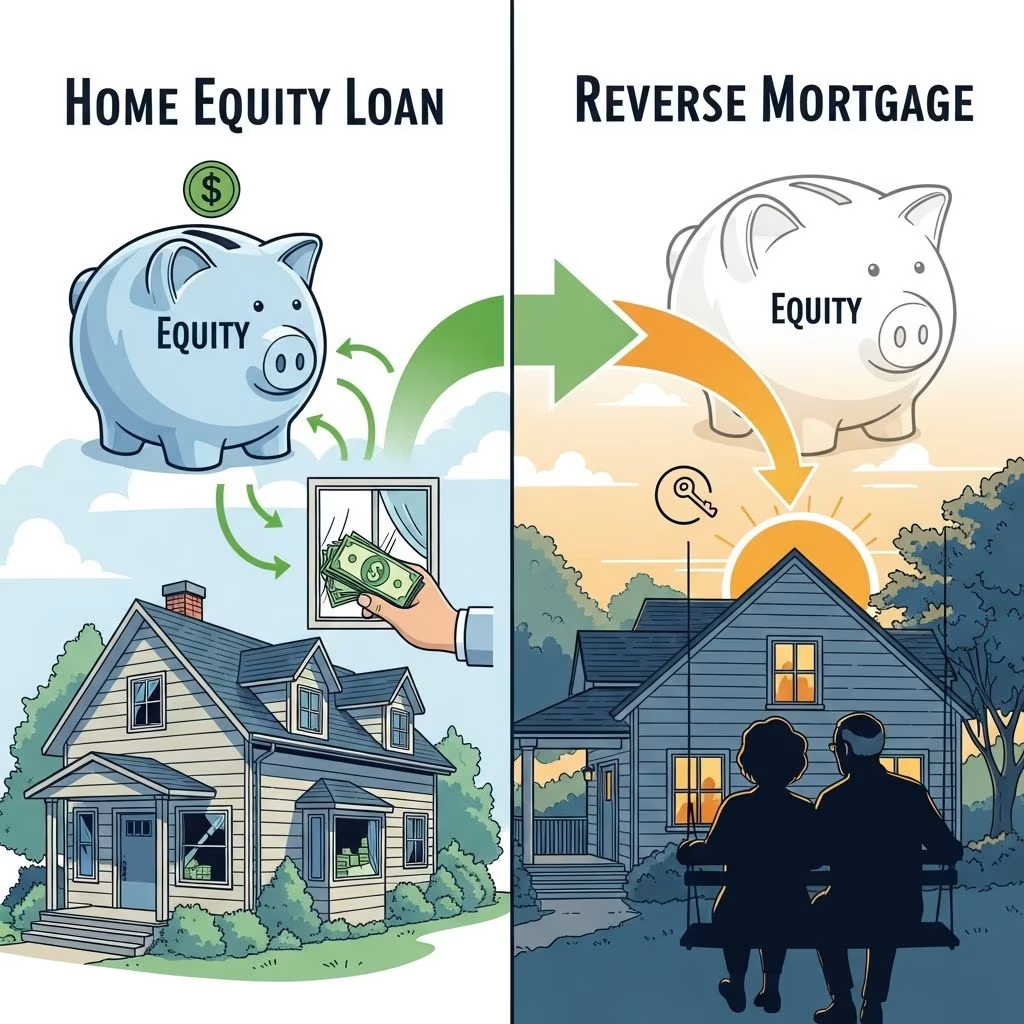
For many retirees, their home is their largest asset and a powerful tool for strengthening financial security later in life. Turning that housing wealth into usable cash can be done in several ways, but two of the most common are home equity loans and reverse mortgages. Understanding how each option works, their eligibility rules, and their long-term impact is essential before you tie your retirement plans to your house.
Using Home Equity in Retirement
Home equity is the difference between your home’s market value and what you owe on any mortgages or liens. Tapping this equity can help you:
- Cover gaps in retirement income and everyday expenses
- Pay for large one-time costs such as medical bills or home repairs
- Fund long-term care or in-home support so you can age in place
- Consolidate high-interest debt into a lower-rate loan
Research has increasingly recognized housing wealth as a viable part of a retirement strategy, especially for older homeowners who are “house rich and cash poor.” Choosing the right method for accessing that equity depends on income stability, risk tolerance, and whether leaving the home to heirs is a top priority.
What Is a Home Equity Loan?
A home equity loan is a second mortgage that allows you to borrow a lump sum using your home as collateral. It typically has:
- A fixed interest rate
- A set repayment term (often 5–30 years)
- Monthly payments required right away
Because of the predictable payment schedule and interest rate, a home equity loan can be easier to budget for, which may appeal to retirees with steady pensions or Social Security income.
Eligibility and Requirements
Unlike reverse mortgages, home equity loans are available to adults of all ages, not just seniors. Lenders typically require:
- Sufficient home equity (often at least 15%–20% remaining after the loan)
- A reliable income stream to support the monthly payment
- An acceptable credit score and debt-to-income ratio
Because underwriting focuses on income and credit, some retirees with limited cash flow may find home equity loans harder to qualify for than reverse mortgages.
Pros of Home Equity Loans
- Predictable costs: Fixed interest and fixed monthly payments simplify budgeting.
- Potentially lower rates: Rates can be lower than unsecured debt like credit cards.
- Tax benefits in some cases: Interest may be deductible if the funds are used to buy, build, or substantially improve the home, subject to IRS rules.
- Equity preservation: Because you are steadily paying down the balance, more equity may remain for heirs compared with a growing reverse mortgage balance.
Cons of Home Equity Loans
- Mandatory monthly payments: Missing payments can lead to default and foreclosure.
- Increased fixed expenses: This can strain a tight retirement budget.
- Qualification hurdles: Retirees with reduced income or higher debts may not qualify easily.
What Is a Reverse Mortgage?
A reverse mortgage allows older homeowners to convert part of their home equity into cash without making monthly mortgage payments. In the U.S., most reverse mortgages are federally backed Home Equity Conversion Mortgages (HECMs), insured by the Federal Housing Administration (FHA).
With a HECM, homeowners age 62 or older can receive funds as a lump sum, line of credit, monthly payments, or a combination. The loan is repaid when:
- The homeowner sells the property
- The homeowner permanently moves out
- The last borrower or eligible non-borrowing spouse dies
Reverse Mortgage Eligibility
While program details can vary, HECMs usually require:
- Homeowner is age 62 or older
- The home is the primary residence
- Sufficient equity, often with the first mortgage paid off or nearly so
- Borrower remains current on property taxes, homeowners insurance, and maintenance
- No unresolved federal debts such as certain tax liens or federal student loans
Counseling from a HUD-approved housing counselor is required before closing a HECM, helping seniors understand risks, costs, and alternatives.
How Reverse Mortgage Payments Work
Instead of you paying the lender every month, the lender pays you or makes funds available. Meanwhile, the loan balance grows over time because:
- Interest accrues on the outstanding balance
- Mortgage insurance premiums and certain fees may be added
No repayment is required as long as you live in the home, keep up with taxes and insurance, and meet other loan conditions. The loan is generally repaid from the sale of the home, with any remaining equity going to you or your heirs.
Pros of Reverse Mortgages
- No monthly mortgage payments: This can significantly reduce financial pressure in retirement.
- Flexible access to funds: You can choose a lump sum, line of credit, monthly payments, or a mix.
- Stay in your home: You can age in place while using the equity to support living expenses.
- Nonrecourse protection: HECMs are nonrecourse loans, meaning you or your estate never owe more than the home’s value, even if the loan balance exceeds the sale price.
Cons of Reverse Mortgages
- Rising loan balance: Interest and fees accumulate, often reducing the equity that remains for heirs.
- Ongoing obligations: You must pay property taxes, homeowners insurance, and maintain the home; failing to do so can trigger foreclosure.
- Upfront and ongoing costs: Reverse mortgages usually involve mortgage insurance premiums, closing costs, and servicing fees.
- Impact on inheritance: Because more equity may be consumed, less value may pass to beneficiaries compared with other options.
Home Equity Loan vs. Reverse Mortgage: Key Differences
The table below summarizes some of the most important differences for retirees weighing these options.
| Feature | Home Equity Loan | Reverse Mortgage (HECM) |
|---|---|---|
| Primary age requirement | None; open to adults of all ages | Generally 62+ |
| Monthly payments | Required from the start | No mortgage payments while conditions are met |
| How funds are received | One-time lump sum | Lump sum, line of credit, monthly payments, or combination |
| Impact on cash flow | Increases fixed expenses | Improves cash flow by removing mortgage payments and providing income |
| Effect on home equity | Balance declines with repayment; may preserve more equity for heirs | Balance grows over time; can significantly reduce equity for heirs |
| Qualification focus | Income, credit score, and debt-to-income ratio | Age, equity, and ability to pay taxes/insurance; easier credit standards |
| Repayment trigger | Regular amortizing payments until paid off | Due when home is sold, vacated, or after death of last borrower/spouse |
How Each Option Fits into Retirement Planning
Whether a home equity loan or reverse mortgage is “better” depends on your broader financial picture, including savings, health, goals, and how long you plan to stay in the home.
When a Home Equity Loan May Be Best
A home equity loan may be a better fit if you:
- Have reliable income from pensions, annuities, or work
- Want a fixed repayment schedule and predictable payoff date
- Plan to use the funds for a one-time expense, such as a renovation or medical procedure
- Are focused on preserving equity for heirs and are comfortable with monthly payments
When a Reverse Mortgage May Be Best
A reverse mortgage may be more appropriate if you:
- Are 62 or older and expect to remain in your home long term
- Need to supplement retirement income to cover everyday living costs
- Cannot comfortably handle an additional monthly loan payment
- Do not have heirs who insist on inheriting the property free and clear, or you prioritize your own cash flow over maximizing inheritance
Some research and planning strategies suggest that using a reverse mortgage earlier in retirement, particularly as a standby line of credit, can help manage market risk and extend the life of investment portfolios. However, this approach is complex and should be coordinated with a financial advisor familiar with housing wealth tools.
Costs, Risks, and Tax Considerations
Both types of borrowing come with costs and risks that should be weighed carefully.
Upfront and Ongoing Costs
- Home equity loans: Often involve appraisal fees, closing costs, and possibly points, but do not require FHA mortgage insurance.
- Reverse mortgages: Typically include upfront and annual FHA mortgage insurance premiums in addition to closing costs and servicing fees.
Because of these insurance and servicing costs, reverse mortgages can be more expensive than traditional home equity products over time, although the lack of monthly payments offsets this for many retirees.
Tax Treatment
For U.S. taxpayers:
- Loan proceeds: Money received from either a home equity loan or a reverse mortgage is generally treated as loan proceeds, not income, and is typically not taxable when received.
- Interest deduction: Mortgage interest may be deductible only when the funds are used to buy, build, or substantially improve the home that secures the loan, and subject to IRS limits; otherwise, it may not be deductible.
Tax treatment is nuanced and can change, so retirees should consult a tax professional before making major borrowing decisions.
Impact on Public Benefits
Reverse mortgage payouts generally do not affect Social Security or Medicare eligibility because they are not counted as income, but large withdrawals that remain in your bank account could affect needs-based programs like Medicaid or Supplemental Security Income (SSI). Timing and structure of withdrawals should be coordinated with benefit planning.
Effect on Heirs and Estate Planning
Many older homeowners worry about how borrowing against their home will affect their heirs. The impact is different for home equity loans and reverse mortgages.
Home Equity Loan and Your Estate
- If you still owe money when you die, your estate must either pay off or refinance the loan.
- Because the balance is usually amortizing and may be smaller than a reverse mortgage, more equity may be left for heirs, assuming payments were made consistently.
Reverse Mortgage and Your Heirs
With a HECM reverse mortgage:
- The loan is typically repaid when the home is sold after the last borrower (or eligible non-borrowing spouse) dies or moves out.
- If the selling price exceeds the loan balance, the estate or heirs keep the remaining equity.
- If the balance is higher than the home’s value, FHA insurance covers the difference; the estate does not owe more than the property’s market value because the loan is nonrecourse.
Families who wish to keep the home can usually pay off the reverse mortgage at the lesser of the loan balance or 95% of the appraised value, depending on program rules at the time. Clear communication with heirs and inclusion of housing plans in your estate documents are critical.
Practical Steps Before You Decide
Before tapping your home equity for retirement, consider the following steps:
- Review your full retirement budget: Include health care, long-term care, and home maintenance costs.
- Clarify your housing plans: How long do you realistically plan to stay in the home?
- Discuss inheritance goals: Talk with family about whether keeping the home matters to them.
- Consult qualified professionals: Speak with a HUD-approved housing counselor for reverse mortgages and a fiduciary financial planner or housing-wealth specialist for strategy.
- Compare multiple offers: Shop several lenders for rates, fees, and terms on both home equity loans and reverse mortgages.
Frequently Asked Questions (FAQs)
Q: Can I lose my home with a reverse mortgage?
You can stay in your home as long as you continue to live there as your primary residence, pay property taxes and homeowners insurance, and maintain the property. Failure to meet these obligations can lead to default and, in serious cases, foreclosure.
Q: Do I still own my home with a reverse mortgage?
Yes. You retain title to your home, just as with a traditional mortgage. The lender places a lien on the property as security for the loan, which is repaid when the home is sold or the loan otherwise comes due.
Q: Is a home equity loan easier to get than a reverse mortgage?
Not necessarily. Home equity loans typically have stricter income and credit requirements, which can challenge retirees with reduced earnings. Reverse mortgages, by contrast, focus more on age, equity, and ability to pay taxes and insurance, and may be easier to qualify for if your cash flow is limited.
Q: Will a reverse mortgage affect my Social Security or Medicare?
Reverse mortgage proceeds are generally treated as loan advances, not income, so they do not directly reduce Social Security or Medicare benefits. However, large unused proceeds held in bank accounts could influence eligibility for needs-based programs like Medicaid or SSI, so professional advice is recommended.
Q: Which option is better if I want to leave the house to my children?
If preserving home equity for heirs is a top priority and you can manage the payments, a home equity loan may leave more value in the property over time. A reverse mortgage can still work if your heirs are comfortable selling the home or refinancing the loan when it becomes due, but it often consumes more equity as interest accrues.
References
- Home equity loan vs. reverse mortgage: Which will be better for seniors in 2026? — CBS News. 2024-01-02. https://www.cbsnews.com/news/home-equity-loan-vs-reverse-mortgage-which-will-be-better-for-seniors-in-2026/
- Home equity loan or HELOC vs. reverse mortgage — Bankrate. 2023-10-11. https://www.bankrate.com/home-equity/home-equity-loan-heloc-vs-reverse-mortgage/
- Should retirement planning include reverse mortgages? — Urban Institute Housing Matters. 2022-06-16. https://housingmatters.urban.org/feature/should-retirement-planning-include-reverse-mortgages
- Reverse mortgage vs. home equity loan or HELOC: How to choose — Rocket Mortgage. 2023-09-08. https://www.rocketmortgage.com/learn/reverse-mortgage-vs-home-equity-loan
- Reverse Mortgage vs. Home Equity Loan or HELOC — PNC Insights. 2023-05-12. https://www.pnc.com/insights/personal-finance/borrow/reverse-mortgage-vs-home-equity-loan-heloc.html
- Reversing the Conventional Wisdom: Using Home Equity to Supplement Retirement Income — Journal of Financial Planning (FPA). 2012-02-01. https://www.financialplanningassociation.org/article/journal/FEB12-reversing-conventional-wisdom-using-home-equity-supplement-retirement-income
This article is general information, not personal financial advice. Consider your own situation, or speak with a licensed adviser, before acting on it.


