

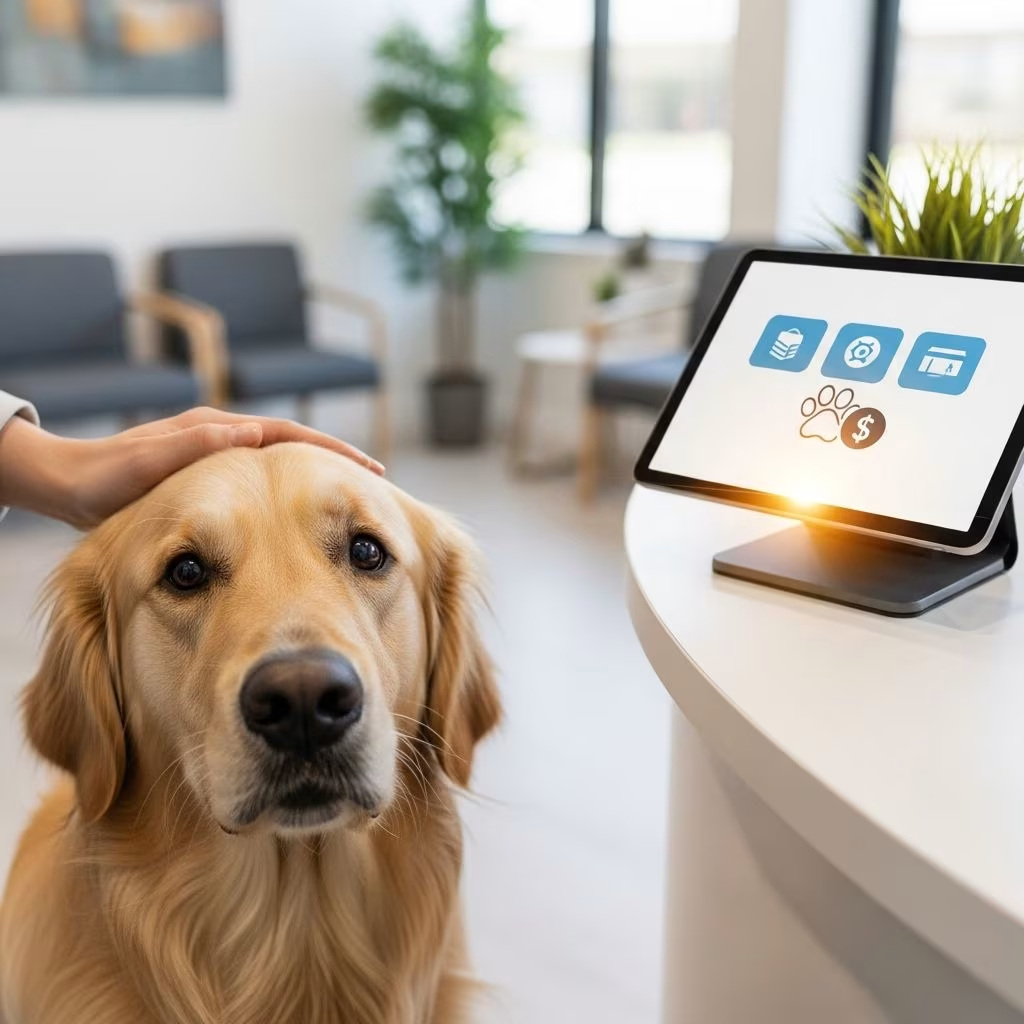
Veterinary care has become increasingly sophisticated, and with that sophistication comes higher costs for diagnostics, surgery, and ongoing treatment. Pet insurance can help offset these expenses, but many pet parents are surprised to discover that most policies follow a reimbursement model, meaning they must pay the vet first and get reimbursed later. In recent years, a new feature has emerged: pet insurance that pays the vet directly, helping reduce the need for large upfront payments.
This guide explains how direct vet pay works, which companies offer it, when it makes sense to use, and how to find veterinarians who accept direct payment from pet insurers. It mirrors the core topics typically covered in detailed consumer guides on this subject, while providing additional context and up-to-date information.
What Is Pet Insurance That Pays Vets Directly?
Traditional pet insurance operates on a straightforward reimbursement model:
- You take your pet to any licensed veterinarian or animal hospital.
- You pay the full bill at checkout.
- You submit a claim with your invoice and medical records.
- The insurer reviews the claim and reimburses you for covered costs, subject to your deductible, reimbursement rate, and annual or lifetime limits.
With direct vet pay (also called vet direct pay or direct-to-vet payment), the process changes:
- The insurer pays the veterinarian directly for the covered portion of the bill, often at or shortly after checkout.
- You only pay your share of the costs (deductible, co-insurance, and non-covered items) instead of the entire invoice upfront.
This feature does not change what is covered under the policy; it only changes who gets paid and when. Coverage limits, exclusions, waiting periods, and pre-existing condition rules remain governed by each plan’s terms.
How Direct Vet Pay Works
Even though specifics vary by insurer, most direct vet pay flows through a few common steps:
- Visit a participating veterinarian
The clinic must be willing and able to accept direct payment. Some insurers, such as Trupanion, use integrated software that allows claims to be processed in real time at the clinic. - Confirm eligibility and coverage
At check-in or before treatment, the clinic or the insurer may verify that your policy is active, the waiting period has ended, and the condition appears potentially covered. - Submit claim information
The vet’s team or you provide an itemized invoice and medical notes. For programs like Pets Best’s Vet Direct Pay, you may need to submit a veterinarian reimbursement release form authorizing the insurer to send payment directly to the clinic. - Insurer reviews and pays the clinic
Once the claim is processed, the insurer sends any eligible reimbursement amount straight to the vet, rather than to you. - You pay your share
You are still responsible for the deductible, co-insurance (e.g., 10–30% of covered costs), and any expenses that fall outside your coverage (such as excluded treatments or exam fees, depending on the policy).
In many cases, direct vet pay is optional. If a vet prefers traditional billing, you can still pay out of pocket and be reimbursed later.
Direct Vet Pay vs. Traditional Reimbursement
The table below highlights the main differences between standard reimbursement and direct vet pay:
| Feature | Traditional Reimbursement | Direct Vet Pay |
|---|---|---|
| Who pays the vet at checkout? | Pet owner pays full invoice. | Insurer pays covered portion directly to vet; owner pays only their share. |
| Cash flow impact | Owner must have funds or credit available to cover entire bill. | Lower upfront out-of-pocket burden, especially for high bills. |
| Claim processing | Owner submits claim later; reimbursement arrives days to weeks afterward. | Claim often processed at or shortly after visit, depending on provider and clinic setup. |
| Vet participation | Any licensed vet can be used, no special setup needed. | Only vets willing to accept direct payments and, in some cases, specific software integrations. |
| Policy coverage rules | Coverage, exclusions, and limits are determined by the policy. | Coverage, exclusions, and limits are the same; only payment flow differs. |
Benefits of Pet Insurance That Pays Your Vet Directly
Direct vet pay is especially attractive for pet owners concerned about large, unexpected bills, such as emergency surgery or intensive care. Key benefits include:
- Reduced upfront costs
You avoid paying the entire invoice out of pocket before reimbursement. This can be crucial for high-cost emergencies where total charges can reach thousands of dollars. - Less reliance on credit or savings
Without direct pay, owners often rely on credit cards or loans to fund care until reimbursement arrives. Direct payments from the insurer may reduce or eliminate that need. - Simplified billing at checkout
When integrated systems are used, the clinic can see in real time what the insurer will pay, and you only settle the remaining portion. - Improved peace of mind
Knowing you do not have to front a large sum can make it easier to authorize recommended treatment quickly, which can be critical for serious illness or trauma.
Potential Drawbacks and Limitations
Despite its advantages, direct vet pay is not universally available and may not be ideal in every situation. Consider the following drawbacks:
- Not all vets accept direct payments
Many clinics still prefer owners to pay in full and then seek reimbursement. According to Progressive, typically there is no direct payment between the vet and the insurer, and exceptions depend on specific company arrangements. - Limited participating providers
Some direct-payment features require clinics to use certain software platforms (for example, Trupanion’s integrated system), which may not be installed in every hospital. - Administrative requirements
Programs like Pets Best’s Vet Direct Pay require a signed reimbursement release form, and some vets may prefer not to deal with added paperwork. - Coverage still subject to policy terms
Direct pay does not guarantee full payment. If a claim is partially denied or falls outside coverage (e.g., pre-existing conditions), you may still owe substantial amounts.
Which Pet Insurance Companies Offer Direct Vet Pay?
Availability of direct vet pay varies widely across the industry, and details evolve as insurers update their systems. Examples of companies or arrangements that may support direct payments include:
- Trupanion
Trupanion is known for its ability to pay veterinarians directly at checkout through its proprietary software installed in participating clinics. With unlimited payouts and up to 90% coverage, it is positioned specifically to reduce the need for owners to wait for reimbursement. - Pets Best – Vet Direct Pay
Pets Best offers an optional Vet Direct Pay feature on all plans. Once you submit a claim with the signed veterinarian reimbursement release form, any eligible reimbursement amount can be sent straight to your vet’s office instead of to you. - CarePlus by Chewy (with Trupanion plans)
CarePlus plans administered by Trupanion may allow direct payments to vets that are set up with Trupanion’s payment system, allowing them to pay the vet directly similar to human health insurance. - Progressive (through partners)
Progressive notes that direct payment is not the norm but may be available as an exception, depending on the underlying pet insurance partner and arrangements with veterinarians.
Other insurers sometimes process special one-time direct payments at a vet’s request for large emergencies, but these arrangements are typically handled case-by-case and are not standard contractual features. Always verify current capabilities with both the insurer and the veterinarian, as offerings can change.
How to Find Vets That Accept Direct Insurance Payments
Because pet insurance generally allows you to see any licensed veterinarian, there is no single network directory that shows direct-payment availability. However, you can take several steps to locate clinics willing to work with direct vet pay:
- Ask the insurer directly
Many insurers maintain lists of hospitals where their software is installed or where direct payment has been used successfully before. Customer support can often provide guidance. - Call local veterinary clinics
Ask questions such as:- “Do you accept direct payment from any pet insurance companies?”
- “Are you set up to receive direct payments from Trupanion or Pets Best?”
- “If my insurer offers a reimbursement release form, would you be willing to receive payment directly?”
- Check emergency and specialty hospitals
High-volume emergency or specialty referral centers are more likely to have experience with direct pay programs, especially those that require integrated software. - Confirm each visit
Policies and staff preferences can change. Confirm the clinic’s direct payment practices before relying on them for major procedures.
Key Factors to Consider When Choosing a Plan with Direct Vet Pay
Direct payment is only one feature among many. When comparing pet insurance policies that advertise a direct vet pay option, also consider:
- Coverage scope
Determine whether the plan is accident-only or accident-and-illness, and whether it covers chronic conditions, hereditary diseases, diagnostic imaging, hospitalization, prescription medications, and surgery. - Reimbursement level and deductibles
Many plans allow you to choose a reimbursement rate (e.g., 70%, 80%, 90%) and deductible amount. Higher reimbursement and lower deductibles reduce your out-of-pocket share but generally raise premiums. - Annual and lifetime limits
Some policies have annual or lifetime caps on payouts. Others, like many Trupanion-linked offerings, market unlimited payouts, which can be important if your pet develops an expensive chronic condition. - Waiting periods
Pet insurance usually includes waiting periods before accident or illness coverage begins, which can differ by state and provider. Direct vet pay will not apply to care rendered before these periods end. - Exclusions and pre-existing conditions
Review policy language on pre-existing conditions, congenital issues, preventive care, and elective procedures. Direct payment will not override exclusions. - Availability of participating vets
If few clinics near you accept direct payments from a specific insurer, prioritizing that feature may make less sense than focusing on overall coverage quality and price.
When Does Direct Vet Pay Make the Most Sense?
Direct vet pay can be particularly valuable for pet owners in these scenarios:
- Limited access to savings or credit
Owners who do not keep large emergency funds or who want to avoid accumulating credit card debt may benefit most from not having to pay the full invoice upfront. - High-risk pets or breeds
Pets predisposed to costly hereditary or chronic conditions may require frequent or expensive care. Reducing upfront outlays can make long-term management more manageable. - Emergency-only planning
Some owners primarily worry about rare but severe emergencies, such as accidents or acute illnesses requiring surgery or intensive care. In these cases, direct pay for large, unexpected bills can be especially relieving.
Frequently Asked Questions (FAQs)
Q: Does pet insurance usually pay the vet directly?
No. Most pet insurance policies operate on a reimbursement model, where you pay the vet first and then file a claim for reimbursement. Direct vet pay is a special feature that only some insurers and clinics offer.
Q: If my insurer offers direct vet pay, can I use it at any veterinary clinic?
Not necessarily. The clinic must agree to accept direct payment and, in some cases, use specific software required by the insurer. Always confirm with both your insurer and the vet before assuming direct payment is available.
Q: Do I still have to pay a deductible and co-insurance with direct vet pay?
Yes. Direct vet pay only changes who receives the reimbursement. You are still responsible for your deductible, co-insurance, and any non-covered services, which you typically pay to the vet at checkout.
Q: Is direct vet pay available for every claim?
No. Availability depends on the insurer, the specific policy, the nature of the claim, and the vet’s willingness to participate. Insurers may also require specific forms or pre-approval before paying a clinic directly.
Q: How can I check whether my vet accepts direct payments from my insurer?
You can call your veterinarian’s office and ask if they work with direct payments from your insurer or specific programs like Trupanion’s in-clinic software. You can also contact your insurer to see if they have a list of participating clinics in your area.
References
- Do all vets accept pet insurance? — Progressive Insurance. 2023-07-10. https://www.progressive.com/answers/do-vets-take-pet-insurance/
- What Pet Insurance Pays the Vet Directly? — Pawlicy Advisor. 2023-05-18. https://www.pawlicy.com/blog/pet-insurance-with-direct-vet-pay/
- CarePlus Pet Insurance & Wellness — Chewy Health. 2024-01-05. https://www.chewy.com/pet-insurance/
- Pet Insurance That Pays Your Vet Directly (Vet Direct Pay) — Pets Best Insurance. 2023-09-01. https://www.petsbest.com/vet-direct-pay
- Aflac Pet Insurance, powered by Trupanion — Aflac / Trupanion. 2023-11-15. https://www.aflac.com/individuals/products/pet-insurance.aspx
This article is general information, not personal financial advice. Consider your own situation, or speak with a licensed adviser, before acting on it.


