

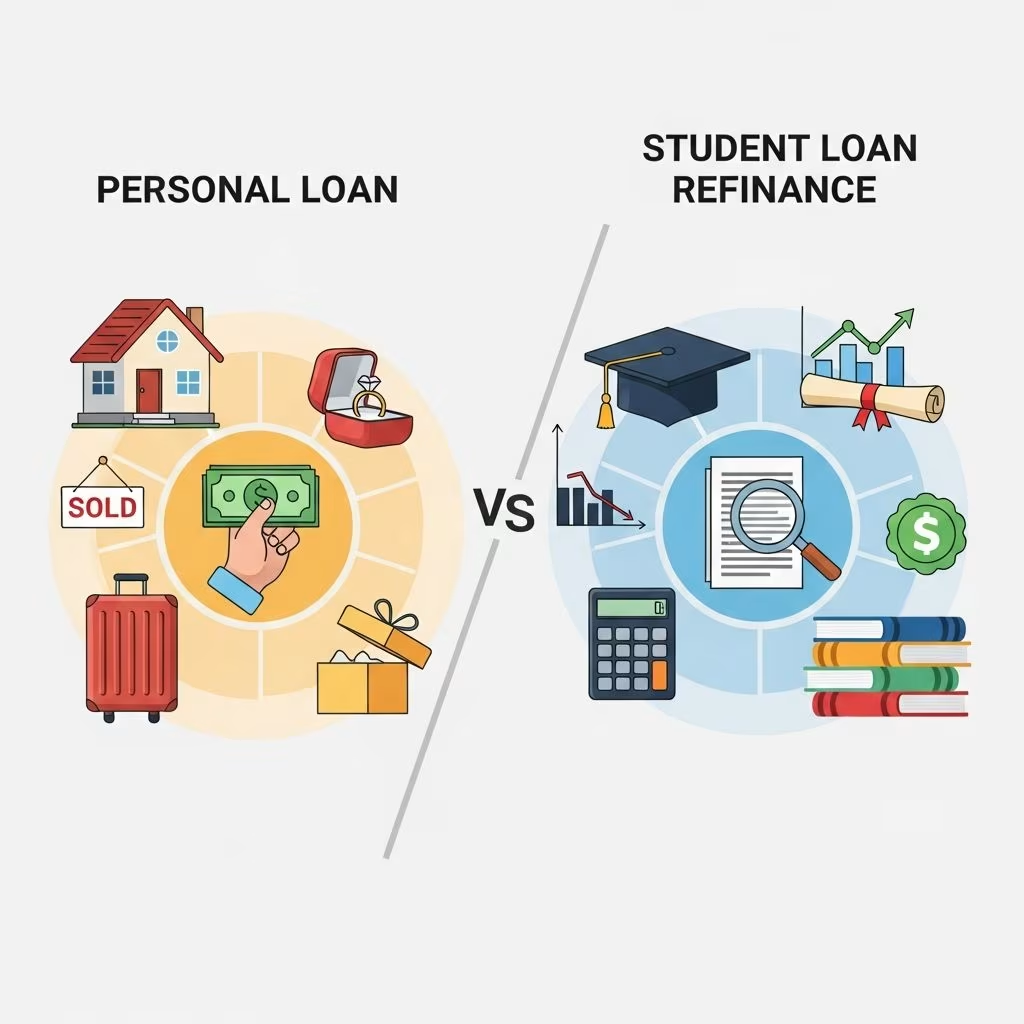
Many borrowers look for ways to make their student debt more manageable or less expensive over time. Two common options are taking out a personal loan to pay off student loans or using a student loan refinance with a private lender. Understanding how these strategies differ in cost, flexibility, and risk can help you choose the approach that best fits your financial goals.
Understanding the Basics
Before comparing options, it is important to understand what each type of loan is and how it works in the context of education debt.
What Is a Personal Loan?
A personal loan is usually an unsecured installment loan from a bank, credit union, or online lender. You receive a lump sum and repay it, with interest, over a fixed term, typically between 1 and 7 years. The lender bases your rate and approval largely on your credit score, income, and existing debts.
Key characteristics of personal loans include:
- Fixed interest rates in most cases, although some lenders may offer variable rates.
- Immediate repayment—payments usually start within 30 days of disbursement.
- Shorter repayment terms than many student loans, which can mean higher monthly payments but a faster payoff.
- No specific education protections, such as income-driven repayment, federal forbearance programs, or forgiveness.
What Is Student Loan Refinancing?
Student loan refinancing means taking out a new private loan to pay off one or more existing student loans (federal, private, or both). The new loan comes with a different interest rate, repayment term, and often a new lender and servicer.
Key characteristics of refinancing include:
- You can combine multiple loans into one new loan, with one monthly payment.
- The main goal is often to secure a lower interest rate or a term that better fits your budget.
- Eligibility typically requires good credit and stable income.
- Refinancing federal loans into a private loan causes you to lose federal protections like income-driven repayment and certain forgiveness options.
Personal Loan vs Student Loan Refinance: Key Differences
Although both options involve replacing or paying off existing debt with a new loan, they differ in how they treat student loan benefits, interest rates, and repayment terms.
| Feature | Personal Loan | Student Loan Refinance |
|---|---|---|
| Primary purpose | General use (debt pay off, purchases, etc.) | Specifically to replace existing student loans |
| Typical interest rate range | Often higher than student loan rates for similar borrowers | Can be competitive and sometimes lower than original student loan rates |
| Repayment term | Usually 1–7 years, leading to higher monthly payments | Often 5–20 years, depending on lender and balance |
| Access to federal benefits | Not eligible for income-driven plans, federal forbearance, or forgiveness | Refinancing federal loans into private removes access to federal programs |
| Use of funds | Flexible; can pay off multiple types of debt | Designed to pay off student loans only |
| Approval criteria | Credit score, income, and debt-to-income ratio | Similar, often emphasizing strong credit and income |
Advantages and Disadvantages of Using a Personal Loan
Potential Advantages of a Personal Loan
Using a personal loan to tackle student debt is less common, but it can have specific benefits depending on your situation.
- Flexible use of funds: You can pay off student loans and also address other high-interest debts, such as credit cards, if your primary goal is overall debt consolidation.
- No restriction to education debt: Unlike refinancing, you are not limited to student loans; this may simplify your overall financial picture if you have multiple types of consumer debt.
- Shorter payoff horizon: Because terms are shorter, a personal loan can force a faster payoff, reducing total interest paid if you can afford the higher monthly payments.
Drawbacks of a Personal Loan for Student Debt
There are several significant downsides to using a personal loan instead of student-focused options.
- Higher interest rates: Personal loan rates tend to be higher than both federal student loan rates and competitive refinance offers for well-qualified borrowers.
- Immediate repayment: You do not get in-school deferment or grace periods; payments start right away, which can strain your budget if you are still studying or just graduated.
- No student-specific protections: Personal loans are not eligible for federal income-driven repayment, government forbearance during hardship, or federal forgiveness programs.
- Potentially higher monthly payments: Shorter terms often result in larger monthly obligations than a refinanced student loan with a longer term.
Advantages and Disadvantages of Student Loan Refinancing
Potential Advantages of Refinancing Student Loans
Refinancing is designed specifically with student borrowers in mind and can offer both financial savings and simplification.
- Lower interest rate: Many borrowers refinance to obtain a lower rate, which can reduce both monthly payments and total interest paid over the life of the loan.
- Simplified repayment: Refinancing can consolidate multiple private and (if you choose) federal loans into a single loan and one monthly payment.
- Customizable term: Lenders often offer a variety of terms (for example, 5, 7, 10, 15, or 20 years), allowing you to target either lower monthly payments or faster payoff.
- Choice of fixed or variable rate: Some lenders let you select between fixed and variable rates, depending on your risk tolerance and expectations for interest rate changes.
- Potential cost savings example: Refinancing a $25,000 loan from 7% to 4% over 10 years can lower the monthly payment and save several thousand dollars in interest over the life of the loan.
Drawbacks and Risks of Refinancing
Refinancing is not always the right choice, especially for borrowers with federal loans who rely on repayment protections.
- Loss of federal benefits: Once you refinance federal loans with a private lender, you permanently lose access to federal income-driven repayment plans, federal forbearance programs, and many forgiveness options (including Public Service Loan Forgiveness in most cases).
- Less flexibility in hardship: Private refinance loans may offer some deferment or forbearance, but they typically do not match the breadth and flexibility of federal programs.
- Credit- and income-based approval: You usually need strong credit and steady income to qualify for the most competitive rates; otherwise, refinancing may not save you money.
- Longer term may increase total interest: Extending your term can lower monthly payments but may increase the total interest you pay over time, even with a lower rate.
Federal vs Private Student Loans: Why It Matters
Whether your current loans are federal, private, or a mix will heavily influence whether a personal loan or refinancing is appropriate.
Federal Student Loans
Federal student loans are issued by the U.S. Department of Education and come with distinct protections and repayment options.
- Income-driven repayment plans that cap monthly payments at a percentage of discretionary income and can lead to eventual forgiveness after 20–25 years, depending on the plan.
- Deferment and forbearance options during periods of unemployment, economic hardship, or further study.
- Eligibility for certain forgiveness programs, such as Public Service Loan Forgiveness if you meet specific employment and payment criteria.
When you refinance federal loans with a private lender, you replace them with a private loan and irrevocably lose these federal benefits.
Private Student Loans
Private student loans are offered by banks, credit unions, and other lenders. They usually lack federal benefits but may have competitive rates and different terms.
- Repayment terms and hardship options depend on the private lender’s policies.
- There is no federal income-driven repayment or guaranteed forgiveness for private loans.
- Refinancing private loans can be especially useful if you can qualify for a lower interest rate or better term.
When a Personal Loan Might Make Sense
Although refinancing is typically more aligned with student debt, there are narrow scenarios where a personal loan might be considered.
- Small remaining balance: If you have a relatively small student loan balance that you want to pay off quickly, a short-term personal loan could be a structured way to do so, especially if your existing student loan has unfavorable terms.
- Mixed high-interest debt: If you are juggling high-interest credit card debt alongside a small private student loan, a single personal loan might consolidate and simplify these obligations, though you must compare interest costs carefully.
- Ineligible for refinancing: If your credit profile or income prevents you from qualifying for competitive refinance rates, but you can obtain a reasonable personal loan, it may be a second-best option. However, you must be cautious about higher rates and payments.
When Student Loan Refinancing Might Be Better
For many borrowers with strong credit and stable income, refinancing is often the more targeted tool for optimizing student debt.
- High-interest private loans: If your existing private student loans carry high interest rates, refinancing can reduce your rate and total interest, especially if your credit profile has improved since you first borrowed.
- Multiple loans and servicers: Refinancing can consolidate multiple private and possibly federal loans into a single payment, making budgeting easier and reducing the chance of missed payments.
- Clear long-term stability: If you are confident in your career path and do not anticipate needing federal safety nets (for example, you have no plans to use income-driven repayment), refinancing federal loans could still be worthwhile for rate savings.
- Goal-based term selection: You can choose a shorter term to become debt-free faster or a longer term to lower monthly payments, depending on your goals and cash flow.
How to Decide: Personal Loan vs Refinance
Choosing between a personal loan and student loan refinancing requires looking at both numbers and non-financial factors.
Key Questions to Ask Yourself
- Are my loans federal, private, or both? If you have federal loans and may need income-driven repayment or forgiveness, refinancing or using a personal loan could be risky because it eliminates federal protections.
- What interest rate can I realistically qualify for? Prequalification tools for refinancing and personal loans can estimate rates with only a soft credit check, allowing comparison without harming your credit score.
- How important is a lower monthly payment vs faster payoff? Shorter terms (often via refinancing or a personal loan) usually mean higher monthly payments but less interest, while longer terms reduce the monthly burden but increase total interest.
- Could I ever need federal protections? If your income is variable, you work in public service, or you expect future career changes, the flexibility of federal programs may outweigh the potential interest savings from refinancing.
Practical Steps to Compare Options
- List your current loans, including balance, interest rate, type (federal or private), and remaining term.
- Use prequalification tools from multiple refinance lenders and personal loan providers to see estimated rates and terms.
- Calculate the total cost (monthly payment and total interest paid) under each option over the full term, not just the monthly payment.
- Factor in any loss of federal benefits if you refinance or use a personal loan to pay off federal loans.
Frequently Asked Questions (FAQs)
Q: Is a personal loan ever better than refinancing my student loans?
A: A personal loan might be useful if you have a small remaining balance or want to consolidate different types of high-interest consumer debt, but for most borrowers focused solely on student loans, a dedicated refinance loan is usually more cost-effective and better aligned with education debt.
Q: Can I refinance both private and federal student loans together?
A: Yes, many private lenders allow you to refinance a combination of federal and private loans into a single new loan. However, refinancing federal loans with a private lender permanently removes federal benefits like income-driven repayment and certain forgiveness options.
Q: Will refinancing affect my credit score?
A: Prequalification usually involves a soft credit inquiry that does not affect your score. When you formally apply, lenders perform a hard inquiry, which can cause a small, temporary dip in your score. Over time, on-time payments on the new loan can help your credit profile.
Q: Should I refinance if I plan to use an income-driven repayment plan?
A: If you expect to rely on income-driven repayment or pursue federal loan forgiveness, refinancing federal loans into a private loan is generally not advisable because you will lose access to these federal programs.
Q: Can I refinance my student loans more than once?
A: Yes, some borrowers refinance multiple times if their credit improves or interest rates fall further. Each new refinance creates a new loan with new terms, so it is important to re-evaluate total costs and any lost benefits each time.
References
- Should I Use a Personal Loan to Pay for My Education? — Experian. 2023-08-09. https://www.experian.com/blogs/ask-experian/is-a-personal-loan-better-than-a-student-loan/
- Student Loan Consolidation vs Refinancing: What’s Best for You? — Sallie Mae. 2024-01-15. https://www.salliemae.com/blog/refinance-student-loans/
- Student Loans: Refinancing or Consolidating – Is There a Difference? — Laurel Road. 2023-06-01. https://www.laurelroad.com/refinance-student-loans/refinance-or-consolidate-student-loans-is-there-a-difference/
- Benefits of Refinancing Student Loans: Is It Worth It? — Education Loan Finance (ELFI). 2023-10-12. https://www.elfi.com/refinance-student-loans/benefits-of-refinancing/
- Should I refinance my private or federal student loans? If so, how? — Citizens Bank. 2023-09-05. https://www.citizensbank.com/learning/refinance-student-loans.aspx
- Is Now the Right Time to Refinance Your Student Loans? — Student Choice. 2023-07-20. https://www.studentchoice.org/is-now-the-right-time-to-refinance-your-student-loans/
- Federal Versus Private Loans — U.S. Department of Education, Federal Student Aid. 2024-02-01. https://studentaid.gov/understand-aid/types/loans/federal-vs-private
This article is general information, not personal financial advice. Consider your own situation, or speak with a licensed adviser, before acting on it.


