

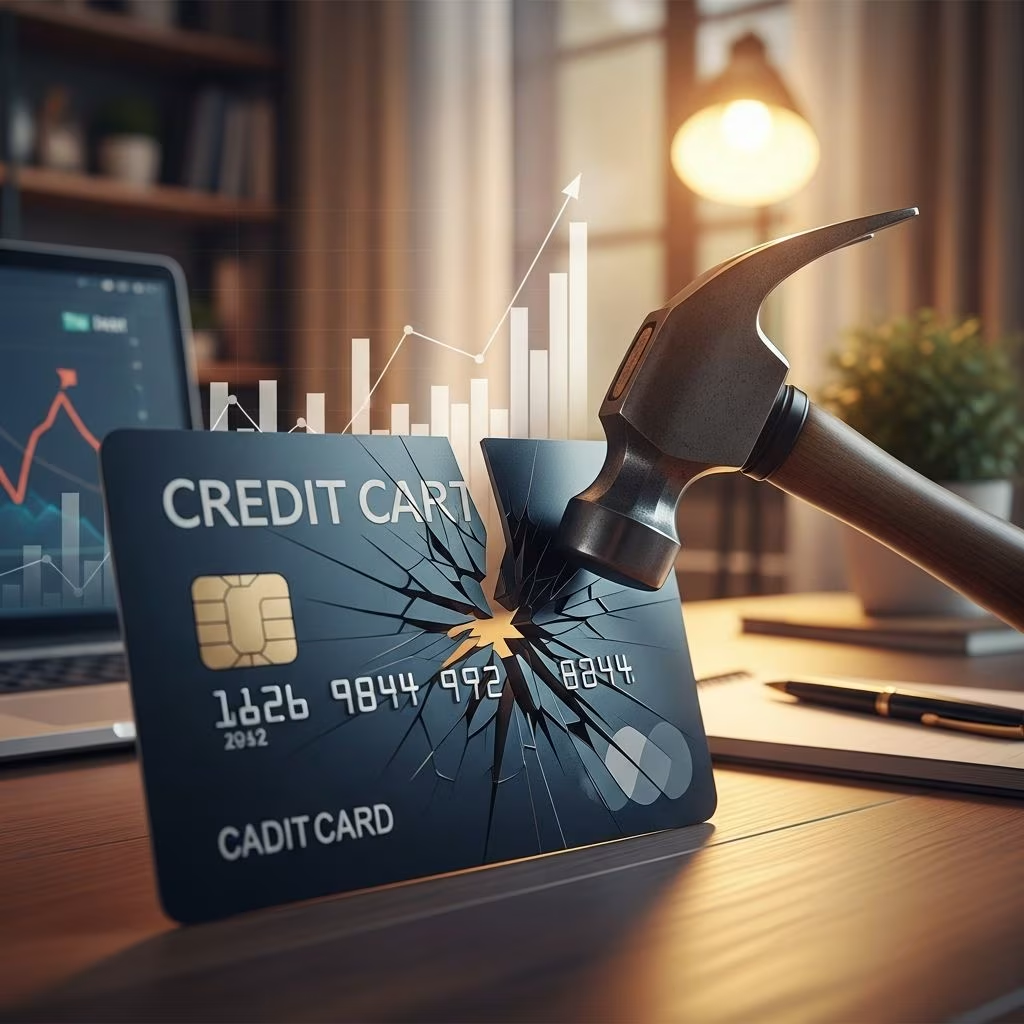
Credit card debt can feel overwhelming, but you are not stuck with it forever. With a clear plan, the right payoff strategy, and better spending habits, you can pay off your balances and finally stop stressing about money.
This guide walks you through five practical tips to get rid of credit card debt, explains the snowball vs. avalanche payoff methods, and answers common questions about what happens if you are late or stop paying your cards.
Why it’s so important to tackle your credit card debt
Credit cards are convenient, but they are also among the most expensive types of consumer debt. Average credit card interest rates in the U.S. have been above 20% in recent years, which makes it easy for balances to grow quickly if you only make minimum payments.
High, persistent credit card debt can:
- Cost you hundreds or thousands in interest over time
- Lower your credit score if payments are late or balances are high relative to limits
- Reduce your ability to qualify for loans or good interest rates in the future
- Increase financial stress and limit your long-term goals, like buying a home or saving for retirement
The good news: once you commit to a structured plan, every payment moves you closer to being debt-free and more financially secure.
5 key tips to stop paying credit card debt faster
1. Choose a specific payoff method
The first step is to stop making random payments and instead follow a clearly defined payoff method. Two of the most effective are the debt snowball and debt avalanche methods.
With both approaches, you:
- List all your debts (balances, interest rates, and minimum payments)
- Continue paying at least the minimum on every account
- Send any extra money to one targeted debt at a time
The difference is how you decide which debt to prioritize first. We will break down each method in detail in the next sections so you can choose the one that best fits your personality and goals.
2. Understand the snowball vs. avalanche strategies
Deciding between snowball and avalanche is part math, part psychology. Both work when you stay consistent.
Snowball method
The debt snowball method focuses on paying off your debts from the smallest to the largest balance, regardless of interest rate.
How it works:
- List all debts from smallest to largest balance.
- Pay the minimum on every debt except the smallest.
- Throw every extra dollar at the smallest balance until it is fully paid off.
- Once it’s paid, move that full payment amount to the next smallest balance.
The main benefit is the quick wins. Eliminating smaller debts early provides a sense of accomplishment and momentum, which can be very motivating if you’ve felt stuck for a long time.
Avalanche method
The debt avalanche method focuses on paying off debts with the highest interest rate first, regardless of balance size.
How it works:
- List all debts from highest to lowest interest rate.
- Pay the minimum on every debt except the one with the highest APR.
- Send all extra money to the highest-rate debt until it’s gone.
- Then move to the next highest rate, and so on.
This method generally allows you to pay less total interest and become debt-free faster than the snowball method, assuming the same total payments, because you attack the most expensive debt first.
| Method | Priority | Main Advantage | Best For |
|---|---|---|---|
| Snowball | Smallest balance first | Quick emotional wins, strong motivation | People who need visible progress to stay on track |
| Avalanche | Highest interest rate first | Least interest paid, typically fastest overall | People focused on math and long-term savings |
3. Build a realistic debt repayment plan
Once you choose your payoff method, turn it into a practical plan you can follow month after month.
Steps to build your repayment plan:
- List every credit card: card name, balance, interest rate, minimum payment.
- Choose your order: sort by balance (snowball) or interest rate (avalanche).
- Calculate your total minimum payments so you know the baseline you must pay each month.
- Determine your extra payment amount based on your budget (we’ll cover this next).
- Set milestones: for example, “Pay off Card A in six months,” or “Reduce total card debt by 25% this year.”
Breaking your overall goal into smaller milestones helps reduce anxiety, because you can track progress regularly instead of only focusing on the final payoff date.
4. Increase your payment power by adjusting your budget
To accelerate debt payoff, you need money left over after covering essentials. That means taking a careful look at your monthly spending and making intentional adjustments.
Start by tracking all expenses for at least one month. Many consumer finance experts recommend categorizing spending into essentials (like housing, utilities, food, and transportation) and non-essentials (like entertainment or dining out).
Practical steps to free up cash for debt:
- Review subscriptions: cancel or pause any you don’t use or value highly.
- Negotiate bills: shop around for better rates on phone, internet, or insurance.
- Lower variable costs: plan meals at home, reduce takeout, and look for cheaper transportation options.
- Temporarily scale back extras: challenge yourself to a low- or no-spend month on non-essential items.
- Increase income where possible: ask for extra hours, take on freelance work, or sell items you no longer use.
Every dollar you free up can be directed to your chosen target card, helping you get out of debt more quickly and reduce the total interest paid.
5. Get your spending under control going forward
Paying off debt is only half the journey—the other half is making sure you don’t fall back into the same pattern.
Healthy habits to prevent new card debt:
- Build and follow a budget that includes saving for irregular expenses like car repairs or annual fees, so you don’t have to rely on credit cards when they arise.
- Use cash or debit for everyday purchases while you’re paying off debt, to avoid adding new balances.
- Turn off card auto-fills in apps and browsers to make spending less automatic.
- Keep one primary card for specific, planned expenses if needed, and pay it in full every month.
- Set spending limits or alerts on your card accounts to help you stay within your budget.
Over time, these habits can support you in moving from chronic debt to using credit as a tool, not a crutch.
Can I just ignore my credit card debt?
Ignoring credit card debt is one of the most harmful decisions you can make. Credit card issuers are required to report account status and payment history to credit bureaus, and failing to act typically triggers fees, interest, and collection activity.
If you ignore your debt:
- Interest and fees continue to grow, increasing what you owe over time.
- Late payments (usually 30 days or more past due) may be reported to credit bureaus, significantly impacting your credit score.
- The issuer may reduce your credit limit or close the account.
- After prolonged nonpayment, the debt may be sent to collections, and in some cases, creditors may pursue legal action.
Instead of ignoring the problem, reach out early. Many card issuers may be willing to discuss hardship programs, modified payment plans, or temporarily reduced interest rates if you contact them before your situation worsens.
How do I stop worrying about credit card debt?
Anxiety about debt is often tied to uncertainty. The more clearly you understand your situation and your plan, the easier it becomes to manage stress.
Create a clear repayment plan
A written plan (even a simple spreadsheet or list) can transform your perspective. You’ll know exactly:
- How much you owe
- What you will pay each month
- Which debt you’re focusing on first
- Approximately when each card will be paid off
Seeing a realistic timeline—even if it feels long—can be reassuring because you’re no longer guessing. You’re actively working a plan.
Focus on financial literacy
Improving your financial knowledge builds confidence and helps prevent future debt. Personal finance education has been linked with better credit behaviors and a lower likelihood of high-cost borrowing.
Key topics to learn about include:
- Budgeting: how to allocate income toward needs, wants, debt, and savings
- Saving and emergency funds: building a cash buffer to avoid using credit during unexpected events
- Credit reports and scores: knowing what affects your score and how to check your credit regularly
- Basic investing: once your high-interest debt is under control, understanding how to grow your money for long-term goals
Look for free, reputable resources from nonprofit organizations, government agencies, and educational institutions.
Consider debt consolidation or settlement (carefully)
If your debt is very high or your payments feel unmanageable, you may want to consider:
- Debt consolidation: combining several debts into one new loan or card, ideally at a lower interest rate, which can simplify payments and reduce costs if you avoid adding new debt.
- Debt settlement: negotiating with creditors to pay less than the total amount owed, typically in a lump sum or structured agreement.
Important cautions:
- Consolidation loans or balance transfers often come with fees, and some promotional rates are temporary.
- Debt settlement can seriously damage your credit and may have tax implications if forgiven debt is treated as income.
- Be wary of any company promising guaranteed, fast fixes—research thoroughly and, if possible, consult a nonprofit credit counselor.
Frequently Asked Questions (FAQs)
Q: What happens if I stop paying my credit card entirely?
If you stop making payments, you’ll typically incur late fees, penalty interest rates, and negative marks on your credit report. After several months of nonpayment, the issuer may charge off the account and send it to collections, and in some cases legal action may be taken to recover the debt.
Q: Should I save money or pay off credit card debt first?
Many experts recommend building at least a small emergency fund while also paying down high-interest debt. For example, you might set aside a modest cushion (such as a few hundred dollars) to avoid new debt from emergencies, then direct most extra funds toward high-interest credit cards.
Q: Is it bad to only make minimum payments?
Paying at least the minimum is essential to avoid late fees and credit damage, but if you only pay the minimum, your debt can last many years and cost far more in interest. Credit card statements are required to show how long payoff will take with minimum payments versus higher payments to help you understand the impact.
Q: Can using the snowball method hurt me because it ignores interest rates?
The snowball method may lead to paying more interest than the avalanche method, because you might tackle some low-rate debts before higher-rate ones. However, many people find the motivation from early wins helps them stick with their plan, which is ultimately more important than using the mathematically perfect method and giving up.
Q: How can I use credit cards wisely after I’m debt-free?
Once your balances are paid off, aim to pay your statement in full every month, keep your utilization low, avoid unnecessary fees, and only charge what you can comfortably repay. Used this way, credit cards can help build your credit history and may provide useful benefits like purchase protections and rewards.
Yes, you can stop paying credit card debt and stop worrying about it
Becoming free from credit card debt is a process, not an overnight event. By choosing a payoff method that fits you, building a realistic repayment plan, adjusting your budget, and developing healthier spending habits, you can break the cycle of debt and anxiety.
Every extra payment, every small balance you eliminate, and every month you stay on track is proof that you are moving in the right direction. Your financial future does not have to look like your past—starting today, you can create a plan that leads to less stress, more freedom, and long-term peace of mind.
References
- Consumer Credit – G.19 — Board of Governors of the Federal Reserve System. 2024-10-07. https://www.federalreserve.gov/releases/g19/current/default.htm
- Credit Reports and Scores — Consumer Financial Protection Bureau. 2023-08-01. https://www.consumerfinance.gov/consumer-tools/credit-reports-and-scores/
- Choose a Strategy for Paying Off Your Debt — Consumer Financial Protection Bureau. 2022-09-15. https://www.consumerfinance.gov/about-us/blog/choose-a-strategy-for-paying-off-debt/
- Emergency Savings — Consumer.gov (Federal Trade Commission). 2023-05-10. https://www.consumer.gov/articles/how-save-money
- Improving the Financial Health of U.S. Households — Federal Reserve Bank of St. Louis. 2022-06-01. https://www.stlouisfed.org/publications/bridges/volume-2-2022/improving-financial-health-us-households
- Dealing with Debt Collection — Federal Trade Commission. 2023-02-28. https://consumer.ftc.gov/articles/debt-collection-faqs
- The Effects of Financial Education: Evidence from a Field Study in High Schools — Brown, Collins, Schmeiser. Journal of Public Economics. 2016-01-01. https://doi.org/10.1016/j.jpubeco.2015.12.004
This article is general information, not personal financial advice. Consider your own situation, or speak with a licensed adviser, before acting on it.


