

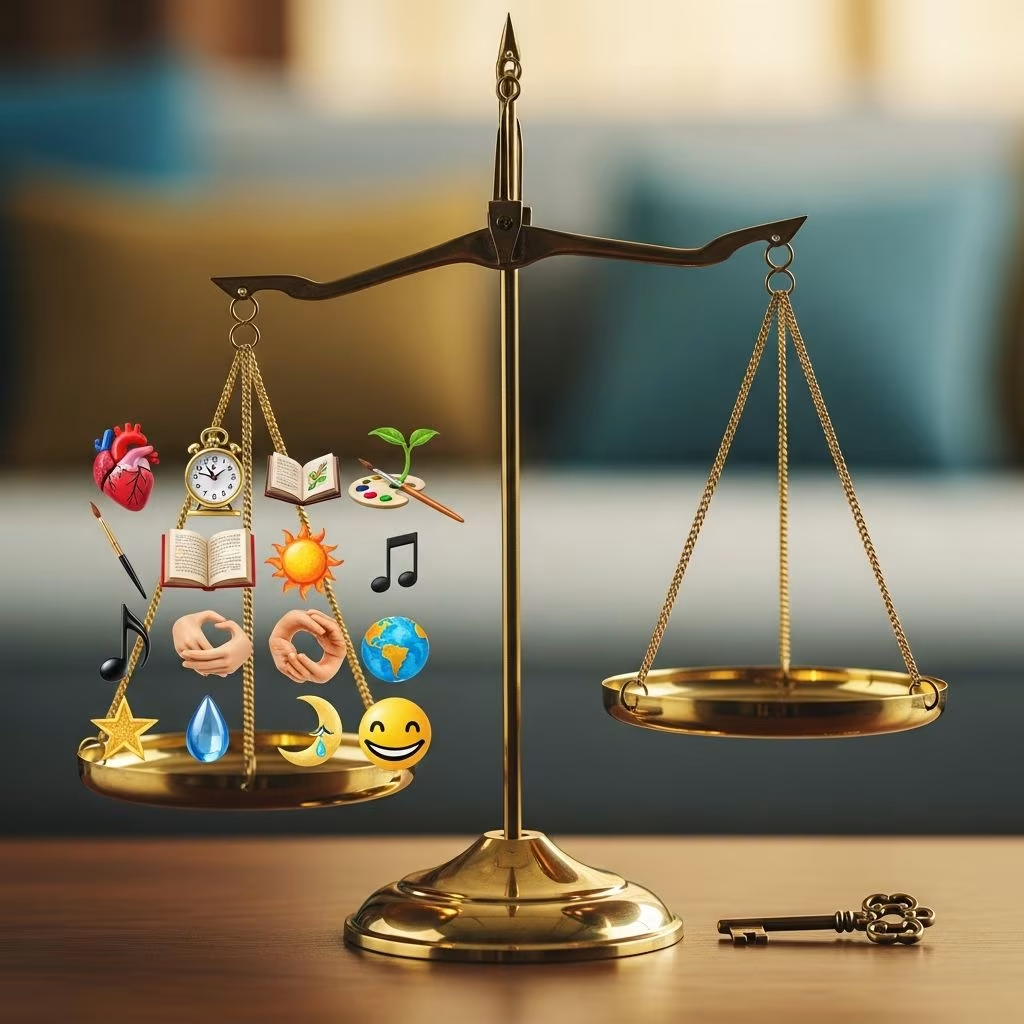
Money is a powerful tool. It can pay bills, fund dreams, and create options. But there is a long list of things money can’t buy that ultimately matter more to your quality of life than any bank balance ever will. Understanding this difference helps you pursue financial goals without losing sight of what truly makes life meaningful.
This article explores 15 important things money can’t buy, why they matter, and practical ways to nurture them alongside your financial journey.
Why It’s Important to Know What Money Can’t Buy
Modern life often equates success with income, status, and possessions. Yet research shows that beyond a certain income level, more money has a limited impact on day-to-day emotional well-being. At the same time, factors like relationships, health, and feeling a sense of purpose play a much larger role in long-term life satisfaction.
When you know what money cannot buy, you can:
- Set healthier financial goals that support your well-being instead of undermining it.
- Avoid burnout from chasing more income at the expense of your health and relationships.
- Invest time and energy in areas of life that truly increase happiness.
- Use money as a tool—not as the ultimate measure of success.
15 Important Things Money Can’t Buy
Let’s walk through some of the most important things that no amount of money can purchase.
1. Mental Health
Money can pay for therapy, medication, or wellness retreats, but it cannot guarantee mental health. True mental well-being comes from a combination of healthy habits, supportive relationships, coping skills, and sometimes professional support over time.
Chronic stress from overworking for more money can increase the risk of anxiety, depression, sleep problems, and even heart disease. If your financial goals are damaging your mental health, it’s a sign to reassess your priorities.
Ways to protect your mental health:
- Set realistic financial goals with clear boundaries around work hours and availability.
- Practice stress management, such as journaling, meditation, or regular movement.
- Seek professional help if you struggle with persistent anxiety, depression, or burnout.
2. Healthy Relationships
Money can fund fancy dates and lavish gifts, but it cannot buy healthy relationships with your partner, family, or friends. Trust, emotional safety, and mutual respect must be built over time through actions, communication, and consistency.
Studies show strong relationships are one of the clearest predictors of happiness and longevity. When conflict arises, spending more or gifting more rarely solves deeper issues.
To build healthier relationships:
- Prioritize quality time over expensive outings.
- Have honest conversations about money, expectations, and values.
- Work on listening more than you speak, especially during disagreements.
3. Time
Money can buy convenience, help, and even faster services—but it cannot buy more time. Once a moment has passed, it’s gone, regardless of how much you earn.
Some people trade years of their lives for extra income, only to realize later that they missed important milestones with loved ones or neglected their health. You can sometimes use money to free up time (by outsourcing chores, for example), but the hours themselves remain finite.
Use your time intentionally by:
- Aligning your schedule with your values, not just your paycheck.
- Saying no to commitments that don’t support your priorities.
- Planning regular time for rest, relationships, and personal growth.
4. Happiness
Money influences comfort and security, but happiness is largely shaped by how you think, act, and connect with others. Research suggests that once basic needs are met, additional income has diminishing returns on life satisfaction.
Buying more things rarely produces lasting joy. Experiences, personal growth, and relationships tend to contribute more to long-term happiness than material purchases.
To cultivate more happiness:
- Practice gratitude for what you already have.
- Invest in meaningful experiences rather than just possessions.
- Develop daily habits that support contentment, like exercise or time in nature.
5. True Friendships
If you have money, you may attract people who enjoy your lifestyle—but true friendships are not for sale. Real friends show up when things are hard, support your growth, and care about you regardless of your financial situation.
Surrounding yourself with people who value you only for what you can provide financially can leave you feeling lonely and used. Genuine friendship is built on shared values, trust, and mutual support.
How to nurture real friendships:
- Show up consistently, especially when your friends are struggling.
- Keep money out of the center of the relationship whenever possible.
- Express appreciation and communicate honestly.
6. Respect and Good Manners
Money can buy influence or attention, but it cannot buy respect or good manners. People may act impressed by your wealth, yet genuine respect is earned through character—how you treat others, keep your word, and behave when no one is watching.
Good manners—speaking kindly, showing gratitude, and being considerate—cost nothing, yet they can open doors and create lasting impressions that money alone cannot.
Action ideas:
- Treat people at every level (from service workers to executives) with equal courtesy.
- Practice basic etiquette: saying please, thank you, and apologizing when needed.
- Let your behavior, not your bank account, be the reason you are respected.
7. Integrity
Integrity—living in alignment with your values—is not something you can buy. In fact, the pursuit of more money sometimes tempts people to compromise their morals, which can damage reputations and relationships for years.
Financial decisions are often ethical decisions too: how you earn, spend, give, and invest your money reflects what you truly value.
To protect your integrity:
- Turn down opportunities that conflict with your core values, even if they pay more.
- Be honest in financial dealings, including with your partner and family.
- Reflect regularly on whether your money choices match the person you want to be.
8. A Sense of Purpose
Money can create options, but it cannot give you a sense of purpose. Purpose comes from understanding your values, strengths, and the impact you want to have on the world. People with strong purpose often report higher levels of well-being and resilience.
You might be highly paid yet feel empty if your work and lifestyle don’t align with what you find meaningful.
To discover and deepen your purpose:
- Ask what activities make you lose track of time in a good way.
- Consider how you want to contribute to others or your community.
- Use money to support your purpose, not as a substitute for it.
9. Empathy
Empathy—the ability to understand and share the feelings of others—cannot be purchased. It develops through life experiences, self-awareness, and the willingness to listen and learn.
No amount of money can automatically help you understand someone else’s pain or perspective. Likewise, you cannot pay others to truly “get” what you are going through; that connection is built through openness and shared humanity.
To build empathy:
- Listen without interrupting or immediately offering solutions.
- Expose yourself to different perspectives through reading, conversation, and volunteering.
- Reflect on times you needed understanding and how others supported you.
10. Wisdom
Wisdom is the ability to use knowledge and experience to make sound decisions. You can pay for education, books, and courses, but wisdom itself is learned over time through reflection, mistakes, and growth.
Financial wisdom specifically involves learning from past money choices and adjusting your habits so you can build a stronger future.
Ways to grow in wisdom:
- Review past financial decisions and identify what you would do differently now.
- Seek guidance from mentors or professionals, then apply what you learn.
- Be willing to change long-held habits when they no longer serve you.
11. Love
Gifts and expensive dates can show affection, but they do not create real love. Love is built on time, trust, shared experiences, and emotional safety.
Trying to buy love often leads to unbalanced relationships where money becomes a tool of control or obligation rather than connection.
Healthy love grows when you:
- Value emotional presence more than material displays.
- Share your thoughts, fears, and hopes honestly.
- Take responsibility for your emotional patterns instead of trying to fix them with spending.
12. Passion
Passion—for your work, hobbies, or causes—cannot simply be bought. Money can fund tools, training, or opportunities, but the inner fire has to come from curiosity, interest, and personal investment.
Many people chase high-paying careers only to realize they lack passion for the work, which can lead to dissatisfaction despite financial success.
To nurture passion:
- Experiment with new activities and interests without pressure to monetize them.
- Notice what energizes you and pursue it even in small amounts.
- Use money to support your passions (classes, materials, travel) rather than replace them.
13. Inner Beauty
Money can pay for clothes, cosmetics, and cosmetic procedures, but it cannot create inner beauty. Traits like kindness, honesty, humility, and generosity are developed through character, not purchases.
Appearances may attract attention, but inner beauty is what sustains deep, lasting connections with others.
Ways to cultivate inner beauty:
- Practice kindness daily, especially when there is nothing in it for you.
- Work on being honest with yourself and others.
- Focus on who you are becoming, not just how you look.
14. Genuine Confidence
You can buy status symbols that look like confidence—nice cars, designer clothes, luxury accessories—but genuine confidence comes from self-respect and competence, not from your wardrobe or address.
Real confidence grows when you keep promises to yourself, build skills, and face challenges.
To build real confidence:
- Set small, achievable goals and follow through on them.
- Develop skills through practice, not just by buying tools or gear.
- Challenge negative self-talk and replace it with realistic, compassionate thoughts.
15. Self-Esteem
Self-esteem is your sense of your own worth. Shopping or upgrading your lifestyle may give you a temporary mood boost, but it does not create lasting self-respect. True self-esteem is built from within: how you treat yourself, the boundaries you set, and how aligned your actions are with your values.
Relying on money or possessions to feel good about yourself can create a cycle of constant spending without ever feeling enough.
Healthier ways to grow self-esteem:
- Speak to yourself as you would to a close friend.
- Celebrate progress, not perfection, in your financial and personal goals.
- Engage in activities that align with your values, like learning, helping others, or creative work.
Money vs. the Things It Can’t Buy: A Quick Comparison
| What Money Can Buy | What Money Can’t Buy |
|---|---|
| Housing, food, and basic needs | Mental health and inner peace |
| Trips, gifts, and fancy dates | Healthy relationships and real love |
| Education and information | Wisdom and life experience |
| Cosmetics, clothes, and procedures | Inner beauty and genuine confidence |
| Convenience and time-saving services | More hours in the day or years in your life |
How to Use Money Wisely While Honoring What It Can’t Buy
Understanding what money cannot buy does not mean money is unimportant. It means you can use money more intentionally to support the things that truly matter.
- Align spending with your values: Direct money toward what supports your health, relationships, and goals, not just what looks impressive.
- Create boundaries around work: Avoid sacrificing all your time and energy just to earn more, especially if it harms your well-being.
- Invest in experiences and growth: Use money for learning, travel, and shared experiences that build memories and skills.
- Prioritize security, then meaning: Aim for financial stability and then focus on how money can support purpose, contribution, and joy.
Frequently Asked Questions (FAQs)
Q: If money can’t buy happiness, why does it still matter?
Money matters because it provides security, reduces financial stress, and covers basic needs like housing, food, and healthcare. Once those needs are met, research suggests that additional income has smaller effects on happiness than factors such as relationships, health, and purpose.
Q: Can money improve mental health at all?
Money can make it easier to access therapy, healthcare, and a safer environment, which can support better mental health. However, it cannot automatically cure mental health conditions or replace ongoing self-care and professional treatment when needed.
Q: How can I balance earning more money with protecting my wellbeing?
Set clear work boundaries, create financial goals that don’t require constant overwork, and regularly check whether your schedule supports sleep, relationships, and self-care. If earning more is consistently harming your health or relationships, it may be time to adjust your goals.
Q: Is it wrong to want both money and happiness?
Wanting both is realistic and healthy. The key is to view money as a tool that supports your happiness—by providing security and options—rather than as the source of happiness itself.
Q: How do I know if I’m relying on money for self-worth?
Signs include feeling “less than” when you earn less, overspending to impress others, or believing you must reach a certain income or lifestyle before you can feel good about yourself. Building self-esteem from your values, character, and relationships can help break that pattern.
References
- Kahneman, D., & Deaton, A. High income improves evaluation of life but not emotional well-being. — Proceedings of the National Academy of Sciences. 2010-08-04. https://www.pnas.org/doi/10.1073/pnas.1011492107
- Harvard Study of Adult Development. — Harvard Medical School / Harvard Gazette. 2017-04-11. https://news.harvard.edu/gazette/story/2017/04/over-nearly-80-years-harvard-study-has-been-showing-how-to-live-a-healthy-and-happy-life/
- Mental health: strengthening our response. — World Health Organization (WHO). 2022-06-17. https://www.who.int/news-room/fact-sheets/detail/mental-health-strengthening-our-response
- Stress effects on the body. — American Psychological Association. 2018-11-01. https://www.apa.org/topics/stress/body
- Money and mental health. — Mental Health Foundation (UK). 2021-03-18. https://www.mentalhealth.org.uk/explore-mental-health/a-z-topics/money-and-mental-health
This article is general information, not personal financial advice. Consider your own situation, or speak with a licensed adviser, before acting on it.


