

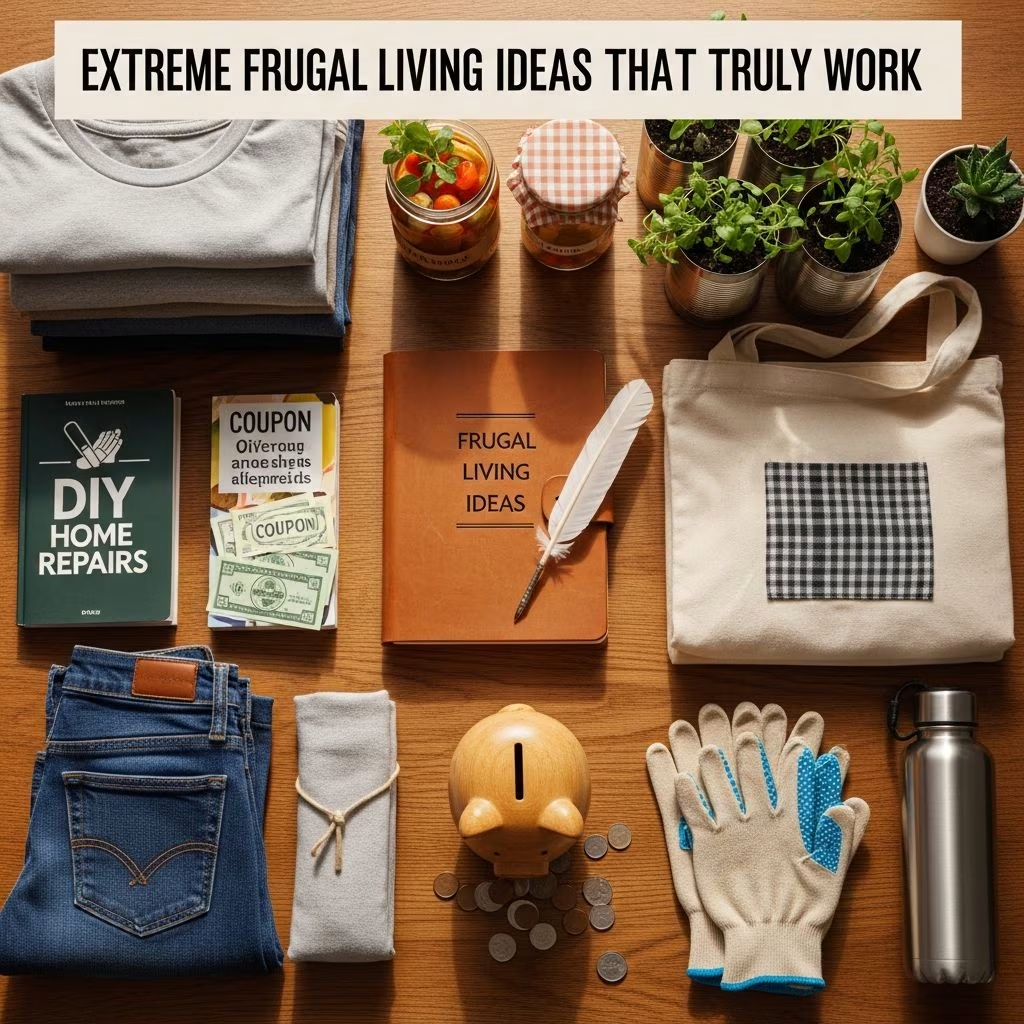
Extreme frugal living goes far beyond clipping the occasional coupon or doing a short no-spend challenge. It is a deliberate lifestyle where you look for every ethical, practical opportunity to reduce expenses and redirect money toward what matters most to you, such as paying off debt, saving an emergency fund, or investing for the future.
In this guide, you will learn what extreme frugal living is, the key benefits, and 15 concrete frugal hacks inspired by the original Clever Girl Finance article. Each idea is designed to help you stretch every dollar, live below your means, and hit big money goals faster.
What Is Extreme Frugal Living?
Extreme frugal living is a lifestyle where you intentionally minimize spending in nearly every area of life so you can maximize saving and investing. It is not about deprivation for its own sake; it is about aligning your money with your values and long-term goals.
Research consistently shows that higher savings rates are strongly associated with greater financial security and financial well-being over time. Extreme frugal living is a way to temporarily or permanently boost that savings rate by cutting expenses to the bare essentials and questioning every purchase.
Common Traits of Extreme Frugal Living
- High savings rate: Prioritizing saving a large share of income (sometimes 30–50% or more).
- Intentional spending: Spending only on what is necessary or deeply meaningful.
- Creative resourcefulness: Borrowing, reusing, and DIY instead of buying new.
- Long-term focus: Willingness to be uncomfortable now to gain freedom later.
Benefits of Incorporating Extreme Frugal Living
Whether you adopt every idea or just a handful, extreme frugal living can change your financial trajectory. Below are core benefits that mirror and expand on the original article.
Helps You Reach Financial Goals Sooner
When you drastically lower your expenses, more of your income becomes available for savings and debt payoff. That accelerates progress toward goals such as:
- Building a fully funded emergency fund
- Paying off high-interest debt
- Saving for a home down payment
- Investing for retirement or early retirement
According to the U.S. Federal Reserve, many households struggle with even modest unexpected expenses, and higher savings buffers are linked with greater financial resilience. Extreme frugality helps build that buffer faster.
Teaches You to Live Below Your Means
Living below your means simply means your expenses are lower than your income. Extreme frugality trains you to:
- Challenge lifestyle creep and impulse buying
- Find low-cost or free alternatives for entertainment and daily needs
- Maintain a cost of living well under your income level, even as income grows
This habit can significantly increase your ability to save and invest over a lifetime, which research shows is crucial for long-term financial security.
Builds Discipline and Money Awareness
Extreme frugal living forces you to look closely at where your money goes. Over time, this improves your financial literacy and your ability to make trade-offs, which are key skills for building and maintaining wealth.
| Standard Frugal Living | Extreme Frugal Living |
|---|---|
| Uses coupons and looks for sales | Combines coupons, sales, bulk buys, and strict lists |
| Cuts some subscriptions | Cuts nearly all nonessential subscriptions and services |
| Occasional home-cooked meals | Almost never eats out or orders in |
| Tracks spending monthly | Tracks every single expense daily |
| Buys secondhand sometimes | Buys secondhand or borrows by default |
15 Extreme Frugal Living Ideas and Frugal Hacks
Below are 15 ideas corresponding to the themes and examples covered in the original article. You can adopt them all or select the ones that make sense for your situation.
1. Grocery Shop With a List—and Stick to It
Impulse purchases at the grocery store can quietly drain your budget. Create a detailed grocery list based on a weekly meal plan and commit to buying only what is written down.
- Plan your meals around what you already have in your pantry and what is on sale.
- Shop after eating so you are less tempted to grab extras.
- Avoid aisles that do not contain anything on your list.
Food is one of the biggest flexible expenses for many households, and planning is a proven strategy for reducing food waste and saving money.
2. Eliminate Convenience Purchases
Convenience costs extra. Frugal households replace convenience with planning and effort:
- Brew coffee at home instead of buying it daily.
- Prepare grab-and-go breakfasts and lunches in advance.
- Batch cook and freeze meals to avoid last-minute takeout.
These small shifts can result in hundreds or even thousands of dollars in annual savings, depending on your prior habits.
3. Track Every Single Expense
Tracking expenses is a classic money management tool, but extreme frugal living takes it a step further: you record every cent you spend.
- Use a notebook, spreadsheet, or budgeting app.
- Review your spending weekly to identify patterns and leaks.
- Set specific reduction goals (for example, cut transportation costs by 10%).
Several studies highlight that budgeting and active expense tracking are associated with better financial outcomes and lower stress.
4. Borrow, Don’t Buy
Before purchasing anything new, ask: “Can I borrow this instead?”
- Borrow clothes for special events from friends or family.
- Use libraries for books, e-books, and sometimes tools or equipment.
- Swap baby gear or hobby equipment with other parents or enthusiasts.
This reduces clutter, prevents one-time-use purchases, and keeps more cash in your pocket.
5. Buy Secondhand as Your Default
When borrowing is not an option, secondhand is often the next best choice:
- Check local resale shops and online marketplaces first.
- Look for quality brands that last longer, even when used.
- Re-sell items when you no longer need them to recover some costs.
Buying used can significantly cut costs on clothing, furniture, sporting goods, and more, while also reducing environmental impact.
6. Practice No-Spend Challenges
No-spend challenges are short-term periods when you commit to spending only on true necessities. Extreme frugal living often includes:
- No-spend weeks or months focused on groceries, clothing, or entertainment.
- Rules such as “use what you already own first” before buying anything.
- Tracking how much you save during the challenge and putting it directly toward a goal.
These challenges reset spending habits and reveal how much of your usual buying is optional.
7. Ditch Most Subscriptions and Memberships
Subscription creep can quietly add dozens or hundreds of dollars to your monthly expenses.
- Cancel streaming services you rarely use and rely on free content.
- Pause gym memberships and use home workouts, parks, or free community classes.
- Review software, apps, and premium memberships and remove non-essentials.
Even small recurring charges add up substantially over time, especially when invested instead of spent.
8. Cut Down on All Expenses
Extreme frugal living goes beyond obvious cuts like cable. It means examining every bill you pay and asking how to reduce it.
- Lower the thermostat in winter and raise it in summer to cut energy use.
- Unplug devices and appliances when not in use.
- Line-dry laundry instead of using an electric dryer.
- Take shorter or cooler showers to save on heating costs.
Government energy agencies report that small behavioral changes in heating, cooling, and appliance use can produce meaningful reductions in household energy bills.
9. Drive Less and Simplify Transportation
Transportation is another major household cost. You can:
- Use public transit, carpooling, or biking where safe and practical.
- Combine errands to reduce trips.
- Maintain your vehicle regularly to avoid expensive repairs later.
If feasible, moving closer to work or becoming a one-car household can yield large, ongoing savings.
10. Sell (Almost) Everything You Own
A bold but powerful step is to sell items you do not use or truly need. This approach:
- Raises cash quickly to pay down debt or bolster savings.
- Reduces clutter and the urge to buy more.
- Helps you see how little you genuinely require to live comfortably.
From furniture and electronics to clothing and décor, a major purge can be one of the fastest ways to fund a financial reset.
11. Learn Basic DIY Skills
Doing more yourself is a hallmark of extreme frugal living. You do not need expert-level skills; start small:
- Handle simple home repairs like painting, minor patching, or basic maintenance.
- Cook at home instead of relying on frozen or prepared foods.
- Make simple household cleaners from basic ingredients.
Over time, these skills can significantly lower your recurring costs and increase your confidence.
12. Repair, Reuse, and Repurpose
Instead of automatically replacing items, ask if you can repair or repurpose them:
- Mend torn clothes rather than throwing them away.
- Repurpose glass jars as storage containers.
- Refinish or repaint furniture instead of buying new pieces.
Using items until they are worn out aligns with both frugal and environmental values and can noticeably stretch your budget.
13. Cut Your Own Hair
Salon visits are a recurring expense that can add up quickly, especially for families.
- Start with simple trims or basic cuts using online tutorials.
- Invest in a basic haircutting kit and practice carefully.
- For complex styles or color, consider spacing out professional appointments and handling in-between maintenance yourself.
Even partially replacing salon visits with DIY haircuts can create steady savings over time.
14. Stop Eating Out
Eating out—whether dine-in, takeout, or delivery—is one of the most common budget leaks. Extreme frugality means cooking almost every meal at home.
- Learn a set of easy, budget-friendly recipes.
- Use meal prep days to cook in bulk.
- Recreate your restaurant favorites at home for a fraction of the price.
Household surveys consistently show that reducing restaurant and takeout spending is one of the fastest ways to free up money for other priorities.
15. Downsize Your Home
Downsizing is one of the most powerful but challenging extreme frugal moves. By moving to a smaller or less expensive home, you can often:
- Reduce your mortgage or rent payment.
- Lower utilities and maintenance costs.
- Pay off debt faster or save more aggressively.
Housing is typically the largest expense category for households, so strategic downsizing can have an outsized impact on your overall budget.
Is Extreme Frugal Living Right for You?
Extreme frugality is not required for financial success, and it may not be sustainable or appropriate for every person or season of life. However, adopting even a few of these ideas can strengthen your finances and increase your sense of control.
- If you are facing debt or unstable income, extreme frugality can help you stabilize quickly.
- If you are pursuing aggressive goals like early retirement, it can accelerate your timeline.
- If you are already comfortable, it can still help you redirect money to what matters most.
The key is to choose changes that support your health, safety, and well-being while still pushing you to grow and save more.
Frequently Asked Questions (FAQs)
Q: Is extreme frugal living the same as being cheap?
A: No. Extreme frugal living is about aligning spending with your values and long-term goals, not about avoiding all spending at any cost. Being cheap often ignores quality, fairness, or relationships, while frugality aims to maximize value and minimize waste.
Q: How do I start living extremely frugal without feeling overwhelmed?
A: Start with one or two high-impact changes, such as tracking every expense and cutting restaurant meals. Once those feel manageable, add more strategies like canceling subscriptions or running a no-spend challenge.
Q: Is extreme frugal living safe for families with children?
A: It can be, as long as essential needs—healthcare, nutrition, safe housing, and education—are fully covered. Focus on cutting non-essentials and involve children in age-appropriate conversations about money and values rather than restricting necessities.
Q: How long should I maintain an extreme frugal lifestyle?
A: Many people use extreme frugality for specific seasons—such as paying off high-interest debt or building an emergency fund—then transition into a more moderate level of frugality once those goals are reached.
Q: What should I do with the money I save from extreme frugal living?
A: Prioritize building a robust emergency fund, paying off high-interest debt, and investing for long-term goals like retirement. These steps are widely recommended by financial educators and consumer protection agencies as foundations of financial health.
References
- Economic Well-Being of U.S. Households in 2023 — Board of Governors of the Federal Reserve System. 2024-05-21. https://www.federalreserve.gov/publications/2024-economic-well-being-of-us-households-in-2023-overall-economic-well-being-in-2023.htm
- Consumer Expenditure Surveys: Table 1203. Income before taxes — U.S. Bureau of Labor Statistics. 2024-09-10. https://www.bls.gov/cex/tables/calendar-year/mean-item-share-average-standard-error/cu-income-before-taxes-1203.htm
- Financial Literacy and Financial Behavior Among Young Adults — Lusardi, A., Mitchell, O. S., Curto, V. Journal of Consumer Affairs. 2010-06-01. https://doi.org/10.1111/j.1745-6606.2010.01173.x
- Household Food Waste: Multinational Perspectives and Causes — Food and Agriculture Organization of the United Nations (FAO). 2019-10-15. https://www.fao.org/platform-food-loss-waste/flw-data/en/
- Energy Saver Guide: Tips on Saving Money and Energy at Home — U.S. Department of Energy. 2023-04-05. https://www.energy.gov/energysaver/articles/energy-saver-guide-tips-saving-money-and-energy-home
This article is general information, not personal financial advice. Consider your own situation, or speak with a licensed adviser, before acting on it.


