

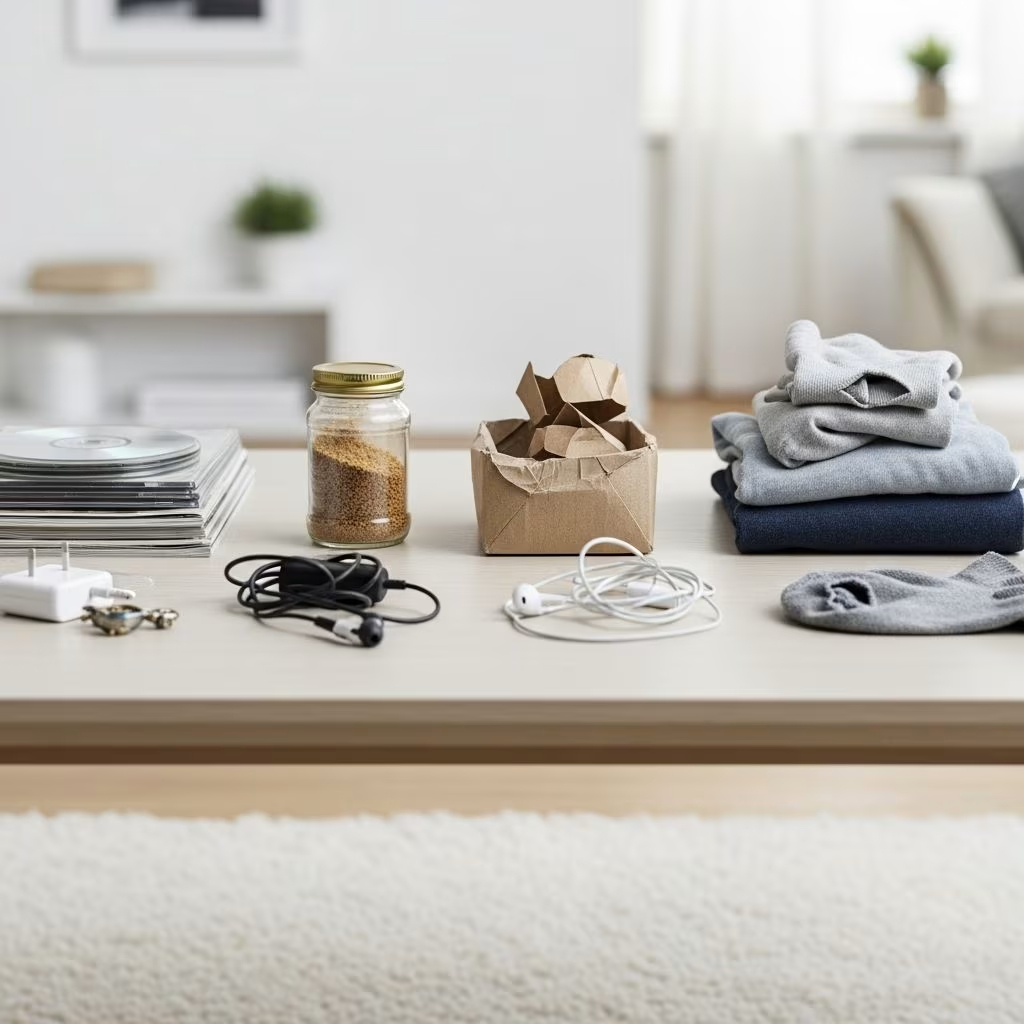
Living with less is not about doing without; it is about removing what distracts you so you can enjoy what matters most. A focused minimalist list of things to get rid of can make decluttering less emotional, more practical, and much easier to complete.
Research links chronic household clutter with elevated stress hormones and lower subjective well-being, especially for women who often manage more of the home environment. Creating a calmer space is therefore not only about aesthetics, but also about supporting your mental health and daily functioning.
This guide walks through the decluttering process and provides a minimalist list of things to let go of in every major area of your life and home. Use it as a reference, not a rigid rulebook, and adapt it to your values and lifestyle.
Why Use A Minimalist Decluttering List?
A minimalist list gives you a clear starting point and protects you from decision fatigue. Instead of asking, “Should I keep this?” for every item you own, you move category by category through common clutter culprits.
Some key benefits include:
- Less overwhelm: Decluttering in small, specific categories feels more manageable than “clean the whole house.”
- Faster decisions: If an item fits a category on the list (for example, expired products), it is an automatic candidate to go.
- Better focus: The list keeps you from jumping randomly between rooms and never finishing a space.
- Visible progress: Each category you clear offers a quick win and motivation to keep going.
How To Use This Minimalist List Of Things To Get Rid Of
Before diving into specific rooms and categories, it helps to have a simple process. Minimalism is not about perfection; it is about consistency and intention.
Step 1: Clarify Your Why
Decluttering is easier when you know why you are doing it. Common reasons people simplify include:
- Creating a calmer home with less visual noise
- Freeing up time previously spent cleaning and organizing
- Preparing for a move, new job, or life transition
- Aligning spending and possessions with financial goals
Write your top one to three reasons on a note and keep it visible while you declutter. This helps you push through moments of hesitation or fatigue.
Step 2: Decide Where Items Will Go
Set up four basic zones or containers:
- Keep: Items you use, need, or genuinely love.
- Donate / Sell: Items in good condition that someone else can use.
- Recycle: Paper, glass, certain plastics, and textiles that can be processed locally.
- Trash: Broken, unsafe, or unsanitary items.
Having these categories in place before you begin prevents items from simply moving from one corner of the home to another.
Step 3: Declutter In Small, Focused Sessions
Instead of attempting a full-house overhaul in one day, use short bursts:
- Set a 15–30 minute timer.
- Choose a single category (for example, “bath towels” or “old notebooks”).
- Work quickly until the timer ends, then stop.
Short, focused sessions reduce burnout and make it realistic to maintain momentum alongside work and family responsibilities.
Minimalist List Of Things To Get Rid Of
The following minimalist list is organized by common areas and categories. You do not need to tackle all of them; start with the easiest sections so that you build confidence before moving on to more sentimental items.
1. Paper Clutter And Old Documents
Paper is one of the fastest-growing sources of clutter because it enters your home constantly: mail, packaging, school forms, receipts, and more. Many of these items have a very short useful life.
Consider decluttering:
- Expired warranties and appliance manuals (many are available online)
- Old receipts you no longer need for returns, taxes, or records
- Duplicate copies of documents
- Outdated notebooks, calendars, and planners
- Junk mail and old promotional flyers
Shred anything with personal information. Keep essential documents (such as tax returns, legal papers, and vital records) in a clearly labeled, fire-safe folder or box, following your country’s recommended retention periods for financial and tax papers.
2. Clothing You Do Not Wear
Closets often hide a large amount of unused value. Clothing you never wear costs you space and mental energy every time you scan your wardrobe.
Use this list to evaluate what to let go:
- Items that do not fit and you have not worn for a full season
- Clothes that are stained, damaged, or uncomfortable
- Duplicate pieces in similar colors that you always skip over
- Impulse purchases that do not match the rest of your wardrobe
- Shoes that hurt your feet or are beyond repair
You can create a simple capsule wardrobe by focusing on versatile, good-quality pieces that work together. Donate usable items and responsibly recycle textiles if your community offers that option.
3. Bathroom And Personal Care Products
Bathrooms get crowded with half-used products and samples. Clearing these out is an easy win because many decisions are straightforward.
Things to consider removing:
- Expired medicines and supplements (dispose of them at a pharmacy or approved collection site)
- Old makeup and skincare past their recommended use-by dates
- Shampoos, lotions, or products you tried but did not like
- Stretched-out hair ties, worn-out brushes, and broken accessories
- Travel-size items you will realistically never use
Store remaining products so that you can see them at a glance. Most people use a small subset of their products daily; keeping only what you use simplifies your morning and evening routines.
4. Kitchen Items And Pantry Clutter
Kitchens function best when counters are clear and tools are accessible. Yet this room easily fills with gadgets and duplicates.
Declutter by category:
- Expired pantry items, spices you no longer use, and stale snacks
- Duplicate utensils, measuring cups, and mismatched food containers
- Appliances you rarely use (for example, a second blender or specialty gadget)
- Chipped plates, cracked mugs, and damaged cookware
- Takeout menus, promotional cups, and extra water bottles
Wipe shelves as you go so that when you put items back, they are going into a clean, organized space. Aim to keep frequently used items within easy reach and occasional-use items higher up or farther back.
5. Home Decor And knickknacks
Decor is highly personal, but it also contributes heavily to visual clutter. Minimalism does not mean bare walls; it means intentionally curated surroundings.
Consider letting go of:
- Decor pieces you no longer notice or enjoy
- Duplicate or generic wall art that does not reflect your style
- Seasonal decor you consistently avoid putting up
- Broken frames, vases, or decorative trays
- Collections that feel more like dust collectors than joyful displays
Choose a few meaningful pieces to feature and give them space to stand out. This can make your home feel calmer and more cohesive with fewer items.
6. Books, Magazines, And Papers To Read “Someday”
Reading material can accumulate faster than we can consume it. Studies on behavior change suggest that we are often overly optimistic about what we will get to in the future.
Review:
- Magazines older than a few months that you have not opened
- Books you started but are not excited to finish
- Free ebooks or downloads you forgot you had
- Printouts of articles you can access digitally
Keep favorites, reference materials you use, and books that truly inspire you. Donate the rest to local libraries, schools, or community centers when possible.
7. Electronics, Cords, And Digital Clutter
Minimalism also applies to your digital life. Constant digital noise can increase distraction and make it harder to relax.
Physical and digital items to declutter include:
- Dead or unused electronics such as old phones, laptops, and chargers
- Extra cords that do not belong to any current device
- Old cases, earphones, and broken accessories
- Apps you have not used in months
- Duplicate or blurry digital photos
- Newsletter subscriptions you no longer read
Back up important files, then create simple digital folders. Unsubscribing from non-essential email lists and removing unused apps can significantly reduce daily distractions.
8. Sentimental Items And Memorabilia
Sentimental belongings are the most emotionally challenging category. Take your time here and start only after you have practiced on easier areas.
When you are ready, consider:
- Duplicates of childhood artwork or school projects (keep a curated selection)
- Gifts you do not love but feel guilty about letting go
- Old cards where the message is generic or repetitive
- Souvenirs that do not hold specific, meaningful memories
One helpful approach is to photograph certain items before releasing them or to create a small memory box for the most important pieces. The goal is to honor memories without storing every physical object attached to them.
9. Hobby Supplies And “Someday” Projects
Hobby equipment often represents who we wish we were (the person who knits weekly or paints every weekend) rather than how we live now.
Review items such as:
- Craft supplies for projects you have postponed for over a year
- Sports gear for activities you no longer enjoy
- Course materials from programs you have completed
- Duplicated tools and materials
Keep what supports hobbies you actively practice and release the rest without judgment. You are not failing; you are updating your belongings to match your current season of life.
10. Miscellaneous Household Extras
Many small, random categories quietly crowd drawers and cabinets. Common examples include:
- Free promotional items (pens, notepads, lanyards, keychains)
- Extra tote bags and reusable shopping bags beyond what you use
- Old candles you never burn
- Excess linens and towels that are worn or unused
- Duplicate kitchen linens, potholders, and aprons
Donate usable linens to shelters or animal rescues when possible. Keep a reasonable number of backups and let the rest go.
Sample Minimalist Declutter Plan
To make this list actionable, here is a simple one-week plan you can adapt. Each day focuses on a small set of categories so you do not feel overwhelmed.
| Day | Focus Area | Key Categories |
|---|---|---|
| Day 1 | Paper & Admin | Mail, receipts, old notebooks, expired documents |
| Day 2 | Closet | Clothing, shoes, accessories |
| Day 3 | Bathroom | Products, makeup, towels, medication |
| Day 4 | Kitchen | Pantry, dishes, gadgets, containers |
| Day 5 | Living Spaces | Decor, books, magazines, electronics |
| Day 6 | Hobbies & Extras | Craft supplies, sports gear, miscellaneous extras |
| Day 7 | Sentimental | Memorabilia, photos, gifts |
Maintaining A Minimalist Home After Decluttering
Decluttering once is a powerful reset, but maintenance keeps your space from sliding back into chaos.
- Adopt a “one in, one out” rule: When you bring in a new item (a shirt, mug, or decor piece), let go of a similar one.
- Schedule mini-refreshes: Once a month, set a short timer and clear a single hot spot such as the entry table or kitchen counter.
- Be intentional with shopping: Wait 24 hours before buying non-essential items to minimize impulse purchases and clutter.
- Store like with like: Keeping similar items together helps you see what you already own and avoid duplicates.
Minimalism is less about rigid rules and more about consistently checking in with yourself: Does what I own still serve me, my goals, and my peace of mind?
Frequently Asked Questions (FAQs)
Q: How do I start decluttering when I feel overwhelmed?
Start with the easiest categories on the minimalist list, such as expired food or old paperwork. Set a short timer and aim for progress, not perfection. Small wins build momentum and confidence.
Q: What if I regret getting rid of something?
For items you are unsure about, use a “maybe” box. Seal it, label the date, and store it out of sight. If you do not reach for anything inside after three to six months, it is usually safe to donate.
Q: How does decluttering relate to my finances?
Minimalism often leads to less impulse shopping and more intentional spending, which can support savings and debt-reduction goals. Keeping a list of what you let go can also highlight categories where you tend to overspend.
Q: Is it wasteful to get rid of things I spent money on?
The money was spent at the moment of purchase; keeping an item you do not use does not get that money back. Donating or reselling allows someone else to benefit and frees your space for items you truly value.
Q: Can a family with children still be minimalist?
Yes. Minimalism with children is about setting reasonable limits and involving them in the process. Focus on clear play areas, rotating toys, and regular donation habits rather than trying to keep the home perfectly minimal.
References
- Clutter, Chaos, and Overload: A Closer Look at the Relationship Between Clutter and Well-Being — Saxbe, D. & Repetti, R. (via Personality and Social Psychology Bulletin). 2010-02-08. https://doi.org/10.1177/0146167209352864
- Examining the Impact of Clutter on Psychological Home and Subjective Wellbeing — Masterson, K. S. & Freeman, P. A. (Journal of Environmental Psychology). 2021-02-01. https://doi.org/10.1016/j.jenvp.2020.101498
- Stress and Your Environment — American Psychological Association. 2019-10-01. https://www.apa.org/topics/stress/environment
- Get Organized and Reduce Clutter — USA.gov. 2023-01-05. https://www.usa.gov/organize-and-reduce-clutter
- Textile Recycling — U.S. Environmental Protection Agency (EPA). 2022-12-15. https://www.epa.gov/recycle/textile-recycling
- Time Discounting and Time Preference: A Critical Review — Frederick, S., Loewenstein, G., & O’Donoghue, T. (Journal of Economic Literature). 2002-06-01. https://doi.org/10.1257/jel.40.2.351
This article is general information, not personal financial advice. Consider your own situation, or speak with a licensed adviser, before acting on it.


