

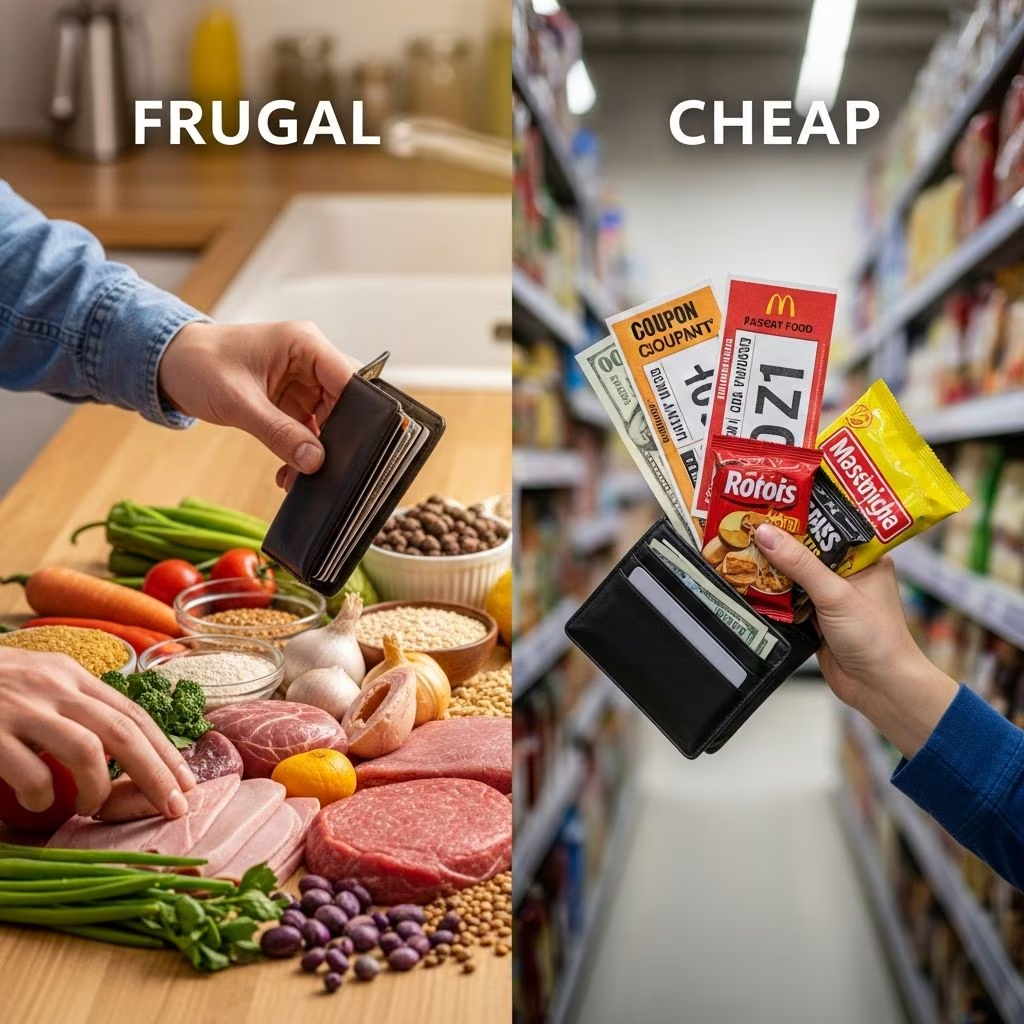
People often use the words frugal and cheap as if they mean the same thing, but they describe two very different ways of handling money. Knowing the difference can help you save more, protect your relationships, and still enjoy a meaningful life.
This article breaks down what it really means to be frugal vs cheap, how each mindset affects your finances and values, and how you can embrace frugality without crossing the line into being cheap.
What does it mean to be cheap?
Being cheap is all about paying the lowest price possible, even when it comes with real costs for quality, relationships, or ethics.
Cheapness focuses on short-term savings without thinking about long-term consequences, the experience of other people, or the true value of what you are buying.
Key traits of a cheap mindset
- Lowest price at any cost: Always choosing the cheapest option, regardless of whether it breaks quickly or performs poorly.
- Quantity over quality: Buying more of something just because it costs less, even if it means frequent replacements.
- Short-term focus: Thinking only about what saves money today, not what it will cost in the future.
- Reluctance to spend on others: Avoiding generosity, such as never tipping fairly or rarely contributing in group situations.
- Ignoring hidden costs: Overlooking time, stress, or social costs as long as the price tag is low.
Examples of cheap behavior
- Buying the lowest-priced shoes every year instead of one durable pair that lasts several years.
- Skipping necessary car maintenance to avoid paying for it, then facing a bigger repair bill later.
- Always letting others pay for shared expenses or avoiding social events to dodge any spending.
- Using poor-quality items that affect safety or health just to avoid paying a fair price.
Over time, a cheap approach often leads to higher total costs because things wear out faster or cause bigger problems later, such as repairs, replacements, or strained relationships.
What does it mean to be frugal?
Being frugal is about maximizing value: you aim to spend less, but not at the expense of quality, health, or your values.
Frugality is a deliberate, strategic approach to money. It is not about never spending; it is about spending wisely so you can reach your financial goals and still live well.
Key traits of a frugal mindset
- Value-conscious: Comparing price, quality, durability, and usefulness before buying.
- Long-term focus: Willing to pay a bit more now to save over time, especially on items you use often.
- Intentional spending: Aligning purchases with your priorities and financial goals.
- Reducing waste: Avoiding unnecessary purchases, subscriptions, or upgrades that do not add real value.
- Willingness to delay: Waiting for sales, planning ahead, or saving up for quality instead of impulse buying.
Examples of frugal behavior
- Buying a higher-quality appliance that uses less energy and lasts longer, instead of replacing cheap ones frequently.
- Cooking at home most of the time but still budgeting for occasional meals out with friends.
- Using libraries, free community resources, or secondhand items for books, clothes, or kids’ toys.
- Negotiating bills or shopping around for insurance to get better value, not just cutting everything to the bone.
Frugality helps you free up money to save, invest, and pay down debt, while still living a life that feels satisfying and aligned with your values.
Frugal vs cheap: What is the real difference?
Both frugal and cheap people care about saving money, but their goals and methods are very different.
| Aspect | Frugal | Cheap |
|---|---|---|
| Primary focus | Getting good value and avoiding waste | Paying the lowest price possible |
| Time horizon | Thinks long term and total cost over time | Thinks only about today’s cost |
| Quality | Willing to pay for quality that lasts | Often ignores quality if the price is low |
| Impact on others | Respects other people’s time and experience | May inconvenience or embarrass others to save |
| Values & ethics | Considers sustainability and fairness when possible | May overlook ethics in pursuit of the lowest price |
| Emotional tone | Empowering, intentional, goal-driven | Fear-based, miserly, or scarcity-driven |
How each mindset affects your finances
- Frugal: Tends to lower the lifetime cost of things by picking well-made items, maintaining them, and skipping purchases that do not matter.
- Cheap: Can raise lifetime costs by leading to frequent replacements, bigger repairs, or missed opportunities (for example, skipping preventive health care to save a copay).
Research in household finance shows that people who plan long term and manage spending thoughtfully are more likely to build savings and reduce debt, reinforcing the benefits of frugal behavior over short-sighted cost cutting.
How each mindset affects your relationships
- Frugal: Others see you as practical and disciplined, especially if you communicate your choices and still show generosity.
- Cheap: Others may see you as selfish or uncaring if you never contribute fairly, avoid generosity, or prioritize money over shared experiences.
Social research consistently finds that generosity and fairness are linked with stronger relationships and well-being, while extreme self-interest can damage trust in social and family settings.
Signs that you might be cheap (not just frugal)
If you are trying to save money, it is easy to slide from healthy frugality into unhealthy cheapness. Here are warning signs to watch for:
- You feel anxious or guilty about any spending, even on essentials or meaningful experiences.
- You regularly buy the lowest-priced option, even after seeing it break or fail multiple times.
- Friends or family often feel uncomfortable because of your behavior around money.
- You avoid contributing your fair share during group activities or shared bills.
- You refuse to spend on preventive care, education, or safety to “save” money now.
When saving money begins to harm your health, relationships, or integrity, it is a strong sign that your behavior has moved into cheap territory.
Signs that you are being wisely frugal
On the other hand, there are clear signs that you are practicing healthy, sustainable frugality:
- You have a budget or spending plan and you use it to guide decisions.
- You look for sales, discounts, or alternatives, but still care about quality and ethics.
- You save consistently toward goals like an emergency fund, debt payoff, or investing.
- You are comfortable saying “no” to purchases that do not match your priorities.
- You can be generous in ways that matter to you (time, money, skills) even while saving.
Frugality supports your overall financial health. For example, guidance from consumer and financial regulators often emphasizes budgeting, thoughtful spending, and avoiding high-cost debt as key behaviors for building stability over time.
How to shift from cheap to frugal
If you recognize cheap habits in yourself, you can intentionally move toward a healthier frugal approach. The goal is not to spend freely, but to spend wisely.
1. Clarify your financial priorities
- Write down your top three money goals (for example: pay off credit card debt, build a three-month emergency fund, save for retirement).
- Decide what you truly value in life: travel, health, education, time with loved ones, giving, or something else.
- Use these priorities as a filter for every spending decision.
When you know what you are saving for, it is easier to let go of meaningless spending while still saying yes to what matters.
2. Think in terms of total cost over time
Instead of focusing only on today’s price tag, ask:
- How long will this last?
- What will it cost to maintain or operate? (energy, repairs, time)
- Will this prevent bigger expenses later? (for example, preventive healthcare visits can reduce costly complications later).
This is especially important for big purchases like appliances, vehicles, or education, where long-term value matters more than initial price.
3. Budget for generosity and experiences
Healthy frugality leaves room for joy and connection.
- Set aside a small amount each month for social activities or gifts.
- Be honest with friends about your budget and suggest affordable ways to spend time together.
- Look for low-cost or free experiences: community events, park days, potlucks, or game nights.
Spending a little on meaningful experiences or generosity can provide long-lasting satisfaction and benefit mental well-being.
4. Cut costs in ways that do not hurt your values
Frugality shines when you save money in ways that do not compromise your ethics or relationships.
- Cancel unused subscriptions or memberships.
- Compare prices on insurance, utilities, and phone plans annually.
- Cook more at home and reduce food waste by planning meals and using leftovers.
- Buy secondhand when it does not affect safety or health.
These types of changes typically reduce waste and expenses without negative side effects.
5. Avoid common cheap traps
As you practice frugality, be careful not to slip back into cheap habits such as:
- Delaying necessary medical or dental visits purely to avoid copays.
- Buying very low-quality versions of safety-related items like helmets, car seats, or smoke detectors.
- Being inflexible about money when it causes stress or embarrassment for others.
Evidence from health and consumer protection agencies consistently shows that skipping preventive care or buying unsafe products can lead to much greater costs and risks later on.
Practical frugal ideas that are not cheap
Here are ways to save money while staying firmly on the frugal—not cheap—side:
- Housing: Share housing, negotiate rent when appropriate, or choose a smaller space that still meets your needs.
- Transportation: Use public transit, carpool, walk, or bike when possible. Maintain your vehicle to avoid bigger breakdowns.
- Food: Plan meals, buy staples in bulk, cook at home, and bring lunch instead of eating out daily.
- Clothing: Buy fewer, higher-quality items; look for sales and secondhand options; care for clothes properly so they last longer.
- Entertainment: Use your library, free local events, and low-cost hobbies instead of constant paid entertainment.
These habits reduce expenses, support healthier living, and often have environmental benefits, such as less waste and fewer unnecessary purchases.
Frequently Asked Questions (FAQs)
Q: Is being frugal always a good thing?
A: Frugality is generally positive when it helps you avoid waste, reach financial goals, and make thoughtful choices. It becomes a problem only when it turns into extreme self-denial or starts harming your health, relationships, or values.
Q: How do I know if I have crossed the line into being cheap?
A: You may have crossed the line if you routinely choose the cheapest option even when you know it will not last, avoid paying your fair share, or feel ashamed when others notice your money-saving tactics. If saving money hurts others or goes against your own values, it is likely cheap, not frugal.
Q: Can I be frugal and still enjoy life?
A: Yes. Frugality is about intentional spending, not deprivation. Many people find that by cutting out purchases that do not matter and focusing on what they truly value, they enjoy life more, not less.
Q: What should I never be cheap about?
A: In general, avoid being cheap about health, safety, and critical long-term decisions. That includes medical care, safe housing, essential home repairs, reliable transportation, and items like helmets or car seats. Cutting corners in these areas can lead to serious harm and higher costs later on.
Q: How can I start being more frugal today?
A: Start by tracking your spending for a month, identifying non-essential expenses to reduce, and setting one clear financial goal. Then, choose a few practical frugal habits—like meal planning, using the library, or canceling unused subscriptions—and build from there.
References
- Frugal vs. Cheap — Mr. Money Mustache. 2012-10-24. https://www.mrmoneymustache.com/2012/10/24/frugal-vs-cheap/
- Frugal Living — Clever Girl Finance. 2024-06-30 (approx., category resource page). https://www.clevergirlfinance.com/category/saving-money/money-savings-tips/frugal-living/
- Household consumption and saving decisions — Organisation for Economic Co-operation and Development (OECD). 2020-11-01. https://www.oecd.org/education/consumer-policy-toolkit.htm
- Financial capability and well-being in the United States — Consumer Financial Protection Bureau (CFPB). 2017-01-01. https://www.consumerfinance.gov/data-research/research-reports/financial-capability-well-being-united-states/
- Household Spending and Saving — U.S. Bureau of Labor Statistics, Consumer Expenditure Surveys. 2023-09-07. https://www.bls.gov/cex/
This article is general information, not personal financial advice. Consider your own situation, or speak with a licensed adviser, before acting on it.


