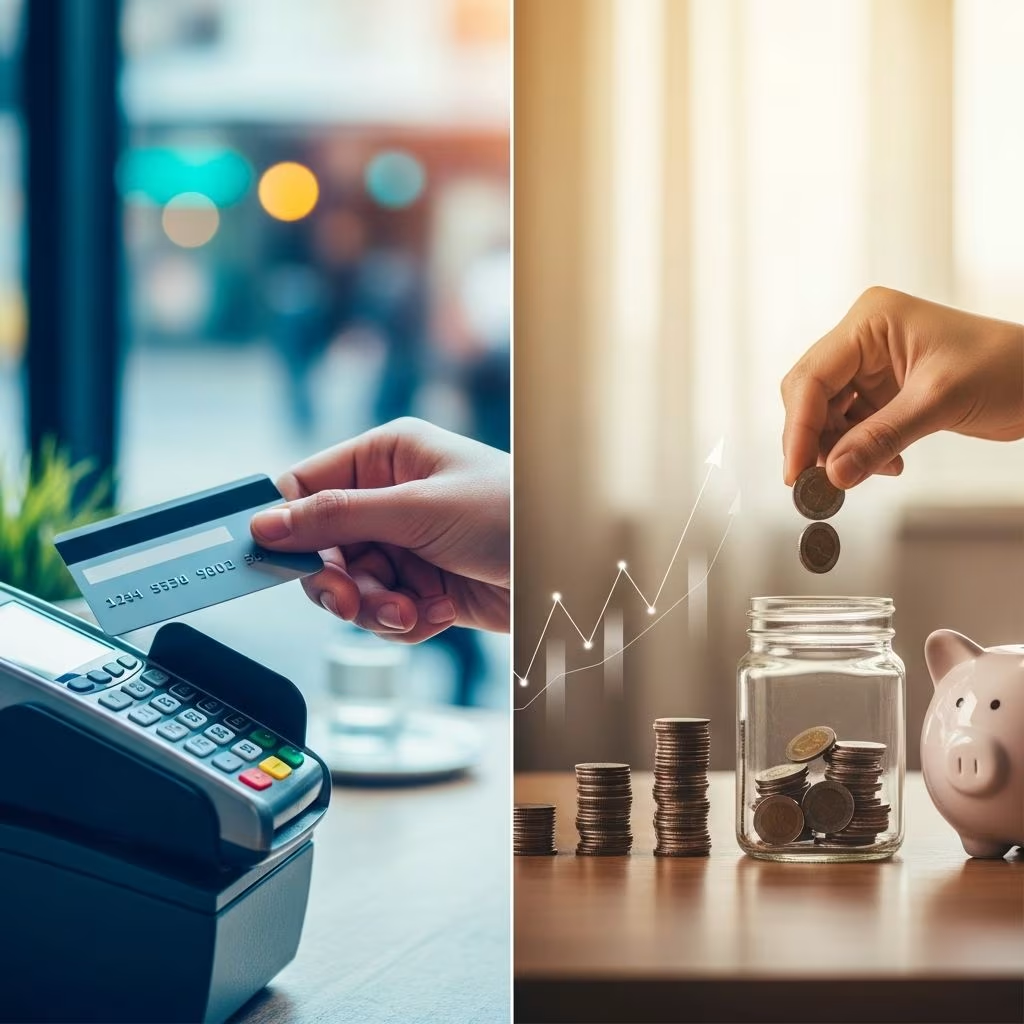
Checking and savings accounts are foundational tools for personal finance management, each designed for distinct purposes. Checking accounts facilitate everyday transactions like bill payments and purchases, while savings accounts help build funds for future goals with interest earnings.
What is a Checking Account?
A **checking account** serves as your primary hub for daily financial activities. It allows frequent transactions such as debit card swipes, ATM withdrawals, check writing, and electronic transfers for bills or peer-to-peer payments. These accounts prioritize accessibility over growth, with most offering little to no interest, though some high-yield options exist at minimal rates.
Key features include FDIC insurance up to $250,000 per depositor, direct deposit capabilities, and integration with mobile banking apps for real-time monitoring. Unlike savings accounts, there are typically no limits on withdrawals or transfers, making them ideal for active spending.
Benefits of a Checking Account
- Unlimited transactions: No caps on debits, deposits, or transfers, perfect for daily use.
- Multiple access methods: Debit cards, ATMs, checks, online bill pay, and Zelle for quick payments.
- Convenience tools: Digital statements, transaction alerts, and overdraft protection options.
- FDIC protection: Deposits insured up to federal limits.
Potential Drawbacks and Fees
Checking accounts often come with fees like monthly maintenance charges (waivable via direct deposit), overdraft fees up to $35 per incident, and out-of-network ATM costs. Minimum balance requirements vary, and exceeding overdraft limits can lead to costly penalties.
What is a Savings Account?
A **savings account** is built for accumulating money over time, earning interest on balances to combat inflation and grow funds modestly. It’s suited for emergency funds, short-term goals like vacations, or larger objectives such as down payments. Federal Regulation D historically limited certain withdrawals to six per month, though many banks have relaxed this post-2020.
These accounts encourage disciplined saving by restricting easy access—no debit cards in most cases—and offering higher **APYs** (annual percentage yields) than checking, especially in high-yield variants from online banks.
Benefits of a Savings Account
- Higher interest earnings: APYs often exceed 4-5% in competitive accounts, compounding over time.
- Goal-oriented saving: Less temptation for impulse spending due to transfer delays.
- Safety net: Builds emergency reserves, ideally 3-6 months of expenses.
- Flexible options: High-yield, money market, or traditional types to match needs.
Potential Fees and Limitations
Common fees include monthly maintenance if balances dip below minima, excess withdrawal charges ($5-25 each), and inactivity penalties. APYs are variable and can fluctuate with Federal Reserve rates.
Checking vs. Savings: Key Differences at a Glance
| Feature | Checking Account | Savings Account |
|---|---|---|
| Primary Purpose | Daily spending, bills, transactions | Saving for goals, emergencies |
| Interest (APY) | Low or none (0.01-0.5% typical) | Higher (up to 5%+ in high-yield) |
| Access Methods | Debit card, ATM, checks, transfers | Transfers only; limited withdrawals |
| Transaction Limits | Unlimited | 6/month (convenience limit, varies) |
| Common Fees | Overdraft, maintenance, ATM | Minimum balance, excess withdrawal |
| Minimum Balance | Varies, often low/waivable | Often higher to earn APY |
This table summarizes core distinctions, highlighting why checking suits liquidity needs and savings prioritizes growth.
Biggest Considerations When Choosing
Select accounts based on your financial goals. For **earning interest**, opt for high-yield savings with competitive APYs—use calculators to project growth (e.g., $10,000 at 5% APY yields ~$500/year). Checking offers superior **ease of access** via debit and ATMs, but pair it with savings for balance.
Evaluate fees, minimums, and digital tools. Online banks often provide better rates with no branches, while traditional ones offer in-person service.
Should You Have Both Accounts at the Same Bank?
Maintaining both at one institution streamlines management but has trade-offs.
Pros
- Convenience: Single app/dashboard for balances and transfers.
- Overdraft protection: Auto-link savings to cover checking shortfalls, avoiding fees.
- Perks: Waived fees, bonus rates for bundled accounts.
Cons
- Limited options: One bank’s rates may lag competitors.
- Temptation risk: Easy transfers could erode savings.
Many experts recommend both types, regardless of bank, for comprehensive strategy.
Using Checking and Savings Together
Integrate accounts for optimal habits: Direct deposits to checking for bills, then auto-transfer surplus (20% rule) to savings. Link for overdraft safety while building 3-6 months’ expenses in savings. Tools like round-up apps or buckets (sub-accounts for goals) enhance this synergy.
Frequently Asked Questions (FAQs)
Do checking accounts earn interest?
Some do, but rates are minimal (under 0.5%) compared to savings. High-yield checking exists but requires activity like direct deposits.
Can I avoid fees on these accounts?
Yes, via direct deposit, minimum balances, or free online options. Shop for no-fee accounts.
What’s the best high-yield savings APY today?
Rates vary; online banks offer 4-5%+. Check FDIC-insured options regularly as they fluctuate.
Are savings accounts FDIC insured?
Yes, up to $250,000 per depositor, per bank.
How much should I keep in checking vs. savings?
Checking: 1-2 months’ expenses. Savings: 3-6 months’ for emergencies, more for goals.
Bottom Line
Checking and savings accounts complement each other—use checking for transactions and savings for growth. Tailor choices to goals, compare rates/fees, and automate transfers for financial success.
References
- Checking Vs. Savings Accounts: Differences And How To Choose — Bankrate. 2024. https://www.bankrate.com/banking/checking-vs-savings-accounts/
- What is the difference between checking and savings accounts? — Bank of America Better Money Habits. 2024. https://bettermoneyhabits.bankofamerica.com/en/personal-banking/the-difference-between-checking-and-savings-account
- Checking vs. Savings Accounts: The Difference — NerdWallet. 2024. https://www.nerdwallet.com/banking/learn/checking-vs-savings
- Understanding Differences Between Checking and Savings Accounts — Intuit. 2024. https://www.intuit.com/blog/innovative-thinking/financial-tips/checking-v-savings/
- Checking vs. Savings: Key Differences Between Bank Account Types — Cornerstone Bank. 2024. https://www.cornerstone.bank/checking-vs-savings-key-differences-between-bank-account-types-why-it-matters/
This article is general information, not personal financial advice. Consider your own situation, or speak with a licensed adviser, before acting on it.