

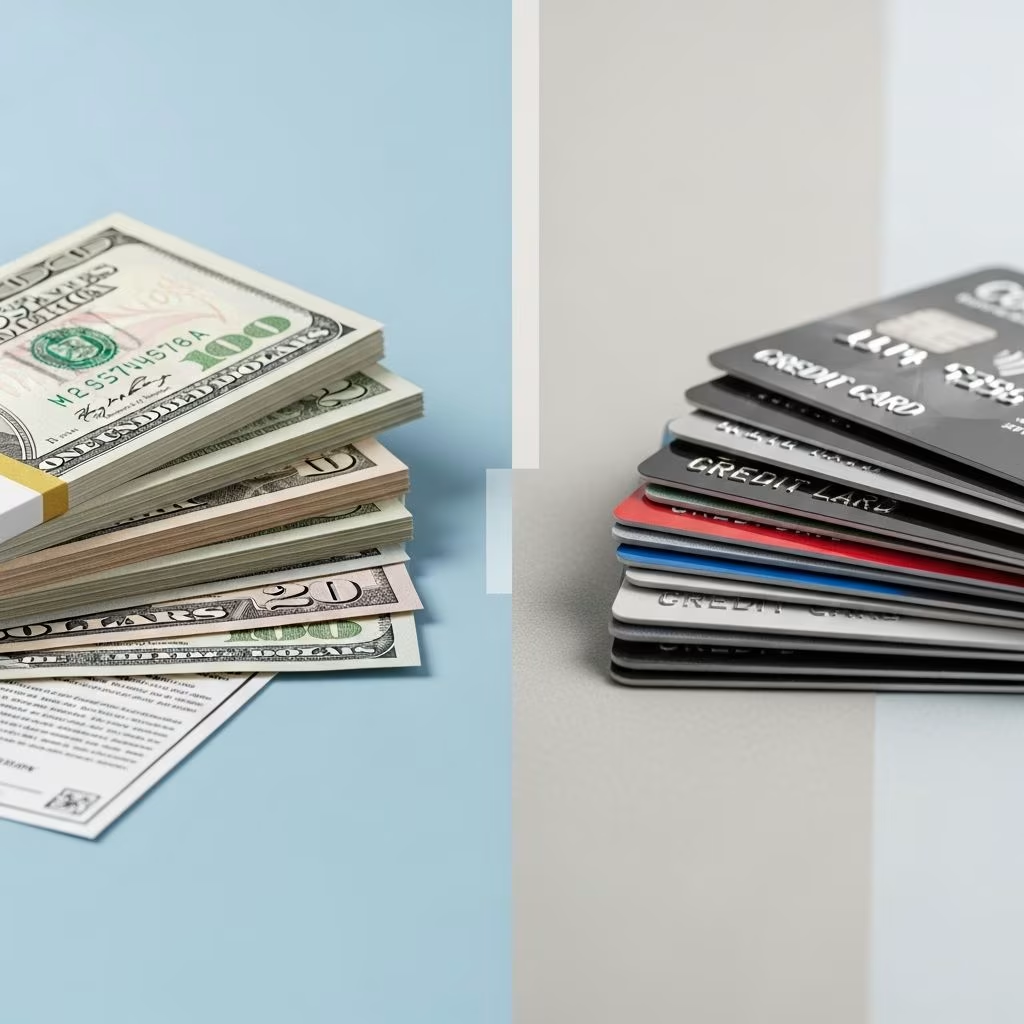
Choosing between a personal loan and a credit card depends on your financial needs, credit profile, and repayment plans. Personal loans provide a lump-sum with fixed payments and often lower rates for large expenses, while credit cards offer revolving credit with flexibility and rewards for smaller, ongoing purchases.
Personal Loan vs. Credit Card: Key Differences
Personal loans and credit cards are both unsecured borrowing options, but they differ fundamentally in structure and use. A personal loan delivers funds as a one-time lump sum deposited into your account, repaid in fixed monthly installments over a set term, typically 1-7 years. Credit cards provide a revolving line of credit up to a limit, which you can draw from repeatedly, paying at least the minimum monthly due.
Interest rates on personal loans are usually fixed, ranging from 6% to 36% APR, with better rates (under 12%) for excellent credit (scores 700+). Credit card APRs are variable, averaging 24.72% for new offers, often higher (15-25%) if carrying a balance, though 0% intro periods exist.
| Feature | Personal Loans | Credit Cards |
|---|---|---|
| Fund Access | Lump sum (up to $100,000) | Revolving line (typically $500-$30,000) |
| Interest Rate | Fixed, 6-36% APR | Variable, avg. 24.72% APR |
| Repayment | Fixed monthly payments | Minimum due, flexible |
| Rewards | None | Cash back, points, miles |
| Grace Period | None (interest from day 1) | 20-25 days if paid in full |
This table highlights core contrasts: personal loans suit structured borrowing, credit cards favor flexibility.
What is a Personal Loan?
A personal loan is an unsecured installment loan from banks, credit unions, or online lenders. You receive the full amount upfront for uses like debt consolidation, home repairs, medical bills, or major purchases. Terms are fixed, with predictable payments aiding budgeting. Loan amounts range from $1,000 to $100,000, depending on credit score, income, and debt-to-income ratio.
- Approval factors: Credit score (mid-600s+ for best rates), income verification, DTI under 36%.
- Common uses: Debt consolidation (transfer high-rate card balances), home improvements, medical expenses, weddings, or emergencies.
- Funding speed: 1-7 days, with some online lenders offering same-day.
What is a Credit Card?
A credit card is a revolving credit line issued by banks or networks like Visa/Mastercard. You spend up to your limit, pay a minimum monthly (often 1-3% of balance + interest), and reuse available credit. Ideal for everyday purchases, they include perks like rewards but high rates if balances linger.
- Approval: Easier for fair credit; limits based on income/credit history.
- Perks: Cash back (1-5%), travel miles, purchase protection.
- Promos: 0% APR intro offers (12-21 months) for balance transfers/purchases.
Personal Loan vs Credit Card Interest Rates
Personal loans generally have lower APRs than credit cards, especially for good credit. Average personal loan APR is 12-18% for excellent borrowers vs. 24.72% credit card average. Fixed rates ensure stability; variable card rates can rise with market changes.
Credit cards win short-term via grace periods (avoid interest if paid in full monthly) or 0% promos. For carried balances over months, loans save money: e.g., $10,000 at 10% loan APR over 3 years costs ~$3,232 interest; same on 20% card could exceed $6,000 if minimum payments.
Personal Loan vs Credit Card Fees
Personal loans may charge origination fees (1-8% of amount), late fees ($15-40), but no annual fees often. Credit cards have annual fees ($0-550), foreign transaction fees (3%), cash advance fees (3-5% + higher APR), balance transfer fees (3-5%). Prepayment penalties are rare on both but check terms.
- Loan fees: Origination (deducted upfront), insufficient funds.
- Card fees: Annual, late ($30-40), over-limit.
Personal Loan vs Credit Card Repayment
Personal loans demand fixed payments (principal + interest) until paid off—no flexibility, but ensures debt clearance. Credit cards require minimums (interest-heavy), allowing larger payments to reduce balance faster, but minimums extend repayment, inflating costs.
Example: $5,000 at 15% on card with minimums takes 20+ years, costing $9,000+ interest. Same as loan over 3 years: ~$1,300 interest.
Personal Loan vs Credit Card Credit Score Impact
Both build credit via on-time payments (35% of FICO score). Loans diversify credit mix (10% FICO), potentially boosting scores. Cards help payment history/utilization (30%). Hard inquiries ding scores temporarily (5-10 points, 1 year).
High card utilization (>30%) hurts scores; loans don’t affect utilization.
Pros and Cons: Personal Loans
Pros
- Lower rates: Often 6-18% vs. 20%+ cards for qualified borrowers.
- Fixed payments: Budget-friendly predictability.
- Large amounts: Up to $100,000 for big needs.
- Debt payoff: Consolidates high-rate debt faster.
Cons
- No rewards/perks.
- Lump sum only—no redraw.
- High rates for poor credit (25-36%).
- Origination fees reduce funds.
Pros and Cons: Credit Cards
Pros
- Flexibility: Revolving access, grace period.
- Rewards: Cash back, miles on spending.
- Convenience: Everyday use, promos.
- Easier approval for fair credit.
Cons
- High APRs on balances.
- Minimum payments prolong debt.
- Fees add up.
- Temptation to overspend.
When Should You Get a Personal Loan?
Opt for personal loans when:
- Consolidating $5,000+ high-rate debt (saves interest).
- Funding large one-time costs (home repairs, medical).
- Needing fixed payments for budgeting.
- Qualifying for <15% APR.
Use calculators to compare total costs.
When Should You Use a Credit Card?
Credit cards excel for:
- Short-term buys paid in full (no interest).
- Earning rewards on daily spend.
- 0% promo balance transfers (<21 months).
- Small, flexible expenses.
Is a Personal Loan or Credit Card Cheaper?
Personal loans are cheaper for amounts over $2,000 repaid in >1 month due to lower fixed rates. Cards cheaper short-term via grace/0% APR. Total cost: Loan on $10k/10%/36mo = $1,682 interest; Card 20% minimums = $13k+ over years.
Personal Loan vs. Credit Card for Debt Consolidation
Personal loans shine for consolidation: Lower rate on multiple cards reduces payments, clears debt faster. E.g., 18% cards to 12% loan saves thousands. Cards via 0% transfers work short-term but revert to high rates.
Which is Easier to Qualify for?
Credit cards often easier (secured options exist), especially fair credit. Personal loans stricter, needing solid scores/income for best terms.
Personal Loan vs. HELOC or Home Equity Loan
Unlike unsecured loans/cards, HELOCs/loans use home collateral for lower rates (8-12%) but risk foreclosure. Best for homeowners with equity; personal loans safer for non-home uses.
Personal Loan vs. Credit Card for Home Improvement
Loans for large projects ($10k+): Lower rates, fixed terms. Cards for small jobs if paid quickly or 0% promo.
Frequently Asked Questions (FAQs)
Are personal loans better than credit cards?
Yes for large, multi-month repayments due to lower fixed rates; cards better for flexible, reward-earning short-term use.
Do personal loans build credit?
Yes, on-time payments boost payment history and mix.
Can I use a personal loan for anything?
Generally yes, as unsecured; common for debt, repairs, medical.
Which has lower interest rates?
Personal loans, especially good credit (6-18% vs. 20-25%).
Is a personal loan or credit card debt dischargeable in bankruptcy?
Both unsecured, potentially yes (Chapter 7/13), but impacts credit 7-10 years.
References
- Personal Loan vs. Credit Card: What’s the Difference? — Experian. 2024-10-15. https://www.experian.com/blogs/ask-experian/how-to-choose-between-a-personal-loan-and-a-credit-card/
- Personal Loan vs. Credit Card: When Each Is Best — NerdWallet. 2025-01-10. https://www.nerdwallet.com/personal-loans/learn/personal-loan-vs-credit-card
- Personal Loans vs. Credit Cards – Which is Right for You? — Municipal Credit Union. 2024-11-20. https://www.nymcu.org/member-resources/financial-education/personal-loans-vs.-credit-cards-which-is-right-for-you
- Credit Cards vs. Personal Loans — Los Angeles Federal Credit Union. 2024-09-05. https://www.lafcu.org/about-us/blog/credit-cards-vs-personal-loans
- Personal Loan or Credit Card: Which is Right for You? — Bank of Hawaii. 2024-12-01. https://www.boh.com/blog/personal-loan-vs-credit-card-which-is-right-for-you
- Personal Loans vs. Credit Cards: Which One Fits Your Needs? — ABC Bank. 2025-02-14. https://theabcbank.com/comparing-personal-loans-credit-cards/
This article is general information, not personal financial advice. Consider your own situation, or speak with a licensed adviser, before acting on it.


