

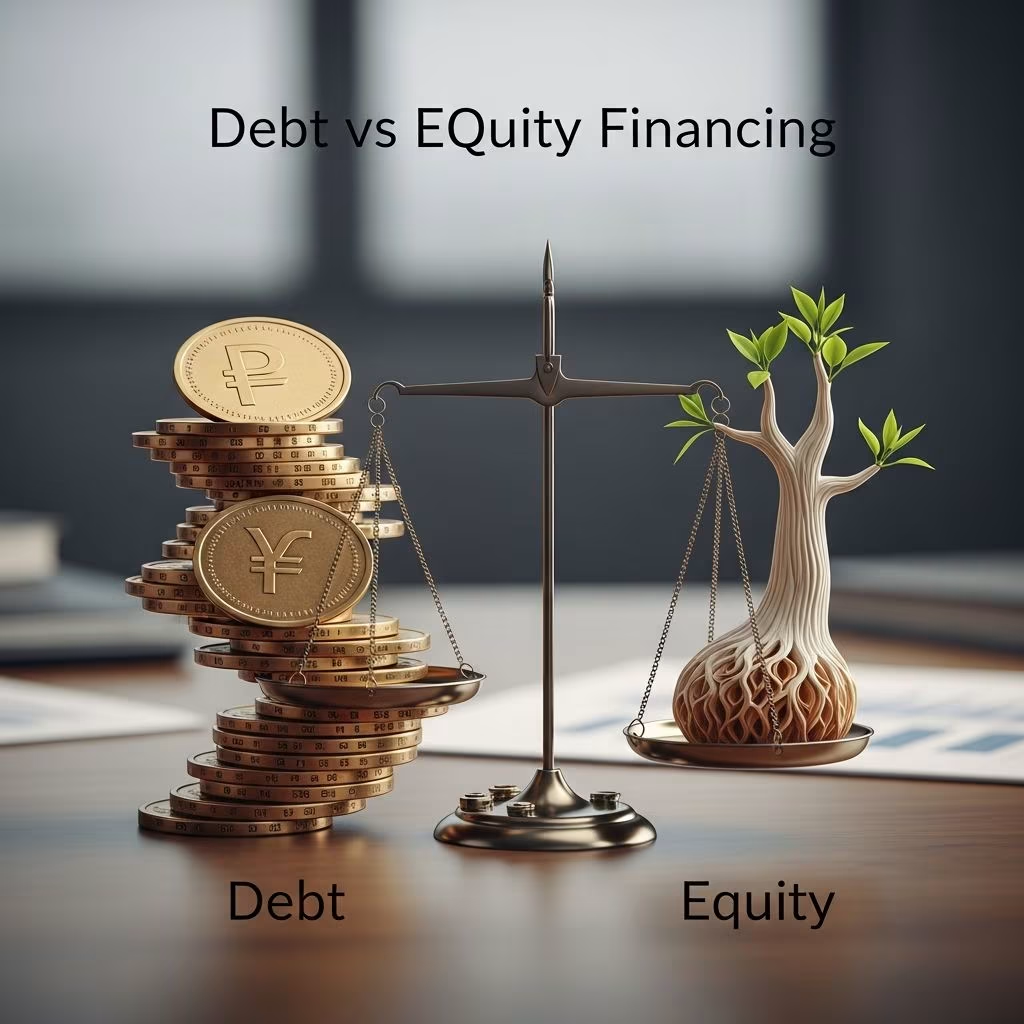
Businesses often face the critical decision of how to fund growth and operations: through debt financing or equity financing. Debt involves borrowing money that must be repaid with interest, while equity means selling ownership stakes to investors in exchange for capital. Understanding these options is essential for maintaining control, managing cash flow, and minimizing costs.
What is Debt Financing?
Debt financing allows businesses to borrow funds from lenders such as banks, credit unions, or bond issuers. The borrowed amount, known as principal, must be repaid over time, typically with added interest. This method does not dilute ownership, enabling full retention of business control.
Common sources include term loans, lines of credit, and bonds. Lenders assess creditworthiness, collateral, and cash flow before approving funds. Interest payments are often tax-deductible, providing a financial advantage.
Advantages of Debt Financing
- Retain Ownership: Borrowers keep 100% control without sharing profits or decision-making with investors.
- Tax Benefits: Interest expenses reduce taxable income, lowering the effective cost of borrowing.
- Predictable Costs: Fixed interest rates offer budgeting certainty, unlike variable profit-sharing in equity.
- Build Credit: Timely repayments strengthen business credit, aiding future financing.
- No Equity Dilution: Ideal for established firms with steady revenue to service debt.
Disadvantages of Debt Financing
- Repayment Obligation: Fixed payments are required regardless of business performance, straining cash flow during downturns.
- Interest Costs: Adds ongoing expenses that reduce net profits.
- Credit Requirements: Needs strong credit history or collateral; startups often qualify less easily.
- Default Risk: Failure to repay can lead to asset seizure, bankruptcy, or damaged credit.
- Cash Flow Pressure: High debt levels increase financial leverage and vulnerability.
What is Equity Financing?
Equity financing raises capital by selling shares of the company to investors, such as venture capitalists, angel investors, or through public stock offerings. Investors become partial owners and share in future profits via dividends or capital gains upon sale.
There is no repayment requirement, making it suitable for high-growth ventures with uncertain cash flows. However, it involves relinquishing some control and a portion of ownership.
Advantages of Equity Financing
- No Repayment: Funds are permanent capital with no fixed installments or interest.
- Shared Risk: Investors bear losses alongside owners, reducing personal financial pressure.
- Expertise Access: Investors often provide strategic advice, networks, and mentorship.
- Scalability: Easier for startups without credit history; based on growth potential.
- Flexibility: No debt covenants restricting operations.
Disadvantages of Equity Financing
- Ownership Dilution: Founders lose control and a share of future profits.
- Higher Long-Term Cost: Investors demand higher returns due to greater risk, often exceeding debt interest.
- Investor Influence: May require board seats or veto rights on key decisions.
- Profit Sharing: Dividends or exits reduce personal gains.
- Complexity: Involves legal fees, negotiations, and potential conflicts.
Debt vs Equity: Key Differences
The core distinction lies in repayment and ownership. Debt preserves control but mandates repayment; equity avoids repayment but shares ownership.
| Factor | Debt Financing | Equity Financing |
|---|---|---|
| Ownership | Retained fully | Diluted; shares sold |
| Repayment | Required with interest | None |
| Control | Full owner control | Investor input possible |
| Cost | Fixed interest (tax-deductible) | Variable; higher returns expected |
| Risk | Default risk on borrower | Shared with investors |
| Cash Flow Impact | Ongoing payments strain flow | Flexible |
| Credit Needs | Strong credit/collateral | Based on potential |
This table highlights why debt suits stable businesses, while equity fits high-risk, high-reward scenarios.
Cost of Debt vs Cost of Equity
The cost of debt is typically lower, comprising interest rates (often 4-8%) minus tax shields. It rises with excessive borrowing due to default risk.
The cost of equity is higher (10-15%+), reflecting investor risk premiums for uncertain returns. Equity demands compensation via profits or appreciation.
Optimal capital structure balances both to minimize Weighted Average Cost of Capital (WACC). Too much debt raises default risk; too much equity increases dilution. For example, moderate debt lowers WACC initially, but extremes elevate it.
Risks of Debt vs Equity Financing
Debt risks include financial distress from repayments, covenant breaches, and bankruptcy if cash flows falter. High leverage amplifies losses in downturns.
Equity risks involve control loss, misaligned investor goals, and pressure for short-term results or exits. Over-dilution erodes founder motivation.
Hybrid approaches mitigate risks: debt for stability, equity for growth.
When to Choose Debt Financing
- Established businesses with predictable revenues.
- Need for assets like equipment or real estate.
- Desire to retain full ownership.
- Tax optimization via interest deductions.
- Short- to medium-term funding needs.
When to Choose Equity Financing
- Startups or high-growth firms with volatile cash flows.
- Lack of collateral or credit history.
- Requirement for large capital infusions.
- Investor expertise adds strategic value.
- Avoidance of repayment pressure.
Debt vs Equity Financing Examples
A mature manufacturer might use a bank loan (debt) for factory expansion, repaying from steady sales. A tech startup could raise venture capital (equity) for R&D, sharing upside without immediate repayments.
Real-world: Many firms blend both—e.g., 60% debt/40% equity—for balanced risk.
Frequently Asked Questions (FAQs)
What is the main difference between debt and equity financing?
Debt requires repayment with interest while retaining ownership; equity sells ownership shares without repayment obligations.
Is debt financing cheaper than equity?
Yes, due to lower interest rates and tax deductibility, but only if the business can service the debt.
Can startups use debt financing?
It’s challenging without credit or collateral; equity is often more accessible.
Does equity financing affect business control?
Yes, investors may gain voting rights or board influence.
What is the optimal debt-to-equity ratio?
It varies by industry; aim to minimize WACC, typically 1:1 to 2:1 for stability.
This comprehensive guide equips business owners to weigh debt vs equity financing strategically. Consult financial advisors for tailored advice.
References
- Debt Financing vs. Equity Financing: A Comprehensive Guide — PNC Insights. 2023-05-15. https://www.pnc.com/insights/small-business/manage-business-finances/debt-financing-vs-equity-financing-a-comprehensive-guide.html
- Debt vs Equity Financing – Definition and Differences — Corporate Finance Institute. 2024-02-10. https://corporatefinanceinstitute.com/resources/commercial-lending/debt-vs-equity/
- Capital Structure Scenarios: Debt vs. Equity — Lucid.Now. 2024-08-20. https://www.lucid.now/blog/capital-structure-scenarios-debt-vs-equity/
- The Difference Between Debt Financing and Equity Financing — Growth Lending. 2023-11-05. https://growthlending.com/knowledge-bank/the-difference-between-debt-financing-and-equity-financing
- Debt vs. Equity Financing: What’s Best for My Business? — Truist Bank. 2024-01-12. https://www.truist.com/resources/commercial-corporate-institutional/financing/articles/debt-financing-vs-equity-financing
This article is general information, not personal financial advice. Consider your own situation, or speak with a licensed adviser, before acting on it.


