

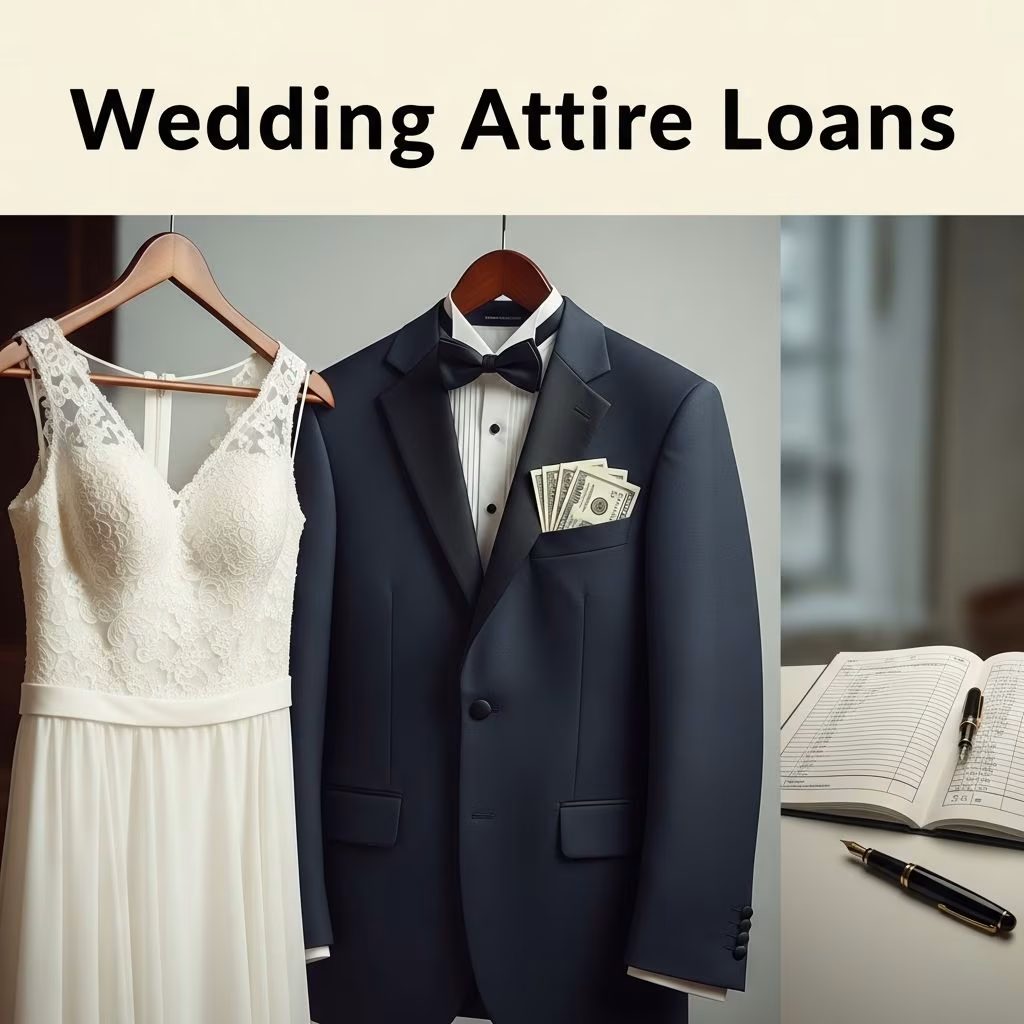
Planning a wedding involves numerous expenses, with attire often being one of the most significant. The average wedding in 2024 cost around $33,000, according to The Knot, and wedding dresses alone can range from $1,000 to over $10,000. Financing options for wedding attire include personal loans, retailer financing, and credit cards. This article explores why a **personal loan** is typically the smartest choice for funding your wedding dress, tuxedo, bridesmaid gowns, or other attire, offering lower rates, flexibility, and predictability compared to alternatives.
What Are Wedding Attire Loans?
Wedding attire loans refer to financing specifically used to purchase wedding-related clothing, such as bridal gowns, tuxedos, veils, shoes, and accessories. Unlike general wedding loans that cover venues or catering, these target the outfit budget, which can exceed $2,000-$5,000 per person for high-end options. Lenders don’t label them exclusively as ‘attire loans,’ but **personal loans** serve this purpose effectively, with amounts from $1,000 to $100,000 available from banks, credit unions, and online lenders.
Personal loans for wedding attire are unsecured, meaning no collateral like your home is required. Approval depends on credit score (often 600+), income, and debt-to-income ratio. Funds deposit quickly—sometimes same-day—allowing seamless payment to designers or bridal shops.
Average Cost of Wedding Attire
Wedding attire costs vary widely:
- Bridal gown: $1,000-$3,000 average; designer up to $10,000+.
- Tuxedo/suit: $200-$1,000 rental or purchase.
- Bridesmaid dresses: $100-$300 each (x4-6 = $400-$1,800).
- Groom/groomsmen: $150-$500 each.
- Accessories/veil/shoes: $200-$1,000.
Total attire budget often hits $3,000-$7,000 for couples. With average wedding costs at $33,000, attire represents 10-20%.
Financing Options for Wedding Attire
Three primary ways to finance wedding attire:
1. Personal Loans
**Personal loans** from lenders like Discover ($2,500-$40,000), SoFi ($5,000-$100,000), or PNC ($1,000-$35,000) offer fixed rates (6.99%-35.99% APR), terms 2-7 years, and no usage restrictions. Prequalify with soft credit checks. Example: $5,000 loan at 12.65% APR (average as of 2025) over 3 years = $166/month, total interest $984.
2. Retailer Financing
Bridal shops like David’s Bridal or Alfred Angelo offer in-house plans, often via third-party like Affirm or Klarna. These resemble buy-now-pay-later with 0% promo periods (6-18 months), but deferred interest (20-30% APR) kicks in if unpaid. Hidden fees and limited to that retailer reduce flexibility.
3. Credit Cards
Convenient for smaller purchases, but average APRs 20-25% make them costly for large attire buys. 0% intro offers exist but require full payoff in 12-21 months or high interest accrues. Rewards cards add value, but debt risk is high.
Personal Loan vs. Retailer Financing vs. Credit Cards: Comparison Table
Here’s a side-by-side for a $5,000 wedding dress:
| Option | APR Range | Term | Monthly Payment (3 yrs) | Total Cost | Pros | Cons |
|---|---|---|---|---|---|---|
| Personal Loan | 6.99%-35.99% | 2-7 yrs | $166 (12.65%) | $5,984 | Fixed payments, shop anywhere, lower rates | Credit check required |
| Retailer Financing | 0% then 25-30% | 6-18 mos | $278 (0% 18 mo) | $5,000-$6,500+ | No interest if paid fast | High penalty APR, retailer-locked |
| Credit Card | 20-25% | Revolving | Min $125 | $7,000+ | Flexible, rewards | High interest, min payments trap |
Data based on 2025-2026 averages. Personal loans win for most due to cost control.
Pros and Cons of Using a Personal Loan for Wedding Attire
Pros
- Lower Interest: Average 12.65% vs. 20%+ cards.
- Fixed Payments: Budget easily; no surprises.
- Flexibility: Use at any vendor, including custom designers.
- Quick Funding: Online lenders like SoFi/Upstart approve in minutes.
- Prequalification: Soft pulls show rates without credit hit.
- No Collateral: Unsecured, protects assets.
Cons
- Credit Requirements: Needs 600+ score for best rates; bad credit = high APR.
- Debt Added: Starts marriage with payments—ensure affordability.
- Fees: Origination 0-8% on some loans.
How to Get the Best Wedding Attire Loan
- Calculate Needs: Budget attire total +10% buffer for alterations/taxes.
- Check Credit: Free scores via AnnualCreditReport.com; improve if below 670.
- Prequalify: Use NerdWallet, Bankrate for multiple offers (e.g., LightStream 6.99%, SoFi).
- Compare APRs/Terms: Shorter terms save interest; use calculators.
- Apply: Gather pay stubs, ID; funds in 1-3 days.
- Avoid Pitfalls: Don’t borrow more than 36% DTI allows.
Top lenders: NerdWallet 2026 picks include SoFi (5.0 rating, $1K-$50K), LightStream ($5K-$100K).
Alternatives to Wedding Attire Loans
- Savings/0% Cards: Best if you have cash or promo periods.
- Family Gifts: Common, but document as non-loan to avoid taxes.
- Wedding Registries: Cash funds for attire via Zola/The Knot.
- Rentals/Secondhand: Save 50-70% via Rent the Runway or Stillwhite.
Is a Wedding Attire Loan Right for You?
Yes, if credit is solid and you prioritize low-cost debt over high-interest options. Avoid if maxed on debt or can save/pay cash—wedding debt averages $33K+ burdens post-honeymoon. Consult financial advisors; tools like Bankrate calculators help.
Frequently Asked Questions (FAQs)
What is the average cost of a wedding dress?
A: Around $1,000-$3,000, but luxury gowns exceed $10,000.
Can I use a personal loan for my wedding tuxedo?
A: Yes, personal loans fund any attire without restrictions.
Are there 0% interest wedding attire loans?
A: Retailer promos offer 0% short-term, but personal loans have fixed low APRs long-term.
How fast can I get wedding attire loan funds?
A: Same-day to 3 days from online lenders.
Does bad credit qualify for wedding loans?
A: Possible at higher APRs (up to 35.99%); min scores 560-None.
Should I finance wedding attire with a credit card?
A: Only if 0% promo and full payoff guaranteed; otherwise, personal loans cheaper.
References
- Wedding Loans: How to Finance Wedding Costs — Bankrate. 2025-06-04. https://www.bankrate.com/loans/personal-loans/wedding-loan/
- Best Wedding Loans of 2026 — NerdWallet. 2026. https://www.nerdwallet.com/personal-loans/best/wedding-loans
- Personal Loan For Wedding Expenses — Discover. Accessed 2026. https://www.discover.com/personal-loans/wedding-loans/
- Are Wedding Loans a Wise Method to Cover Costs? — The Knot. 2024. https://www.theknot.com/content/wedding-loans-personal-wedding-costs
- Why Your Best Wedding Dress Loan Is a Personal Loan — MoneyRates. Accessed 2026. https://www.moneyrates.com/personal-loans/wedding-attire-loans.htm
- Personal Loan for Wedding and Honeymoon Expenses — SoFi. Accessed 2026. https://www.sofi.com/personal-loans/wedding-loans/
- Wedding Loans: Borrow Up to $35K — PNC Bank. Accessed 2026. https://www.pnc.com/en/personal-banking/borrowing/personal-loans/unsecured-personal-loan/wedding-loans.html
This article is general information, not personal financial advice. Consider your own situation, or speak with a licensed adviser, before acting on it.


