

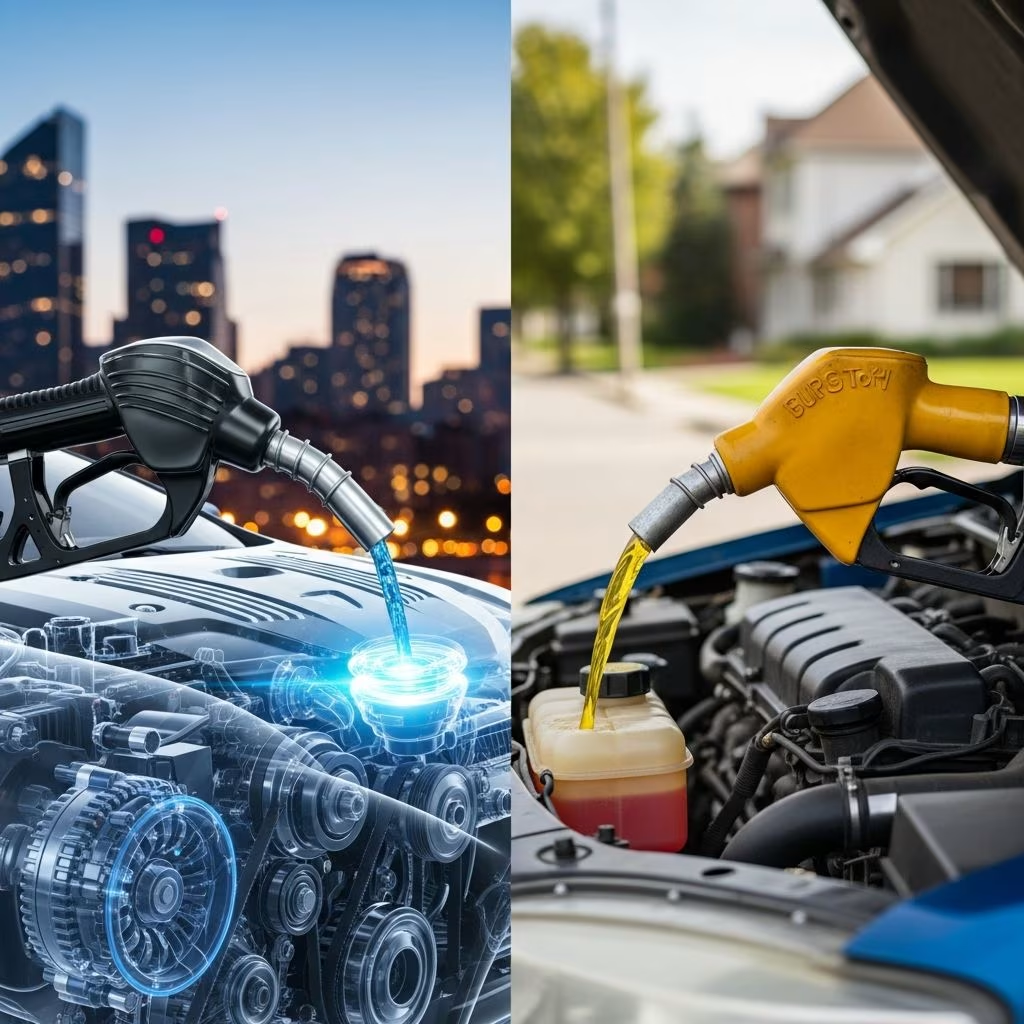
At the gas pump, you’re faced with choices: regular unleaded at 87 octane, midgrade at 89, or premium at 91-94. Premium gas often costs 20-60 cents more per gallon, prompting the question: does it deliver better performance, fuel economy, or engine protection to justify the price? This article breaks down the science, myths, and practical advice to help you save money without risking your engine.
What’s the Difference Between Premium and Regular Gas?
The primary distinction between premium and regular gas is the **octane rating**, which measures a fuel’s ability to resist premature ignition or “knocking” in the engine. Regular gas typically has an 87 octane rating, midgrade around 89, and premium 91 or higher (up to 93 in some areas labeled as “super-premium”). Knocking occurs when the air-fuel mixture ignites too early due to high compression, potentially damaging pistons and valves over time.
Premium gas burns more slowly and resists compression better, making it ideal for high-performance engines with turbochargers or high compression ratios. Regular gas suits most everyday vehicles designed for lower compression. Beyond octane, both contain similar detergents for cleaning injectors, though premium may have slightly higher concentrations—but not enough to warrant switching if not required.
| Gas Type | Octane Rating | Avg. Price Premium (per gal) | Best For |
|---|---|---|---|
| Regular | 87 | $3.07 (national avg.) | Standard sedans, SUVs |
| Midgrade | 89 | $3.32 | Moderate performance |
| Premium | 91-94 | $3.90 | Turbo, high-compression engines |
Prices vary by location, but premium averages 60 cents more per gallon than regular, adding up to $12.45 for a 15-gallon fill-up.
Do You Really Need Premium Gas?
Check your vehicle’s owner’s manual or the sticker inside the fuel door. If it says “Premium Unleaded Fuel Only,” using regular can cause knocking, reduced power, and long-term damage. “Premium Recommended” means regular won’t harm the engine but may lower performance and efficiency slightly.
Most cars (over 80% on U.S. roads) run fine on regular gas, as they’re engineered for 87 octane. High-performance models like turbocharged BMWs or sports cars benefit from premium to maximize horsepower and avoid knock. For a typical commuter sedan or SUV, premium offers no measurable gains in power, mileage, or longevity.
- Requires Premium: High-compression engines (e.g., many luxury/performance cars).
- Recommends Premium: Test both fuels; track mileage and performance.
- Regular Only: Everyday drivers—save the cash.
Premium Gas Myths Busted
Many believe premium gas cleans engines better, boosts MPG, or extends engine life universally. Here’s the truth:
- Myth: Premium improves fuel economy in any car. Fact: Only if your engine is tuned for it. Consumer Reports tests show cars averaging 30 MPG save over $200/year on regular vs. premium; at 50 MPG, savings exceed $400.
- Myth: Premium reduces emissions. Fact: No significant difference; both meet EPA standards.
- Myth: Premium prevents all knocking. Fact: Modern engines have knock sensors that adjust timing on regular if compatible.
- Myth: Higher octane = more power always. Fact: Tests on vehicles like Ford F-150 show 10% lower boost on regular, but only if premium-required.
Using premium in a regular-gas car wastes money without benefits, as excess octane doesn’t convert to power.
Cost Comparison: How Much Can You Save?
With premium at $0.59-$0.83 more per gallon, annual savings add up. Assume 15,000 miles/year at 25 MPG (600 gallons):
- Regular: $1,842 total.
- Premium: $2,340 total.
- Savings: $498/year.
For efficient cars (35 MPG, 429 gallons), savings hit $250+. Driving a premium-required car? The cost prevents repairs from knocking, which can exceed $1,000.
Can You Mix Premium and Regular Gas?
Yes, modern engines handle mixed octanes safely due to adaptive ECUs. Mixing averages the octane (e.g., half tank each = ~89). Avoid in premium-required cars, as it may reduce efficiency or trigger knock. No performance boost from mixing; stick to recommendations.
Switching From Premium to Regular: Is It Safe?
If “recommended” not “required,” test it: Fill with premium, track MPG/performance for 200 miles. Switch to regular, compare. Many report no change in sedans/SUVs. Turbo models may lose acceleration (e.g., 0-60 slows 0.5-1 sec). Monitor for pinging; if heard, revert to premium.
When Should You Use Premium Gas?
- Towing/hauling in high-compression engines.
- Hot climates increasing knock risk.
- Manufacturer mandates.
- Performance testing shows gains.
Otherwise, regular suffices. Top Tier brands (with extra detergents) in either grade enhance cleaning.
Frequently Asked Questions (FAQs)
Does premium gas give better mileage?
No, unless required. Tests show regular matches or exceeds in non-demanding engines, saving hundreds yearly.
Is premium gas better for the engine?
Only if specified; otherwise, no longevity or cleaning edge.
What happens if I put regular in a premium car?
Possible knock, power loss, damage if “required.” Safe short-term if “recommended.”
Can I switch gases frequently?
Yes, engines adapt quickly. No harm from alternating.
What’s midgrade for?
A compromise; useful for mild knock or averaging mixes.
Final Tips to Save at the Pump
Consult your manual, test fuels, buy Top Tier regular, avoid overfilling. Savings from regular can fund maintenance, keeping your car running efficiently longer.
References
- Premium vs. Regular Gasoline — Chicago Northside Toyota. 2023. https://www.chicagotoyota.com/premium-vs-regular-gasoline.htm
- What Is The Difference Between Regular Unleaded And Premium — Tidewater Tech Trades. 2024-05-15. https://tidewatertechtrades.edu/blog/unleaded-premium-gas/
- Premium vs. Regular Gas – Which is Better? — AAA. 2025-01-10. https://www.acg.aaa.com/connect/blogs/4c/auto/premium-vs-regular-gas
- Understanding Premium Vs. Regular Gas — Spicer Agency. 2024. https://www.spiceragency.com/article/understanding-premium-vs-regular-gas/
- Regular vs. Premium Gas Explained — Berryman Products. 2024-08-20. https://www.berrymanproducts.com/regular-vs-premium-gas-explained/
- Should You Use Premium Gas? — Kelley Blue Book. 2025-03-05. https://www.kbb.com/car-advice/should-you-use-premium-gas/
- Regular Gas vs. Premium Gas — Consumer Reports (YouTube). 2023-11-12. https://www.youtube.com/watch?v=TdcPEk3ldzc
This article is general information, not personal financial advice. Consider your own situation, or speak with a licensed adviser, before acting on it.


