

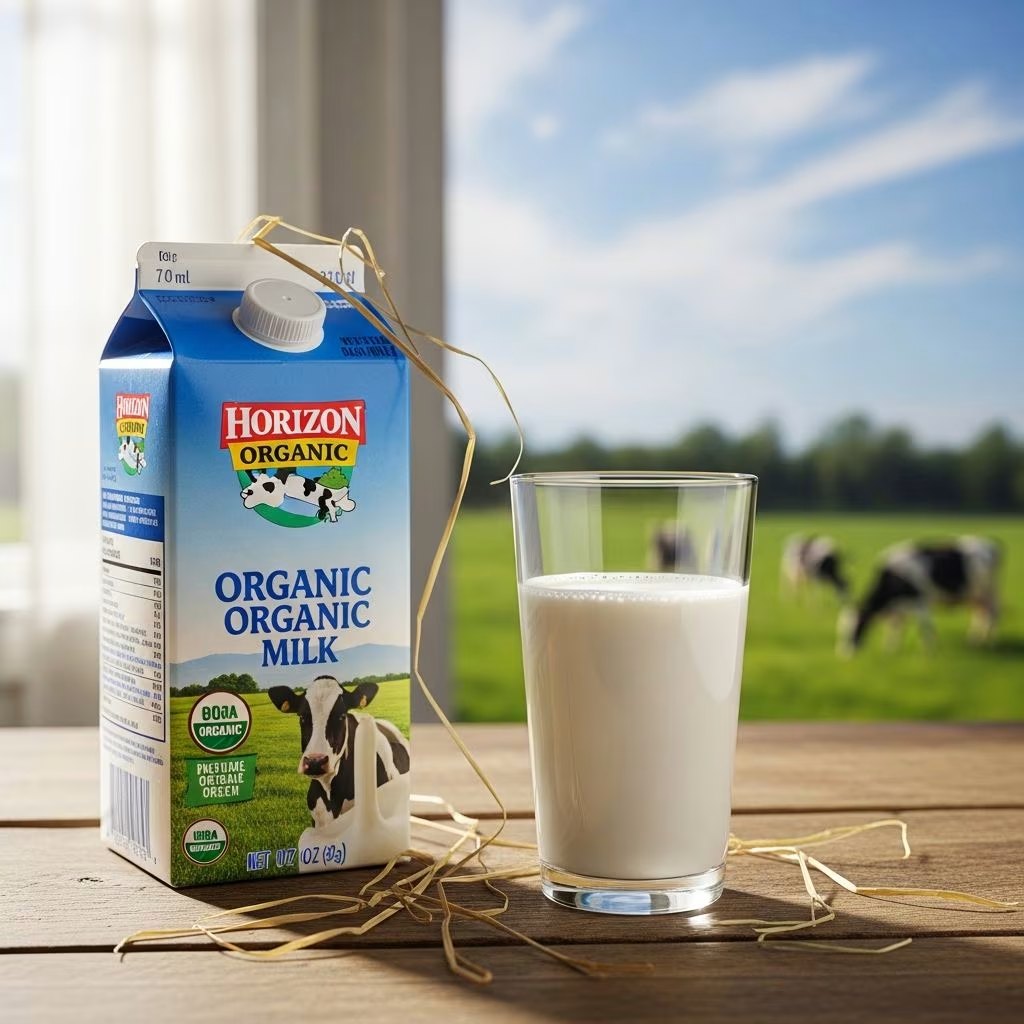
Horizon milk contains a synthetically produced additive meant to support brain health. Is the USDA organic seal on its products misleading? This article examines the ingredients, regulations, consumer expectations, and financial implications behind one of the top-selling organic milk brands.
USDA Seems Totally Cool With This Synthetic Additive in Your ‘Organic’ Milk
You’ve probably noticed the bold claim on Horizon Organic Milk cartons: “DHA OMEGA-3 Supports Brain Health.” Printed in large black letters on a gold banner against the iconic red packaging, it promises enhanced nutrition for your brain. For many shoppers, this justifies paying about 30 cents more per half-gallon than standard organic milk—which already costs roughly double the price of conventional milk in many stores.
Horizon’s DHA-enriched organic milk has proven enormously popular, generating approximately $250 million in sales. This figure represents about 14% of all organic milk sold in the U.S., highlighting its dominance in the category. But what exactly makes this milk superior for brain health? Many consumers assume it stems from superior farming practices or naturally occurring nutrients in the milk. Others might think any additives are organically sourced. Both assumptions are incorrect.
The key ingredient is a synthetic algal oil derived from Schizochytrium, an algae species harvested from the coasts of Southern California. This oil, which carries a faintly fishy taste, is produced in massive industrial facilities featuring five-story-tall steel vats. It’s not extracted from fish or plants in a natural process but brewed through fermentation in controlled, factory environments.
Despite its synthetic origins, Horizon and similar brands proudly display the USDA Organic seal on these products. The U.S. Department of Agriculture (USDA) has permitted this practice for at least a decade, showing little enforcement against the inclusion of such non-organic additives in products labeled as organic. This stance has fueled a heated debate between industry players and consumer watchdogs.
The DHA Additive: What It Is and How It’s Made
DHA, or docosahexaenoic acid, is an essential omega-3 fatty acid crucial for brain development, eye health, and cognitive function. It’s naturally present in fatty fish, certain algae, and human breast milk. However, in Horizon’s case, it’s not naturally occurring in the milk but added post-production.
- Source: Algal oil from Schizochytrium sp., a microalgae.
- Production: Fermented in large-scale bioreactors using sugar substrates, then extracted, refined, and concentrated.
- Addition: Blended into the milk after pasteurization to achieve claimed levels of 32mg DHA per serving.
- Taste Profile: Mildly fishy, which some detect in the final product.
This process allows Horizon to fortify its milk with DHA levels higher than typical organic milk, appealing to parents seeking nutritional boosts for children. Yet, the method raises questions about purity and authenticity under organic standards.
Consumer Advocates Push Back: Synthetics Don’t Belong in Organic
Groups like Consumer Reports argue vehemently that factory-brewed additives undermine the organic label’s integrity. “We do not think that [the oil] belongs in organic foods,” stated Charlotte Vallaeys, senior policy analyst at Consumer Reports, in an interview.
“When an organic milk carton says it has higher levels of beneficial nutrients, like omega-3 fats, consumers want that to be the result of good farming practices … not from additives made in a factory.”
Advocates emphasize that organic certification should reflect holistic farming—pasture-raised cows grazing on organic feed, free from synthetic pesticides, hormones, and GMOs. Adding synthetic DHA circumvents this by artificially enhancing nutrition without improving animal welfare or soil health.
The Organic Consumers Association and Cornucopia Institute echo these sentiments, petitioning the USDA for stricter rules. They contend that misleading labeling exploits consumer trust, as surveys show most buyers equate “organic” with “natural” and “additive-free.”
USDA’s Position: Approved Under National List
The USDA defends its approval via the National List of Allowed and Prohibited Substances, part of the National Organic Program (NOP). This list permits specific synthetic substances when non-organic alternatives aren’t available or feasible.
| Aspect | USDA Stance | Criticisms |
|---|---|---|
| DHA Algal Oil | Allowed since 2003 as a nutrient supplement. | Synthetics contradict organic philosophy. |
| Enforcement | Relies on self-certification by processors. | Lax oversight enables misuse. |
| Consumer Impact | Provides access to fortified organics. | Price premium not justified by farming. |
USDA documents confirm DHA from Schizochytrium is on the National List for use in organic infant formula and other products, extended to milk. Officials argue it meets safety standards and fills nutritional gaps. However, no recent updates (as of 2026) indicate changes, despite ongoing petitions.
The Price Premium: Is It Worth It?
Organic milk commands a 100%+ premium over conventional due to higher production costs. Adding DHA tacks on another 10-20%. A half-gallon of Horizon DHA Organic might cost $6-8, vs. $3-4 for regular milk.
- Sales Success: $250M annually proves demand.
- Marketing Power: Brain health claims drive purchases.
- Alternatives: Plain organic milk, wild fish, or supplements offer DHA cheaper.
For budget-conscious families, the debate intensifies: Pay for perceived purity, or save with conventional options? Transparency labels could help, but current packaging blurs lines.
Horizon’s Defense and Broader Industry Trends
Horizon (a WhiteWave Foods brand, owned by Danone) maintains compliance: “Our DHA is USDA-approved and sourced sustainably.” They highlight third-party testing and no animal-derived ingredients, appealing to vegans.
This isn’t isolated. Brands like Stonyfield and Organic Valley offer DHA versions. The trend reflects demand for functional foods—milk as a delivery system for vitamins, probiotics, and now omega-3s.
What Should Consumers Do?
Read labels closely: Look for “DHA algal oil” in ingredients. Opt for plain organic if avoiding synthetics. Support advocacy by contacting USDA or choosing pasture-raised verified brands (e.g., via Cornucopia’s scorecards).
Ultimately, “organic” means specific standards, not perfection. Informed choices balance cost, nutrition, and values.
Frequently Asked Questions (FAQs)
What is DHA in Horizon milk?
DHA is a synthetic omega-3 from algae, added for brain health support. It’s factory-produced, not natural to the milk.
Is Horizon milk truly organic with DHA?
Yes, per USDA rules, as DHA is National List-approved. Critics argue it dilutes organic meaning.
Why is Horizon DHA milk more expensive?
The additive costs extra (~30¢/half-gallon), plus organic premiums. Sales hit $250M yearly.
What do consumer groups say?
Groups like Consumer Reports oppose synthetics in organics, preferring farm-derived nutrients.
Alternatives to Horizon DHA milk?
Plain organic milk, fish oil supplements, or algae oil capsules provide DHA without synthetic concerns in dairy.
References
- Is Horizon Organic Milk Really Organic? Consumer Advocates Say No — The Penny Hoarder / Desiree Stennett. 2017-06-07. https://www.thepennyhoarder.com/save-money/horizon-milk/
- National List of Allowed and Prohibited Substances — USDA Agricultural Marketing Service. 2023-10-01. https://www.ams.usda.gov/rules-regulations/organic/national-list
- Organic Dairy Overview — Cornucopia Institute. 2024-05-15. https://www.cornucopia.org/dairyscorecard/
- Consumer Reports on Organic Standards — Consumer Reports. 2022-11-20. https://www.consumerreports.org/organic-foods/
This article is general information, not personal financial advice. Consider your own situation, or speak with a licensed adviser, before acting on it.


