

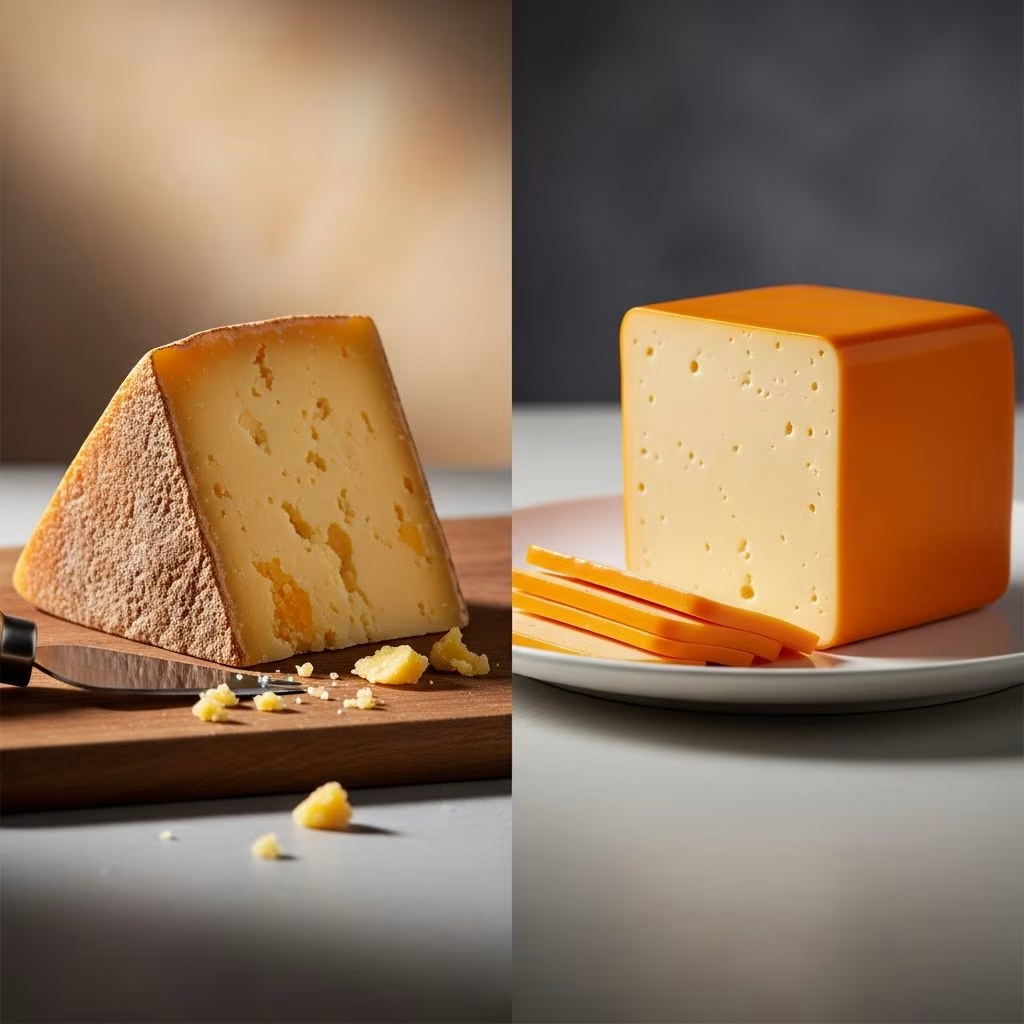
Fancy cheeses promise gourmet flavor, but U.S. labeling laws let fakes thrive. Learn to spot authentic Parmigiano-Reggiano, Manchego, and Swiss to avoid overpaying for inferior products.
Your Cheese Might Be an Imposter. Here’s Why
Authentic cheeses like Parmigiano-Reggiano—the true original Parmesan from Italy—must adhere to strict rules. It contains only three ingredients: milk from the Parma/Reggio region (produced less than 20 hours from cow to cheese), salt, and rennet from calf intestine. Governments enforce production details, including cattle species and maximum distance from farm to creamery.
These standards preserve centuries-old traditions. Author Larry Olmsted’s book Real Food/Fake Food exposes how U.S. labeling loopholes allow fakes in products like honey, olive oil, balsamic vinegar, and cheeses.
A prime example is Kraft’s green-can “Parmesan,” packed with cellulose powder and potassium sorbate—additives banned in real Parmigiano-Reggiano. This led to Kraft being barred from labeling it Parmesan in Europe. Americans often miss out on genuine taste, settling for subpar versions.
The real frustration? Paying premium prices for supposed “good stuff” that turns out fake. When splurging on fancy cheese, demand authenticity to ensure value.
Parmigiano-Reggiano
Parmigiano-Reggiano was a revelation for many, far superior to the grated powder or plastic-wrapped blocks common in stores. As the “King of Cheeses,” it’s one of the world’s most faked, per Deli Market News.
What to look for:
- The rind is stamped “Parmigiano-Reggiano.” Every authentic wheel from Parma, Italy, bears this marking. Even partial visibility confirms origin; unmarked or differently named rinds (like Grana Padano or Pecorino Romano) are not it.
- Avoid pre-grated or “Parmesan” labels without the full name and DOP seal (Denominazione di Origine Protetta), Italy’s authenticity mark.
- Texture and taste: Real versions are hard, granular, with complex nutty flavors—no woody cellulose.
Opt for wedges from reputable importers. Aged 24+ months, genuine pieces offer unmatched umami. Stores like Whole Foods or specialty delis often stock verified imports.
Manchego
Manchego, Spain’s iconic sheep’s milk cheese from La Mancha, is another frequent fake. Only cheese from Manchega sheep in that region qualifies as authentic.
What to look for:
- Label specifies “Manchego” from La Mancha, Spain, made from sheep’s milk. Cow or goat versions are imitations.
- PDO seal (Protected Designation of Origin) on packaging or rind.
- Rind markings: Genuine has a distinctive basket-weave pattern from traditional molds.
- Flavor profile: Tangy, nutty, slightly caramel-like; younger (3-6 months) is milder, aged (12+ months) firmer.
Fakes often use cheaper milk blends. Check origin—anything not from La Mancha isn’t real. Pair with membrillo or red wine for an authentic experience.
Swiss Cheese
American “Swiss” cheese rarely hails from Switzerland. Most lack holes (eyes), a trait unique to specific Swiss varieties like Emmentaler.
True Swiss cheeses vary widely: nutty Gruyere, creamy Raclette, spicy Appenzeller. Domestic versions imitate but can’t match alpine pastures’ terroir.
What to look for:
- Imported from Switzerland—avoid generic “Swiss” labels, which signal U.S.-made.
- Specific names like Gruyere, Emmentaler, or L’Etivaz. Beware “Gruyere-style” domestics.
- AOP seal (Appellation d’Origine Protégée) for Swiss authenticity.
- Irregular eyes, pale yellow interior, complex aromas from raw milk aging.
Worth the premium: Wisconsin imitations beat standard slices, but imports elevate sandwiches and fondues.
Other Cheeses Prone to Fakes
Beyond these stars, watch for imposters in:
- Gorgonzola: Real from Lombardy/Piedmont, Italy; creamy blue veins, DOP mark.
- Roquefort: French sheep’s milk only, AOC seal, intense pungency.
- Feta: Authentic PDO from Greece; sheep/goat milk, brined texture—not Danish cow versions.
- Prosciutto-wrapped cheeses: Often fake pairings; verify both elements.
U.S. law permits generic terms like “parmesan” or “feta,” diluting authenticity. EU-style protections lag here.
How to Shop Smart for Real Cheese
To avoid fakes:
- Read labels closely: Seek DOP/PDO/AOP seals, exact origins.
- Buy from specialists: Cheesemongers at farmers’ markets or stores like Murray’s Cheese verify sources.
- Check rinds: Authentic markings are non-removable.
- Taste test: Real cheeses shine without additives.
- Price check: Bargain “premiums” signal fakes; genuine costs more due to traditions.
| Cheese | Authentic Origin | Key Identifier | Common Fake |
|---|---|---|---|
| Parmigiano-Reggiano | Parma/Reggio, Italy | Rind stamp, DOP | Grated U.S. “Parmesan” |
| Manchego | La Mancha, Spain | PDO, sheep milk | Cow milk blends |
| Gruyere | Switzerland | AOP, imported | “Swiss” slices |
Why It Matters: Taste, Health, and Savings
Real cheeses use raw or minimally processed milk, fostering beneficial bacteria absent in fakes loaded with preservatives. Superior flavor elevates meals—think real Parmesan shaving over pasta vs. sawdust-like powder.
Financially, paying for authenticity avoids buyer’s remorse. A small wedge of genuine lasts longer, delivering more satisfaction per bite.
Support traditions: Buying real sustains artisan producers facing counterfeits.
Frequently Asked Questions (FAQs)
What makes Parmigiano-Reggiano authentic?
Stamped rind, DOP seal, three ingredients only, from specific Italian region.
Is all Manchego from Spain?
No—only La Mancha sheep’s milk versions; others are styles.
Why no holes in most Swiss cheese?
Holes (eyes) are rare, mainly in Emmentaler; U.S. “Swiss” skips traditions.
Are there U.S. laws protecting cheese names?
Lax compared to EU; generic terms allow fakes.
Where to buy real cheese affordably?
Specialty stores, co-ops; buy wedges, not pre-packaged.
References
- Is it Fancy or Fake Cheese? How to Get Real … — The Penny Hoarder. 2023. https://www.thepennyhoarder.com/save-money/dont-buy-fake-cheese/
- Parmigiano-Reggiano Consortium Official Guidelines — Parmigiano-Reggiano Consortium (consorzio-parmigiano-reggiano.it). 2024-01-15. https://www.parmigianoreggiano.com/consortium/regulations
- Manchego PDO Regulations — Spanish Ministry of Agriculture (mapa.gob.es). 2023-06-20. https://www.mapa.gob.es/en/alimentacion/temas/calidad-dop-igp/queso-manchego
- Swiss Cheese AOP Standards — Federal Office for Agriculture FOAG (blw.admin.ch). 2024-03-10. https://www.blw.admin.ch/blw/en/home/markt/lebensmittelqualitaet/qualitaetskennzeichen-aop-igp.html
- EU PDO Cheese Protections — European Commission (ec.europa.eu). 2025-01-01. https://ec.europa.eu/info/food-farming-fisheries/food-safety-and-quality/certification/quality-labels/geographical-indications-register/
This article is general information, not personal financial advice. Consider your own situation, or speak with a licensed adviser, before acting on it.


