

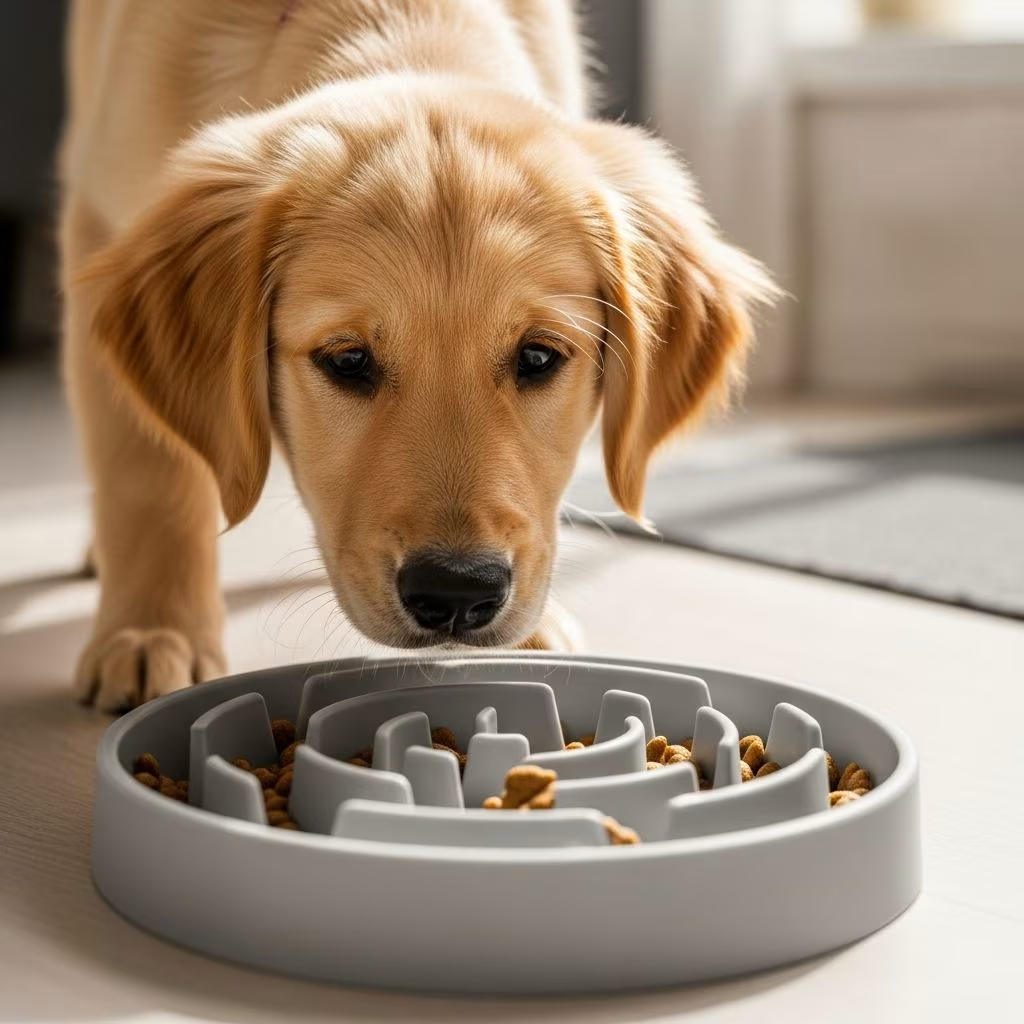
Does your dog devour meals in seconds? A slow feeder dog bowl can transform mealtime, promoting healthier eating habits and preventing costly health issues like bloat and obesity. These affordable tools help dogs eat slower, improving digestion and saving pet owners money on vet bills.
Why Dogs Eat So Fast
Dogs often eat rapidly due to instinctual behaviors rooted in their wild ancestry. In the wild, canines competed for food, leading to gulping to secure meals before others. Domesticated dogs retain this trait, especially in multi-pet homes or with high-energy breeds. Fast eating swallows air with food, causing bloating, gas, and life-threatening gastric dilatation-volvulus (GDV or bloat).
Breeds like Great Danes, Labradors, and German Shepherds are prone to bloat, a condition where the stomach twists, requiring emergency surgery costing $2,000-$7,500. Slow feeders address this by design, extending meal times from seconds to minutes.
Health Risks of Fast Eating
Rapid consumption leads to several issues:
- Choking: Gulping large chunks risks airway blockage.
- Bloat/GDV: Swallowed air expands the stomach, potentially fatal without treatment.
- Indigestion: Poor chewing causes vomiting, regurgitation, and nutrient malabsorption.
- Obesity: Dogs don’t register fullness, leading to overeating and weight gain.
- Vomiting: Undigested food returns quickly after meals.
These problems increase vet visits, with bloat surgery alone averaging $3,500. Slow feeders mitigate risks by forcing smaller bites and thorough chewing.
Benefits of Slow Feeder Dog Bowls
Slow feeder bowls feature mazes, ridges, or puzzles that challenge dogs to work for food, naturally slowing intake. Key advantages include:
- Improved Digestion: Proper chewing breaks down food, enhancing nutrient absorption and reducing gas/bloating.
- Choking Prevention: Smaller bites minimize aspiration risks.
- Weight Control: Longer meals signal fullness, curbing overeating.
- Mental Stimulation: Puzzle elements engage the brain, reducing boredom and destructive behaviors.
- Better Behavior: Calmer mealtimes lower food aggression and anxiety.
Studies show slow feeding can extend meal times by 3-5 times, cutting bloat risk by up to 50% in prone breeds. Owners report fewer vomiting episodes and healthier weights.
How Slow Feeder Bowls Work
These bowls incorporate barriers like:
- Mazes: Winding paths for kibble.
- Ridges/Walls: Block quick scoops.
- Valleys/Hills: Uneven surfaces slow access.
Dogs must use tongue and nose to navigate, mimicking foraging. This not only slows eating but provides enrichment equivalent to puzzle toys.
Types of Slow Feeder Bowls
| Type | Description | Best For | Price Range |
|---|---|---|---|
| Maze | Intricately patterned base | Medium/large dogs | $10-25 |
| Ridge | Simple raised barriers | Small/fast eaters | $8-15 |
| Slope | Angled or tilted design | Picky eaters | $12-20 |
| Puzzle | Movable parts/compartments | High-intelligence breeds | $15-30 |
| Portable | Collapsible/travel-friendly | On-the-go owners | $10-20 |
Choose based on breed size, eating speed, and material (ceramic, plastic, stainless steel). Non-tip bases prevent spills.
How to Choose the Right Slow Feeder
Consider these factors:
- Dog Size: Larger mazes for big breeds; shallow for small noses (e.g., brachycephalic like Pugs).
- Food Type: Works best with kibble; wet food may need lick mats.
- Difficulty: Start easy, increase challenge.
- Material: BPA-free plastic or stainless steel for durability; avoid breakable ceramic for active dogs.
- Cleaning: Dishwasher-safe preferred.
Test with a puzzle toy first to gauge interest. Budget options under $15 abound on major retailers.
Introducing a Slow Feeder
Abrupt changes frustrate dogs. Transition tips:
- Mix old/new bowls with increasing slow feeder use over 7-10 days.
- Supervise first meals; hand-feed kibble from bowl if needed.
- Add enticing toppers like broth.
- Praise successes to build positive association.
Most adapt in 1-2 weeks, with meals lasting 10-20 minutes.
Slow Feeder Bowls vs. Other Solutions
| Method | Pros | Cons | Cost |
|---|---|---|---|
| Slow Feeder Bowl | Passive, multi-benefit, reusable | May not suit all noses | $10-30 |
| Puzzle Toys | High engagement | Messy, cleaning intensive | $15-40 |
| Food Disperser | Portable | Less effective for speed | $20-50 |
| Hand Feeding | Bond-building | Time-consuming | Free |
Slow bowls win for convenience and cost-effectiveness.
Cost Savings with Slow Feeders
Initial $15 investment prevents:
- Bloat surgery: $2,000+ savings.
- Obesity treatments: $500/year in meds/diets.
- Vet visits for vomiting: $100-300 each.
One study estimates slow feeding saves $200-500 annually per fast-eating dog via fewer health issues.
FAQs
Are slow feeder bowls safe for all dogs?
Yes, but brachycephalic breeds (Pugs, Bulldogs) may need flatter designs. Consult vets for GDV-prone dogs.
How much slower do they make eating?
Typically 3-5x slower, turning 30-second meals into 10+ minutes.
Can puppies use slow feeders?
Yes, start with easy designs post-weaning for habit formation.
Do they work with wet food?
Limited; pair with lick mats for best results.
What’s the best material?
Stainless steel for hygiene; plastic for affordability.
Frequently Asked Questions (FAQs)
Q: Will a slow feeder stop my dog from food guarding?
A: It reduces competition stress by prolonging meals, lessening aggression.
Q: How do I clean a slow feeder bowl?
A: Top-rack dishwasher safe; scrub mazes with brush for residue.
Q: Are expensive bowls better?
A: No, $10-20 models perform equally; focus on design fit.
References
- Top 5 Benefits of Using a Slow Feeder Dog Bowl — Super Feedy. 2023-05-15. https://superfeedy.com/en-us/blogs/slow-feeding/top-5-benefits-of-using-a-slow-feeder-dog-bowl
- Slow Feeder Dog Bowl: Pros And Cons — Hiddin. 2024-02-10. https://shophiddin.com/blogs/news/slow-feeder-dog-bowl-pros-and-cons
- Slow Feeder Bowls — SodaPup/True Dogs, LLC. 2025-01-01. https://sodapup.com/collections/slow-feeder-dog-bowls
- Dog Slow Feeder Bowls: Benefits and Risks — Messy Mutts. 2023-11-20. https://messymutts.ca/blogs/news/dog-slow-feeder-bowls-benefits-and-risks
- The Science Behind Slow Feeders — ShopYomp. 2024-08-05. https://shopyomp.com/blogs/magazine/the-science-behind-slow-feeders-how-they-improve-your-dog-s-eating-habits
This article is general information, not personal financial advice. Consider your own situation, or speak with a licensed adviser, before acting on it.


