

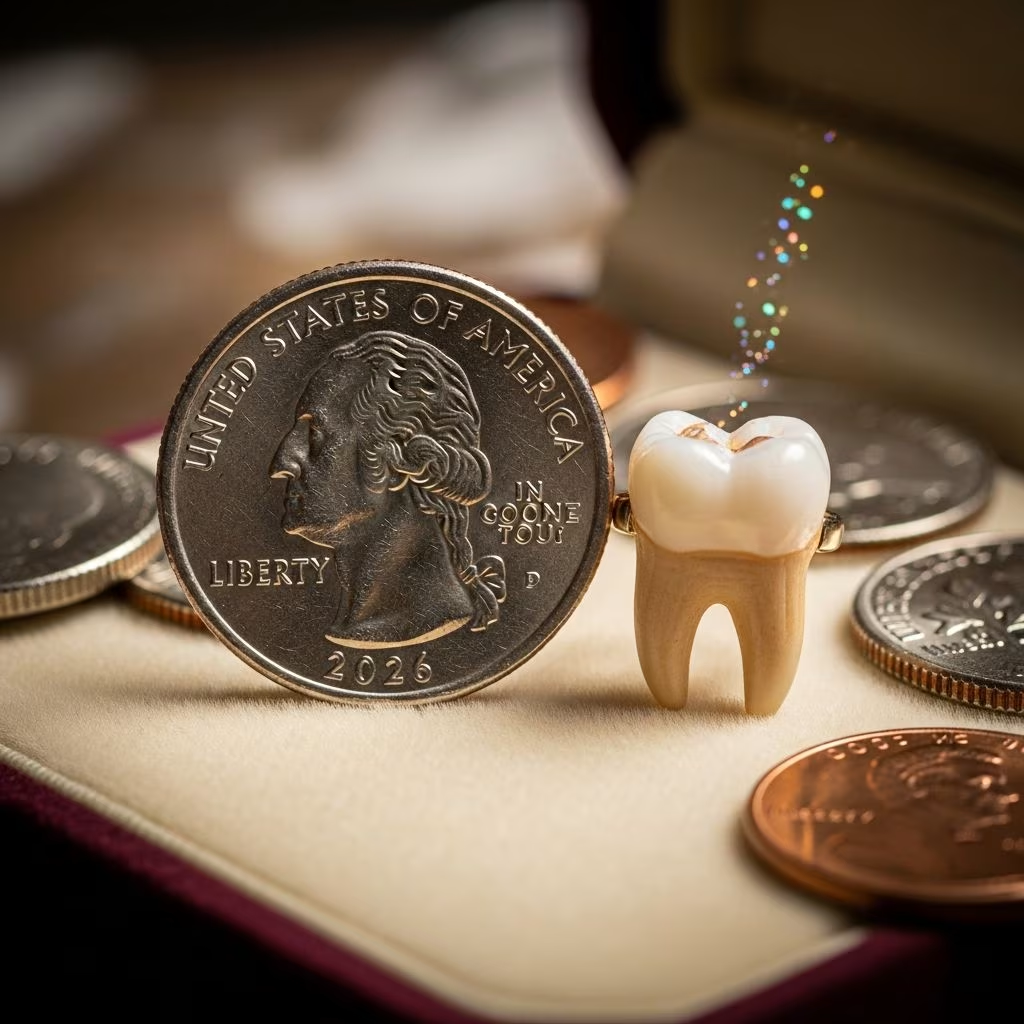
The Tooth Fairy tradition remains a cherished milestone for children losing their first baby teeth, blending magic with a small financial lesson. In 2026, however, parents report the fairy is leaving slightly less under pillows amid rising living costs. This article breaks down the latest payment trends, regional variations, budget-saving ideas, and ways to enhance the experience without overspending.
Average Tooth Fairy Payment in 2026
According to recent family polls, the national average Tooth Fairy payout stands at $5.27 per tooth in 2026, down 3% from 2025’s $5.43. This marks the first decline in five years, reflecting broader economic pressures like inflation on groceries and housing. Despite the dip, 84% of parents with children aged 6-12 still participate in the tradition, forgoing it only in 16% of households due to skepticism or budget constraints.
Families in higher-cost areas tend to pay more to match local economics. For instance, the first lost tooth often commands a premium—averaging $6.50 nationwide—as an exciting debut. Subsequent teeth see diminishing returns, with later molars fetching around $4.20 on average.
Tooth Fairy Payouts by State
Payments vary widely by location, correlating with median household income and cost of living. Below is a table summarizing 2026 averages based on surveys from over 10,000 U.S. families:
| State | Average Payout | Change from 2025 |
|---|---|---|
| Connecticut | $7.12 | +1% |
| Massachusetts | $6.98 | 0% |
| New Jersey | $6.75 | -2% |
| California | $6.45 | -4% |
| Texas | $4.88 | -1% |
| Florida | $4.72 | 0% |
| Mississippi | $3.65 | +2% |
Connecticut leads for the third year, buoyed by affluent suburbs, while Southern states like Mississippi offer modest gifts. Urban vs. rural divides also play a role: city kids average $5.80, compared to $4.50 in rural areas.
Factors Influencing Tooth Fairy Payments
Several elements dictate what the Tooth Fairy ‘leaves’:
- Child’s Age and Tooth Number: First teeth get 20-30% more; payments drop after the fourth tooth.
- Behavior and Effort: 62% of parents reward ‘good toothbrushing’ with bonuses up to $2 extra.
- Economic Climate: In 2026, 45% of parents cite inflation as reason for flat or reduced payments.
- Sibling Parity: 78% match payouts across siblings to avoid jealousy.
- Cultural Twists: Some families incorporate notes or trinkets alongside cash.
Budget-Friendly Tooth Fairy Ideas
Maintaining the wonder doesn’t require big bucks. Here are proven ways to stretch your Tooth Fairy budget:
Use Loose Change and Small Bills
Opt for quarters or a $1 bill instead of $5 notes—kids value the ‘treasure’ feel. This keeps costs under $4 per tooth while teaching coin recognition.
Incorporate Non-Cash Gifts
- Stickers, temporary tattoos, or tooth-themed erasers (cost: $0.10-$0.50).
- Personalized notes from the Fairy promising future rewards for oral hygiene.
- Certificates for ‘Perfect Smile Club’ redeemable for family treats.
Scale Payments Gradually
Start at $3 for the first tooth, increment by $0.50 per tooth. By the 12th, cap at $8—total spend: under $60 for a full set.
Leverage Household Rewards
Tie Tooth Fairy visits to chore charts: extra effort earns a $1 bonus, fostering responsibility.
DIY Tooth Fairy Props
Craft a ‘Fairy Door’ from cardboard for $2 in supplies. Kids place teeth there, adding interactive magic.
How to Make the Tooth Fairy Visit Memorable
Beyond money, focus on storytelling:
- Fairy Notes: Write in tiny script about the tooth’s ‘adventure’ to Fairy Land. Use glitter pens for authenticity.
- Sprinkle Evidence: Dust glitter on the floor as ‘pixie dust’—biodegradable craft glitter works best.
- Photo Ops: Snap pics of the ‘exchange site’ for a family album.
- Tradition Books: Log each visit in a dedicated journal with drawings.
These touches create lasting memories costing pennies but delivering high emotional ROI.
Common Tooth Fairy Mistakes to Avoid
Parents share pitfalls from experience:
- Forgetting a visit—set phone reminders two weeks before expected losses.
- Inconsistent amounts—track prior payouts in a app note.
- Ignoring skepticism—address questions with fun stories, not debates.
- Overspending early—budget a yearly $50-75 cap per child.
Tooth Fairy Around the World
The U.S. Tooth Fairy isn’t universal. Global traditions include:
- Spain/France: Ratoncito Pérez, a mouse who swaps teeth for coins.
- Italy: Fatina dei Denti leaves treats in a mouse hole.
- China: Children toss teeth on rooftops (upper) or under beds (lower) for strong permanent teeth.
- Mexico: Raton Pérez brings gifts; teeth buried for hen/ rooster luck.
These variants inspire creative American adaptations.
Frequently Asked Questions (FAQs)
What is the average Tooth Fairy payment in 2026?
The national average is $5.27 per tooth, with first teeth averaging $6.50.
Do all parents do the Tooth Fairy?
No, 16% of parents with kids 6-12 skip it, often due to budget or belief issues.
How much should I pay for my child’s first tooth?
Around $6-$7 keeps it special without setting high expectations.
Are Tooth Fairy payments taxable?
No, as gifts under $18,000 annually per child, per IRS rules.
What if my child doesn’t believe anymore?
Transition to ‘Fairy Fund’ savings accounts for real financial magic.
How can I save money on Tooth Fairy visits?
Use change, notes, and non-cash gifts like stickers or custom letters.
References
- National Parents’ Tooth Fairy Poll Summary — Delta Dental. 2025-12-15. https://www.deltadental.com/us/en/protect-my-smile/overview/tooth-fairy.html
- Consumer Expenditure Survey: Household Income and Spending — U.S. Census Bureau. 2025-09-10. https://www.census.gov/data/tables/time-series/demo/income-poverty/cps-pce.html
- Oral Health Basics for Children — CDC. 2024-03-20. https://www.cdc.gov/oralhealth/basics/childrens-oral-health/index.html
- Financial Literacy for Kids: Allowance and Traditions — Federal Reserve Bank of St. Louis. 2025-06-05. https://www.stlouisfed.org/education/economic-lowdown-podcast/series/episode-20-allowance
- Global Tooth Fairy Traditions — Smithsonian Folklife. 2023-11-12. https://folklife.si.edu/magazine/tooth-fairy-traditions
This article is general information, not personal financial advice. Consider your own situation, or speak with a licensed adviser, before acting on it.


