

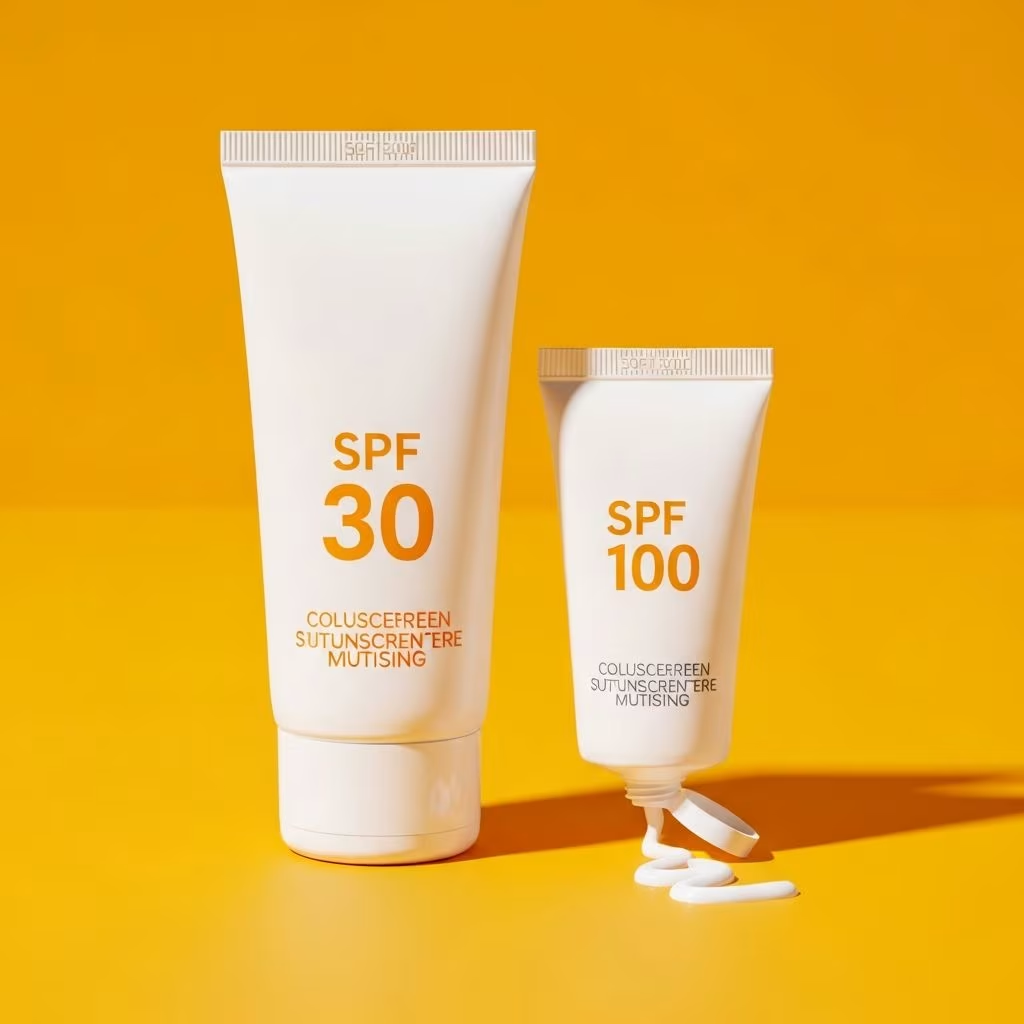
Sunscreen is a non-negotiable part of summer skincare — and honestly, year-round protection too. But with shelves stocked with SPF 30, 50, 70, and even 100, it’s easy to think higher numbers mean better safety for your skin. The truth? SPF 100 isn’t worth the premium price tag. Dermatologists agree that anything beyond SPF 30 delivers diminishing returns on protection, yet costs significantly more. This article breaks down the science behind SPF ratings, debunks common myths, compares costs, and recommends affordable alternatives that keep you protected without draining your wallet.
Understanding SPF Ratings: It’s Not What You Think
Sunscreen labels promise escalating protection with higher SPF numbers, but the reality is far less dramatic. SPF, or Sun Protection Factor, measures how much UVB radiation — the rays primarily responsible for sunburn and skin cancer — a product blocks. SPF 15 filters out about 93% of UVB rays, SPF 30 blocks 97%, SPF 50 filters 98%, and even SPF 100 only reaches 99%. The jump from SPF 30 to 100 adds just 2% more blockage, a marginal gain that doesn’t justify the doubled or tripled price.
The FDA regulates SPF claims in the U.S., requiring broad-spectrum sunscreens (protecting against both UVA and UVB) to undergo rigorous testing. However, no sunscreen blocks 100% of UV rays — that’s physically impossible due to skin penetration and application variables. Over-reliance on ultra-high SPFs can lead to complacency, where users apply less product or reapply less frequently, reducing overall effectiveness.
The Diminishing Returns of High SPF: Science-Backed Facts
Diminishing returns kick in sharply after SPF 30. According to the American Academy of Dermatology (AAD), SPF 30 is sufficient for most daily activities, blocking nearly all harmful rays when applied correctly. Studies show that SPF 100 provides only a 1% edge over SPF 50 in real-world conditions, as factors like sweat, water, and rubbing diminish protection equally across ratings.
- SPF 30: Blocks ~97% UVB; ideal for everyday use and extended outdoor time.
- SPF 50: Blocks ~98% UVB; suitable for high-exposure activities like beach days.
- SPF 100: Blocks ~99% UVB; unnecessary for most, adds bulk and cost without proportional benefits.
A 2010 study published in the Journal of the American Academy of Dermatology tested SPF 100 products and found they often underperformed due to inconsistent application — users need about 1 ounce (a shot glass full) per full-body use, reapplied every 2 hours. High-SPF formulas are thicker, greasier, and harder to apply generously, ironically lowering protection.
Cost Comparison: SPF 100 vs. Smarter Choices
Price per ounce skyrockets with SPF ratings, turning sun protection into an unnecessary expense. Here’s a breakdown of popular sunscreens based on average retail prices:
| Product | SPF | Size (oz) | Price | Cost per oz |
|---|---|---|---|---|
| Neutrogena Ultra Sheer | 30 | 3 | $9 | $3 |
| Coppertone Sport | 50 | 6 | $12 | $2 |
| Banana Boat | 100 | 3 | $15 | $5 |
| La Roche-Posay Anthelios | 60 | 5 | $30 | $6 |
As shown, SPF 100 costs up to 67% more per ounce than SPF 30 equivalents, yet offers negligible extra protection. Opt for SPF 30-50 drugstore brands to save 40-60% while maintaining safety. Bulk buys at warehouse clubs like Costco further slash costs — a 4-pack of SPF 50 might run $20 total, or $1 per ounce.
Common SPF Myths Debunked
Myths perpetuate the high-SPF hype, leading to wasted money. Let’s set the record straight:
- Myth 1: Higher SPF = Longer wear time. No — all sunscreens last 2 hours max outdoors, regardless of SPF. Reapply frequently.
- Myth 2: SPF 100 is essential for fair skin or kids. Dermatologists recommend SPF 30+ for everyone; skin type influences application amount, not rating.
- Myth 3: SPF 100 blocks UVA completely. Always choose ‘broad-spectrum’; high SPF focuses on UVB.
- Myth 4: Water-resistant means waterproof. Even ’80-minute water-resistant’ needs reapplication after swimming.
These misconceptions drive up sales of premium products. Stick to evidence-based choices for real savings.
Best Affordable Sunscreens to Buy Instead
Skip SPF 100 and stock up on these vetted, budget-friendly options praised by Consumer Reports and dermatologists:
- Neutrogena Cool Dry Sport SPF 50: Lightweight, non-greasy, $10 for 3 oz. Excellent for active use.
- Equate (Walmart) Sport SPF 50: Store-brand steal at $5 for 6 oz, matches name brands in tests.
- Cetaphil Sheer Mineral SPF 50: Gentle for sensitive skin, $12 for 4 oz.
- Trader Joe’s Daily Facial SPF 40: $8 for 1.7 oz tube, clean ingredients without premium pricing.
For natural options, brands like Native or Bulldog offer SPF-infused grooming products around $10-20, avoiding harsh chemicals while keeping costs low. Pair with wide-brim hats and UPF clothing for layered protection.
How to Maximize Any Sunscreen’s Effectiveness
Application trumps SPF rating. Follow these tips for optimal protection:
- Apply 15-30 minutes before sun exposure.
- Use 1 tsp per body part (face, arms, etc.); total 1 oz for adults.
- Reapply every 2 hours, or immediately after swimming/sweating.
- Seek shade 10 a.m.-4 p.m.; UV is strongest then.
- Combine with barriers: hats, sunglasses, long sleeves.
Proper habits make SPF 30 as effective as SPF 100 used poorly, saving money long-term.
The Bigger Picture: Sun Safety Beyond Sunscreen
Sunscreen is one tool in a sun-smart arsenal. The Skin Cancer Foundation emphasizes holistic strategies: avoid tanning beds (linked to 419,000 U.S. skin cancer cases yearly), check your skin monthly for changes, and see a dermatologist annually. Early detection saves lives and healthcare costs — melanoma treatment averages $171,000 over a lifetime.
For families, teach kids sun safety early. Free activities like park picnics beat pricey beach resorts; pack SPF 30 and snacks to keep budgets in check.
Frequently Asked Questions (FAQs)
What SPF is best for everyday use?
SPF 30 broad-spectrum is ideal for daily routines, blocking 97% of UVB when applied properly.
Is SPF 100 safe for children?
Yes, but unnecessary; pediatricians recommend SPF 30+ for kids over 6 months, with mineral-based formulas to minimize irritation.
Mineral vs. chemical sunscreen: Which saves money?
Chemical options like Neutrogena are cheaper upfront; minerals (zinc-based) last longer on skin, better value for reapplication-heavy days.
Does sunscreen expire?
Yes, typically 3 years; check the bottom of the tube. Expired product loses efficacy, wasting money.
Can I use body lotion with SPF instead of sunscreen?
Not reliably — lotions provide lower, inconsistent protection. Invest in dedicated sunscreen for safety.
By ditching SPF 100 hype, you protect your skin and savings effectively. Choose SPF 30-50, apply generously, and enjoy the sun smarter.
References
- How to Select a Sunscreen — American Academy of Dermatology. 2024-06-01. https://www.aad.org/public/everyday-care/sun-protection/sunscreen-patients/sunscreen-faqs
- Sunscreen: How to Help Protect Your Skin from the Sun — FDA. 2023-05-18. https://www.fda.gov/drugs/understanding-over-counter-medicines/sunscreen-how-help-protect-your-skin-sun
- Sun Protection Factor (SPF) Explained — Skin Cancer Foundation. 2025-01-10. https://www.skincancer.org/skin-cancer-prevention/sun-protection/spf/
- 352 Simple Ways to Save Money — The Penny Hoarder / Mike Brassfield. 2024-03-15. https://www.thepennyhoarder.com/save-money/how-to-cut-expenses-all-the-ways/
- Consumer Reports Sunscreen Ratings — Consumer Reports. 2025-05-20. https://www.consumerreports.org/sunscreen/sunscreen-ratings/
This article is general information, not personal financial advice. Consider your own situation, or speak with a licensed adviser, before acting on it.


