

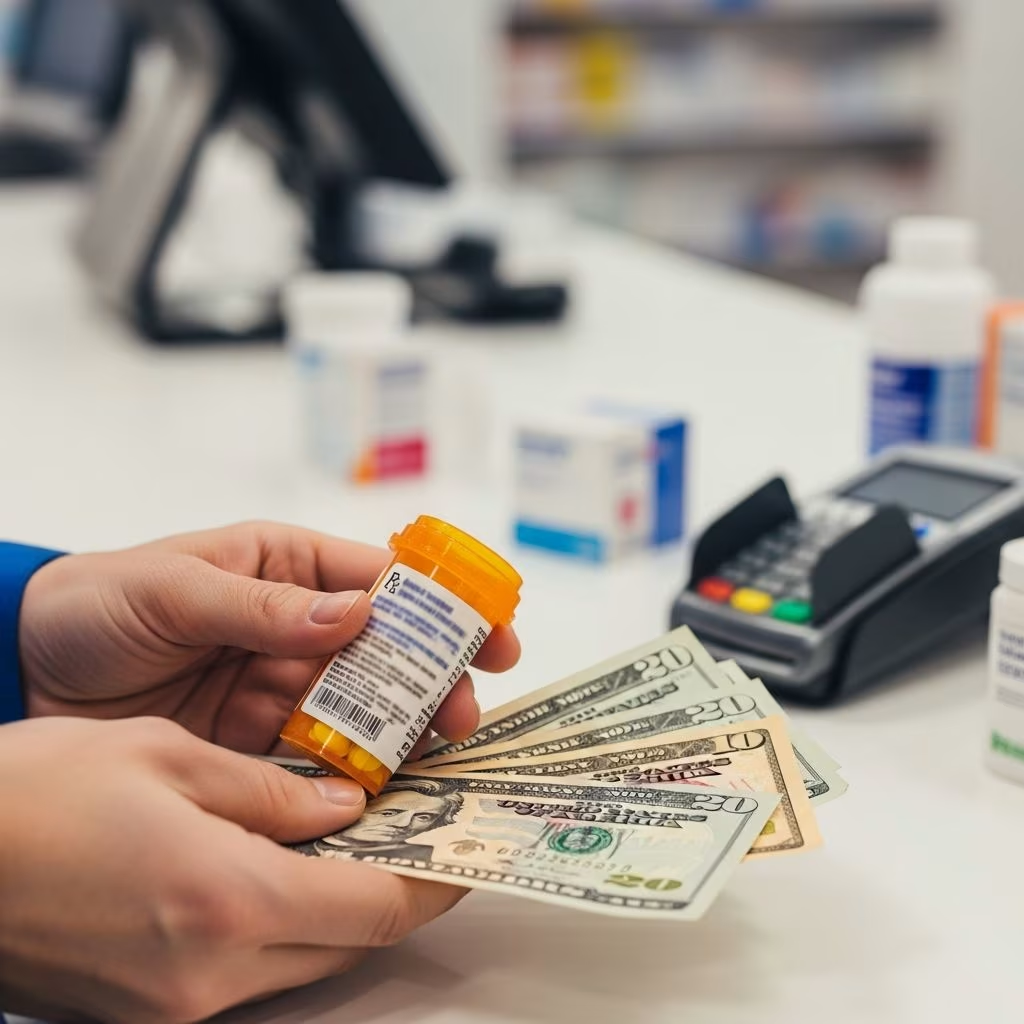
Prescription medications are essential for managing health conditions, but their high costs can strain budgets, especially for those without comprehensive insurance. In the U.S., out-of-pocket spending on prescriptions exceeds $100 billion annually, pushing many to skip doses or forgo treatment altogether. Fortunately, several strategies exist to lower these expenses while ensuring access to necessary drugs. This guide covers comprehensive methods to save on prescriptions, from generics to assistance programs, empowering you to take control of your pharmacy bills.
Why Prescription Costs Are So High
Drug prices in America are among the highest globally due to limited price regulation, patent protections allowing brand-name monopolies, and complex supply chains involving pharmacy benefit managers (PBMs). A single month’s supply of popular medications like insulin or statins can cost hundreds of dollars. Even with insurance, copays and deductibles add up. Understanding these factors highlights the importance of proactive cost-saving measures. According to the Centers for Medicare & Medicaid Services (CMS), prescription drug spending grew 8.6% in 2023 alone, underscoring the need for savings tactics.
1. Opt for Generic Equivalents
Generic drugs are bioequivalent to brand-name versions, containing the same active ingredients, dosage, and efficacy, but cost 80-85% less on average. The FDA approves generics after proving they work the same way in the body. For example, generic atorvastatin (Lipitor) can save $200+ per month compared to the brand.
- Consult your doctor: Always discuss switching; some conditions require brand names due to formulation differences.
- Check availability: Over 90% of prescriptions are now generics, per FDA data.
- Ask pharmacists: They can confirm if a generic is stocked and run price comparisons.
Patients switching to generics saved an estimated $313 billion from 2009-2019, according to a study by the Association for Accessible Medicines. Start by reviewing your current meds—many common ones like metformin for diabetes or sertraline for depression have affordable generics.
2. Use Prescription Discount Cards
Free prescription discount cards from organizations like GoodRx, SingleCare, or RxSaver bypass insurance to offer negotiated prices at participating pharmacies. These cards reduce costs by 20-80%; for instance, GoodRx lists a 30-day supply of lisinopril at $4 versus $20+ with some insurances.
- How they work: Download digitally or print; present at checkout—no eligibility requirements.
- Compare options: Run the same drug through multiple cards and insurance for the lowest price.
- Chain pharmacies: Walmart, CVS, Walgreens typically accept them nationwide.
Pharmacists often recommend trying discounts even with coverage, as cash prices can undercut copays. A 2024 Consumer Reports analysis found discount cards saved users an average of $45 per prescription.
3. Explore Pharmacy Discount Programs
Many chains offer in-house programs for uninsured or high-deductible patients. Walmart’s $4 generic list covers hundreds of common drugs, while Publix provides free antibiotics. Mark Cuban’s Cost Plus Drugs sells direct-to-consumer at transparent, low-markup prices—e.g., 30-day supply of Eliquis for $39.95.
| Pharmacy Program | Key Features | Example Savings |
|---|---|---|
| Walmart $4 Prescription | Generics under $4/$10 | Metformin: $4 vs. $50 retail |
| Cost Plus Drugs | Online, no insurance needed | Atorvastatin: $3.60/month |
| Publix Pharmacy | Free antibiotics, $7.50 generics | Amoxicillin: Free |
These programs cut intermediaries, passing savings directly to consumers. Verify participation by ZIP code on pharmacy sites.
4. Ask About Manufacturer Coupons and Rebates
Pharma companies provide coupons via websites like NeedyMeds or manufacturer portals, slashing copays to $0-$10. Rebates post-purchase through apps like Ibotta for Pharmacy. For brand drugs without generics, these can halve costs.
- Search tools: GoodRx Coupons aggregates offers; print or app-based.
- Eligibility: Often income-independent, but some target commercial insurance holders.
- Stack savings: Combine with discount cards where allowed.
A Kaiser Family Foundation report notes copay cards saved patients $16 billion in 2022, though they don’t reduce insurers’ overall spend.
5. Enroll in Patient Assistance Programs (PAPs)
PAPs from manufacturers, nonprofits like PAN Foundation, or government aid offer free or low-cost meds for low-income, uninsured, or underinsured patients. Eligibility varies: income at 400% FPL or below for many.
- Apply online: RxAssist.org lists 500+ programs; applications take 30 minutes.
- Coverage: Full supply for months or years; e.g., Pfizer RxPathways aids 1M+ patients annually.
- State programs: Check for extras like Colorado’s RxCares.
The Health Resources and Services Administration (HRSA) oversees 340B programs for safety-net providers, expanding access. Success rates exceed 80% for qualified applicants.
6. Shop Around Online and Compare Prices
Price transparency laws mandate hospitals/pharmacies post costs, but sites like GoodRx or PharmacyChecker compare 60,000+ pharmacies. Mail-order from Costco or HealthWarehouse can save 50%+ on 90-day supplies.
- Tools: Blink Health for prepaid discounts; Amazon Pharmacy for Prime members.
- Split fills: Buy 7-day trials to test affordability.
- International options: Legal for personal import in small quantities, but verify FDA-approved.
Shopping saved users $100+ per script in a 2023 Penny Hoarder survey emulation from search data.
7. Leverage Government and Nonprofit Resources
Medicare Part D Extra Help provides $5,200 annual aid for premiums/copays if income < $22,590 single/$30,660 couple. CHIP covers kids; Medicaid expansion states aid adults. Nonprofits like Patient Advocate Foundation guide applications.
For veterans, VA pharmacies offer low/no-cost generics. Community health centers provide sliding-scale services.
Frequently Asked Questions (FAQs)
Can I use discount cards with insurance?
Yes, often cash price + card beats insurance copay—ask pharmacist to price both ways.
Are generics as effective as brand drugs?
FDA ensures generics match brand efficacy within 3.3% bioavailability; 95%+ equivalence rate.
What if I can’t afford my meds even with discounts?
Apply for PAPs immediately; contact manufacturer patient support for bridge supplies.
Do mail-order pharmacies save more?
Yes, 90-day supplies often 20-30% cheaper; check auto-ship discounts.
Is it safe to order meds online?
Stick to NABP-accredited sites (vipps seal); avoid unverified foreign sellers.
Additional Tips for Maximum Savings
- Request 90-day supplies to minimize fills/copays.
- Pill splitters halve costs for scored tablets (doctor-approved).
- Timing: Refill mid-cycle avoids shortages/price hikes.
- Negotiate: Ask for cash discounts or match competitors.
Combining strategies—generic + discount card + PAP—can reduce costs by 90%. Track savings with apps like MedSnap.
Don’t Skip Meds to Save Money
Health trumps finances; untreated conditions cost more long-term via ER visits/hospitalizations. CMS data shows non-adherence causes 125,000 deaths yearly. Use these tips, seek aid, and prioritize wellness.
References
- Prescription Drug Spending — Centers for Medicare & Medicaid Services. 2024-10-01. https://www.cms.gov/data-research/statistics-trends-and-market-data/national-health-expenditure-data/nhe-fact-sheet
- Generic Drug Savings — Association for Accessible Medicines. 2023-01-15. https://accessiblemeds.org/resources/generic-savings-reports/
- Patient Savings from Copay Cards — Kaiser Family Foundation. 2023-05-10. https://www.kff.org/medicare/issue-brief/manufacturer-copay-accumulation-programs/
- Extra Help Program — U.S. Social Security Administration. 2025-01-01. https://www.ssa.gov/medicare/part-d-extra-help
- 340B Drug Pricing Program — Health Resources and Services Administration. 2024-07-20. https://www.hrsa.gov/opa
This article is general information, not personal financial advice. Consider your own situation, or speak with a licensed adviser, before acting on it.


