

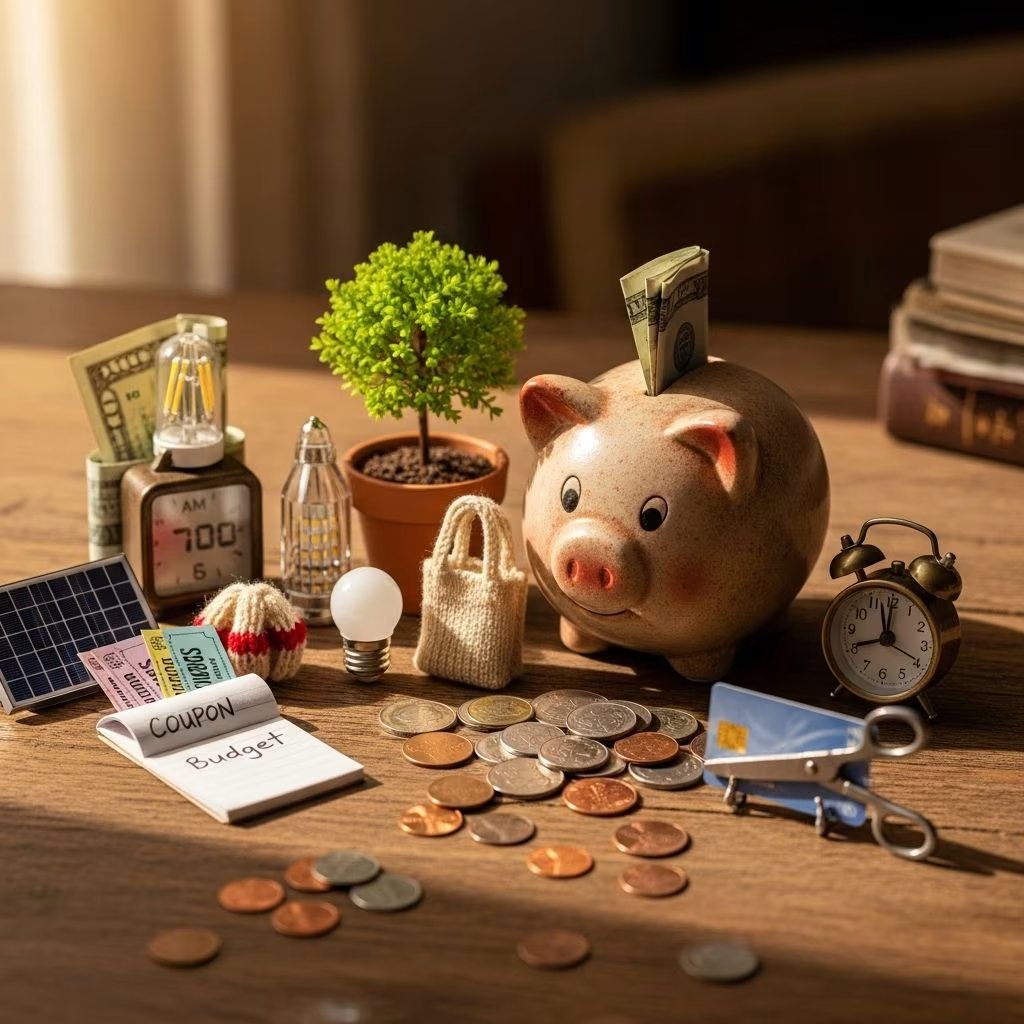
Saving money doesn’t require drastic lifestyle changes. With simple, proven tricks, you can trim expenses across groceries, bills, shopping, and entertainment while building a stronger financial future. These strategies, drawn from expert advice, help you rethink spending habits and maximize every dollar.
How to Save Money: 25 Proven Tips That Actually Work
Mastering the art of saving starts with practical, actionable steps. Here are 25 expert-backed tips to reduce costs in budgeting, banking, debt management, and daily hacks.
- Create a budget you can stick to. Use the 50/30/20 rule: 50% on needs, 30% on wants, 20% on savings and debt. For a $3,000 monthly income, allocate $1,500 to essentials, $900 to wants, and $600 to savings.
- Try zero-based budgeting. Assign every dollar a job until income minus expenses equals zero.
- Use the envelope method. Divide cash into category envelopes like gas or food; stop spending when empty.
- Automate savings transfers. Set up automatic deposits to a high-yield savings account.
- Track your spending. Apps like Mint or a simple spreadsheet reveal hidden leaks.
- Pay off high-interest debt first. Target credit cards with rates over 20% to save hundreds in interest.
- Build an emergency fund. Aim for 3-6 months of expenses in a separate account.
- Negotiate bills. Call providers to lower internet or cable by $20/month, saving $240 yearly.
- Switch to cheaper insurance. Shop around for auto or home policies annually.
- Cut unused subscriptions. Audit streaming services; cancel one $15/month service to save $180/year.
- Meal plan and shop smart. Plan weekly meals to avoid $40 takeout; save $2,000/year by cooking four nights weekly. Use lists, store brands, and bulk buys.
- Buy generics and stack deals. Store-brand cereal costs $2.50 vs. $4.50 name-brand.
- Use cash-back apps. Apps like Upside offer $290/year in rebates on planned buys. Pair with 5% credit card rewards.
- Repair instead of replace. Fix appliances or sew clothes to avoid full replacement costs.
- Buy used. Thrift stores and apps like Facebook Marketplace for quality at half price.
- Leverage libraries. Free books, streaming, audiobooks, museum passes, and classes save $180/year vs. subscriptions.
- Implement the 30-day rule. Wait 30 days on non-essentials; many impulses fade.
- Try a no-spend challenge. Skip non-essentials for a week or month; save $400 by ditching restaurants.
- Sell unused items. List on eBay or OfferUp for quick cash from clutter.
- Use tax refunds wisely. Apply $2,500 to debt to save $500 in interest.
- Grab freebies. Birthday rewards and community events add up.
- Side hustle in free time. Apps like Solitaire Cash earn up to $83/win.
- Lower utility bills. 18 tips like LED bulbs and smart thermostats cut summer costs.
- Shop sales strategically. Buy only what’s on deep discount and needed.
- DIY more. Home repairs and gifts save hundreds annually.
No-Spend Challenge: Boost Savings Effortlessly
A no-spend challenge resets habits by banning non-essential purchases. Allow essentials like groceries, toiletries, medicine, gas, and bills.
Variations to Fit Your Lifestyle
- Ban spending for set time. Start with a no-spend weekend or week; advance to a month or more.
- Scatter no-spend days. Pick 10-15 days/month without overspending on others.
- Target weaknesses. No clothes, takeout, or Amazon for focused control.
- Freeze during occasions. DIY gifts, regift, or volunteer for holidays/birthdays.
Tips for No-Spend Success
| Strategy | How It Helps | Potential Savings |
|---|---|---|
| Plan ahead | Stock food, meal prep lists | Avoids takeout temptations |
| Find free things | Craigslist free, Buy Nothing, library loans | Zero-cost acquisitions |
| Shop at home | Inventory pantry, clothes, makeup | Rediscover owned items |
| Swap, don’t shop | Clothing/toy swaps, barter services | Money-free exchanges |
| Avoid temptation | Leave cards home, unsubscribe emails | Prevents impulse |
| Wish list | Delay buys 30+ days post-challenge | Many wants vanish |
Budget small splurges ($20-30) for sustainability.
Budgeting Basics: Envelope System and More
The cash envelope system curbs overspending: Allocate cash per category in envelopes. Empty? Stop spending. Ideal for visual spenders.
- Groceries: $200 envelope.
- Entertainment: $50 max.
- Gas: Refill only as needed.
Combine with 50/30/20 for balanced control.
Grocery Savings Hacks
Groceries eat budgets; fight back with these:
- Meal plan weekly using templates.
- Shop perimeter for fresh foods.
- Buy bulk non-perishables.
- Use apps for digital coupons.
- Cook in batches to freeze.
Switching to generics and planning saves thousands yearly.
Bill Negotiation and Utility Cuts
Average households waste on utilities. Tips include:
- Unplug vampires (standby power).
- LED bulbs save 75% energy.
- Low-flow showerheads.
- Negotiate internet/cable rates.
Entertainment on a Budget
Skip pricey outings:
- Library perks: Free streaming, passes.
- Community free concerts/classes.
- Home movie nights.
- Free hiking/parks.
Frequently Asked Questions (FAQs)
Q: What’s the easiest way to start saving money?
A: Track spending for a week and create a 50/30/20 budget. Automate $20/paycheck to savings.
Q: How effective is a no-spend challenge?
A: Skipping one month’s restaurants saves $400; many build lasting habits.
Q: Can the envelope system work digitally?
A: Yes, apps mimic envelopes with virtual categories.
Q: How much can cash-back apps save?
A: Up to $290/year with responsible use on planned purchases.
Q: Are libraries really that useful for savings?
A: Yes, free streaming and passes replace $180/year subscriptions.
Q: What’s the 30-day rule?
A: Wait 30 days on non-essentials; impulses often fade, preventing regret buys.
Implement these tricks consistently for compounded savings. Start small, track progress, and watch your financial health improve.
References
- How to Save Money in 2026 With a No-Spend Challenge — The Penny Hoarder. 2026 (approx., recent update). https://www.thepennyhoarder.com/save-money/no-spend-challenge/
- How to Save Money: 25 Proven Tips That Actually Work — The Penny Hoarder. 2026 (approx., recent). https://www.thepennyhoarder.com/save-money/how-to-save-money/
- Save Money in Every Aspect of Life with These Tips — Top Class Actions. Recent. https://topclassactions.com/penny-hoarder/save-money-every-aspect-life-tips/
This article is general information, not personal financial advice. Consider your own situation, or speak with a licensed adviser, before acting on it.


