

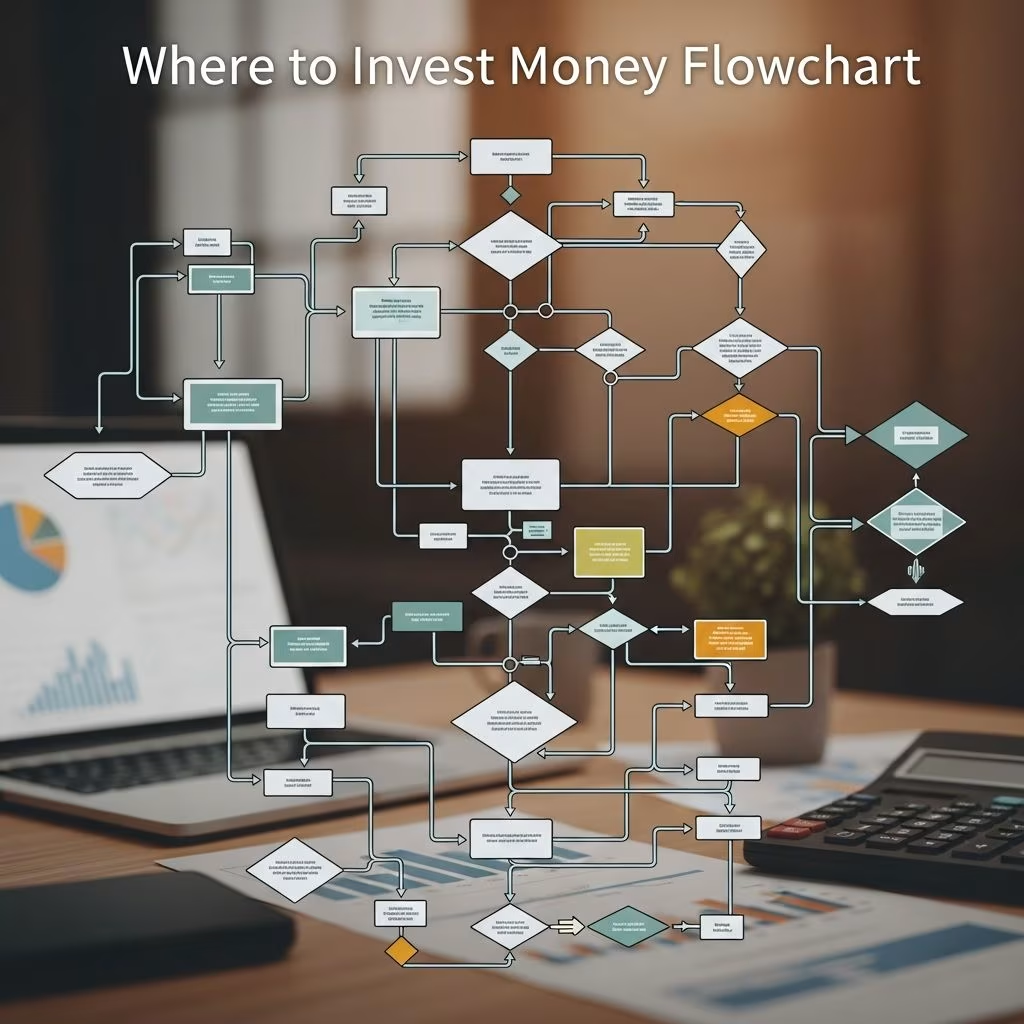
Many people struggle with prioritizing their finances after covering daily needs. Should you tackle debt, save for emergencies, fund retirement, or invest elsewhere? This flowchart simplifies the process with yes/no questions to guide your decisions, helping you build a solid financial foundation regardless of your starting point.
This Flowchart is So Simple, It’s Brilliant
The flowchart starts with basic necessities and progresses through debt reduction, savings, retirement, and advanced wealth-building. It’s designed for everyone, from beginners to those already on solid footing. While everyone’s situation varies, this visual tool offers a clear path forward. Below, we expand on each step with actionable advice, tools, and strategies drawn from proven financial principles.
Putting the flowchart into practice requires discipline, but resources like budgeting apps, automated savings, and low-cost investing platforms make it achievable. No matter your current financial stage, following these steps can lead to financial freedom.
1. Necessities: Build the Foundation
Every financial journey begins here. Before investing or saving aggressively, ensure your essentials are covered. This means creating a budget, minimizing expenses, and establishing basic financial security.
- Create a budget: Track income and expenses to identify leaks. Use the 50/30/20 rule: 50% needs, 30% wants, 20% savings/debt. Tools like free budgeting templates help beginners get started.
- Save on groceries and bills: Shop smart, use coupons, switch to cheaper providers. Small cuts compound over time.
- Start an emergency fund: Aim for 3-6 months of living expenses in a high-yield savings account. Automate transfers to build it effortlessly.
- Pay credit cards and loans: Always pay more than the minimum to avoid interest traps. Consider balance transfer cards for high-interest debt.
- Boost income: Get a side gig or start a business. Platforms for freelancing or ridesharing can add hundreds monthly.
- Match employer retirement contributions: If offered, contribute enough for the full match—it’s free money.
Developing a frugal mindset is key. Enjoy free entertainment like libraries or parks while paying down obligations. Once necessities are handled, proceed to the next step.
2. Baby Steps: Tackle High-Interest Debt
With basics covered, prioritize high-interest debt like credit cards (often 20%+ APR). Paying it off yields guaranteed returns higher than most investments.
Use strategies like the debt snowball (smallest balances first for momentum) or avalanche (highest interest first for savings). Real stories show it’s possible: one person cleared $10,000 in credit card debt, another mom eliminated $64,000 in two years through focused effort.
- Automate savings: Apps like Digit round up purchases and save spare change, funneling it to debt or emergencies.
- Consolidate debt: Low-interest personal loans or 0% balance transfers can slash costs.
- Increase payments: Dedicate windfalls like tax refunds directly to debt.
Average users invest $30/month via round-ups, equating to $360/year—perfect for debt acceleration or initial savings.
3. Emergency Fund: Your Safety Net
Next, build or bolster your emergency fund to $1,000 initially, then 3-6 months’ expenses. This prevents dipping into debt during crises like job loss or repairs.
Keep it liquid in high-yield savings (currently 4-5% APY from FDIC-insured banks). Automate weekly $20 transfers for steady growth via dollar-cost averaging principles.
| Fund Size Goal | Purpose | Timeline |
|---|---|---|
| $1,000 | Minor emergencies | 1-3 months |
| 3 months expenses | Job loss buffer | 6-12 months |
| 6 months expenses | Full security | 1-2 years |
Systematic saving smooths market volatility, buying more when costs are low.
4. Retirement Savings: Secure Your Future
With debt managed and emergencies funded, max retirement accounts. Employer 401(k) matches are priority one, then IRAs.
Invest systematically: fixed monthly amounts into diversified, low-cost index funds tracking the S&P 500. This dollar-cost averages, reducing timing risks.
- Choose funds: Low-expense S&P 500 ETFs (fees <0.1%). Diversified portfolios mitigate sector fads.
- Automate: Set recurring buys post-deposit to ensure execution.
- Compounding magic: Regular contributions grow exponentially over decades, outpacing inflation.
Brokerages like Vanguard or Fidelity offer no-minimum Roth IRAs. Aim for 15% of income.
5. Well-Off: Accelerate Wealth Building
Congratulations—you’re ahead! Now optimize: pay off low-interest debt like mortgages, invest in real estate, or pursue early retirement.
- Mortgage payoff: Extra principal payments save thousands in interest.
- Real estate: Rental properties or REITs for passive income. Assess risks via cash flow analysis.
- Early retirement (FIRE): Save 25x annual expenses. Side hustles fuel aggressive investing.
- Rewards: Treat yourself modestly—a vacation earned through discipline.
Passive income streams like dividend stocks or peer-to-peer lending diversify further. Always reassess goals.
Principles of Systematic Investing
Core to later stages: Invest fixed amounts regularly, regardless of market conditions. Buy more shares low, fewer high—averaging costs over time.
Example: $100/month at $10/share = 10 shares. At $5/share = 20 shares. Long-term, markets trend up (S&P 500 historical average ~10% annually).
- Budget reliably: Start small, scale up.
- Diversified low-fee funds: S&P trackers or balanced stock/bond.
- Brokerage setup: Robinhood, Vanguard for auto-features.
- Auto-deposits: Link bank for seamless transfers.
- Recurring orders: Market buys post-deposit.
- Patience: Ignore short-term dips; compounding wins long-term.
Micro-Investing: Easy Entry for Beginners
Apps like Acorns invest spare change from round-ups into ETFs. Simple, automatic—ideal post-necessities.
Risk surveys tailor portfolios. Recurring transfers enhance growth via dollar-cost averaging.
Frequently Asked Questions (FAQs)
What if I can’t cover necessities?
Focus solely here: budget ruthlessly, cut non-essentials, seek income boosts.
How fast should I pay debt?
Prioritize >10% interest. Use snowball for motivation.
What’s the best emergency fund size?
3-6 months; single-income households aim higher.
Should I invest before retirement maxed?
No—employer match first, then fund.
Can I skip steps?
Not recommended; each builds on the last for stability.
This flowchart demystifies money management. Start today—small steps lead to big wealth.
References
- Not Sure How to Manage Your Money? Follow This Simple Flowchart — The Penny Hoarder. 2023. https://www.thepennyhoarder.com/investing/where-to-invest-money-flowchart/
- What is Micro-Investing & How Can You Get Started? — The Penny Hoarder. 2024. https://www.thepennyhoarder.com/investing/how-to-start-micro-investing/
- Systematic Investing is Long Haul Strategy — The Penny Hoarder. 2023. https://www.thepennyhoarder.com/investing/systematic-investing/
- 13 Passive Income Ideas for Beginners — The Penny Hoarder. 2024. https://www.thepennyhoarder.com/make-money/side-gigs/beginners-guide-to-passive-income/
- 10 Top Budgeting Lessons to Improve Your Money Management — The Penny Hoarder. 2023. https://www.thepennyhoarder.com/budgeting/top-budgeting-stories/
This article is general information, not personal financial advice. Consider your own situation, or speak with a licensed adviser, before acting on it.


