

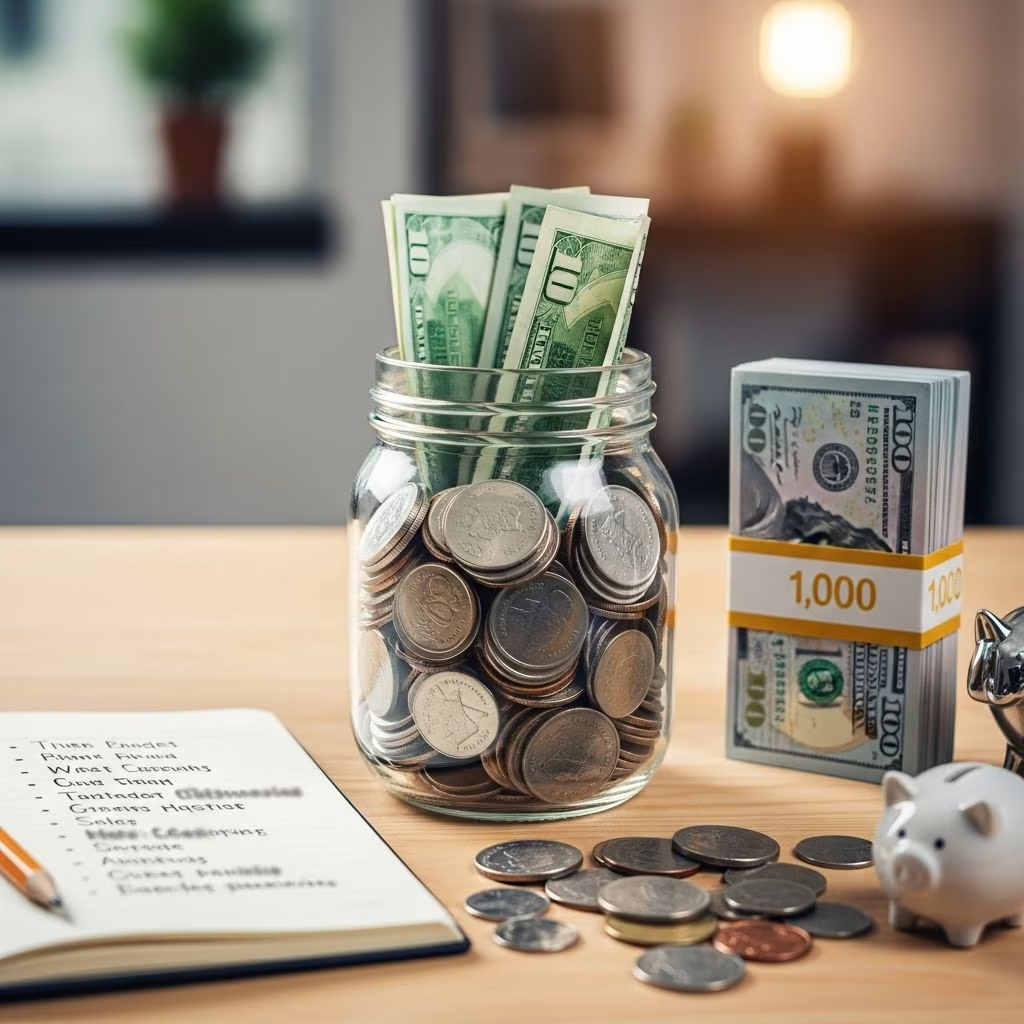
Saving $1,000 in a single month is an attainable goal for many households, even with rising costs. By tracking your spending, setting a realistic budget, cutting unnecessary expenses, and reducing grocery bills, you can hit this target in 30 days. This guide breaks down six practical steps to help you save big every month, drawing from proven budgeting principles like the 50/30/20 rule and simple habit changes.
Whether you’re building an emergency fund or accelerating debt payoff, these strategies prioritize high-impact actions that require minimal effort. Many people overlook small leaks in their budget, but addressing them can free up hundreds of dollars quickly. Let’s dive into the steps.
Step 1: Track Your Spending and Set a Realistic Budget
The foundation of saving $1,000 starts with visibility. If you don’t know where your money goes, you can’t redirect it effectively. Begin by monitoring every expense for one week to uncover hidden waste like impulse buys or frequent dining out.
How to Do It:
- Use a Budgeting App: Apps like YNAB (You Need A Budget) or Rocket Money categorize purchases, flag overspending, and set savings targets. They make tracking effortless and reveal patterns instantly.
- Set a Clear Savings Goal: To save $1,000 in a month, aim for $33.33 daily or $250 weekly. Break it into bite-sized targets to stay motivated.
- Apply the 50/30/20 Rule: Allocate 50% of income to necessities (rent, utilities, groceries), 30% to wants (entertainment, dining), and 20% to savings/debt. This simple framework ensures savings are non-negotiable.
Tracking alone can uncover $100+ in monthly waste. One user reported saving $200 after spotting daily coffee runs.
Step 2: Cut Unnecessary Expenses, Especially on Food
Food and dining are top budget busters. Americans spend an average of $300+ monthly on eating out, but simple swaps can reclaim this cash.
Ways to Cut Back:
- Cook at Home: Skip takeout and prepare meals yourself. Batch cooking Sundays saves time and money long-term.
- Pack Your Lunch: Bringing lunch to work instead of buying can save $150 monthly — that’s five $10 lunches avoided.
- Skip Coffee Runs: Brew at home and limit cafe visits to three per week for $50 in savings.
Potential Savings: Meal prepping yields $200-$300 monthly, cutting restaurant dinners adds $100, and gas/grocery apps like Upside can net $290 yearly ($24 monthly).
| Expense Cut | Monthly Savings |
|---|---|
| Pack Lunch Daily | $150 |
| Meal Prep | $200-$300 |
| Fewer Coffee Runs | $50 |
| Total | $400-$500 |
Step 3: Lower Your Auto Insurance Rates to Free Up Cash
Car insurance often costs $100-$200 monthly, but overpaying is common. Shopping around or tweaking your policy can slash premiums without sacrificing coverage.
How It Works:
- Ask for Discounts: Contact your provider for good driver, bundling, or low-mileage deals. Many qualify for 10-25% off.
- Adjust Deductibles: Raising your deductible from $500 to $1,000 can lower premiums by 20%.
- Switch to Usage-Based: Programs like Progressive Snapshot track safe driving for personalized rates.
Users report average savings of $500 annually ($42 monthly) with comparison tools. Combine with gas-saving apps for compounded wins.
Step 4: Master Grocery Savings with Smart Strategies
Groceries have surged, but you can counter with planning. Impulse buys at the store inflate bills by 30%.
How to Save:
- Plan Meals: Create a weekly list based on sales flyers to avoid waste and extras.
- Switch to Store Brands: Generics cost 30% less and match quality in most cases.
- Use Cashback Apps: Scan receipts with Ibotta or fetch for rebates.
Potential Savings: $100-$200 monthly through these tweaks. Track progress weekly to refine.
Step 5: Cancel Subscriptions and Negotiate Bills
Subscriptions drain $200+ yearly unnoticed. Audit and axe the unused ones.
Why It Works: Streaming, gyms, and apps pile up. Tools like Rocket Money scan and cancel automatically.
How to Save:
- Cancel Unused: Review bank statements; end forgotten trials.
- Negotiate Bills: Call providers for internet/phone discounts — success rate is 70% for loyalty offers.
- Share Streaming: Split Netflix with family to halve costs.
Average savings: $50-$100 monthly. Negotiation scripts online boost confidence.
Step 6: Automate Your Savings for Effortless Growth
Manual saving fails; automation wins. Set it and forget it to hit $1,000 without willpower drain.
How to Save Automatically:
- High-Yield Savings Account: Earn 4-5% APY vs. 0.01% traditional. SoFi offers up to 3.80%.
- Auto Transfers: Schedule $250 weekly post-payday.
- Round-Up Apps: Acorns invests spare change; users save $30+ monthly passively.
Automation builds habits. Start small at $10-$50 weekly to grow confidence.
Bonus Tips for Long-Term Success
Beyond these steps, tackle debt with snowball (smallest first) or avalanche (highest interest) methods. Maintain work-life balance to avoid stress spending — aim for 3-4 leisure hours daily. Use free library workshops for budgeting classes.
Track net worth monthly. Celebrate $1,000 milestones to stay motivated.
Frequently Asked Questions (FAQs)
Q: Is saving $1,000 in a month realistic on a low income?
A: Yes, especially with the 50/30/20 rule and cuts to dining/insurance. Low earners save by starting small and automating.
Q: What if I can’t hit $1,000 right away?
A: Build gradually — $250/week adds up. Focus on habits over perfection.
Q: Are budgeting apps free?
A: Many offer free tiers like Rocket Money basics; premium unlocks more.
Q: How do I negotiate bills successfully?
A: Be polite, mention competitors, and ask for loyalty deals. Practice scripts.
Q: What’s the best high-yield account?
A: Compare APYs; options like SoFi provide competitive rates with no fees.
Implement these 6 steps today to transform your finances. Consistency turns $1,000 monthly into life-changing wealth. (Word count: 1624)
References
- Consumer Financial Protection Bureau: Budgeting and Saving Basics — CFPB (U.S. Government). 2024-06-15. https://www.consumerfinance.gov/consumer-tools/budgeting-saving/
- Federal Reserve: Report on the Economic Well-Being of U.S. Households — Federal Reserve Board. 2025-05-20. https://www.federalreserve.gov/publications/2025-economic-well-being-of-us-households.htm
- Financial Industry Regulatory Authority: Tools & Calculators for Budgeting — FINRA. 2024-11-10. https://www.finra.org/investors/personal-finance/budgeting-saving
- Bureau of Labor Statistics: Consumer Expenditure Survey — U.S. Department of Labor. 2025-09-12. https://www.bls.gov/cex/
This article is general information, not personal financial advice. Consider your own situation, or speak with a licensed adviser, before acting on it.


