

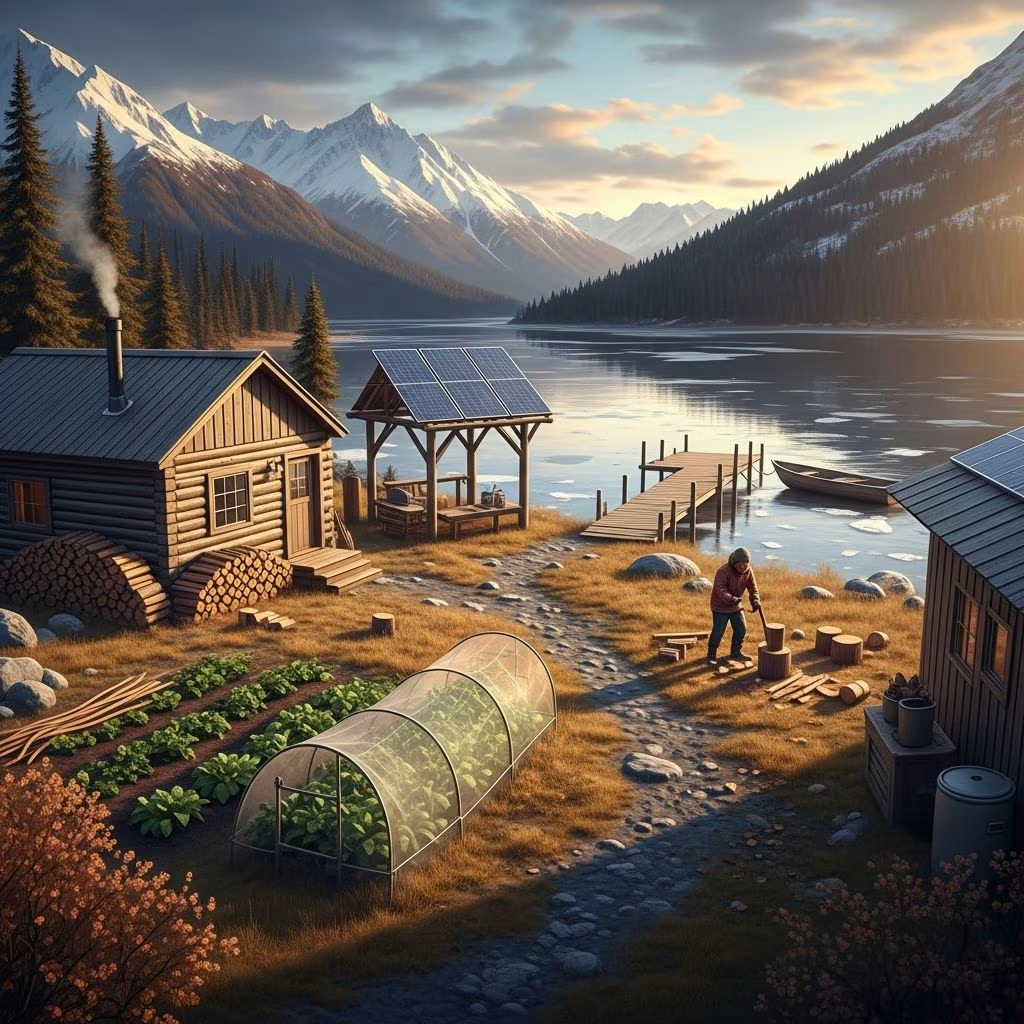
Living off the grid in Alaska means embracing self-reliance in one of the harshest environments on Earth. Families and couples are ditching utility bills, mortgages, and urban stress to build cabins, install solar power, and grow their own food on raw wilderness land. This lifestyle demands hard work, smart planning, and minimalism, but it delivers freedom, massive savings, and a deeper connection to nature.
Why Go Off-Grid in Alaska?
Alaska’s vast, affordable land draws off-gridders seeking independence. Properties often sit empty for years, available at bargain prices compared to mainland U.S. states. One couple, lifelong Alaskans with nearly a century of combined experience, bought raw land five years ago. They carved out a homestead bit by bit, using friends’ help and their own labor while holding full-time jobs.
The appeal is financial: no monthly electric bills averaging $200+, no water fees, and no mortgage if built debt-free. Grid hookup in remote areas can cost tens of thousands—far more than a DIY solar array. Off-grid living slashes expenses, allowing savings on everyday needs like power (as little as a coffee pot’s worth for an entire cabin) and heat from free wood.
- Affordable land: Remote parcels with no utilities are plentiful and cheap.
- No utility dependence: Avoid hookup fees and rising rates.
- Freedom: Design your life around heat, light, food, and water priorities.
Finding and Buying Your Off-Grid Property
Scout properties with southern exposure for solar gain and proximity to water sources like springs. The featured couple found their spot after years of searching—raw wilderness perfect for building. Key factors: access to roads (even rough ones), timber for heat, and space for gardens.
Budget $10,000–$50,000 for 5–40 acres, depending on location. Avoid debt; save aggressively or use cash. One young couple hoarded pennies, lived minimally, and bought a travel trailer for initial shelter while developing land—eschewing apartments to invest every dollar in their future.
| Property Checklist | Why It Matters |
|---|---|
| Solar-friendly slope | Maximizes winter sun |
| Near spring or drill site | Unlimited water without hauling |
| Timber access | Free heating fuel |
| Road access | Supplies and emergencies |
Building Your Cabin Debt-Free
Start small: a camper or wall tent serves as base camp. The Alaska couple lived in a camper half a mile from their build site, hiking to a fridge powered by initial solar panels. They worked full-time, built weekends, and relied on one dedicated friend until the shell was up.
Design for efficiency: prioritize heat, light, food preservation. Their cabin uses passive solar—large south-facing windows flood interiors with summer light (up to 20 hours daylight) and warmth. Wood stoves handle heating; no AC needed in cool Alaska.
Avoid big loans that trap you in off-farm jobs. Build incrementally: foundation, walls, roof, then interiors. Total cost? Under $20,000 for a functional 400–800 sq ft cabin using logs, reclaimed materials, and sweat equity.
Power: Solar, Generators, and Minimalism
Solar is king for off-grid Alaska. A $2,000 system (small panels, batteries) powers fridges, lights, pumps—everything but high-draw items. The couple started with two panels and a fridge; now it runs the whole cabin efficiently.
Winter sun is scarce (hours per day), so generators supplement: small ones charge batteries, a larger for heavy loads. Limit appliances—no dryer, big TV, or microwave. Energy use mirrors a coffee pot.
- Solar array: Roof-mounted, 1–2 kW sufficient.
- Batteries: Deep-cycle for storage.
- Generators: Propane/gas backups.
- LED lights: Minimal draw.
Lesson: Calculate needs first. List must-haves (fridge, lights, pump), ditch the rest. This keeps systems small and cheap.
Water Systems: Wells, Springs, and No Hauling
Water transforms off-grid life. Drill a well (10–50 ft in Alaska’s wetlands) for pressurized, unlimited supply. The couple’s well provides great pressure; no hauling required.
Alternatives: nearby springs (test for purity), rainwater collection, or hauling (last resort—time sink). A good well costs $5,000–$15,000 but pays off immediately.
Plumbing: Simple greywater to bog, composting toilet or outhouse. Indoors: basic sink, shower fed by wood-heated or solar pump.
Heating and Cooking with Wood
Alaska winters demand reliable heat. Wood stoves are essential—burn local timber for free fuel. A single stove heats the entire cabin, doubles as cooktop.
Outdoor kitchens for summer: canning, baking. Propane for stoves if needed, but wood suffices. Toyo heaters (kerosene) backup for quick warmth.
Harvest deadfall or cut sustainably; stockpile for 6–8 month winters.
Food, Garden, and Animals
Grow what you can: potatoes, greens, berries thrive in short seasons. Preserve via canning, root cellars. Hunt, fish for protein—Alaska’s bounty.
Animals: Chickens for eggs, goats for milk/meat if space allows. Feed from garden scraps, local hay.
Daily Life and Challenges
Off-grid is a ‘work in progress.’ Balance building, gardening, jobs. Winters: cozy cabin time, wood chores. Summers: endless light for projects.
Challenges: Isolation, repairs, weather. Rewards: No bills, fresh air, self-reliance. Fuel storage: propane tanks, gas cans safely bunkered.
Cost Savings Breakdown
| Category | Grid Cost/Year | Off-Grid Cost | Savings |
|---|---|---|---|
| Electricity | $2,400 | $200 (solar maint.) | $2,200 |
| Water | $600 | $0 | $600 |
| Heating | $1,800 | $300 (chain saw) | $1,500 |
| Total | $4,800 | $500 | $4,300 |
Annual savings fund expansions or retirement.
Frequently Asked Questions (FAQs)
Q: How much does solar cost for off-grid Alaska?
A: A basic system starts at $2,000, powering essentials with generators for winter. Expand as needed.
Q: Is drilling a well worth it?
A: Yes—unlimited water beats hauling. Costs $5k–$15k but eliminates ongoing labor.
Q: Can you live off-grid full-time with jobs?
A: Absolutely. Many build while working, using weekends and friends’ help.
Q: What’s the biggest lesson?
A: Everything’s a work in progress—embrace incremental wins.
Q: How do you handle winter power?
A: Generators charge solar batteries; minimal use keeps it simple.
Ready to go off-grid? Start small, plan power/water/heat, and watch savings grow. Alaska’s wilderness awaits.
References
- Everything We Learned 5 Years Off Grid in Alaska — Simple Living Alaska (YouTube). 2023. https://www.youtube.com/watch?v=13KsoiJUSVY
- Honest Look at Living Off Grid | Full Cabin and Property Tour — Simple Living Alaska (YouTube). 2023-03-06. https://www.youtube.com/watch?v=0meTx6dXpSw
- Living Off Grid in Alaska | Answering Your Most Asked Questions — North To Alaska (YouTube). 2025-12-15. https://www.youtube.com/watch?v=JvkTwoUTyvw
- Young Couple Starts an Off-Grid Homestead from Scratch, Part 2 — Mother Earth News. 2015-10. https://www.motherearthnews.com/homesteading-and-livestock/young-couple-starts-an-off-grid-homestead-from-scratch-part-2-zbcz1510/
This article is general information, not personal financial advice. Consider your own situation, or speak with a licensed adviser, before acting on it.


