

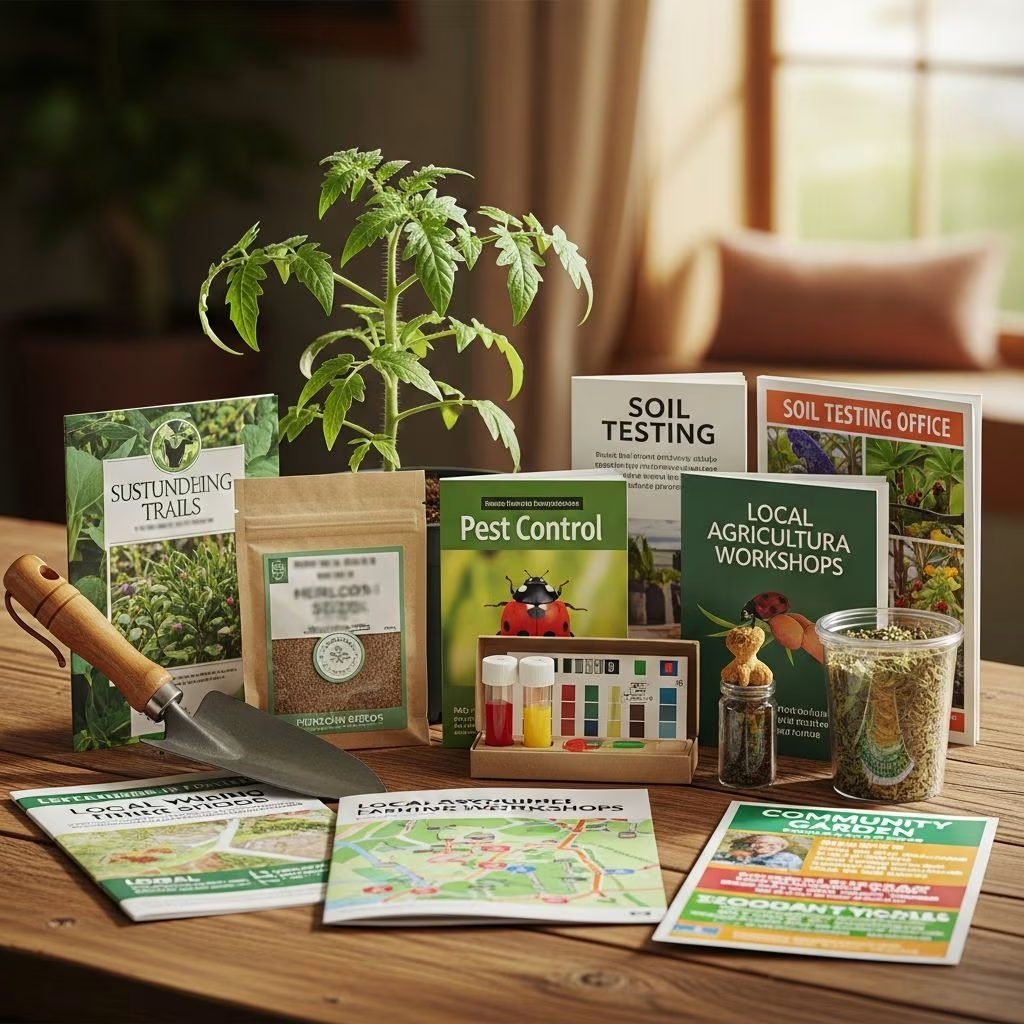
Local cooperative extension offices, run by land-grant universities and the USDA, provide expert advice and resources on agriculture, family life, and community development at little to no cost. These under-the-radar hubs help families save money through practical programs on gardening, nutrition, budgeting, and more. Whether you’re starting a home garden or learning to preserve food, extension offices deliver university-backed knowledge right in your community.
Every U.S. county has an extension office, funded by federal, state, and local governments to extend research from universities like those in the National Institute of Food and Agriculture (NIFA). Services vary by location but commonly include free testing, workshops, publications, and consultations. Families can save $250+ yearly by tapping these resources instead of buying supplies or paying for private advice.
What Is a Cooperative Extension Office?
Cooperative Extension System originated from the Smith-Lever Act of 1914, partnering USDA with states to deliver non-formal education. Today, it operates through 106 land-grant institutions, reaching over 2,900 counties with programs on sustainable farming, health, and youth development. Extension agents—experts with advanced degrees—offer personalized guidance, making complex research accessible for everyday savings.
Find your local office via the NIFA directory or state university websites. Services are free or low-cost to promote self-sufficiency and economic resilience.
1. Free or Cheap Soil Testing
Before planting, test your soil pH and nutrients for $5–$20 per sample (often subsidized). Agents analyze results and recommend amendments, preventing crop failure and wasted seeds. This service alone saves $50–$100 in failed gardens annually, per USDA estimates on home production efficiency.
- Submit samples with simple kits from the office.
- Get customized fertilizer plans based on your zip code’s climate.
- Ideal for veggies, lawns, or flowers—avoids over-fertilizing costs.
2. Gardening Advice and Free Seeds
Master gardeners volunteer free consultations on pest control, crop rotation, and companion planting. Many offices distribute free seeds for trials or community plots, worth $20–$50 per packet. Learn to grow $500+ in produce yearly on a small plot, reducing grocery bills.
Workshops cover raised beds, composting (saving $100/year on waste disposal), and organic methods endorsed by university research.
3. Canning and Food Preservation Classes
Free or $10 workshops teach safe canning, freezing, dehydrating, and fermenting. Get USDA-approved recipes to preserve bumper crops, avoiding spoilage losses of 20–30% in home harvests. Pressure canner demos ensure botulism-free results.
- Beginner sessions on water-bath canning for jams.
- Advanced pressure canning for low-acid veggies.
- Download free guides like the USDA Complete Guide to Home Canning.
4. Budgeting and Money Management Workshops
Family and consumer science agents offer free classes on creating budgets, debt reduction, and emergency funds. Tailored to local costs, these mirror programs like those from the CFPB but customized. Participants report 10–15% household savings post-course.
Topics include grocery stretching, utility audits, and tax prep basics.
5. Nutrition Education and Meal Planning
Snap-Ed programs provide free cooking classes using affordable staples. Learn to feed a family of four for under $150/week with nutrient-dense meals. Evidence-based curricula from NIFA reduce diet-related health costs by promoting whole foods.
6. 4-H Youth Programs
Free after-school clubs teach leadership, animal care, robotics, and shooting sports. Kids gain skills while parents save on camps ($200–$500/session). Over 6 million youth participate annually, building resumes with real projects.
7. Livestock and Small Farm Advice
Raise chickens or goats affordably with free herd health checks, feed formulas, and fencing tips. Agents help scale operations to cut feed costs by 20% via pasture management.
8. Free Publications and Fact Sheets
Download or pick up 100+ guides on topics like stormwater management, beekeeping, and elder care. Each saves $10–$50 vs. buying books.
9. Water Testing for Wells
$10–$30 tests detect contaminants in private wells, protecting health and avoiding bottled water expenses ($300/year).
10. Forestry and Tree Care Advice
Free invasive species ID and pruning demos prevent costly tree removal ($500+).
11. Composting and Waste Reduction Help
Build bins for $20 in materials; divert 300 lbs. of waste yearly, saving landfill fees.
12. Small Business Startup Guidance
Agriculture entrepreneurs get free market analysis and grant info for farm stands or agritourism.
13. Health and Wellness Programs
Free diabetes prevention and fitness classes via Extension’s health initiatives.
14. Energy Efficiency Audits
Home energy assessments identify $200+ annual savings on bills.
15. Stormwater and Environmental Education
Free rain barrel workshops and erosion control to lower flood insurance.
16. Custom Local Research
Agents conduct tailored studies, like best corn varieties for your soil.
How to Get Started at Your Extension Office
Search ‘[your county] extension office’ online. Call to schedule tests or classes—many are virtual now. Bring soil samples in zip bags; attend seasonal workshops for max value.
| Service | Typical Cost | Annual Savings |
|---|---|---|
| Soil Test | $10–$20 | $100 |
| Canning Class | Free–$10 | $200 (preserved food) |
| Garden Consult | Free | $500 (home produce) |
| Budget Workshop | Free | 10–15% income |
Frequently Asked Questions (FAQs)
Is my local extension office really free?
Most services are free or nominal fee; funding ensures accessibility for all income levels.
Do I need to be a farmer to use it?
No—programs serve urban gardeners, families, and homeowners too.
How do I find my county extension office?
Visit nifa.usda.gov/extension or search your county name + ‘extension’.
Are classes available online?
Many yes, especially post-pandemic; check your state site’s event calendar.
Can kids join for free?
Yes, 4-H and youth programs are tuition-free with optional project fees.
References
- Extension Services Overview — USDA National Institute of Food and Agriculture. 2024-01-15. https://www.nifa.usda.gov/extension
- Cooperative Extension System — USDA NIFA Land-Grant Universities. 2023-06-10. https://nifa.usda.gov/extension/land-grant-universities
- Complete Guide to Home Canning — USDA Agricultural Information Bulletin. 2022-09-01. https://nchfp.uga.edu/publications/publications_usda.html
- 16 Things You Can Get Free or Cheap at an Extension Office — The Penny Hoarder. 2023-11-01. https://www.thepennyhoarder.com/save-money/extension-office/
- Smith-Lever Act and Extension History — USDA NIFA. 2024-03-20. https://www.nifa.usda.gov/about-nifa/blogs/cooperative-extension-centennial
- Snap-Ed Nutrition Programs — USDA NIFA. 2025-01-05. https://snaped.fns.usda.gov/
This article is general information, not personal financial advice. Consider your own situation, or speak with a licensed adviser, before acting on it.


