

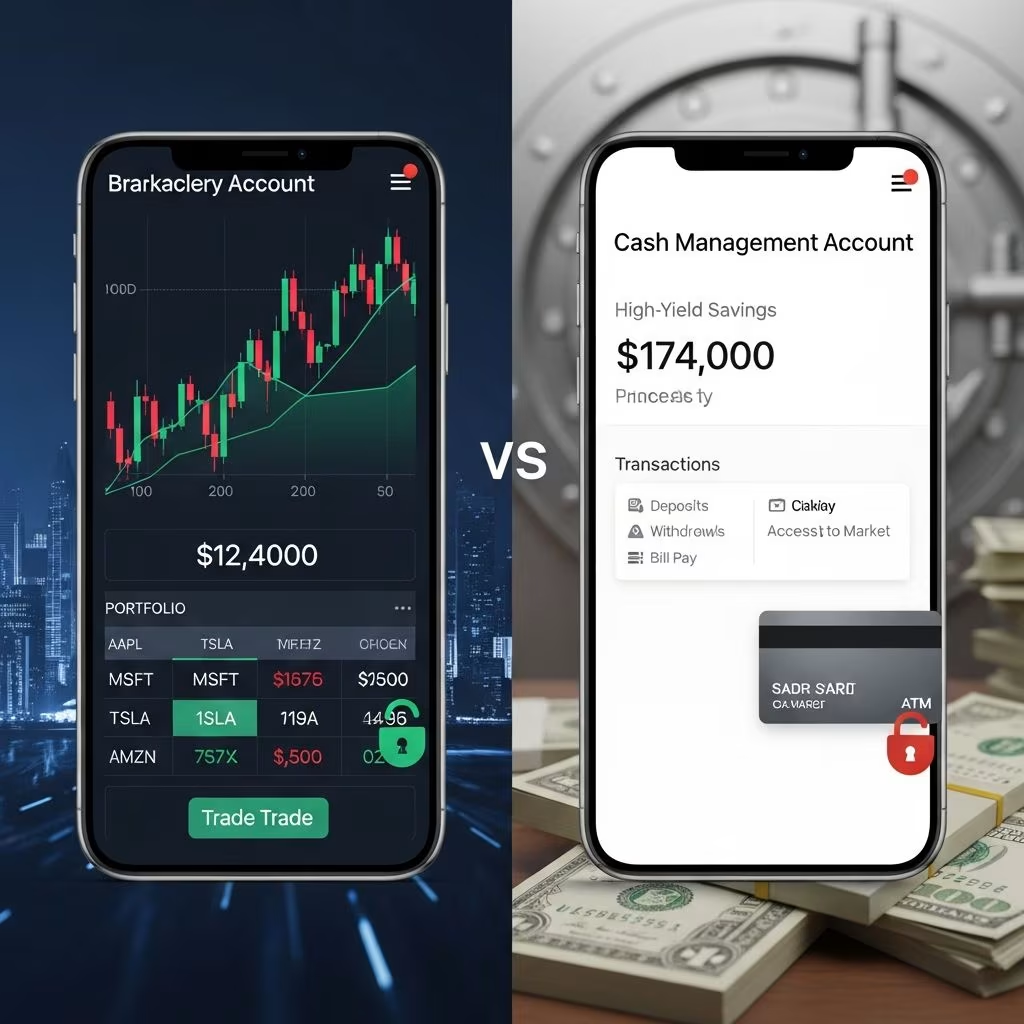
Brokerage accounts are designed for buying and selling securities like stocks, bonds, and funds, offering high potential returns but with market risk and SIPC protection. Cash management accounts (CMAs) function like hybrid checking-savings accounts provided by brokerages, earning interest on cash with FDIC insurance and easy access via debit cards or checks.
What Is a Brokerage Account?
A **brokerage account** serves as a platform for investors to purchase, sell, and hold various securities, including stocks, bonds, mutual funds, ETFs, and options. These accounts enable participation in the financial markets, where value grows through asset appreciation, dividends, or interest payments from holdings. Unlike traditional bank accounts, brokerage accounts prioritize investment growth over daily liquidity.
Brokerage accounts come in two main types: cash accounts, which require full payment for securities at purchase, and margin accounts, allowing borrowing against holdings for amplified trades. Investors must fund the account via transfers, direct deposits, or wire, then execute trades through the brokerage’s platform, app, or advisor services. Returns are variable, tied to market performance—potentially high over time but subject to losses during downturns.
Key features include real-time trading, research tools, fractional shares, and automated investing options like robo-advisors. However, uninvested cash earns minimal or no interest, and transactions may incur commissions, though many firms offer commission-free trades for stocks and ETFs. Brokerage accounts are not FDIC-insured; instead, they receive SIPC coverage up to $500,000 (including $250,000 cash) per customer in case of firm failure, protecting against theft or liquidation issues but not market losses.
- Primary purpose: Long-term wealth building through diversified investments.
- Risk level: High volatility; principal not guaranteed.
- Accessibility: Funds available post-settlement (T+1 for stocks), but selling incurs potential delays.
What Is a Cash Management Account?
A **cash management account (CMA)** combines features of checking, savings, and brokerage accounts into one convenient product, typically offered by brokerage firms or non-bank institutions. CMAs hold uninvested cash, pay competitive interest rates (often 4-5% APY as of recent data), and provide spending tools like debit cards, checks, bill pay, and ATM access without monthly fees at participating networks.
CMAs excel in liquidity: funds are available immediately for purchases or transfers to linked brokerage accounts. Providers like Fidelity, Vanguard, or E*TRADE use “cash sweep” mechanisms, distributing balances across multiple FDIC-insured partner banks to extend coverage up to $5 million or more. For example, a $250,000 deposit might split into portions under the $250,000 FDIC limit per bank. This setup ensures principal safety while earning yields higher than traditional checking accounts.
Unlike pure savings accounts, CMAs support unlimited transactions and often include money market funds or brokered CDs for yield enhancement. They bridge everyday banking with investing—ideal for parking cash awaiting investment opportunities or proceeds from sales. Minimum balances are low or nonexistent, with no trading capabilities directly in the CMA; securities trading occurs via a linked brokerage account.
- Primary purpose: Daily cash management with interest earnings and seamless investing integration.
- Risk level: Very low; FDIC protection safeguards principal.
- Accessibility: Instant via debit/check; no settlement delays for spending.
Brokerage Account vs. Cash Management Account: Key Differences
While both accounts are offered by brokerage firms and can integrate seamlessly, their core functions diverge significantly. Brokerage accounts focus on investment growth with higher risk/reward, whereas CMAs prioritize safety, liquidity, and modest interest income.
| Feature | Brokerage Account | Cash Management Account |
|---|---|---|
| Purpose | Buying/selling securities for growth | Cash holding, spending, interest earning |
| Returns | Market-driven (stocks: 7-10% historical avg.); variable | Interest (4-5% APY); stable but lower |
| Risk | High (market losses possible) | Minimal (FDIC-insured) |
| Insurance | SIPC ($500K total, $250K cash) | FDIC (up to $250K/bank; sweeps extend) |
| Access Tools | Wire/ACH transfers; limited checks | Debit card, checks, bill pay, ATMs |
| Fees | Possible commissions/margin interest | Often fee-free; competitive yields |
Earnings sources differ fundamentally: brokerage gains stem from capital appreciation and dividends, exposed to volatility. CMA yields derive from bank interest or money market rates, akin to high-yield savings but with banking conveniences. Brokerages like Fidelity offer CMAs with FDIC sweeps, while others like Merrill Lynch provide integrated CMA-debit solutions.
Similarities Between Brokerage Accounts and Cash Management Accounts
Despite differences, brokerage accounts and CMAs share attributes that enhance their complementary use.
- Offered by Brokerages: Firms like Vanguard, Fidelity, and SoFi provide both, enabling easy linking for transfers—e.g., sweeping sales proceeds to CMA for interest.
- Earning Potential: Both generate returns; brokerages via investments, CMAs via interest, outperforming idle bank checking (often 0.01%).
- Integration: Linked accounts allow automatic sweeps: CMA funds to brokerage for trades, or vice versa for liquidity.
- Digital Access: Mobile apps, online platforms, and 24/7 support unify management.
- Tax Treatment: Interest/dividends reportable on Form 1099; no direct taxes on principal.
Pros and Cons
Brokerage Account Pros and Cons
- Pros: High growth potential; diversification; tax-advantaged options (IRAs); research tools.
- Cons: Market risk; no FDIC; potential fees; emotional trading pitfalls.
Cash Management Account Pros and Cons
- Pros: FDIC safety; liquidity; interest income; no/minimal fees; brokerage synergy.
- Cons: Lower returns than stocks; yield fluctuates with rates; limited FDIC per bank without sweeps.
Should You Get a Brokerage Account, Cash Management Account, or Both?
Choose based on goals: Use a **brokerage account** for long-term investing if you tolerate risk and aim for wealth accumulation—historical S&P 500 returns average 10% annually, far exceeding CMA yields. Opt for a **CMA** for emergency funds, short-term savings, or daily spending needing protection and accessibility. Most investors benefit from **both**: Park cash in CMA for yield/safety, transfer to brokerage for growth. Vanguard and Fidelity exemplify seamless combos, with auto-sweeps minimizing idle cash drag. Consider time horizon—avoid investing short-term needs to mitigate volatility.
Bottom Line
Brokerage accounts drive investment growth with risk, while CMAs deliver secure, liquid cash management. Together, they form a robust financial ecosystem: invest aggressively via brokerage, safeguard/spend via CMA. Evaluate providers like Fidelity (high FDIC sweeps) or SoFi (competitive APYs) for alignment with needs.
Frequently Asked Questions (FAQs)
Are brokerage accounts and cash management accounts the same?
No. Brokerage accounts facilitate securities trading with market risk and SIPC coverage, while CMAs mimic bank accounts with FDIC insurance, interest, and debit access.
Can you keep cash in a brokerage account?
Yes, but uninvested cash earns little interest and lacks FDIC protection. CMAs or high-yield savings are superior for cash holdings.
Do cash management accounts and brokerage accounts work together?
Yes, when linked at the same firm—CMAs fund trades or receive proceeds, offering liquidity without external bank transfers.
Is a CMA FDIC-insured?
Yes, via partner bank sweeps extending coverage beyond standard limits, managed by the provider.
Which has higher returns: brokerage or CMA?
Brokerages offer higher long-term potential via markets but with risk; CMAs provide stable, lower interest.
References
- What is a cash management account? — Fidelity Investments. 2024-01-15. https://www.fidelity.com/learning-center/smart-money/what-is-a-cash-management-account
- What is a cash management account? — Vanguard. 2025-03-10. https://investor.vanguard.com/investor-resources-education/article/what-is-a-cash-management-account
- Your deposits are insured up to applicable limits by FDIC insurance — FDIC.gov (via brokerage disclosures). 2023-12-31. https://www.fdic.gov/resources/deposit-insurance
- Brokerage Account vs. Cash Management Account — SmartAsset. 2024-06-20. https://smartasset.com/personal-finance/brokerage-account-vs-cash-management-account
- Cash Management Accounts (CMAs) vs Brokerage Accounts — SoFi. 2025-02-14. https://www.sofi.com/learn/content/brokerage-account-vs-cash-management
- Cash Management Accounts vs. Brokerage Accounts — NerdWallet. 2024-11-05. https://www.nerdwallet.com/banking/learn/cash-management-accounts-vs-brokerage-accounts
This article is general information, not personal financial advice. Consider your own situation, or speak with a licensed adviser, before acting on it.


