

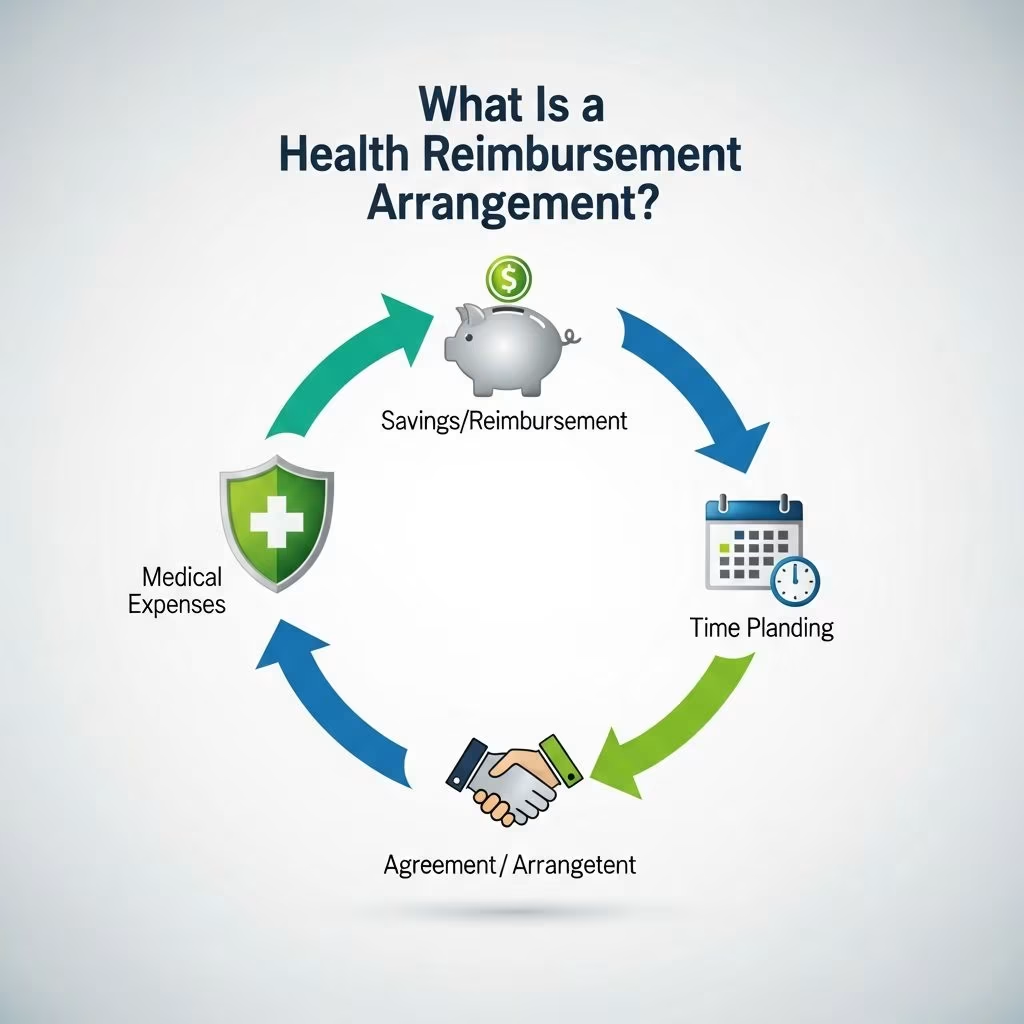
A Health Reimbursement Arrangement (HRA) is an employer-funded benefit plan designed to reimburse employees tax-free for qualified medical, dental, vision, and other eligible healthcare expenses. Unlike traditional health savings accounts, HRAs are fully funded by employers, offering flexibility in how employees use these funds to cover out-of-pocket costs not paid by insurance.
HRAs empower employees to control their healthcare spending while providing employers a cost-effective alternative to group health insurance. Funds are not portable like HSAs; unused amounts may roll over or be reclaimed by the employer depending on the plan design. This arrangement promotes affordability, especially for high-deductible plans, by bridging gaps in coverage.
How Does a Health Reimbursement Arrangement Work?
HRAs operate through a straightforward reimbursement process. Employers set an annual or monthly allowance, employees pay eligible expenses upfront, submit claims with receipts, and receive tax-free reimbursements up to the allocated amount.
Key steps include:
- Employer Funding: 100% employer-funded; employees contribute nothing. Funds can accumulate for future use, COBRA premiums, or retiree costs.
- Eligible Expenses: Cover IRS-qualified costs per Publication 502, such as deductibles, copays, coinsurance, prescriptions, dental, vision, and sometimes premiums.
- Claims Submission: Employees provide proof of payment; administrators review and approve.
- Reimbursement Limits: Capped by employer-defined allowances, which may vary by employee class, family status, or plan type.
For example, with a $1,000 deductible plan, an employer might fund $500 in HRA. Employees use this for initial costs tax-free, then pay the remaining $500 out-of-pocket until the deductible is met, followed by coinsurance.
Types of Health Reimbursement Arrangements
Several HRA variants exist to suit different employer sizes and needs. Each integrates with or replaces traditional group coverage while adhering to IRS rules.
| Type | Description | Key Features | Eligibility |
|---|---|---|---|
| Individual Coverage HRA (ICHRA) | Reimburses individual health insurance premiums and qualified expenses. | Differentiates allowances by 11 employee classes (e.g., full-time, part-time); requires minimum essential coverage (MEC); no group plan needed. | All employer sizes; employees must have individual policy. |
| Group Coverage HRA (GCHRA) | Supplements existing group health plans for out-of-pocket costs (not premiums). | Customizable by 7 employee classes; enhances high-deductible plans. | Employees enrolled in group plan. |
| Qualified Small Employer HRA (QSEHRA) | For businesses with fewer than 50 full-time employees without group coverage. | Capped by IRS limits; reimburses premiums and expenses; integrates with Marketplace subsidies. | Small employers; employees notify of subsidy eligibility. |
| Excepted Benefit HRA (EBHRA) | Limited to $2,100 annually (2025); pairs with group plans. | Covers extras like dental/vision; capped and opt-out allowed. | Any size employer with group coverage. |
| Retiree-Only HRA | Post-retirement medical expense reimbursements. | Flexible for Medicare gaps; no MEC requirement. | Retirees only. |
| Integrated HRA | Offsets deductibles/copays in group plans. | Not for premiums; simple reimbursement. | Paired with group insurance. |
Employers select based on workforce size, budget, and compliance needs. ICHRA and GCHRA, introduced in 2020, offer unlimited funding potential without caps like QSEHRA.
Benefits of HRAs for Employers and Employees
HRAs deliver mutual advantages, making healthcare more predictable and personalized.
Benefits for Employees
- Tax-Free Reimbursements: No federal income, payroll, or Social Security taxes on funds used for eligible expenses.
- Flexibility: Choose providers, plans, or save for future needs like orthodontia spanning years.
- Cost Control: Reduces out-of-pocket burdens; rollovers allow accumulation.
- Portability Elements: Some designs cover COBRA continuation.
Benefits for Employers
- Cost Predictability: Budget exactly; reclaim unused funds (except in certain designs).
- Customization: Tailor by classes, avoiding one-size-fits-all group plans.
- Compliance & Savings: Avoid ACA penalties; cheaper than full group insurance for small firms.
- Attract Talent: Competitive benefit without premium volatility.
Overall, HRAs lower administrative costs and enhance satisfaction. Employees shop for value, while employers cap exposure.
HRA vs. HSA: Key Differences
HRAs and Health Savings Accounts (HSAs) both aid medical costs but differ fundamentally.
| Feature | HRA | HSA |
|---|---|---|
| Funding | 100% employer-funded; post-expense reimbursement. | Employee + employer contributions; pre-fundable. |
| Portability | Not owned by employee; ends with employment (funds may not roll over). | Employee-owned, portable indefinitely. |
| Eligibility | Any high-deductible or individual/group plan per type. | Only HDHP-eligible. |
| Reimbursements | Qualified expenses + premiums (ICHRA); employer-controlled. | Qualified expenses only; triple tax-free growth. |
| Forfeiture | Unused funds often revert to employer. | Funds remain with employee. |
Choose HRA for employer-driven simplicity; HSA for personal control.
What Expenses Are Eligible for Reimbursement?
Eligibility follows IRS Section 213(d) and Publication 502: medical, dental, vision expenses exceeding 7.5% of adjusted gross income, but HRAs reimburse without this threshold if plan-integrated.
- Copays, coinsurance, deductibles.
- Prescriptions, hospital stays, office visits.
- Dental (e.g., orthodontia per payment plan), vision.
- Premiums (ICHRA/QSEHRA), COBRA, Medicare Parts B/D.
- Over-the-counter meds (CARES Act-expanded).
Ineligible: Cosmetics, gym memberships (unless prescribed), insurance premiums outside plan rules. Always check plan documents.
HRA Eligibility and Enrollment
Eligibility varies: all employees for integrated HRAs; specific classes for ICHRA/GCHRA. Qualifying life events (marriage, birth, job loss) allow mid-year changes within 30-60 days.
Enrollment typically during open periods; notify of Marketplace subsidies for QSEHRA to avoid premium tax credit conflicts.
Frequently Asked Questions (FAQs)
What is an HRA?
An HRA is an employer-funded account reimbursing tax-free qualified health expenses.
Can unused HRA funds roll over?
Yes, many plans allow carryover to future years or COBRA.
Are HRAs taxable?
No, reimbursements are tax-free if IRS-qualified.
Who administers HRAs?
Employers or third-party administrators handle claims.
Can HRAs replace group insurance?
ICHRA/QSEHRA can; others supplement.
What if I leave my job?
Remaining funds typically end; some cover COBRA.
Are dependents covered?
Yes, expenses for spouse/dependents qualify.
This comprehensive guide equips you to navigate HRAs effectively. Consult plan documents or IRS.gov for specifics.
References
- Health Reimbursement Arrangement (HRA) — Blue Cross Blue Shield of Kansas. 2023. https://www.bcbsks.com/health-reimbursement-arrangement-hra
- Health Reimbursement Arrangement (HRA): Your Complete Guide — AES International. 2024-01-15. https://www.aesinternational.com/blog/health/health-reimbursement-arrangement-hra-your-complete-guide
- Using Your Health Reimbursement Arrangement (HRA) — EBC Flex. 2024. https://www.ebcflex.com/hra/
- Health Reimbursement Arrangements (HRA) — Sonoma County Government (.gov). 2025. https://sonomacounty.gov/hra
- Health Reimbursement Arrangement (HRA) Guide — PeopleKeep. 2025-01-10. https://www.peoplekeep.com/health-reimbursement-arrangement-hra
- 2025 Guide to Health Reimbursement Arrangements (HRAs) — Take Command Health. 2025. https://www.takecommandhealth.com/health-reimbursement-arrangements
This article is general information, not personal financial advice. Consider your own situation, or speak with a licensed adviser, before acting on it.


