

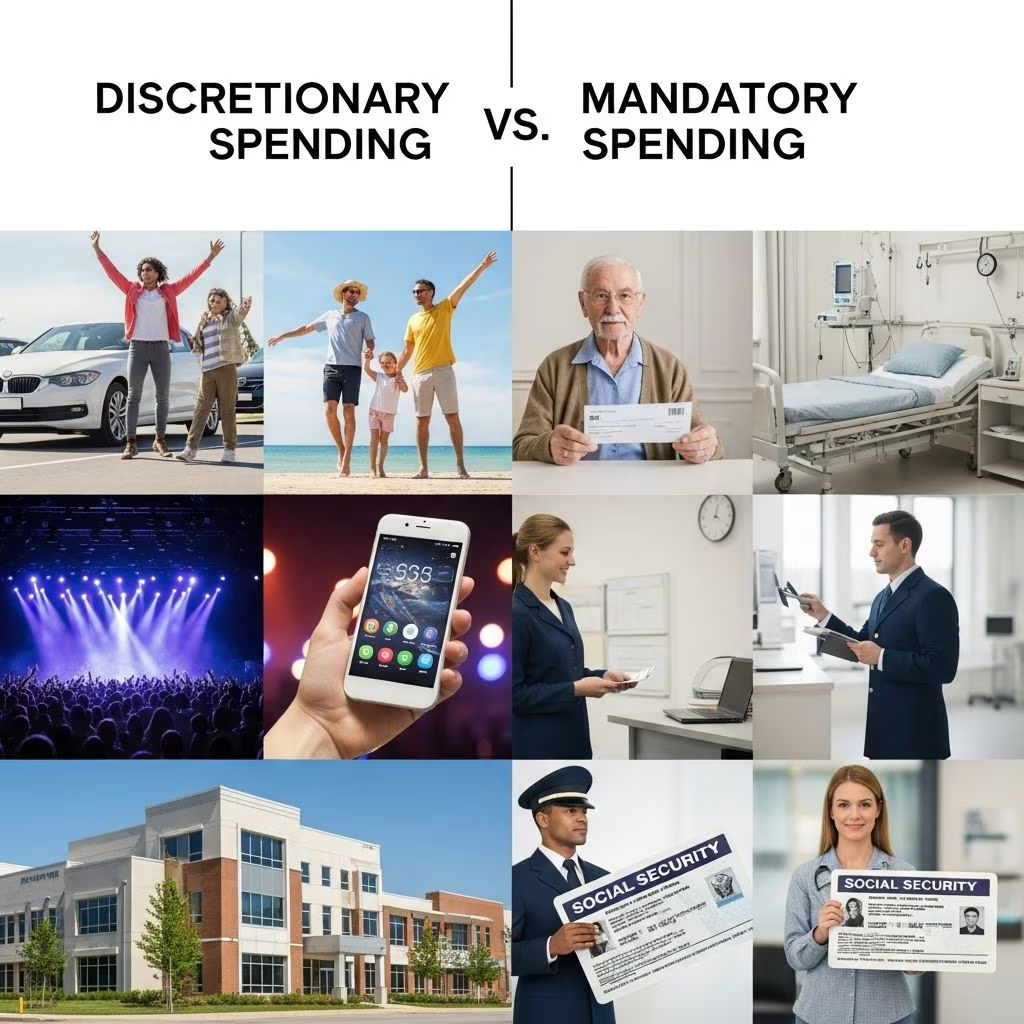
Mandatory spending covers essential expenses required for basic living needs, such as housing, utilities, food, and transportation, while discretionary spending includes non-essential items like entertainment, dining out, and luxury purchases that can be adjusted to improve financial health.
What Is Mandatory Spending?
Mandatory spending, also known as fixed or essential spending, refers to the expenses you must pay to maintain your basic quality of life and meet legal or survival obligations. These are the non-negotiable costs that, if ignored, could lead to serious consequences like eviction, utility shutoffs, or health issues. In personal finance, mandatory spending forms the foundation of any budget because it ensures your survival and stability.
Unlike government mandatory spending, which includes entitlement programs like Social Security and Medicare that operate on autopilot without annual approval, personal mandatory spending is dictated by contracts, laws, and necessities. For individuals, these costs are predictable and recurring, often making up 50-70% of monthly income depending on lifestyle and location.
Examples of Mandatory Spending
- Housing costs: Rent or mortgage payments, property taxes, homeowners or renters insurance. These secure shelter, a fundamental human need.
- Utilities: Electricity, water, gas, internet, and phone bills essential for daily living and work.
- Groceries and minimum food budget: Basic nutritious food to sustain health, excluding gourmet or convenience items.
- Transportation: Car payments, insurance, gas, public transit passes, or maintenance required to get to work or essential services.
- Debt payments: Minimum payments on credit cards, student loans, or other debts to avoid penalties and credit damage.
- Healthcare: Insurance premiums, prescriptions, and copays for necessary medical care.
- Childcare or education: Daycare, school fees if required for employment.
These items are ‘mandatory’ because skipping them risks immediate harm. For instance, failing to pay rent can lead to homelessness, mirroring how governments must fund unavoidable obligations like debt interest.
What Is Discretionary Spending?
Discretionary spending encompasses optional expenses that enhance lifestyle but are not critical for survival. Inspired by federal budgeting where discretionary funds require annual approval for defense, education, and more, personal discretionary spending offers flexibility—you can reduce or eliminate it without jeopardizing basic needs. This category often balloons budgets, leading to debt if unchecked.
In practice, discretionary spending accounts for the remaining 30-50% of budgets after essentials. Cutting here builds savings, pays down debt, or funds goals like vacations or emergencies. The key is distinguishing ‘wants’ from ‘needs’ to reclaim control.
Examples of Discretionary Spending
- Dining out and takeout: Restaurant meals, coffee shops, delivery services beyond home cooking.
- Entertainment: Streaming subscriptions, movies, concerts, hobbies, gaming.
- Shopping: Clothing, gadgets, home decor not required for work or function.
- Travel and vacations: Leisure trips, weekend getaways.
- Subscriptions: Gym memberships (if unused), premium apps, magazines.
- Hobbies and luxuries: Golf, crafts, beauty treatments, alcohol/tobacco.
These enhance joy but can be paused. For example, cooking at home instead of ordering out saves hundreds monthly, much like how Congress scrutinizes discretionary allocations yearly.
Mandatory vs. Discretionary Spending: Key Differences
The core distinction lies in necessity and flexibility: mandatory spending is survival-driven and inflexible, while discretionary is enjoyment-driven and adjustable. Here’s a comparison:
| Aspect | Mandatory Spending | Discretionary Spending |
|---|---|---|
| Necessity | Essential for survival/health/legal compliance | Optional for comfort/lifestyle |
| Flexibility | Low—can’t easily cut without consequences | High—can reduce/eliminate |
| Examples | Rent, utilities, groceries, debt min. | Dining out, entertainment, shopping |
| Budget Impact | 50-70% of income, fixed | 30-50%, variable |
| Review Frequency | Annual contracts, shop yearly | Monthly tracking/adjustments |
This table highlights why prioritizing mandatory first (50/30/20 rule: 50% needs, 30% wants, 20% savings) is crucial.
How to Track Your Spending
Tracking reveals spending patterns, essential for distinguishing categories. Start with these steps:
- Review statements: Bank/credit card apps for 1-3 months’ data.
- Use tools: Apps like Mint, YNAB, or spreadsheets categorize automatically.
- Log daily: Note cash purchases immediately.
- Categorize: Assign each expense to mandatory or discretionary.
- Analyze: Calculate percentages; aim for under 50% on non-essentials.
Consistent tracking, like annual federal appropriations, prevents overspending.
Budgeting Tips for Mandatory and Discretionary Spending
Effective budgeting allocates income wisely. Follow these tips:
- Prioritize mandatory: Pay essentials first to avoid fees.
- Cap discretionary: Set 30% limit; use envelopes or app alerts.
- Zero-based budget: Assign every dollar a job.
- Review monthly: Adjust based on income changes.
- Build buffers: Emergency fund covers 3-6 months mandatory expenses.
Incorporate the 50/30/20 rule for balance.
Ways to Reduce Discretionary Spending
Cutting discretionary frees funds without sacrificing needs. Strategies include:
- Meal prep: Cook weekly to slash dining costs by 50-75%.
- Cancel unused subs: Audit streaming/gym; save $100+/month.
- Shop smart: Wait 48 hours for purchases; use cash only.
- Free entertainment: Libraries, parks, home workouts.
- Negotiate bills: Even mandatory like cable can be bundled.
- Set challenges: No-spend weeks target categories.
Average households save $300-500/month with these, accelerating debt payoff or savings.
Building Healthy Financial Habits
Long-term success requires habits: Automate mandatory payments/savings, review quarterly, increase income via side hustles. Track net worth yearly. These mirror PAYGO rules balancing spending.
Frequently Asked Questions
What percentage of income should go to mandatory spending?
Ideally 50%, per 50/30/20 rule, leaving room for wants and savings.
Is car insurance mandatory or discretionary?
Mandatory if driving legally; shop for best rates annually.
Can groceries be discretionary?
Basic staples are mandatory; organic/specialty often discretionary.
How do I handle variable mandatory costs like utilities?
Average past bills, use energy-saving tips to stabilize.
What if discretionary exceeds budget?
Prioritize cuts, seek raises or side income.
References
- What is mandatory and discretionary spending? — Tax Policy Center. 2023. https://taxpolicycenter.org/briefing-book/what-mandatory-and-discretionary-spending
- Discretionary vs. Mandatory Spending — House Committee on Appropriations (simpson.house.gov). 2024. https://simpson.house.gov/appropriations/discretionarymandatory.htm
- What to know about Government Spending — Enlisted Association of the National Guard of the United States (EANGUS). 2024. https://eangus.org/what-to-know-about-government-spending/
- Understanding the Federal Budget — Peter G. Peterson Foundation. 2024-10-01. https://www.pgpf.org/federal-budget-guide/
- Distinguishing Between Discretionary and Mandatory Spending — Congressional Research Service (CRS). 2024. https://www.congress.gov/crs-product/IF13124
This article is general information, not personal financial advice. Consider your own situation, or speak with a licensed adviser, before acting on it.


