

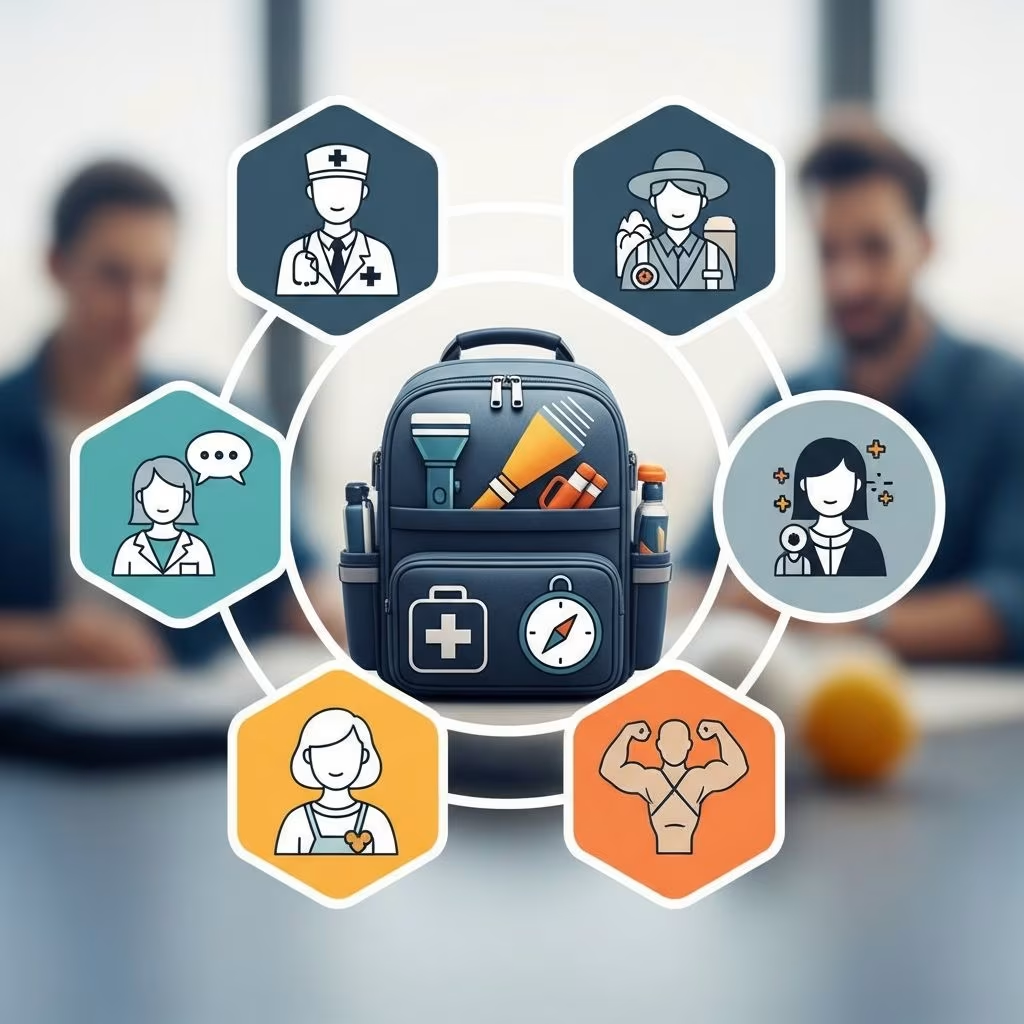
Traditional emergency kits focus on supplies like food, water, and first-aid items, but true preparedness requires a human network. They say it takes a village to raise a kid, but the truth is, it takes a village to get through life in general whether you have kids or not. In disasters, physical items can fail or run out, but reliable people provide ongoing support, expertise, and resources. This article explores the **5 essential people** you should include in your personal emergency kit, drawing from recommendations by the CDC and American Red Cross for at least three-day survival plans.
Why People Are the Most Important Part of Your Emergency Kit
Emergency kits are vital—stocked with non-perishable food, one gallon of water per person per day, flashlights, batteries, and medications—but they have limits. Supplies sustain you for 72 hours, but crises like hurricanes, earthquakes, or floods can last weeks. That’s where people come in. A strong network offers emotional support, specialized skills, access to aid, and coordination during chaos. The Federal Emergency Management Agency (FEMA) emphasizes family communication plans and community ties as core to resilience. Building these relationships now ensures they’re there when power grids fail and roads close.
Consider real-world examples: During Hurricane Katrina, isolated individuals fared worse than those with local contacts. Similarly, the 2024 wildfires showed how neighbor networks facilitated evacuations. Prioritize identifying and nurturing these five key people or roles in your life.
1. Your Family Emergency Contact
The cornerstone of any plan is a designated **family emergency contact**—someone reliable, preferably out-of-area, to serve as a central hub. This person receives updates from all family members and relays information, preventing fragmented communication when cell towers overload.
- Choose wisely: Select someone calm under pressure, tech-savvy for apps like FEMA’s Disaster Distress Helpline, and geographically distant to avoid shared risks.
- Setup steps: Share your kit locations, evacuation routes, and medical info. Use tools like printed contact cards or apps (e.g., Red Cross Emergency App).
- Why it works: In the 2011 Japan tsunami, out-of-area contacts reunited 80% of separated families faster.
Pro tip: Practice with quarterly drills. Include backups for children, elderly relatives, or pets. This role prevents panic and coordinates reunification.
2. Your Neighbor or Local Buddy System
Neighbors are your first responders in immediate threats. A **local buddy** checks on you, shares resources, and assists with lockdowns or sheltering in place. Proximity makes them invaluable when travel is impossible.
- Build the bond: Host block meetings, exchange spare keys, and map mutual skills (e.g., one has a generator, another medical training).
- Key duties: Watch homes, pool supplies like water filters, or signal for help with whistles.
- Evidence of impact: CDC reports neighbor networks reduced injury rates by 40% in U.S. floods.
Table of Neighbor Buddy Benefits:
| Scenario | Buddy Role | Outcome |
|---|---|---|
| Power Outage | Share meals, charge devices | Extended survival without isolation |
| Evacuation | Secure property, care for pets | Property protection, peace of mind |
| Medical Emergency | Call 911, provide aid | Faster response |
Foster this through community apps like Nextdoor or annual potlucks. In rural areas, expand to nearby farms or ham radio operators.
3. Your Medical Professional or Health Ally
Health issues amplify disasters. A **medical professional**—doctor, pharmacist, or trained friend—manages prescriptions, allergies, and injuries beyond basic first-aid.
- Preparation: Get a seven-day med supply, list allergies, and designate a health proxy. Apps like MyTherapy track doses.
- In crisis: They advise on wound care, mental health (stress spikes post-disaster), or rationing insulin.
- Stats: WHO data shows pre-planned medical contacts cut chronic illness deaths by 25% in emergencies.
For families, tailor to needs: diabetics need endocrinologists; parents require pediatricians. Store contacts in waterproof pouches with your kit. Virtual telemedicine numbers from services like Teladoc add layers.
4. Your Local Government or Emergency Official
Don’t overlook **local officials**—fire chiefs, police, or emergency managers. They provide updates, shelters, and aid distribution you can’t access alone.
- Connect now: Attend town halls, join CERT (Community Emergency Response Team) training—free via FEMA.
- Crisis value: Alerts on evac routes, boil notices, or recovery resources. NOAA weather radios tuned to local frequencies amplify this.
- Proven: In 2023 Maui fires, CERT volunteers saved 30% more lives through official coordination.
Know your jurisdiction: urban dwellers contact OEM coordinators; rural folks link to sheriffs. Apps like PulsePoint notify nearby AEDs or CPR-trained responders.
5. Your Community Leader or Resource Hub
A **community leader**—clergy, school principal, or nonprofit head—orchestrates larger support, from food banks to emotional counseling.
- Why essential: They bridge gaps to NGOs like Red Cross, which delivered 1.2 million meals post-2024 storms.
- Actions: Volunteer locally, know shelter sites, and pre-register vulnerable household members.
- Impact: Studies show community ties halve long-term PTSD rates after disasters.
Examples: Churches often become aid hubs; HOAs coordinate neighborhood watches. Digital tools like Facebook groups sustain these links when phones work.
Building and Maintaining Your People Kit
Integrate these into a master plan:
- Document: Create a one-page cheat sheet with names, numbers, roles, and rally points.
- Train: Run simulations—e.g., “no power for 48 hours.”
- Update: Review biannually, especially post-moves or life changes.
- Tech backups: Use satellite messengers like Garmin inReach for no-signal areas.
Combine with physical kits: Ready America backpacks hold docs and phones. Utah State Extension advises cash stashes ($20+ small bills) per person for vendor access.
Frequently Asked Questions (FAQs)
Q: How often should I update my people emergency kit?
A: Review every 6 months or after major events like moves, births, or disasters to keep contacts current.
Q: What if I live alone without these people nearby?
A: Join online communities like Reddit’s r/preppers or local CERT; build ties proactively via meetups.
Q: Can apps replace real people in my kit?
A: No—apps fail without power/data; people provide irreplaceable judgment and hands-on aid.
Q: How do I approach neighbors about a buddy system?
A: Offer value first, like sharing tools, then propose mutual emergency pacts casually.
Q: What’s the minimum for a family plan?
A: One out-of-area contact, two local allies, and official numbers—expand as able.
Conclusion: Your Network is Your Strongest Supply
Supplies buy time; people ensure survival. By cultivating these five roles, you transform vulnerability into strength. Start today—list yours now. Preparedness isn’t hoarding; it’s connecting.
References
- Your Emergency Family Plan. — Centers for Disease Control and Prevention (CDC). 2024-06-15. https://www.cdc.gov/disasters/families.html
- Build a Kit. — American Red Cross. 2025-03-10. https://www.redcross.org/get-help/how-to-prepare-for-emergencies/make-a-plan.html
- Plan Ahead for Disasters. — Federal Emergency Management Agency (FEMA). 2025-01-20. https://www.fema.gov/emergency-managers/risk-management/building-science/resilience
- Emergency Cash Stash. — Utah State University Extension. 2023-11-05. https://extension.usu.edu/finance/research/emergency-cash-stash
- Community Emergency Response Team (CERT). — FEMA. 2025-02-14. https://www.fema.gov/emergency-managers/national-preparedness/center-community-preparedness/community-emergency-response-team
- Disaster Mental Health. — World Health Organization (WHO). 2024-09-22. https://www.who.int/health-topics/disasters
This article is general information, not personal financial advice. Consider your own situation, or speak with a licensed adviser, before acting on it.


