

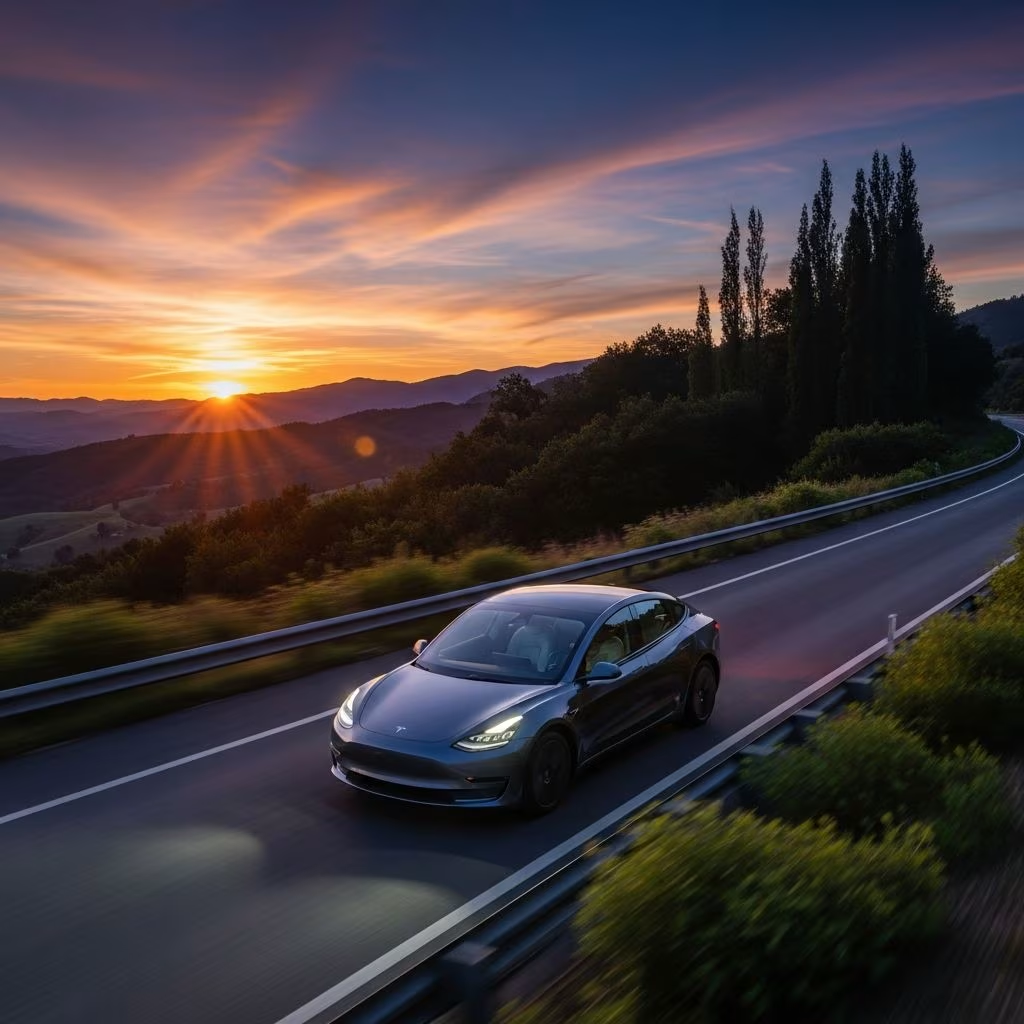
Driving efficiently isn’t just about getting from point A to B—it’s a powerful way to stretch your dollars further in an era of fluctuating fuel prices. By adopting smart habits, you can significantly boost your vehicle’s fuel economy, reduce wear and tear, and save hundreds of dollars annually on gas and maintenance. This comprehensive guide draws from proven strategies to help you drive smarter, covering everything from maintenance basics to advanced driving techniques. Whether you’re commuting daily or planning long road trips, these tips will help you maximize every gallon.
Understand Your Vehicle’s Fuel Efficiency Basics
Fuel efficiency, measured in miles per gallon (MPG), directly impacts your wallet. Small changes in how you drive and maintain your car can improve MPG by 10-30%, according to automotive experts. Start by knowing your car’s optimal performance range—most vehicles achieve peak efficiency between 50-60 mph. Exceeding this speed increases drag and burns more fuel exponentially.
- Track your MPG: Use your car’s dashboard computer or apps like Fuelly to monitor real-time efficiency and identify patterns.
- Know your baseline: Calculate current MPG by dividing miles driven by gallons used over a full tank.
Regularly reviewing these metrics turns driving into a game of optimization, where every improvement translates to real savings. For instance, improving from 20 MPG to 25 MPG on 12,000 annual miles saves about 96 gallons of gas yearly at $3.50 per gallon—over $330 in pocket.
Proper Maintenance for Peak Performance
A well-maintained vehicle runs more efficiently. Neglecting basics like tire pressure or oil changes can reduce MPG by up to 10%. Schedule monthly checks to ensure your car operates at its best.
| Maintenance Task | Frequency | Potential MPG Gain | Annual Savings Estimate |
|---|---|---|---|
| Check tire pressure | Monthly | 3-5% | $50-100 |
| Oil change | Every 3-5k miles | 1-4% | $30-80 |
| Air filter replacement | Every 12k miles | 5-10% | $70-150 |
| Wheel alignment | Yearly | 2-7% | $40-120 |
Maintain proper tire pressure as listed on the driver’s door sticker—underinflated tires create 1% MPG loss per 1 PSI below recommended. Clean or replace the air filter regularly; a dirty one restricts airflow, forcing the engine to work harder. Fresh oil reduces friction, ensuring smoother operation.
Smooth Acceleration and Braking Techniques
Aggressive driving guzzles gas. Jackrabbit starts and hard stops waste fuel through unnecessary engine strain and braking energy loss. Aim for gradual acceleration: reach cruising speed in 5-8 seconds.
- Accelerate gently to 50-60 mph for highway merging.
- Anticipate stops by easing off the gas early—coasting saves fuel.
- Avoid braking in stop-and-go traffic; maintain safe following distance.
Studies show smooth driving can improve city MPG by 15-20%. Practice in low-traffic areas: feel the engine’s ‘sweet spot’ where it hums efficiently without revving high.
Optimal Speed and Highway Driving
Speed is the biggest MPG killer. For every 5 mph over 50, fuel economy drops 7-10%. Cruise at 55-65 mph on highways for the sweet spot.
- Use cruise control on flat roads to maintain steady speed.
- Avoid tailgating; it forces frequent braking.
- Plan routes to minimize hills—downhill coasting recovers efficiency.
On long trips, this can mean 20% better MPG. Wind resistance doubles every 10 mph increment, so slower is smarter for savings.
Minimize Idling and Use Smart Engine Habits
Idling burns 0.5-1 gallon per hour. Turn off the engine for stops over 10 seconds—modern starters handle frequent use without harm.
- At drive-thrus or rail crossings, shut off.
- Warm up engines only 30 seconds; drive gently until operating temperature.
- Avoid short trips under 10 minutes—they don’t let the engine reach efficiency.
Combine errands into one trip to reduce cold starts, which use 20% more fuel.
Reduce Vehicle Weight and Drag
Every 100 lbs reduces MPG by 1-2%. Travel light: remove roof racks when unused (they cut MPG 10-25%), clear trunk clutter.
- Keep windows up at highway speeds—open ones create drag like a parachute.
- Use AC sparingly below 40 mph; open windows. Above, recirculate AC.
Streamlined driving pays off quickly; empty nesters removing kid gear often see instant MPG bumps.
Fuel Purchasing and Planning Strategies
Buy gas mid-week at high-volume stations for lowest prices. Use apps like GasBuddy for deals.
- Fill up in mornings when cooler—less evaporation loss.
- Track prices; avoid impulse fills.
- Loyalty programs and credit cards offer 3-5¢/gallon cashback.
Route planning via Google Maps or Waze avoids traffic, saving 10-15% fuel in congestion.
Advanced Tips for Maximum Savings
Hypermiling techniques: Draft safely behind trucks (maintain distance), pulse-and-glide (accelerate then coast). Caution: prioritize safety.
- Draft 10% MPG gain on highways.
- Shift manually to efficient RPMs (2000-3000).
For EVs/hybrids, precondition via app while plugged in to save battery.
Long-Term Habits for Lifelong Efficiency
Build routines: weekly tire checks, monthly MPG logs. Teach passengers these habits for family-wide savings. Over years, these compound—$500/year adds up to $5,000/decade.
Frequently Asked Questions (FAQs)
Q: How much can I save with efficient driving?
A: Drivers see 10-30% MPG improvement, saving $200-600/year on average for 12,000 miles at $3.50/gallon.
Q: Is cruise control always best?
A: Yes on flats/highways for steady speed; disengage on hills for manual control.
Q: Does premium gas improve efficiency?
A: Only for high-compression engines; regular suffices for most, saving 20-30¢/gallon.
Q: Are automatic transmissions less efficient?
A: Modern ones match manuals; focus on driving style over type.
Q: How do I handle winter efficiency drops?
A: Use winter tires sparingly, block heaters if extreme cold; expect 10-20% MPG dip.
References
- Fuel Economy: Driving More Efficiently — U.S. Department of Energy, Office of Energy Efficiency & Renewable Energy. 2024-06-15. https://www.fueleconomy.gov/feg/driveHabits.jsp
- Fuel Economy Tips — U.S. Environmental Protection Agency. 2025-01-10. https://www.epa.gov/greenvehicles/fuel-economy-tips
- Gasoline Consumption at Idle — U.S. Department of Energy. 2023-08-20. https://www.energy.gov/energysaver/reducing-fuel-use-idling
- Effects of Vehicle Weight on Fuel Economy — National Highway Traffic Safety Administration. 2024-03-12. https://www.nhtsa.gov/equipment/tires#fuel
- Driving Efficiency Research — AAA Foundation for Traffic Safety. 2024-11-05. https://aaafoundation.org/wp-content/uploads/2024/11/24-0567_EcoDriving_fs.pdf
This article is general information, not personal financial advice. Consider your own situation, or speak with a licensed adviser, before acting on it.


