

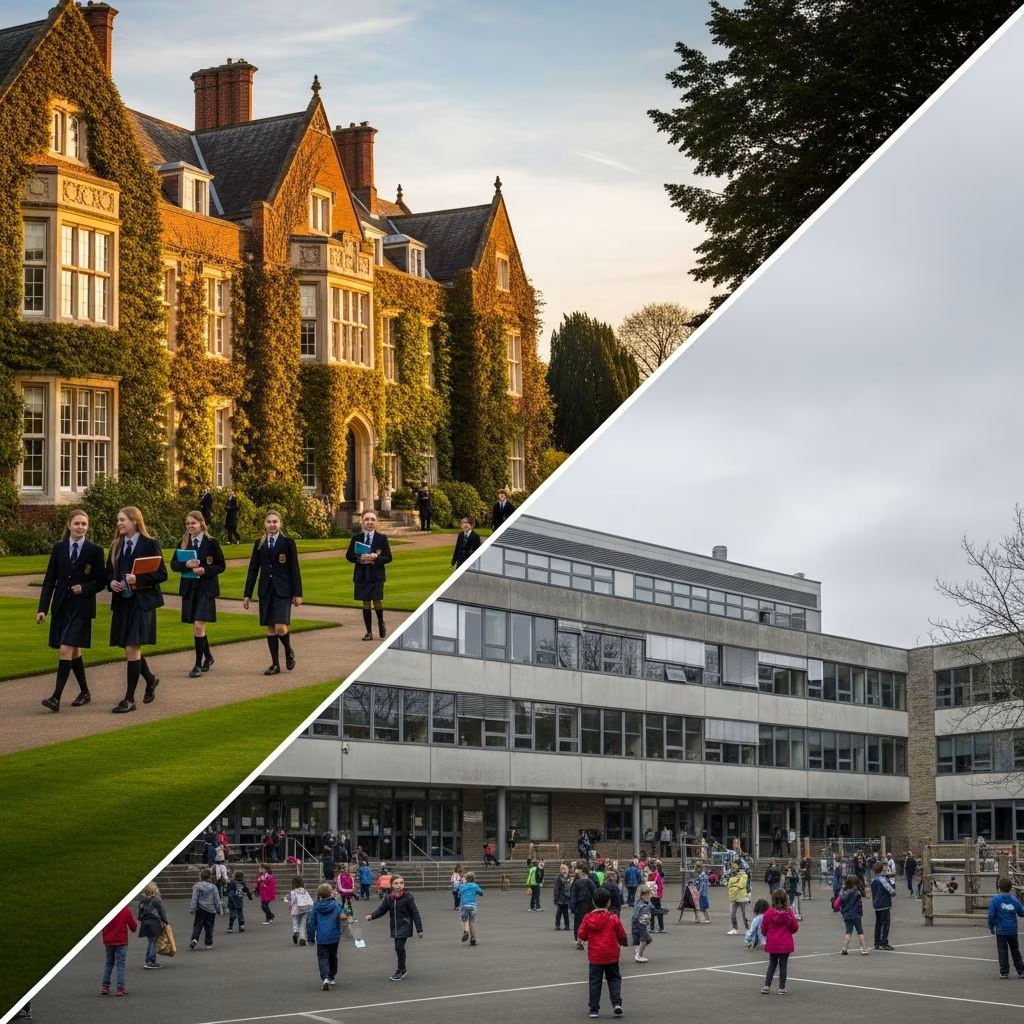
Choosing between private and public schools is a pivotal decision for parents aiming to provide the best education for their children. While public schools serve the majority of students and offer free access funded by taxes, private schools provide tailored environments that can better suit specific family needs. According to data from the National Center for Education Statistics, private schools often achieve higher graduation and college enrollment rates despite lower per-student spending in some cases, such as Catholic schools averaging $6,000-$12,000 per student compared to public schools’ $12,000. This article outlines seven key scenarios where private schools demonstrably outperform public ones, drawing from educational research and real-world considerations.
1. When Your Child Has a Special Gift
Gifted children often thrive in environments that challenge them beyond standard curricula. Public schools, constrained by standardized testing and large class sizes, may not adequately nurture exceptional talents in areas like mathematics, arts, or sciences. Private schools, particularly those specializing in gifted education, offer accelerated programs, advanced placement courses, and enrichment activities designed for high achievers.
For instance, many private institutions employ differentiated instruction, grouping students by ability rather than age. This allows a mathematically precocious 8-year-old to engage with algebra alongside peers at their level, preventing boredom and underachievement common in public settings. Research from the Brookings Institution highlights that private schools frequently attract high-achieving students, creating peer groups that foster excellence. Parents of gifted children report higher satisfaction with private options, where individualized acceleration plans are standard.
- Advanced curricula: Private schools often include STEM labs, debate clubs, and international baccalaureate programs unavailable in many public schools.
- Teacher expertise: Faculty with specialized training in gifted education provide mentorship tailored to unique abilities.
- Outcomes: Studies show private school attendees have higher SAT scores and college acceptance rates, benefiting gifted students disproportionately.
In contrast, public schools’ one-size-fits-all approach can lead to behavioral issues or disengagement for gifted learners, making private schools the superior choice here.
2. When Your Child Has a Special Need
Children with learning disabilities, autism spectrum disorders, or physical challenges require specialized support that public schools may struggle to deliver due to resource limitations and bureaucratic hurdles. Private schools specializing in special education offer smaller class sizes, dedicated therapists, and customized Individualized Education Programs (IEPs) that exceed public mandates.
Public schools must comply with the Individuals with Disabilities Education Act (IDEA), but implementation varies widely, often resulting in overwhelmed staff and generic accommodations. Private special needs schools provide one-on-one aides, sensory rooms, and behavioral interventions backed by board-certified specialists. A White Coat Investor analysis notes that public systems sometimes fail advanced or atypical learners, pushing families toward private alternatives.
| Aspect | Public Schools | Private Special Needs Schools |
|---|---|---|
| Class Size | 20-30 students | 6-12 students |
| Therapy Access | Limited, shared resources | Daily, on-site specialists |
| Customization | Basic IEP | Holistic, tech-integrated plans |
Families often find private placements yield measurable progress in social skills, academics, and independence, justifying the investment.
3. When Your Child Is Too Young
For preschoolers and kindergarteners aged 3-5, private schools emphasize play-based learning, emotional development, and low student-teacher ratios critical for early brain development. Public pre-K programs, where available, face funding shortages, larger groups, and less focus on socialization.
Private early childhood centers use Montessori or Reggio Emilia methods, fostering creativity and motor skills in nurturing settings. Research indicates smaller ratios (1:8 vs. public 1:20) correlate with better readiness for primary grades. This foundational stage sets lifelong learning trajectories, making private options ideal for tiny learners.
- Holistic focus: Emphasis on arts, music, and outdoor play over rote academics.
- Safety and care: Enhanced security and trained caregivers for separation anxiety.
- Parental involvement: Frequent updates and family-style events build strong foundations.
4. When You Aren’t in a Good School District
Residing in a low-performing district with high dropout rates, violence, or underfunding makes private schools a lifeline. Public school quality ties directly to local property taxes, leaving urban or rural families underserved.
Private schools transcend zip codes, offering safe havens with rigorous academics. Brookings data reveals private schools achieve better outcomes at lower costs, appealing for families unable to relocate to top districts. Rather than upsizing homes for better publics—costing $400K+ extra—private tuition provides access without moving.
Key benefits:
- Stable environments free from disruptions.
- College prep regardless of location.
- Financial math: Tuition often cheaper than district upgrades.
5. When You Want a Religious or Values-Based Education
Public schools maintain strict secularism, prohibiting religious instruction or moral frameworks aligned with family beliefs. Private religious schools integrate faith, ethics, and character education seamlessly into daily learning.
Catholic, Jewish, or evangelical privates report strong community bonds and moral grounding, with NAEP scores often surpassing publics by 10-20 points in key grades. Parents seeking biblical worldviews or service-oriented curricula find publics inadequate.
- Spiritual growth: Chapels, service projects, and faith-infused subjects.
- Peer influence: Like-minded families reinforce values.
- Long-term impact: Higher ethical outcomes and life satisfaction.
6. When Class Size and Attention Matter Most
Large public classes (25-35 students) dilute individual attention, hindering personalized feedback. Private schools average 12-18 students per class, enabling deeper engagement and customized pacing.
This ratio boosts academic gains, especially for struggling or excelling students. Studies affirm smaller settings improve test scores and graduation rates. For parents prioritizing teacher-student bonds, privates excel.
| Metric | Public Average | Private Average | Impact |
|---|---|---|---|
| Class Size | 28 | 15 | +20% engagement |
| Teacher Experience | 14 years | 18 years | Better mentorship |
7. When College and Career Prep Is the Priority
Private schools boast superior college placement, with counselors guiding applications and alumni networks opening doors. Publics vary widely, often lacking resources for top-tier prep.
Graduation rates exceed 95% in privates vs. 80% public national average, per NCES data. Rigorous curricula, internships, and test prep yield Ivy League admits and scholarships.
- Counseling: 1:50 ratio vs. public 1:500.
- Extracurriculars: Leadership clubs, robotics, mock trial.
- ROI: Higher earnings post-graduation.
Frequently Asked Questions (FAQs)
Q: Are private schools always better than public ones?
A: No, but in the seven scenarios outlined, they offer distinct advantages like specialized programs and smaller classes.
Q: How much do private schools cost?
A: Median $17,310 annually, varying by type; financial aid available for many.
Q: Do private schools improve college chances?
A: Yes, with higher enrollment rates and better preparation.
Q: Can public schools meet special needs?
A: Often limited by resources; privates provide superior customization.
Q: Is moving for better publics cheaper?
A: Not always—$520K in housing premiums over 13 years vs. targeted tuition.
References
- Public or Private School? It Shouldn’t Matter — Brookings Institution. 2014-06-12. https://www.brookings.edu/articles/public-or-private-school-it-shouldnt-matter/
- Is Private School Worth It? [Pros & Cons] — White Coat Investor. N/A. https://www.whitecoatinvestor.com/private-school-pro-con/
- 7 Times You Should Choose Private School Over Public — Wise Bread. N/A. https://www.wisebread.com/7-times-you-should-choose-private-school-over-public
- Are Private Schools Worth the Money They Demand? — Wise Bread. N/A. https://www.wisebread.com/are-private-schools-worth-the-money-they-demand
- Private Choices, Public Policy & Other People’s Children — School Finance 101. 2011-07-08. https://schoolfinance101.com/2011/07/08/private-choices-public-policy-other-peoples-children/
- Deciding Between Public and Private School — SageVest Kids. N/A. https://www.kidsfinancialeducation.com/deciding-between-public-and-private-school/
This article is general information, not personal financial advice. Consider your own situation, or speak with a licensed adviser, before acting on it.


