

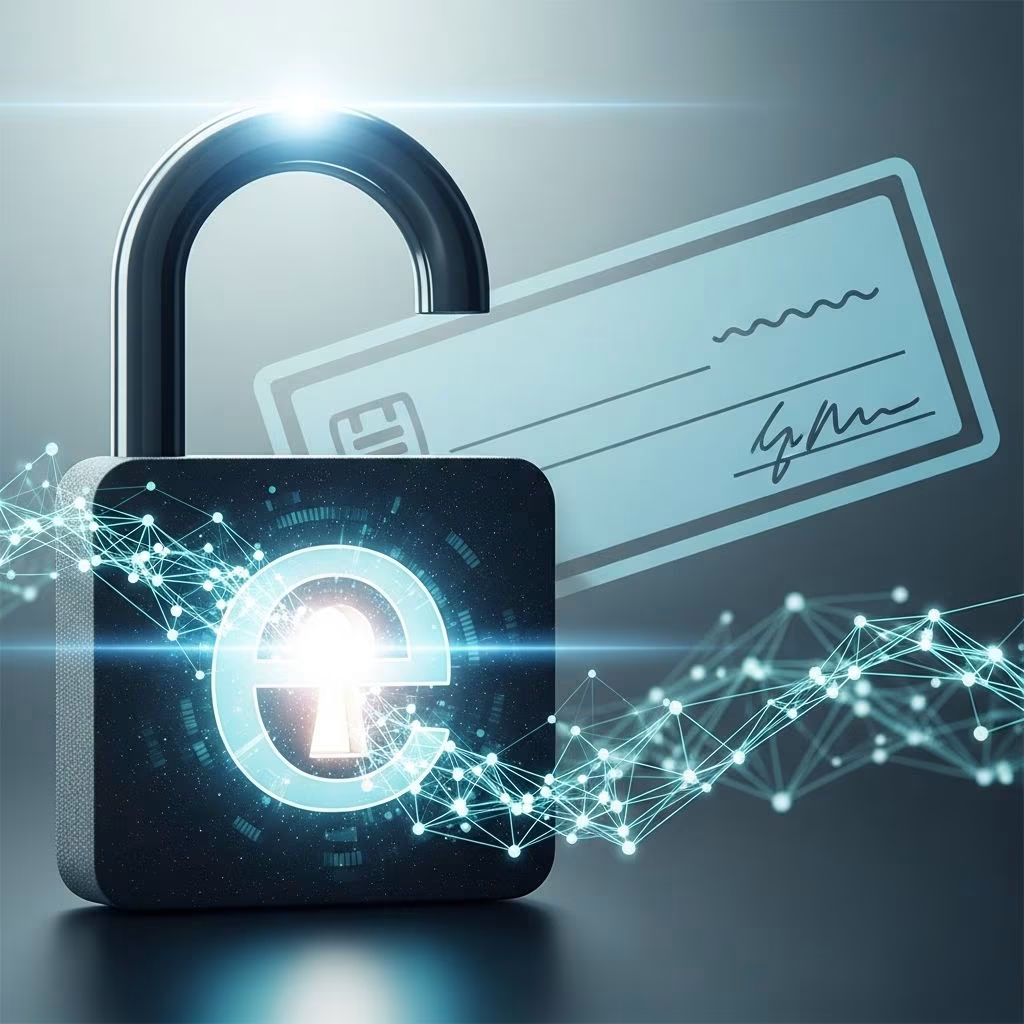
eChecks represent a seamless evolution in payment technology, functioning as electronic equivalents to paper checks while leveraging secure networks for fund transfers. Processed through the Automated Clearing House (ACH) system, they enable direct debits and credits between bank accounts without physical documents.
The Fundamentals of Electronic Checks
An **eCheck** digitizes the traditional check-writing process, where payers provide bank details digitally to authorize withdrawals. Unlike paper versions requiring mail or in-person delivery, eChecks transmit data instantly via online platforms or apps, debiting the sender’s account and crediting the recipient’s typically within days.
Key elements include the payer’s account number, routing number, payee details, and transaction amount. Authorization occurs through digital signatures or terms acceptance, ensuring legal binding before processing.
How eCheck Transactions Unfold Step by Step
The lifecycle of an eCheck begins with initiation and ends with settlement, involving multiple secure steps:
- Authorization: Payer enters banking info and approves via a merchant portal or bank app.
- Submission: Data routes to the ACH network, a U.S. financial backbone handling billions in transfers annually.
- Verification: Payer’s bank checks funds availability and account validity.
- Clearing: ACH coordinates debit from payer and credit to payee banks.
- Settlement: Funds finalize, often in 1-3 business days, with notifications sent.
This process mirrors paper check handling but eliminates delays from physical transport.
ACH Network: The Backbone Powering eChecks
The **Automated Clearing House (ACH)** is an electronic funds transfer system operated by Nacha, connecting over 10,000 U.S. institutions for batch-processed payments. eChecks are a subset of ACH transactions, distinct from real-time wires or card swipes.
| Aspect | eChecks | Traditional ACH |
|---|---|---|
| Purpose | Digital check mimicry | Broad transfers (payroll, bills) |
| Speed | 1-3 days | 1-3 days; same-day options |
| Initiation | Payer/merchant portal | Batch uploads |
| Cost | Lower fees | Variable by volume |
eChecks specifically emulate check-writing for familiarity in online scenarios.
Advantages Driving eCheck Adoption
eChecks offer compelling benefits for individuals and businesses alike.
- Cost Savings: Fees are fractions of card processing, ideal for high-volume payers.
- Speed and Efficiency: Faster than mailing checks, with automation reducing errors.
- Environmental Impact: Paperless, cutting waste from billions of annual checks.
- Record-Keeping: Digital trails simplify audits and disputes.
- Accessibility: Enables payments without cards or cash, broadening inclusion.
Businesses gain predictable cash flow via recurring setups, while consumers avoid checkbook hassles.
Robust Security Measures in eChecks
Security is paramount, with eChecks incorporating advanced protections. Transactions use end-to-end encryption, PCI-DSS compliance, and NACHA rules mandating verification.
- Digital signatures prevent tampering.
- Fraud detection flags duplicates or anomalies.
- Audit logs track every step for accountability.
Compared to paper checks vulnerable to theft, eChecks reduce risks through bank-level authentication. Payers should verify merchant legitimacy and monitor statements.
eChecks in Everyday Applications
Versatility defines eChecks across sectors:
- B2B Payments: Invoicing and supplier settlements.
- Consumer Use: Utility bills, rent, e-commerce.
- Non-Profits: Donations with recurring options.
- Government: Tax refunds, benefits via direct deposit.
Integration with platforms like QuickBooks or PayPal streamlines adoption.
Navigating Potential Drawbacks
While advantageous, eChecks have limitations. Processing lags behind instant methods like cards, and returns for insufficient funds incur fees. Reversals are possible within windows, requiring prompt monitoring. Not all vendors accept them, though adoption grows.
Setting Up eChecks: Practical Tips
For businesses, partner with ACH-enabled processors like Stripe or Worldpay for gateways. Consumers access via bank apps or biller sites.
- Choose compliant providers.
- Secure customer authorization explicitly.
- Implement fraud monitoring tools.
- Educate users on timelines.
Verify routing numbers using NACHA tools for accuracy.
Future Trends Shaping eChecks
Enhancements like same-day ACH and RTP networks promise faster eChecks. AI-driven fraud prevention and blockchain integration loom, boosting trust. With digital banking surging, eChecks will anchor contactless economies.
Frequently Asked Questions (FAQs)
What distinguishes eChecks from debit cards?
eChecks pull from bank accounts via ACH, avoiding card fees and limits, but take longer to process.
Are eChecks safe for large payments?
Yes, with encryption and verification, though limits apply; confirm provider security.
How long until funds appear?
Typically 1-3 business days, varying by banks.
Can eChecks be recurring?
Absolutely, ideal for subscriptions with one-time authorization.
What if there’s an error?
Contact your bank promptly; returns process in 2 days with evidence.
eChecks bridge traditional reliability with digital efficiency, poised for broader use as payments evolve.
References
- What Is an ACH eCheck? A Look at Electronic Check Payments — CoreBT. 2023. https://www.corebt.com/glossary/ach-echeck/
- eChecks: Guide to Understanding How Electronic Checks Work — PaySimple. 2023. https://paysimple.com/blog/how-do-echecks-work/
- eChecks: What It Is, How It Works, & How Long It Takes — Ramp. 2024. https://ramp.com/blog/what-are-echecks
- Electronic Check (E-Check): What It Is and How It Works — SoFi. 2024. https://www.sofi.com/learn/content/what-is-an-electronic-check-e-check/
- What is an electronic check (eCheck): How they work — PayPal. 2024. https://www.paypal.com/us/brc/article/what-is-an-echeck
- What is an eCheck, and how does it work? — Stripe. 2024. https://stripe.com/resources/more/what-is-an-echeck
- eChecks: What is an electronic check & how they work [2026] — QuickBooks Intuit. 2026. https://quickbooks.intuit.com/r/payments/what-is-an-echeck/
This article is general information, not personal financial advice. Consider your own situation, or speak with a licensed adviser, before acting on it.


