

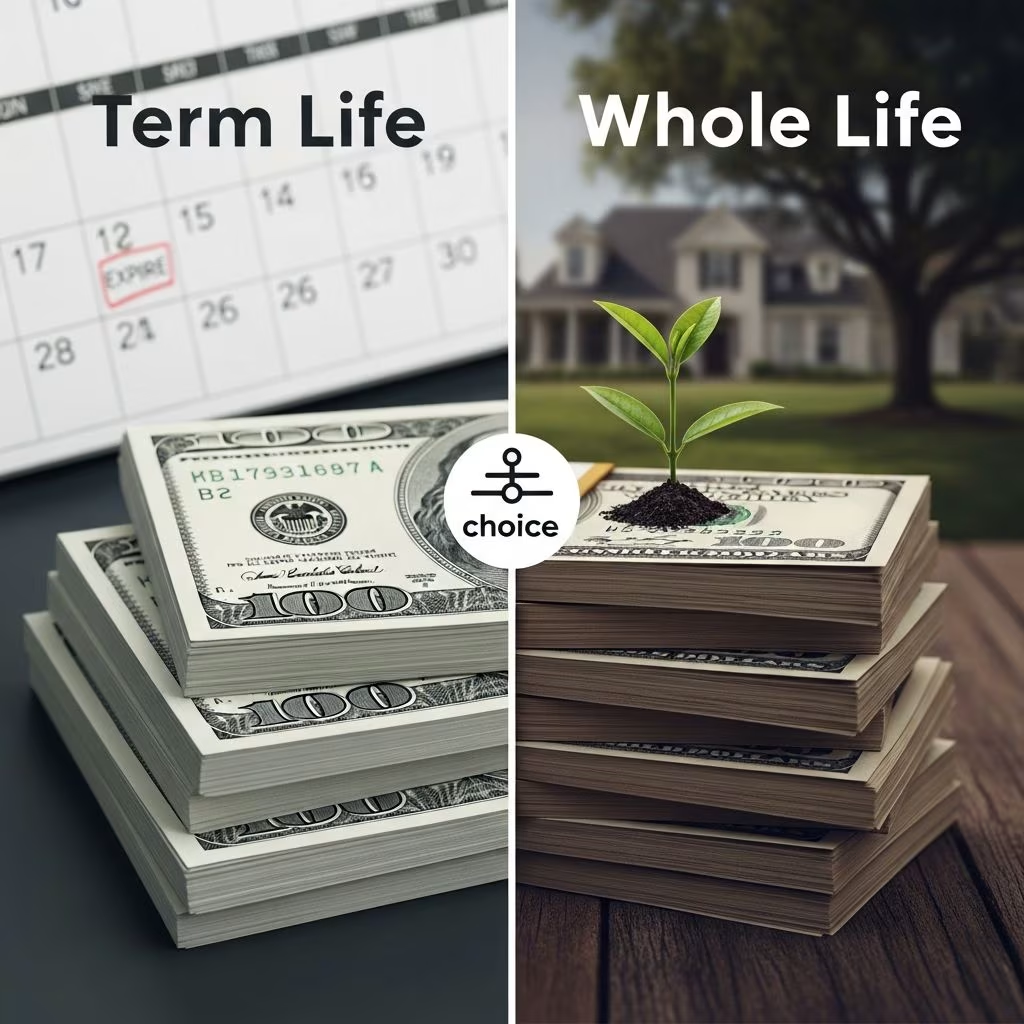
Life insurance is a cornerstone of financial planning, providing peace of mind by ensuring your loved ones are protected financially after your passing. But with options like term life insurance and whole life insurance, how do you choose? Term life offers affordable, temporary coverage for specific needs like mortgages or child-rearing years, while whole life provides lifelong protection with a cash value component that grows over time. This comprehensive guide breaks down the differences, pros, cons, costs, and strategies to help you decide which policy fits your life stage, budget, and goals.
What Is Term Life Insurance?
Term life insurance is the simplest and most affordable form of life insurance, providing coverage for a fixed period, typically 10, 20, or 30 years. If you die during the term while premiums are paid, your beneficiaries receive a death benefit tax-free to cover expenses like funeral costs, debts, or income replacement. Premiums remain level during the term but the policy expires without payout if you outlive it—no cash value accumulates, keeping costs low.
- Key Features: Temporary coverage (e.g., 10-30 years), low premiums, pure death benefit protection, often convertible to permanent policies.
- Ideal For: Young families, those with temporary debts (mortgage, student loans), or budget-conscious buyers needing high coverage amounts affordably.
For example, a healthy 30-year-old non-smoker might secure $500,000 in 20-year term coverage for under $25 monthly, making it accessible for most budgets. Policies usually require a medical exam, but simplified or guaranteed issue options exist for higher premiums.
What Is Whole Life Insurance?
Whole life insurance, a type of permanent insurance, covers you for your entire life (to age 99 or 121, policy-dependent) as long as premiums are paid. It combines a death benefit with a cash value account that grows tax-deferred at a guaranteed rate, funded by part of your premium. You can borrow against or withdraw from this cash value for loans, retirement, or emergencies, though unpaid loans reduce the death benefit.
- Key Features: Lifelong coverage, fixed premiums, cash value accumulation, dividends (if participating policy), can’t be canceled for health changes after contestability period.
- Ideal For: Estate planning, lifelong dependents (e.g., special needs child), high-net-worth individuals seeking tax-advantaged savings.
Whole life premiums are 5-15 times higher than term due to the savings element and guaranteed payout. A $250,000 policy for the same 30-year-old might cost $200+ monthly, but the cash value could reach tens of thousands over decades.
Term Life vs. Whole Life: Key Differences
The core distinctions boil down to duration, cost, and features. Here’s a side-by-side comparison:
| Feature | Term Life Insurance | Whole Life Insurance |
|---|---|---|
| Duration | 10-30 years (temporary) | Lifetime (permanent) |
| Premiums | Lower, fixed during term | Higher, fixed for life |
| Cash Value | No | Yes, grows tax-deferred |
| Death Benefit | Pays if death during term | Pays anytime, guaranteed |
| Flexibility | Convertible, renewable | Borrow/withdraw cash value |
| Cost Example (30-yr-old, $500K coverage) | $20-30/month | $200-400+/month |
Data synthesized from multiple insurers; actual quotes vary by health, age, gender. Term is straightforward insurance; whole life is insurance plus forced savings.
Pros and Cons of Term Life Insurance
Pros
- Affordability: Lowest premiums allow maximizing coverage (e.g., $1M+ for pennies daily).
- Simplicity: No investment component; predictable death benefit and premiums.
- High Coverage: Ideal for peak financial needs like raising kids or paying off home.
- Convertibility: Many policies let you switch to whole life without new medical exam.
Cons
- Temporary: Expires without refund; renewal rates skyrocket with age/health changes.
- No Cash Value: No living benefits or savings growth.
- Potential Gaps: Must reassess needs if you outlive the term.
Pros and Cons of Whole Life Insurance
Pros
- Lifelong Protection: Guaranteed payout whenever you die, no expiration worries.
- Cash Value Growth: Tax-deferred savings you can access via loans (often at low rates).
- Fixed Premiums: No increases; premiums stay level regardless of age/health.
- Dividends: Many policies pay dividends, boosting cash value or reducing costs.
Cons
- High Cost: Premiums strain budgets; opportunity cost vs. investing elsewhere.
- Complexity: Loans, surrenders affect benefits; less transparent returns.
- Lower Initial Coverage: High premiums limit death benefit amount.
- Inflexible: Hard to adjust; early lapse loses money.
Cost Comparison: Term vs. Whole Life
Term life wins on affordability: A 35-year-old female might pay $18/month for $500K/20-year term vs. $285/month for whole life. Over 30 years, term totals ~$6,500; whole life ~$100,000+, but includes ~$50,000 cash value. “Buy term and invest the difference” advocates argue investing premium savings in low-cost index funds often outperforms whole life’s conservative growth. However, whole life suits those prioritizing guarantees over market risk. Factors like age, health, gender, and smoker status dramatically impact quotes—shop multiple carriers.
Who Should Choose Term Life Insurance?
Opt for term if you’re in your 20s-50s with finite needs: covering a mortgage (20-year term), kids’ college (until youngest graduates), or temporary income gap. It’s perfect for debt protection without overpaying for unused lifelong coverage. Many ladder terms (e.g., 10-year + 20-year policies) to match decreasing needs.
Who Should Choose Whole Life Insurance?
Whole life fits estate planners, business owners needing buy-sell funding, or parents of special needs children requiring lifelong support. It’s valuable if you maxed retirement accounts and want tax-free inheritance or supplemental retirement income via cash value. High earners in high-tax brackets benefit from tax advantages.
Alternatives and Hybrid Strategies
- Buy Term + Invest: Get cheap term; invest premium difference in Roth IRA/401(k).
- Laddering: Multiple term policies with staggered ends for tapering coverage.
- Universal/Variable Life: Flexible premiums/cash growth, but riskier.
- No-Lapse Guarantee: Whole life variant with death benefit protection if minimum premiums paid.
How to Choose the Right Policy
- Assess Needs: Calculate coverage (10-15x income + debts); match duration to goals.
- Budget Check: Premiums <10-15% income; prioritize term if tight.
- Health Eval: Lock in rates young/healthy; consider riders (waivers, child coverage).
- Shop Around: Compare 3-5 quotes via independent agents or online tools.
- Review Annually: Life changes (marriage, kids) may require adjustments.
Consult a fee-only advisor to avoid commission bias.
Frequently Asked Questions (FAQs)
Q: Is term or whole life insurance cheaper?
A: Term life is significantly cheaper, often 5-15x less than whole life for the same death benefit, due to its temporary nature and lack of cash value.
Q: Can you convert term to whole life?
A: Yes, many term policies offer conversion options without a new medical exam, typically within the first 10 years.
Q: Does whole life insurance have cash value?
A: Yes, it builds tax-deferred cash value over time, accessible via loans or withdrawals, unlike term.
Q: What happens if you outlive term life?
A: Coverage ends without payout; renew (higher rates), convert, or let lapse—no cash returned.
Q: Is whole life worth it?
A: For lifelong needs and savings, yes; for temporary protection, term + investing often better.
Life insurance choice hinges on your timeline, finances, and risk tolerance. Term offers value and simplicity; whole provides permanence and utility. Run personalized quotes and align with holistic planning for optimal security.
References
- The differences between term and whole life insurance — TruStage. 2024. https://www.trustage.com/learn/life-insurance/term-vs-whole-life-insurance
- Term vs. Whole Life Insurance: Key Differences — Progressive. 2024. https://www.progressive.com/answers/term-vs-whole-life-insurance/
- Term vs. Whole Life Insurance: What’s the Difference? — Guardian Life. 2024. https://www.guardianlife.com/life-insurance/term-vs-whole
- Which Is Better: Term or Whole Life Insurance? — Experian. 2024. https://www.experian.com/blogs/ask-experian/should-i-get-term-or-whole-life-insurance/
- Term Life vs. Whole Life Insurance: Key Differences and How To Choose — NerdWallet. 2025-01-10. https://www.nerdwallet.com/insurance/life/learn/term-vs-whole-life-insurance
- Term vs. Whole Life Insurance: Making the Choice — Mutual of Omaha. 2024. https://www.mutualofomaha.com/advice/life-insurance/types-of-life-insurance/term-vs-whole-life-insurance-making-the-choice
- Term Life vs. Whole Life Insurance — Aflac. 2024. https://www.aflac.com/resources/life-insurance/term-vs-whole-life-insurance.aspx
This article is general information, not personal financial advice. Consider your own situation, or speak with a licensed adviser, before acting on it.


