

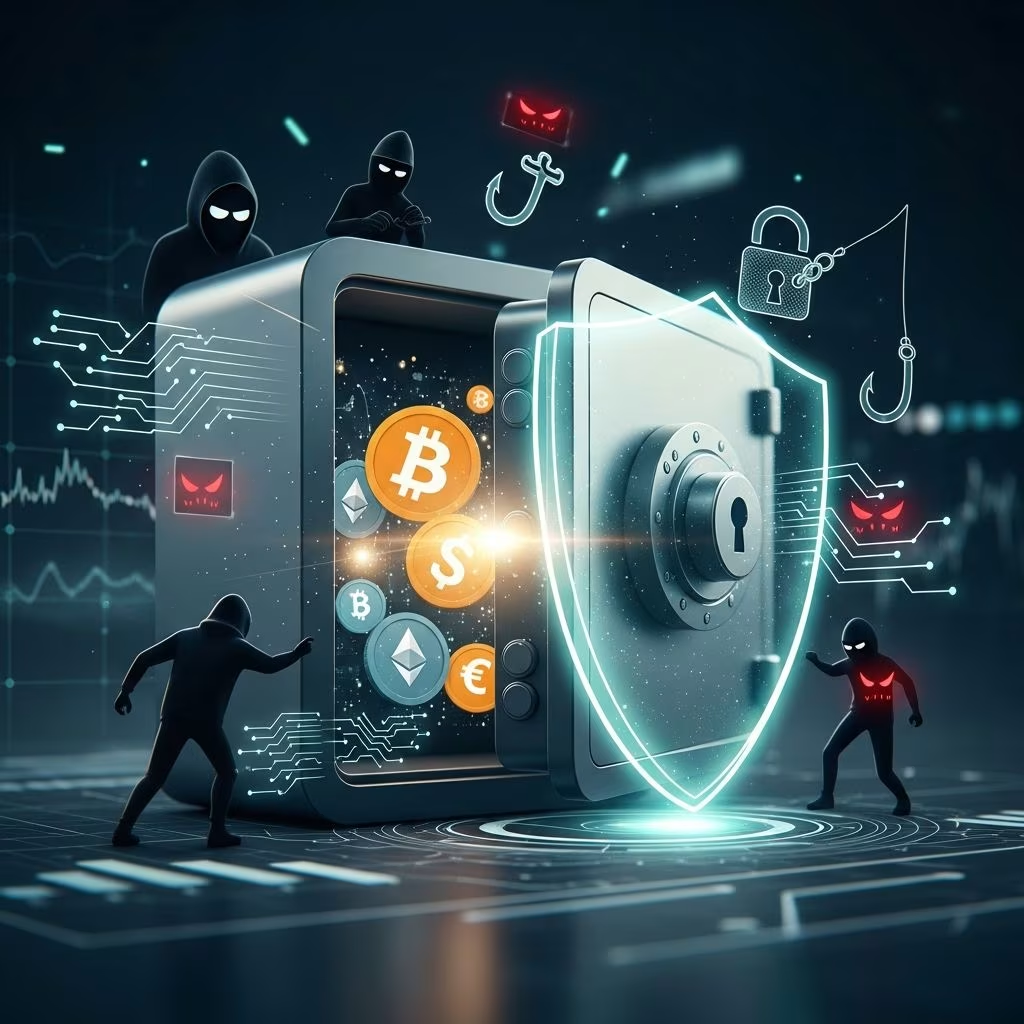
Your retirement account represents years of hard work and careful saving, making it a prime target for cybercriminals. With rising incidents of hacks draining savings, such as a Chicago couple losing $180,000 from their brokerage account, proactive protection is essential. This guide outlines comprehensive strategies to shield your funds from digital threats, drawing from expert recommendations and real-world cases.
Understand the Risks to Your Retirement Savings
Retirement accounts like 401(k)s, IRAs, and pensions are vulnerable due to their high value and sensitive personal data. Hackers use phishing, malware, and credential stuffing to gain access. The FBI reports scams like the Phantom Hacker targeting seniors, costing over $1 billion since 2024, often wiping out life savings through multi-phase impersonation schemes. In one case, a couple’s tastytrade account was breached via a New Jersey IP while they vacationed, resulting in rapid fraudulent trades and massive losses because optional two-factor authentication (2FA) wasn’t enabled.
Cybersecurity experts emphasize vigilance: employers and firms may not alert you to issues to avoid hacking risks, so personal monitoring is crucial. Identity theft can derail retirement plans by accessing accounts for unauthorized withdrawals or loans. Rising costs further strain savings, with 92% of retirees noting inflation’s impact, amplifying the need for security.
Create Strong, Unique Passwords
Weak passwords are a gateway for hacks. Use complex combinations of at least 12 characters, mixing uppercase, lowercase, numbers, and symbols. Avoid reusing passwords across sites—each account needs a unique one. Password managers like LastPass or Bitwarden generate and store them securely.
- Change passwords regularly, ideally every 3-6 months.
- Never share passwords or write them down insecurely.
- As Chris Pirillo quipped, “Passwords are like underwear: don’t let people see it, change it very often, and you shouldn’t share it with strangers.”
Enable password hints only if obscure, and test recovery options beforehand.
Enable Multi-Factor Authentication Everywhere
Multi-factor authentication (MFA) or two-factor authentication (2FA) adds a second verification layer beyond passwords, drastically reducing breach risks. In the tastytrade hack, the firm blamed the lack of optional 2FA, reimbursing only half the $180,000 loss. Cybersecurity expert Nicole Zhang advocates mandatory MFA, preferring biometrics like fingerprints or voice over SMS codes, which are vulnerable to SIM swapping.
- Activate 2FA on all retirement portals, email, and banking apps.
- Use authenticator apps (e.g., Google Authenticator) generating time-based codes.
- Avoid SMS if possible; opt for app-based or hardware keys like YubiKey.
Firms like Vanguard and Fidelity mandate or strongly recommend it—check your provider’s settings immediately.
Monitor Your Accounts Regularly
Daily or weekly logins catch issues early. Set up alerts for logins, withdrawals, or trades. The Pension Rights Center urges active monitoring since firms avoid email alerts. Review statements quarterly for anomalies.
| Monitoring Frequency | Actions | Why It Matters |
|---|---|---|
| Daily | Check balances, recent activity | Spot unauthorized logins instantly |
| Weekly | Review transactions, alerts | Detect subtle fraud patterns |
| Monthly | Full statement audit | Ensure contributions/withdrawals match |
| Quarterly | Verify allocations, fees | Prevent long-term drift or errors |
Report suspicious activity to your provider and authorities like the FBI’s IC3 immediately.
Beware of Phishing and Social Engineering
Scammers impersonate banks, tech support, or government officials. The FBI’s Phantom Hacker Scam starts with fake tech support granting remote access, escalating to “moving funds” via wire or crypto. Never click unsolicited links or share info over phone/email.
- Verify caller ID independently; call official numbers.
- Use bookmarks for account access, not search engines.
- Recognize red flags: urgency, threats, unsolicited help offers.
Seniors posting interests like Corvette collecting on social media attract AI-tailored scams. Educate family via dinner discussions.
Secure Your Devices and Networks
Hacks often start at home. Keep OS, browsers, and antivirus updated. Use VPNs on public Wi-Fi.
- Install reputable antivirus (e.g., Malwarebytes, Bitdefender).
- Enable firewalls; avoid free, risky Wi-Fi.
- Log out after sessions; use incognito for sensitive tasks.
Regular scans detect malware granting remote access, as in Phantom Hacker cases.
Freeze Your Credit and Use Fraud Alerts
Identity theft enables fraudulent accounts. Contact Equifax, Experian, TransUnion to freeze credit—free and quick.
- Place extended fraud alerts (7 years).
- Monitor credit reports annually at AnnualCreditReport.com.
- Consider identity theft protection services sparingly.
This blocks new accounts in your name, crucial for retirement-linked fraud.
Choose Reputable Providers with Strong Security
Opt for firms with SIPC/FDIC insurance, robust security, and responsive support. Research via FINRA BrokerCheck.
- Prioritize those mandating 2FA.
- Avoid unproven apps or high-risk brokers.
- Diversify across institutions.
In the tastytrade incident, poor policy response compounded losses.
Backup Important Documents Securely
Store statements offline or encrypted cloud (e.g., Google Drive with 2FA). Use password-protected PDFs.
- Shred physical docs.
- Maintain beneficiary/death benefit records.
Prepare for recovery with account numbers noted securely.
Educate Yourself and Family on Scams
Stay informed via FTC.gov, FBI alerts. Discuss risks with loved ones—scams prey on trust.
Resources: Pension Rights Center tips; FBI IC3 for reporting.
Frequently Asked Questions (FAQs)
What should I do if I suspect a hack?
Immediately change passwords, enable 2FA, contact your provider, freeze credit, and report to police/FBI IC3. Act fast—recovery odds drop after days.
Is 2FA foolproof?
No, but it blocks 99% of automated attacks. Use app-based over SMS.
How often should I check statements?
Weekly minimum; daily for high-risk periods like vacations.
Can I recover hacked funds?
Possible if reported immediately (10-15% chance), but rare otherwise. Brokers may reimburse partially.
Are retirement apps safe?
Only from reputable sources with encryption and 2FA. Read reviews, check security policies.
Conclusion: Stay Vigilant for a Secure Retirement
Implementing these steps minimizes risks, ensuring your nest egg endures. Security is ongoing—review annually and adapt to new threats.
References
- Protecting Your Retirement Account Against Cybersecurity Threats — Pension Rights Center. Accessed 2026. https://pensionrights.org/resource/protecting-your-retirement-account-against-cybersecurity-threats/
- Couple’s retirement account hacked, costing them $180000 — CBS Chicago (YouTube). 2025-11-07. https://www.youtube.com/watch?v=UdO4hDH7sCk
- FBI Warns Seniors: Devastating Cyber Scam Wipes Out Savings — FOX 7 Austin. 2025-07-15 (updated). https://www.fox7austin.com/news/fbi-warns-seniors-about-devastating-cyber-scam-wipes-out-life-savings
- Identity Theft in Retirement: How to Protect Yourself — Blackbridge. Accessed 2026. https://www.blackbridgenc.com/blog-01/identity-theft-retirement-how-protect-yourself
This article is general information, not personal financial advice. Consider your own situation, or speak with a licensed adviser, before acting on it.


