

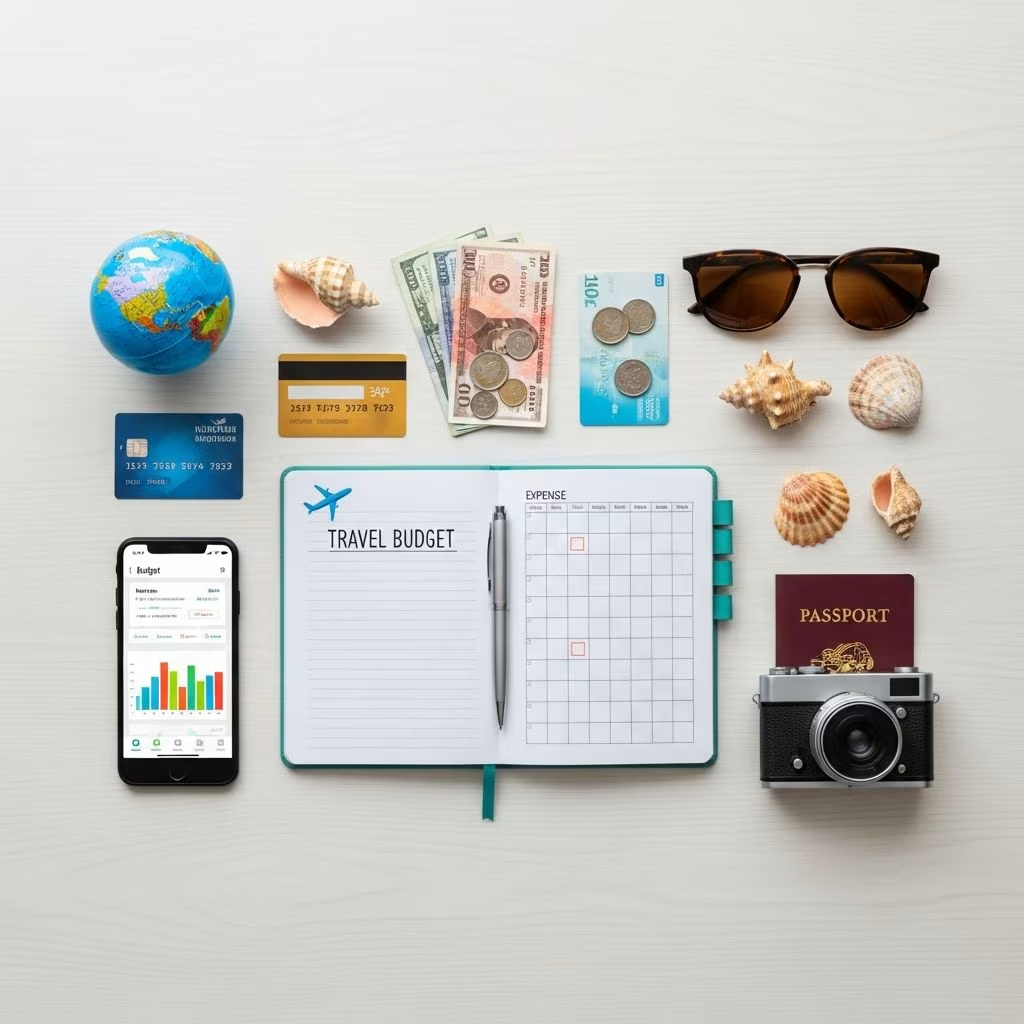
Vacations provide essential breaks from daily routines, but poor planning can lead to financial stress or debt. This guide outlines a comprehensive approach to researching costs, building savings, cutting unnecessary expenses, and tracking spending in real-time to enjoy your trip affordably.
Research Your Destination Thoroughly
Start by gathering detailed cost data for your destination to set realistic expectations. Average hotel rates vary widely; for example, a mid-range stay in a major city might cost $150–$300 per night, while budget options start at $80. Factor in transportation like flights, gas, or trains—budget airlines can offer fares under $100 for short domestic hops, but add fees for bags and seats.
Estimate daily meals at $50–$100 per person, depending on dining choices. Activities such as tours or attractions often range from $20–$100 each. Don’t overlook incidentals: parking fees ($20–$50/day), tolls, souvenirs ($50–$200 total), or pet boarding ($30–$60/day). Use tools like Google Flights, Kayak, or Booking.com for averages, then calculate a total budget and divide by weeks or months left to determine weekly savings targets.
- Hotels: Check sites like Hotels.com for seasonal rates.
- Transport: Compare airlines, trains, and rideshares.
- Food: Research grocery costs vs. restaurant prices.
- Activities: Prioritize free parks or low-cost museums.
This research prevents sticker shock and ensures your vacation aligns with your finances.
Avoid Financing with Debt
Debt turns vacations into long-term burdens; credit card interest can double costs if unpaid. Experts warn against charging trips unless you have a full repayment plan within the grace period. For instance, a $2,000 trip at 20% APR accrues $400 in interest over a year.
Instead, pay cash or use savings. John Rosenfeld from Citizens Bank emphasizes: “A credit card is convenient, but unpaid balances make vacations memorable for the wrong reasons.” If travel rewards cards help, pay off monthly; otherwise, stick to debit or prepaid options to enforce discipline.
Open a Dedicated Vacation Savings Account
Separate your vacation fund from everyday checking to resist temptation. Online high-yield savings accounts offer 4–5% APY, earning extra on your stash—$1,000 at 5% yields $50 annually.
Automate transfers post-paycheck: even $25 weekly builds $300 in 12 weeks for gas or meals. Andrea Woroch recommends this for painless saving: “You’ll have cash without realizing it.” Set alerts for progress and visualize your goal, like a European itinerary, to stay motivated.
| Monthly Savings | 6 Months | 12 Months |
|---|---|---|
| $100 | $600 | $1,200 |
| $200 | $1,200 | $2,400 |
| $500 | $3,000 | $6,000 |
This table shows how consistent saving scales for bigger trips.
Cut Back on Non-Essential Spending
Redirect luxury outflows to your fund. Skip house cleaning ($100/month), car washes ($20/week), manicures ($50), or grooming ($40) for 3–6 months to free $200–$500 monthly. Woroch notes: “Cutting luxuries speeds savings.”
Track a week of expenses to identify leaks like daily coffee ($5×7=$35). One saver cut costs drastically, saving $12,000 in six months for travel. A U.K. extreme saved $27,000 yearly by minimizing everything. Aim for 20–30% lifestyle cuts without sacrificing joy.
- Coffee shop → Home brew: Save $100/month.
- Dining out → Cooking: Save $200/month.
- Subscriptions → Pause: Save $50/month.
Leverage Local Deals and Freebies
Stretch your budget with destination-specific discounts. Sign up for Groupon, LivingSocial, or Amazon Local pre-trip for 50–70% off activities, meals, or spas. Regina Novickis suggests: “Tap local deals for cheaper experiences.”
Prioritize free attractions: beaches, hikes, markets. In Europe, Ryanair flights beat trains ($40 vs. $136). Rent motorbikes in Asia ($5/day + gas) over $40 tours. Bargain rentals—negotiate from $25 to $15/day saves $120 on 12 days.
Track Expenses in Real-Time
Mobile banking apps are essential: monitor balances, transfer funds, find ATMs instantly. Swipe debit for meals/gas/attractions; daily checks prevent overruns.
Put daily cash in your wallet only—empty means done. Log everything: apps like Trail Wallet or Excel categorize spends (food: $60, fun: $40).
- Calculate daily budget (total ÷ days).
- Cash envelope per category.
- App entry after each purchase.
- Evening review/adjust.
Use Prepaid Cards to Enforce Limits
Load exact budget onto a prepaid debit like Green Dot—no overdrafts possible. Glinda Bridgforth advises: “Allocate vacation funds to prepaid to stay within limits.” Avoid credit/debit temptations; prepaids cap spending automatically.
Bonus: Some offer cashback on travel. Track via app for receipts and balances.
Cook and Limit Movement to Save More
Self-catering slashes food costs: groceries for $20/day vs. $60 eating out. Markets provide cheap, authentic meals. Minimize transit—fewer cities reduce flights/buses.
Shop rentals competitively; split motorbike costs with partners. Leave splurge buffer (10% of budget) for must-dos without guilt.
Frequently Asked Questions (FAQs)
Q: How far in advance should I start saving for vacation?
A: 6–12 months for big trips; set monthly targets based on total costs.
Q: What’s the best app for tracking vacation expenses?
A: TravelSpend, Trail Wallet, or bank apps like Mint for real-time categorization.
Q: Can I use credit card points without debt?
A: Yes, if paid off monthly; otherwise, stick to cash/prepaid.
Q: How do I handle unexpected costs?
A: Build a 10–15% buffer; prioritize and adjust daily spends.
Q: Are budget airlines reliable for savings?
A: Often yes, like Ryanair at $40 vs. $136 trains, but watch fees.
Final Tips for Success
Set specific goals (e.g., Paris in 9 months) for motivation. Review weekly, celebrate milestones. Frugal choices like cooking and deals enable rich experiences without debt. Your vacation awaits—budget smart, travel happy.
References
- 7 Easy Ways to Budget for Summer Vacation — Wise Bread. 2015-05-15. https://www.wisebread.com/7-easy-ways-to-budget-for-summer-vacation
- The Easy Way to Save Up a Big Travel Budget — Wise Bread. 2014-08-20. https://www.wisebread.com/the-easy-way-to-save-up-a-big-travel-budget
- 7 Fool-Proof Ways to Stay Within Your Travel Budget — Wise Bread. 2016-03-10. https://www.wisebread.com/7-fool-proof-ways-to-stay-within-your-travel-budget
- Consumer Financial Protection Bureau: Prepaid Cards — CFPB.gov. 2024-01-15. https://www.consumerfinance.gov/consumer-tools/prepaid-cards/
- Federal Reserve: High-Yield Savings Accounts — FederalReserve.gov. 2025-06-01. https://www.federalreserve.gov/publications.htm
This article is general information, not personal financial advice. Consider your own situation, or speak with a licensed adviser, before acting on it.


