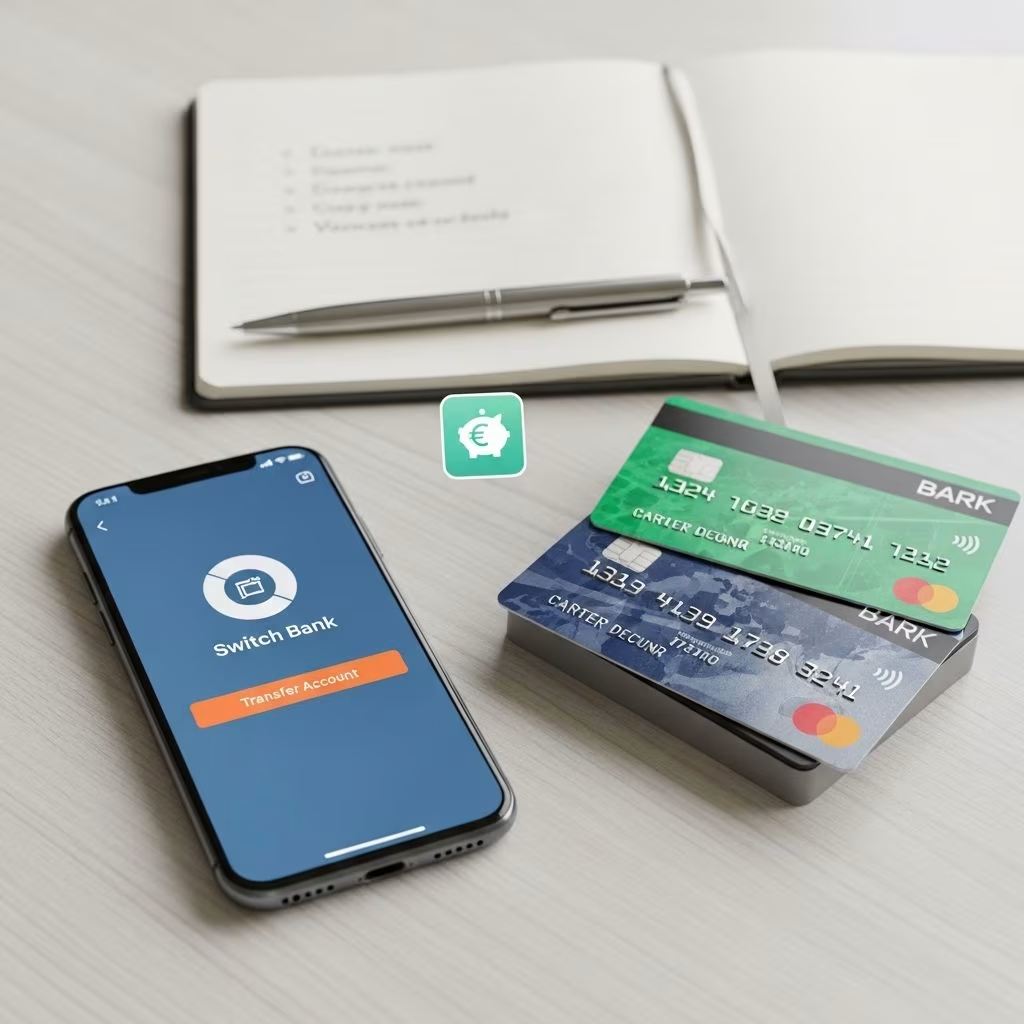
Switching banks can save you money on fees, unlock better interest rates, and provide superior online tools, but it requires careful planning to avoid disruptions. Most people complete the process in less than a week using checklists and switch kits provided by banks. This guide mirrors proven steps from financial experts, ensuring you cover every detail from research to final closure.
Why Switch Banks?
Your current bank might charge high fees, offer low interest on savings, or lack robust mobile apps. Common triggers include excessive overdraft charges, poor customer service, or simply finding better perks like sign-up bonuses. Research shows consumers who switch often reduce costs by hundreds annually through free checking and higher yields. Before starting, evaluate your needs: Do you prioritize branches, online access, or rewards?
- Fee avoidance: Escape monthly maintenance or ATM fees.
- Better rates: Seek higher APYs on savings, currently averaging under 0.5% at big banks but up to 5% at online ones.
- Convenience: Choose banks with seamless bill pay and 24/7 support.
- Bonuses: Many offer $200–$500 for new accounts, but read terms.
Step 1: Research and Choose Your New Bank
Start by comparing banks or credit unions. Use sites like Bankrate or NerdWallet for rates, but verify directly on bank websites. Prioritize FDIC-insured institutions. Consider online-only banks for top rates, but weigh access to physical branches if needed.
| Bank Type | Pros | Cons | Best For |
|---|---|---|---|
| Big National Banks | Widespread ATMs, branches | High fees, low rates | Branch access |
| Credit Unions | Member-owned, low fees | Membership required | Local service |
| Online Banks | High yields, no fees | No branches | Digital users |
List must-haves: free checking, no minimums, mobile deposit. Check reviews on Trustpilot or BBB. Credit unions often beat banks on service. Aim for institutions with switch kits—pre-made checklists for transfers.
Step 2: Open Your New Account
Never close your old account first. Open the new one online or in-branch while keeping the old active for continuity. You’ll need:
- Government-issued ID (driver’s license, passport).
- Social Security number.
- Proof of address (utility bill).
- Initial deposit ($25–$100 typical).
Activate online banking, mobile app, and bill pay immediately. Set up alerts for transactions. If eligible, claim any welcome bonus by meeting direct deposit requirements. This step takes 15–30 minutes online.
Step 3: Identify and Update Direct Deposits and Automatic Payments
This is critical—missed updates lead to overdrafts or late fees. Review 12 months of statements from your old account to catch everything, including rare ones like annual subscriptions.
- List all incoming: Paychecks, Social Security, refunds. Contact HR or providers with new routing/account numbers (9-digit routing, 10–12 digit account).
- List all outgoing: Utilities, loans, Netflix, gym. Log into each payee site to update.
- Prioritize: Change high-risk items first (rent, mortgage).
Many banks provide switch kits with forms for employers. Expect 1–3 pay cycles for direct deposits to fully switch. Pro tip: Set calendar reminders for semi-annual bills.
Step 4: Transfer Your Funds
Move balances after updates begin flowing to the new account. Leave $100–$500 in the old to cover stragglers. Methods include:
- ACH transfer: Free, 1–3 days via app.
- Wire: Fast but $25–$50 fee.
- Check: Write to self, deposit.
- Cashier’s check: Secure for large sums.
Avoid overdrafts by monitoring daily. Online banks like Ally or Capital One excel here with instant transfers.
Step 5: Monitor Both Accounts
Run parallel for 2–4 weeks. Check daily for missed items.
- Verify deposits hit new account.
- Confirm payments process correctly.
- Download all old statements before closure.
Redirect any strays manually. This overlap prevents 99% of issues.
Step 6: Close Your Old Account
Only after 30+ days of clean activity. Visit branch or call for closure. Request:
- Final statement.
- Written confirmation of closure.
- No auto-reopen for overdrafts.
Get remaining funds via check or transfer. Shred old checks/debit cards.
Common Mistakes to Avoid
Pitfalls derail switches:
- Closing too soon: Leaves you vulnerable to fees.
- Missing infrequent payments: Review full-year statements.
- Ignoring bonuses’ fine print: Direct deposit minimums.
- Forgetting linked accounts: Investments, loans.
- Not downloading records: Lose tax/history access.
Pro Tips for a Smooth Switch
- Use bank switch kits.
- Switch mid-month to catch bills.
- Notify IRS for tax refunds.
- Consider credit unions for perks.
- Track via spreadsheet checklist.
Time estimate: 4–7 days active work, 2–4 weeks monitoring.
Frequently Asked Questions (FAQs)
Q: How long does switching banks take?
A: Core steps under a week, but monitor 2–4 weeks for safety.
Q: Will I lose money or incur fees?
A: No, if planned. Avoid early closure penalties by leaving buffer funds.
Q: Can I switch online-only banks?
A: Yes, but ensure app suits you. Read fine print on access/fees.
Q: What if I miss a payment?
A: Keep old account open briefly; manually pay from new.
Q: Do credit unions require membership?
A: Often yes, but easy via donation or location.
Final Thoughts
Switching empowers better finances. With organization, it’s low-stress and rewarding. New banks often assist fully. Start today for tomorrow’s savings.
References
- How to Switch Banks – Step-by-Step Guide — Money Fit. 2023. https://www.moneyfit.org/how-to-guides/banking/how-to-switch-banks/
- Switch to a Better Bank in 5 Easy Steps — Wise Bread. 2022-05-15. https://www.wisebread.com/switch-to-a-better-bank-in-5-easy-steps
- 5 Steps to Help You Switch Banks — SouthEast Bank. 2024. https://www.southeastbank.com/knowledge-hub/money-management/banking/5-steps-to-help-you-switch-banks/
- Your Easy, 3-Step Guide to Finally Switching Banks — White Rose Credit Union. 2023. https://www.whiterosecu.com/blog/your-easy-3-step-guide-to-finally-switching-banks/
- How To Switch Banks, Explained – Step-By-Step Guide — YouTube (The Financial Diet). 2023-08-10. https://www.youtube.com/watch?v=DOR2dWX6NyU
This article is general information, not personal financial advice. Consider your own situation, or speak with a licensed adviser, before acting on it.