

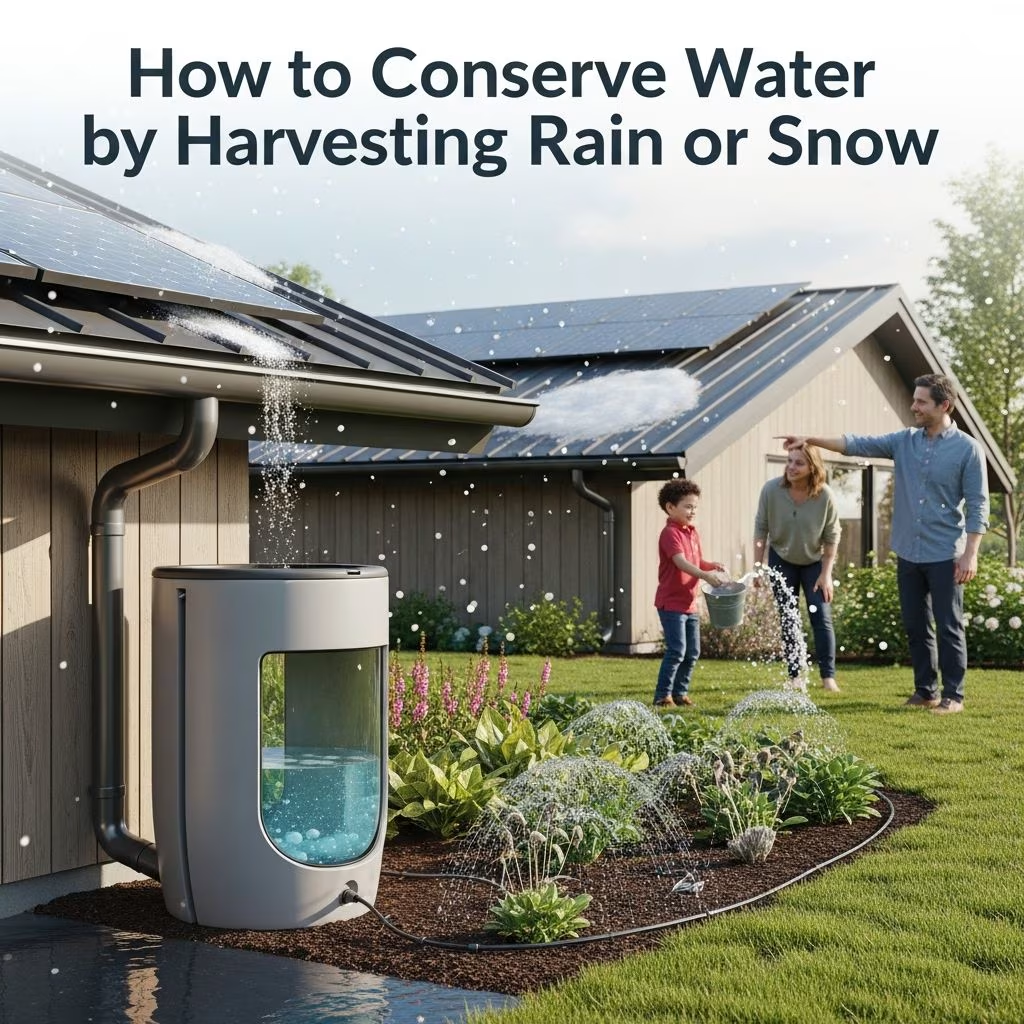
Water conservation is essential in today’s world of increasing droughts and rising utility bills. Harvesting rain and snow provides a free, sustainable alternative to municipal water supplies, capturing precipitation for household, garden, and livestock use. This practice, known as water harvesting, reallocates surplus runoff to areas of need, boosting availability during shortages.
Why Harvest Rain or Snow?
Traditional water sources like wells or city supplies can be unreliable or expensive. Rainwater harvesting turns rooftops into collection points, while snow harvesting stores winter melt for summer use. These methods reduce dependency on grid water, lower bills by up to 30-50% for irrigation, and mitigate flood risks by managing runoff. Globally, water harvesting technologies have proven effective in arid regions, increasing crop yields and groundwater recharge.
Benefits include environmental gains like reduced erosion and pollution from stormwater runoff, plus economic savings on water and sewage fees. In the U.S., households using rain barrels report significant reductions in summer water use. For off-grid living, harvested water ensures self-sufficiency.
Rainwater Harvesting Basics
Rainwater harvesting involves three core components: a catchment area (roofs or pavements), conveyance (gutters and pipes), and storage (barrels or tanks). The goal is to capture, store, and reuse precipitation efficiently.
Choosing Your Catchment Area
Roofs are ideal catchments due to their large surface area and minimal soil infiltration. Metal or tile roofs work best; avoid asphalt shingles if using for potable water due to potential contaminants. Calculate potential yield: a 1,000 sq ft roof in 1 inch of rain yields about 620 gallons.
- Assess roof material: Clean, non-toxic surfaces maximize purity.
- Measure area: Multiply by rainfall depth and 0.623 for gallons per sq ft per inch.
- Consider location: Sloped roofs direct flow better.
Setting Up Gutters and Downspouts
Ensure gutters are debris-free. Install first-flush diverters to discard initial dirty runoff, then direct clean water to storage. Leaf screens prevent clogs.
- Clean gutters annually.
- Add screens or guards.
- Use diverters: PVC pipes with ball valves work simply.
Selecting Storage Solutions
Rain barrels (55-gallon drums) suit beginners; larger cisterns (1,000+ gallons) for serious users. Place on level gravel beds to prevent sinking. Overflow pipes direct excess to gardens or drains.
| Type | Capacity | Cost | Best For |
|---|---|---|---|
| Plastic Barrel | 55 gal | $50-100 | Small gardens |
| Metal Drum | 55-275 gal | $75-200 | Medium use |
| Cistern | 1,000+ gal | $1,000+ | Large properties |
UV-resistant materials prevent algae; spigots allow easy access.
Snow Harvesting Techniques
In snowy regions, harvesting meltwater extends supply. Snow acts as a natural reservoir, slowly releasing water as temperatures rise.
Building Snow Catchment Areas
Create packed snow pads near homes using tarps or plywood frames. Plow driveways onto these for collection. Insulate with straw to slow melt and reduce freezing.
- Tarp-lined pits: Line with plastic, pile snow atop.
- Barrel stacking: Fill barrels layer-by-layer as snow falls.
- Melt channels: Direct melt into barrels via sloped boards.
Managing Snowmelt Storage
Snow yields less volume than rain (about 10:1 ratio), so plan accordingly. Filter melt through gravel to remove debris. Store in insulated tanks to prevent refreezing.
Filtration and Treatment
Untreated rainwater suits irrigation; potable use requires purification. Basic filters: gravel, sand, charcoal. Advanced: UV lights or chlorination.
- Screen filters: Mesh over inlets blocks leaves.
- Slow sand filters: Biological layer purifies naturally.
- Boiling/UV: Kills pathogens for drinking.
Test water quality annually, especially first-flush discards reduce contaminants by 90%.
Using Harvested Water
Garden and Lawn Irrigation
Drip systems or soaker hoses deliver water efficiently, reducing evaporation. Use for veggies, flowers, and trees; harvested water is soft and ideal for plants.
Household Applications
Flush toilets, wash clothes, or top off cisterns. In dry climates, it cuts bills dramatically.
Livestock and Domestic Animals
Clean, harvested water prevents mineral buildup in troughs.
Advanced Systems
Scale up with rooftop cisterns, underground tanks, or swales. Integrate with solar pumps for automation. For industrial scales, analytical methods like sequent peak algorithms size storage optimally.
Legal and Safety Considerations
Check local laws: Some U.S. states restrict collection; most allow non-potable use. Position barrels away from foundations to avoid mosquito breeding—add screens and BTI pucks.
Maintenance Tips
- Winterize: Drain and store barrels.
- Clean quarterly: Scrub with vinegar.
- Monitor levels: Overflow management prevents waste.
Frequently Asked Questions (FAQs)
Q: Is harvested rainwater safe to drink?
A: With proper first-flush, filtration, and disinfection (boiling or UV), yes. Test regularly for contaminants.
Q: How much rain do I need for viability?
A: At least 20-30 inches annually; calculate based on roof size and demand.
Q: Can I harvest snow in urban areas?
A: Yes, using clean surfaces; avoid salted roads.
Q: What’s the ROI on rain barrels?
A: Payback in 1-3 years via water savings.
Q: Are permits required?
A: Varies by location; check municipal codes.
Conclusion
Harvesting rain and snow empowers sustainable living, conserving resources while cutting costs. Start small with a barrel and expand as needed for lasting impact.
References
- Water Harvesting – Guidelines to Good Practice — WOCAT (World Overview of Conservation Approaches and Technologies), HP. Liniger et al. 2013. https://wocat.net/documents/85/WaterHarvesting_lowresolution.pdf
- Evaluation of Rainwater Harvesting Methods and Structures Using Analytical Hierarchy Process — Scientific Research Publishing (SCIRP). 2014-10-28. https://file.scirp.org/Html/7-9400115_1076.htm
- Water Budgets: Foundations for Effective Water-Resources and Environmental Management — U.S. Geological Survey (USGS). 2003 (authoritative foundational document still referenced in modern water management). https://water.usgs.gov/watercensus/AdHocComm/Background/WaterBudgets-FoundationsforEffectiveWater-ResourcesandEnvironmentalManagement.pdf
- Sustainable, efficient, and equitable water use: the three pillars of wise freshwater allocation — WIREs Water (Wiley). 2018-05-25. https://wires.onlinelibrary.wiley.com/doi/10.1002/wat2.1000
This article is general information, not personal financial advice. Consider your own situation, or speak with a licensed adviser, before acting on it.


