

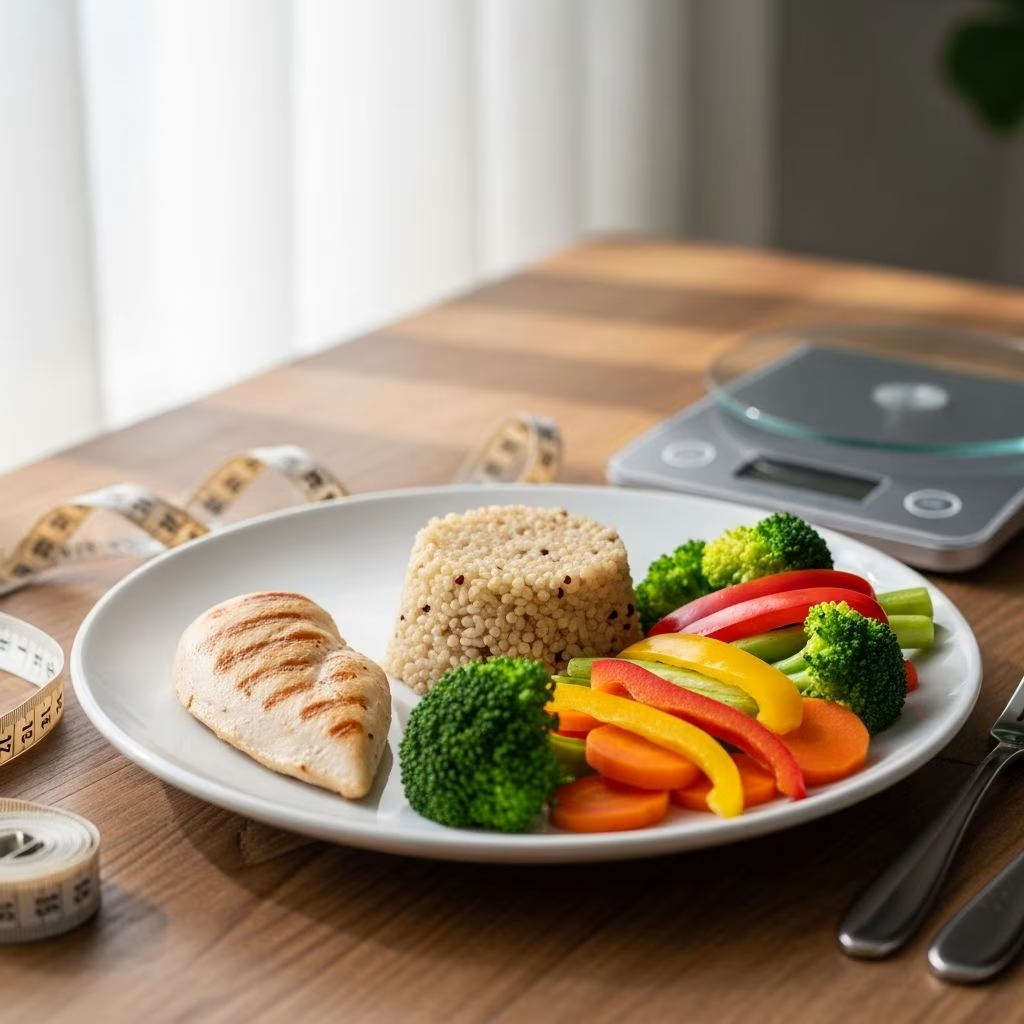
Weight loss is one of the most common health goals, yet many people struggle to achieve it despite their best efforts. The truth is, successful weight management isn’t necessarily about eating less—it’s about eating smart portions. Research consistently demonstrates that controlling portion sizes is one of the most effective strategies for sustainable weight loss. Whether you’re starting your weight loss journey or looking to break through a plateau, understanding and implementing proper portion control can be transformative.
Understanding Portion Control and Its Impact on Weight Loss
Portion control refers to managing the amount of food you consume at each meal and throughout the day. It’s distinct from a serving size, which is a standardized amount of food as defined by nutritional guidelines. A portion is simply what you choose to put on your plate. The relationship between portion sizes and weight gain is well-established: research shows that larger portions consistently lead to increased food consumption and higher calorie intake, regardless of hunger levels.
The science behind this is compelling. Studies demonstrate that increasing portion sizes by just 75% results in approximately a 27% increase in total food consumed and a 25% increase in energy intake. This portion size effect persists even among individuals who have received formal training in portion control, illustrating how powerful this mechanism is. When people are served larger portions, they naturally consume more calories without necessarily feeling more satisfied—a phenomenon that directly contributes to weight gain over time.
Normalizing portions could reduce overall calorie intake by almost one-third, roughly 527 calories per day. This reduction alone would result in significant weight loss over time, demonstrating why portion control is such a fundamental pillar of any successful weight management program.
The Science Behind Portion Control and Energy Density
One of the most important discoveries about effective portion control is the concept of energy density—the number of calories per gram of food. Foods with lower energy density allow you to eat larger volumes while consuming fewer calories. This is why vegetables, fruits, and whole grains are so valuable in a weight loss plan: they provide volume and satiety with minimal calorie cost.
Research comparing individuals trained in portion control to untrained controls found a crucial distinction: trained participants consistently chose meals with lower energy density. They achieved lower overall energy intake (506 calories versus 601-611 calories for controls) not by eating smaller portions of everything, but by strategically selecting more lower-energy-density foods. This finding reveals an important principle: the best portion control strategy involves eating larger portions of healthy, low-calorie foods while consuming smaller portions of calorie-dense foods.
Visual Cues and Practical Portion Size Guidelines
One of the most effective ways to manage portions without constant measurement is using visual cues—everyday objects and references that help you estimate appropriate serving sizes. These practical tools don’t require you to carry measuring cups everywhere, making portion control more sustainable in real-world settings.
Hand-Based Portion Guidelines
- Protein portions: About the size and thickness of your palm
- Carbohydrate portions: About the size of your closed fist
- Vegetable portions: Two handfuls or more (vegetables are low-calorie and should comprise a large portion of your meal)
- Fat portions: About the size of your thumb
The Plate Method
One of the most straightforward approaches to portion control is dividing your plate visually. Most health professionals recommend the 50/25/25 rule: fill 50% of your plate with vegetables, 25% with protein, and 25% with starchy vegetables or carbohydrates. This method ensures balanced nutrition while naturally controlling portions through visual organization.
Some bariatric and nutrition specialists advocate for the 60/40 rule, allocating 60% of your plate to protein and green vegetables with 40% remaining for other foods. The key is choosing a method that works for your lifestyle and consistently applying it.
Practical Strategies for Implementing Portion Control
Understanding portion control principles is one thing; implementing them consistently is another. These practical strategies help bridge that gap:
Use Smaller Plates, Bowls, and Glasses
A simple yet highly effective strategy is reducing your dishware size. Smaller plates and bowls naturally limit how much food you can serve yourself, creating an automatic portion control mechanism. Interestingly, smaller plates don’t feel restrictive because they appear fuller at the same portion size, satisfying psychological cues that influence satiety.
Pre-Portion Snacks and Foods
For foods that are easy to overeat—nuts, pretzels, cereals, chips—pre-portioning into single-serving containers makes a significant difference. Use small ziplock bags or containers to create grab-and-go portions. This removes the temptation to eat directly from a large package and makes portion awareness automatic rather than requiring conscious decisions each time you snack.
Strategic Food Placement and Visibility
Your food environment dramatically influences how much you eat. Make healthy foods visible and accessible:
- Keep fresh fruit in a fruit bowl on the counter at eye level
- Store berries and cut vegetables in clear glass containers in the refrigerator where you’ll see them
- Place calorie-dense foods (cookies, chips, pastries) in opaque containers or back of pantry/refrigerator, out of sight
- Use the “out of sight, out of mind” principle strategically
Pack Your Lunch and Plan Ahead
Packing your lunch gives you complete control over portions. Restaurant meals and cafeteria options typically provide oversized portions, making it difficult to control intake. By preparing meals at home, you determine exact portion sizes and food quality. This strategy also prevents impulsive food choices when hunger strikes.
Manage Eating Speed and Meal Timing
Eating slowly is fundamental to portion control success. It takes approximately 20 minutes for satiety signals to reach your brain. Rushing through meals leads to overeating before you feel full. Additionally, avoid eating right before bedtime (generally wait at least 3 hours before sleep) to prevent unnecessary calorie consumption when your body doesn’t need fuel.
Structuring Your Diet for Optimal Portion Control
Prioritize Protein and Nutrient-Dense Foods
When building your meals, establish this priority order:
- Protein (meat, fish, eggs, legumes)
- Fruits and vegetables
- Whole grains and starchy carbohydrates
- Healthy fats in moderation
This sequencing ensures you fill up on the most satiating, nutrient-dense foods first. Protein is particularly important because it promotes fullness, preserves muscle during weight loss, and requires more energy to digest than other macronutrients.
Eat Frequent, Smaller Meals
Rather than three large meals, consider eating five smaller meals throughout the day (breakfast, mid-morning snack, lunch, afternoon snack, dinner). This approach prevents extreme hunger that leads to overeating and helps maintain stable blood sugar levels. Smaller, frequent meals keep metabolism active and reduce the likelihood of binge eating.
Embrace Plant-Based Portions
Plant-based foods offer a unique advantage for portion control: you can eat larger volumes while consuming fewer calories. Vegetables and fruits are rich in fiber, water, and nutrients while being relatively low in calories. A plant-based diet approach doesn’t require you to eat less food—just more of the right foods. Additionally, plant-based diets offer benefits beyond weight loss, including cancer prevention, improved heart health, and better management of chronic diseases.
Portion Control and Long-Term Weight Loss Success
What makes portion control particularly valuable for weight loss is its sustainability. Unlike restrictive diets that eliminate entire food groups or severely limit calories, portion control allows you to eat the foods you enjoy—just in appropriate amounts. This approach doesn’t feel like deprivation, making it more likely you’ll stick with it long-term.
Research shows that portion control effectiveness persists over time. Even individuals trained in sophisticated portion control strategies continue to benefit from these habits, maintaining lower energy intake and healthier food choices compared to untrained individuals. This suggests that portion control skills become internalized behaviors that support lasting weight management.
The key to success involves combining multiple strategies: using smaller dishware, pre-portioning foods, eating slowly, choosing lower-energy-density foods, and structuring meals around protein and vegetables. Together, these create a comprehensive approach to weight loss that doesn’t feel restrictive or unsustainable.
Overcoming Common Portion Control Challenges
Many people struggle with portion control despite understanding its importance. Common obstacles include restaurant meals with oversized servings, social situations where portion norms encourage overeating, and environmental cues that promote excess consumption. Success requires planning ahead for these situations, bringing smaller containers to restaurants when possible, and consciously resisting environmental pressure to eat larger portions.
Measuring tools like measuring cups and spoons can help, but visual cues and hand-based estimates often prove more practical in daily life. Over time and with practice, your ability to judge appropriate portions naturally improves, requiring less conscious effort.
Frequently Asked Questions
Q: What’s the difference between a serving and a portion?
A: A serving is a standardized amount defined by nutritional guidelines (like 1 cup of cereal), while a portion is the actual amount you choose to eat. Portions can be larger or smaller than recommended servings.
Q: Can I still eat my favorite foods while practicing portion control?
A: Yes. Portion control allows you to enjoy foods you love in smaller amounts while emphasizing nutrient-dense options. You can eat smaller portions of calorie-dense foods but larger portions of healthy foods.
Q: How quickly will portion control lead to weight loss?
A: Reducing portions by normalizing them could decrease daily calorie intake by approximately 527 calories, creating a significant calorie deficit for weight loss. Most people experience noticeable weight loss within 4-6 weeks of consistent portion control.
Q: Do I need to exercise while practicing portion control?
A: While not absolutely required, combining portion control with regular exercise (4-6 hours weekly) optimizes weight loss results and improves overall health.
Q: Is portion control effective for everyone?
A: Yes. Research shows that portion control benefits individuals across different weight categories and backgrounds. Appropriate portion sizes vary based on height, weight, gender, and activity level, so personalization is important.
References
- Comparing the portion size effect in women with and without extended portion control training — National Center for Biotechnology Information (NIH). 2018-02-14. https://pmc.ncbi.nlm.nih.gov/articles/PMC5817023/
- Portion Control & Healthy Weight Loss — YouTube. 2013-05-27. https://www.youtube.com/watch?v=8p4Q7HYXVH0
- Struggling With Portion Control? 5 Trustworthy Tips to Eat Less — Bariatric Centers of America. 2024. https://bcofa.com/portion-control/
- Portion control for weight loss — Mayo Clinic. 2025-12-24. https://www.mayoclinic.org/healthy-lifestyle/weight-loss/in-depth/portion-control/art-20546800
- The Truth About Portion Control — Consumer Reports. 2024. https://www.consumerreports.org/healthy-eating/the-truth-about-portion-control/
This article is general information, not personal financial advice. Consider your own situation, or speak with a licensed adviser, before acting on it.


